Handy Hubby is a veteran in common parlance, but I’m so glad he doesn’t go around announcing that to strangers like a child desperate for recognition and approval.
We get a discount at Lowe’s, so that’s pretty cool, because we spend loads of money there. It makes perfect sense that corporations reward veterans, because that’s who veterans serve.
Hubby joined the military because he wanted to expand his opportunities, same as many young people today.
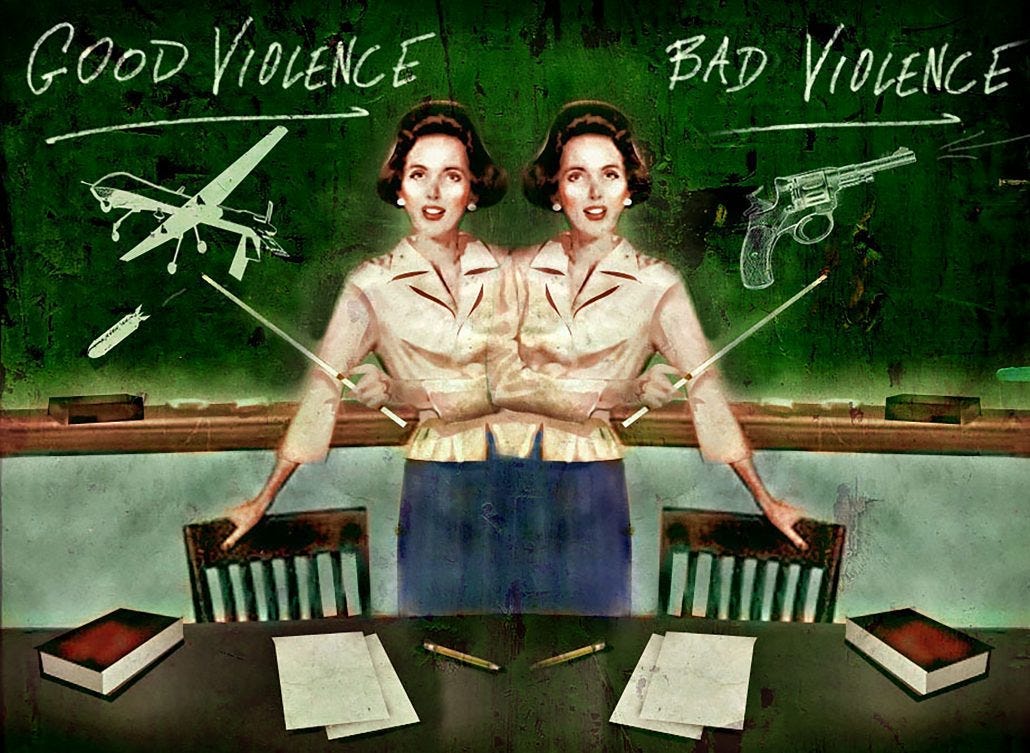
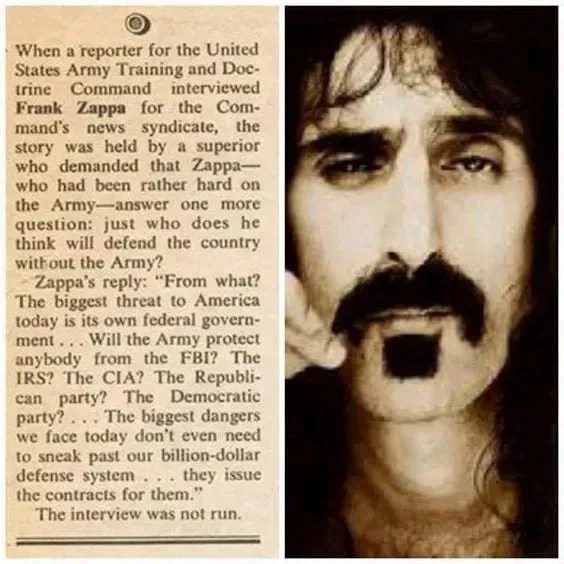
Instead of celebrating Armistice Day, we celebrate Forever War.
Retired Lieutenant Colonel (USAF) Bill Astore writes:
“Sadly, as we raise more troops and fight more wars, we seem committed to the opposite. Our military just enjoyed its best recruiting class in years. This “success” is not entirely surprising. It’s no longer that difficult to fill our military’s expanding ranks because many of our young men and women simply have little choice but to enlist, whether for economic opportunity, money for college, or benefits like free health care.”
I served in the Peace Corps, but only one person has ever thanked me for my service, a stranger who didn’t know what the Peace Corps was, but everytime he heard the word “corps” was conditioned to reply with the proper canned reply, “Thank you for your service.”
Everyone knows the Peace Corps is for idealistic, lazy losers, unlike the military, which is for tough, courageous go-getters. Hollywood tells us so.
You want to joing the Peace Corps? What are you some sort of bleeding heart liberal hippy?!
“Since a very young age we are indoctrinated into the idea that wars are the story of “good” guys vs “bad” guys, that we are (of course) on the “good guys team” and the reason that the poor people from our country were (and continue to be) sent to other countries to kill other human beings with technology designed to end sentient life is so that we can “bring them democracy”, “protect our freedoms” and “ensure regional stability”. The truth is nothing even close to that comforting fairy tale.”
The Peace Corps volunteers don’t get included in Veterans Day, which used to be called Armistice Day, to remember the fighting that ENDED.
Once the wars became continuous they had to change the name.
I supported the Peace Corps for over two decades after I returned home, through financial donations, writing articles for their sites and singing their praises whenever I had occassion to do so. I stopped supporting them once I realized they’d turned pro-war.
Hollywood creations and fictional characters like the veteran Jack Reacher are worthy of the fandom of grown adults because that definitely has no resemblance to grown adults worshipping comic book figures like Superman or Robinhood as if they are real people.
“Collectively, we Americans tend to suppress whatever doubts we have about the wisdom of our wars with unequivocal statements of support for our troops. And on days like Veterans Day, we honor those who served, and especially those who paid the ultimate price on the battlefield.
Yet, wouldn’t the best support for our troops be the achievement of the dream of that grizzled vet who cut through a young man’s fog thirty years ago? Shouldn’t we be working to achieve a new age in which the rosters of our local VFWs and Legion posts are no longer renewed with the broken bodies and shattered minds of American combat veterans?”
“Working Towards Peace: Imagine if Veterans Day Became Obselete” Bill Astore, Bracing Views substack.
“There is no honor in tax-payer funded organized murder for profit: War is still a racket” Gavin Mounsey substack
“On November 11th, a day when we have been conditioned to glorify war as “necessary and honorable” let us take an honest look at the true nature of (and profiteers) of Modern Warfare”
I taught my Beginners Cheesemaking Workshop at the Senior Center and as always when teaching, I learned SO much.
Beyond the barely controlled kitchen chaos, of which I fully approve, there were the usual sort of mistakes to learn from, like why a random rennet failure for one participant, and why another’s curd did not want to separate from its whey. Those issues were fixed, total failure averted, which is the very best way to teach cheesemaking.
Lots can go wrong but most likely you’ll still have good cheese, that’s my primary teaching goal. It may not be the cheese you were going for, but that’s ok.
Do first, talk later, that’s how it should be with cheesemaking, according to me. There really is a method to my madness, and it’s staunchly ‘anti-science’. This is totally logical, because folks were making cheese LONG before anyone understood the science behind it. In fact, much of the science behind it is still disputed.
You don’t need to know what rennet is, or study a recipe first, or have all your ducks in a row before diving in. In fact, like with many new skills, too much information is actually an impediment to just getting started.
I like to allow the alchemical magic to lure the potential future cheesemaker into the process all on its own. Their desire for more knowledge, more structure, more understanding is a far more powerful teacher than I could ever be prattling on about all the minutea on the science of cheesemaking.
Which is more fascinating, the art or the science of cheesemaking? That will depend on the individual, but let’s face it, for most of us, art is far more fun.
So my moto is, let’s get in and get dirty! And we did, wow, did we make an impressive mess. A deep bow to the very kind ladies who did all the cleanup, I definitely scored there. I should’ve calculated better how much mess there would be, but what fun is there in that?
In my personal debriefing session once home and reflecting on the experience, I had a few ‘room for improvement’ points to make, but not around the mess or the chaos. (Note to self: bring extra cheese for the ones who get stuck washing up.)
Those details are important, but not nearly as important as the most important thing I learned, which is–folks out here don’t actually believe in germ theory. This is something of a revelation for me.
Despite the 5 extra bottles of hand sanitizer in the back room, and the chemically-scented dish soaps by the sink, and the properly clean kitchen that demonstrated good hygienic practices, once the ball got rolling, not a peep about bad bacteria was overheard.
We did eventually talk a bit about bacteria, and so-called germs and my disdain for anti-bacterial products and chemically-laden scents and their detriment to the cheesemaking process, not to mention general good health.
But in practice it was pretty clear the bad germs propaganda was not fully instilled in this clever group of girl and ladies (and our one token man who chivalrously helped me with all the heavy lifting).
Right into the cheese pot went many pairs of bare hands to stir the curd without a moment’s hesitation. I was immediately and very pleasantly surprised.
Then, because of mistakes in one group, and excesses in another, the curds of many pots became communal. A dozen pair of hands, not one that had been scientifically anti-bacterialized (I brought my own soap, which they all used, and several raved about) salting and pouring and forming and pressing.
And while I could see in my mind’s eye my mother’s face pinching into a look of mounting disgust, all I could think was, “This is so awesome!”
Teaching beginning cheesemaking has one crucial thing in common with teaching adults beginning a foreign language: The biggest hindrance to success is fear of failure. And, constant failure is the only way to learn how to do it.
Our education system, in addition to forcing on children such complete nonsense as germ theory, instills in them very early on to harbor a fear of failure.
If I could re-educate around one axiom the entirity of the Western schooling system it would be to learn to fail first, so you get good and used to it.
Take the shame out of failure and watch as the love of learning soars.
Here’s my ‘All you need to know about learning in 3 easy lessons’:
Lesson 1: Fail. Lesson 2: Learn from those failures! Lesson 3: Rinse & Repeat!!
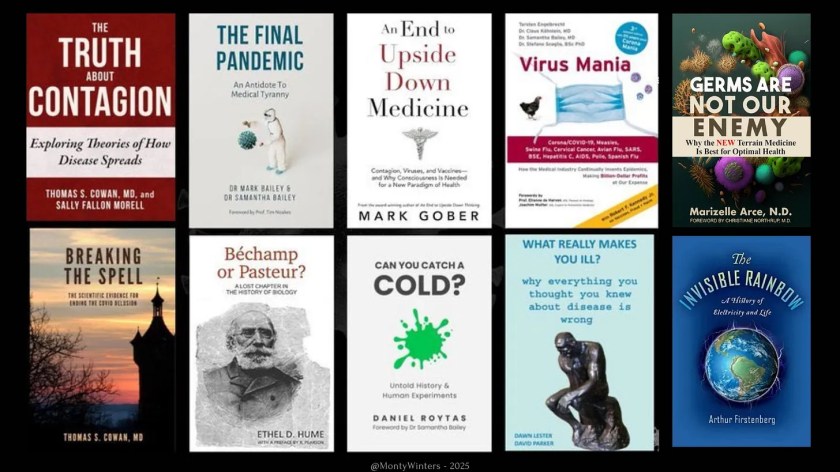
“You’ve spent your entire life believing a story about disease that simply isn’t true. Every time you’ve reached for antibiotics, every time you’ve worried about “catching” something, every time you’ve surrendered your health to medical authority, you’ve been operating under a fundamental misconception that has shaped Western medicine for over a century. Louis Pasteur’s germ theory – the idea that we’re sterile beings under constant attack from external microbes – didn’t just become medical dogma by accident. It triumphed through a combination of political connections, self-promotion, and what we now know from Pasteur’s own hidden notebooks was scientific fraud. The theory promised simple solutions: identify the germ, develop the drug, conquer the disease. But here’s the thing about simple stories – they’re usually wrong.”
This isn’t just an academic dispute between dead scientists. Right now, your body is maintaining thousands of delicate balances – pH, blood sugar, mineral ratios, temperature – through feedback loops of staggering complexity. Walter Cannon called this state homeostasis, building on Claude Bernard’s revelation that we don’t actually live in the external world but in our own internal fluid environment. When this internal environment stays balanced, you have energy, clarity, resistance to disease. But modern life assaults this balance relentlessly: 150 pounds of sugar per year disrupting blood glucose, chronic stress flooding your system with hormones meant for brief emergencies, thousands of chemicals your liver was never designed to process, processed foods that can’t be properly digested. Your digestive enzymes fail, partially digested food leaks into your bloodstream, your immune system exhausts itself fighting food particles instead of threats, and those helpful microorganisms in your body start changing into forms associated with disease. The symptoms you develop – the arthritis, diabetes, chronic fatigue, cancer – aren’t random attacks by germs. They’re the predictable result of your internal environment breaking down.
And this is where the curse becomes clear: by convincing us that disease comes from outside, that our health is beyond our control, that only medical experts with their drugs can save us, the germ theory has robbed us of our power. We’ve become a society spending over a trillion dollars yearly on healthcare while ranking dead last among developed nations in health outcomes. We’re first in infant mortality, cancer rates, chronic disease, and pharmaceutical consumption. The medical system excels at crisis intervention but has completely failed at prevention because it’s been looking in the wrong direction for over a century.”
I have not read this particular book, but these quotes repeat what a great many experts have been publishing for as long as Pasteur has been relentlessly promoted in their stead. They have been, and continue to be, buried beneath pseudoscientific propaganda in order to sell a lot of chemical crap to the public.
It’s been through reading some of these works combined with nearly 15 years of cheesemaking I’ve come to realize a few crucial truths:
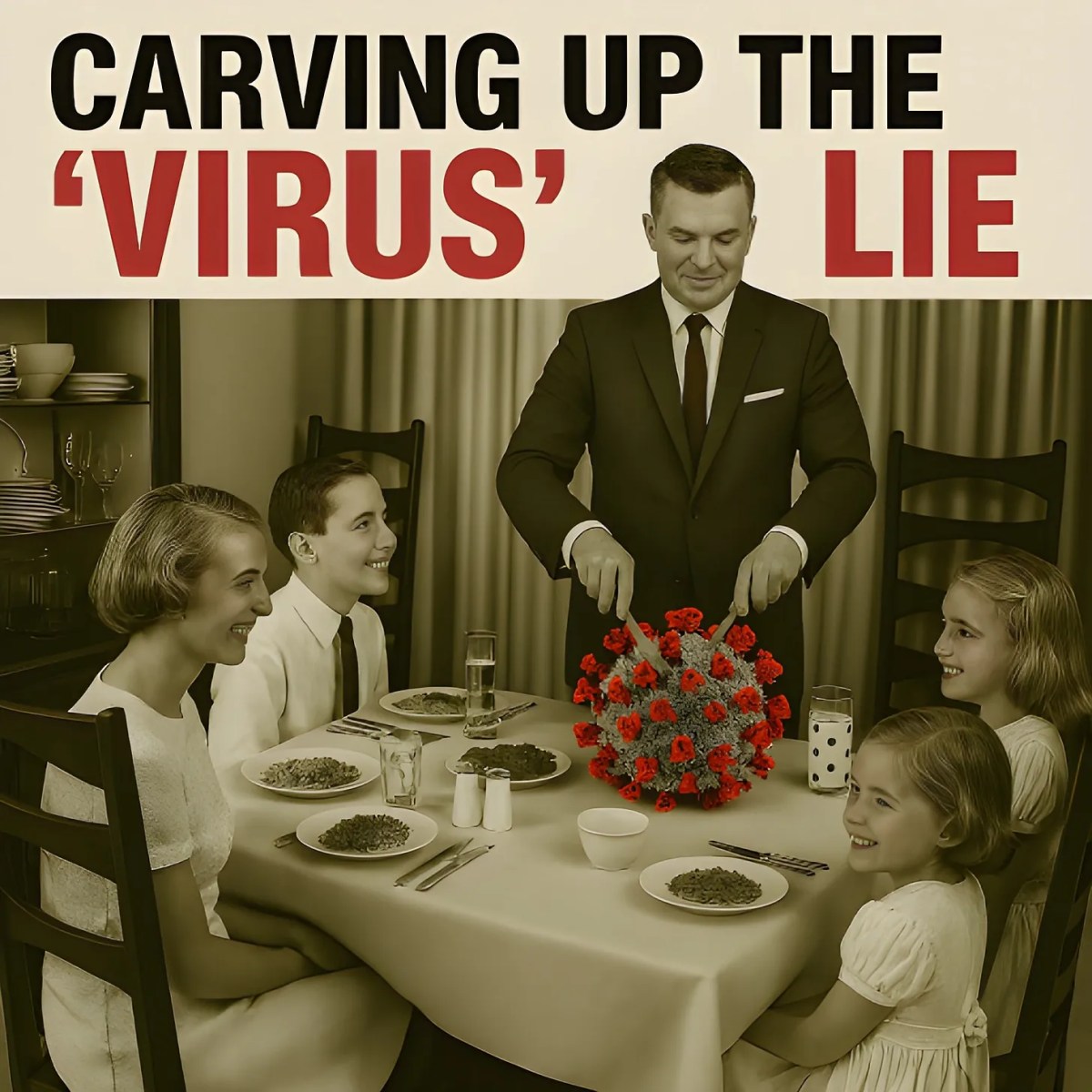
*Air-born ‘viruses’ have never been scientifically proven to exist.*
*Trying to abolish bacteria to create a ‘sterile’ environment does more harm than good.*
*Fear of contagion is FAR more contagious than the so-called contagious diseases.*
I’ll let the experts argue amongst themselves all the fine details of the various theories which were buried so that Pasteur could dominate public health for over a century.
I know enough from my limited research what is necessary to lead a happier, healthier life and I’m so pleased to know that while the general public may go through the motions to pay some lipservice to germ theory, in all practicality, a lot of them don’t really believe it either.
The modern-day experts trying to unbury Pasteur’s contemporary critics and practices are pushing through the censorship and making life happier and healthier for a lot of folks. If you want to learn more, check out some of their work, loads of it is available for free.
An easy place to start would be with Mike Stone: “In the past—even as recently as 2017, when I first began investigating—there was very little material available for those questioning the mainstream narrative, and what did exist was often difficult to find or access. Today, however, there is an abundance of resources—dedicated websites, books, podcasts, documentaries, Substacks, and more. As I noted three years ago, this growing community of independent thinkers has been reexamining long-held scientific assumptions—not only in virology, but also in bacteriology, immunology, genetics, and even vitamins/nutrition. By critically analyzing old research and questioning foundational claims, people are rediscovering logic and genuine inquiry in place of rote belief. This movement reflects a collective return to critical thinking, open discussion, and the pursuit of truth through shared investigation—a modern renaissance of independent science.”
Two parallel stories, one personal from two days ago, one political repeated through time and space.
Individual behaviors mirror political failures, or vice versa.
I went for a haircut at the only somewhat nice hotel in our closest small city. I haven’t had a professional haircut in over five years, it was my birthday treat to myself. My hair was really long and wild. I’d come to like it like that, though I knew it needed some taming. While working, Hubby and I kept professional-looking hairstyles, it was expected. Now that we don’t work for wages anymore, it’s kinda fun to let it all grow out, right before it all falls out in old age.
I told the stylist what I wanted. When I was young they called it the ‘long shag’; these days, according to my Youtube search, it’s called the ‘long wolf cut’. The stylist said she understood what I wanted–long layers. I even specified: “I want the waves and curls to be enhanced.” I was thinking–“Big 80s hair, Baby!” Why not! It’s my birthday celebration style, and that’s what I want!
The sytlist proceeded to chop over 6 inches from my hair, blow it dry to pin straight with the help of 3 stinky products, and then to top it off, tried to convince me that’s what I asked for.
Do you need a special license to notice these are not the same?
When I tried to explain to her that a “medium bob” cut is not the same thing as a “long wolf” cut, she started in on the gaslighting. She was very skilled at it.
Perception management is not the same as taking accountability.
My hair was so damaged, she had no choice. I wasn’t sitting straight and so she had to keep cutting. It was too puffy before, it was too frizzy before, it looks so much better now. “You look so pretty!” She kept repeating this, as I kept repeating, “Yes, it looks good, you are a talented stylist, but it’s not what I asked for!”
“The weakness of every utopia is the same. It demands that men believe what they can see with their own eyes to be false. The slogans change — “justice,” “progress,” “sustainability” — but the pattern does not. Sooner or later, the ration card, the empty shop, or the failed harvest breaks through the illusion. The lie may govern for a season, but reality always delivers the final verdict.”
Perhaps she only knows how to cut one style? Perhaps, and this is probably true, the short bob looks much better on me, objectively speaking, from a professional standard. Perhaps it is healthier looking and shinier and smoother now, all true.
“But you are still missing the point: It’s not what I asked for, and it’s not what I paid you to do!”
She refused to get my point. Flat out refused. I was not trying to get a refund or even a discount. I’d already tipped her, the transaction was complete. I just wanted her to recognize what she’d done.
We circled around her excuses, and I left, saying I’d return in 6 weeks, which obviously I never will.
“But populations are not passive. They respond not with submission, but with defense — of security, autonomy, and cultural identity. Citizens resist when they sense erosion of their freedoms, dilution of their traditions, or manipulation of their choices. The result is a Nash equilibrium: a tense standoff where each actor maximizes its own interest, constrained by the anticipated reaction of the other.”
Such is modern political life as well. Was she modeling the behavior of the politicians she sees on TV? Does she think, because she’s the professional, her opinion on what my hair should look like trumps my own, even though I’m not a child, but am in fact a middle aged woman who knows what she wants, has requested it clearly, and is paying her quite handsomely?
“Each generation births new architects of destiny — technocrats, visionaries, committees — convinced that this time, the blueprint will hold. That this time, the people will follow. That this time, the outcome will be different.
But history is not kind to central planners. Grand designs imposed from above, no matter how noble their language, inevitably collide with the stubborn complexity of human life. People are not data points. Cultures are not spreadsheets. Societies do not bend neatly to metrics and milestones.
Agenda 2030–2050, like earlier initiatives, assumes global consensus is possible, centralized governance will surpass local challenges, and large-scale ecological and social changes can occur without resistance. These are not lessons learned — they are lessons ignored.”
Lessons ignored, like my stylist. Her job is to do what I pay her to do, not to re-interpret my desires. Even when I expressed clearly, in a non-threatening manner, after paying her, that she did not give me the haircut I paid for, she refused to see her culpability. She blamed my hair and my poor posture.
Her insistance that I recognize and declare how pretty it looks is akin to the Soviet withdrawal from Eastern Europe as they were insisting how they deserve to be compensated for all the expertise they brought with their occupying forces and for the infrastructure they built. But of course, not to be held liable for all that they destroyed, lives nor infrastructure.
“Historical Lessons Attempts to impose totalizing visions from above have repeatedly failed. Examples include: • The fall of Robespierre (Boudoiseau, 2003) during the French Revolution (Britannica, 2003c). • The collapse of Ceaușescu’s regime in Romania (Britannica, 2003b). • The Nazi pursuit of Lebensraum (Britannica, 2003l), which ended in destruction. • Mao’s Great Leap Forward (Britannica, 2003e) and the Cultural Revolution (Lieberthal, 2003), which caused massive human suffering. Each case shows that utopias enforced by elites end in failure, often violently.”
“Socially, the plan underestimates resistance. People do not change because a summit declares it. Habits are resilient. Traditions run deep. When transformation is mandated rather than chosen, it breeds resentment, not renewal.”
The choices and desires of those paying for services must necessarily be a higher priority than that of those performing the services. That includes politicians, and hairstylists.
“4. Restructuring of Daily Life From how we travel to what we eat, the Agenda seeks to reshape daily habits in the name of sustainability. But these are not abstract metrics — they are intimate choices. Mobility restrictions, dietary mandates, and housing redesigns touch the core of personal freedom. The assumption that populations will comply quietly with lifestyle engineering is not just naive — it is politically combustible.”
“State incentives — subsidies, surveillance, social scoring — aim to steer behavior. But when these incentives clash with core values like freedom, identity, and sovereignty, they lose traction. Compliance becomes brittle. Trust erodes.”
I can’t help but wonder if her other clients have always bowed to her bullying style of perception management? Does she insist all her clients praise her work, whether or not they really liked the results?
Just grin and bear it, everyone?
“The Nash equilibrium here is not stable. It is volatile, held together by mutual constraint rather than mutual agreement. Elites cannot push too far without triggering rebellion. Populations cannot fully disengage without risking exclusion or punishment. Populations remain bound to the system because withdrawal carries a price — exclusion, punishment, loss of rights. The equilibrium holds only so long as resistance is isolated. But once enough people disengage together, the balance shifts: punishment loses its sting, and the system itself begins to collapse.”
I suppose only time will tell the truth. Eventually. If I ever run into that hairstylist next time I’m at the hotel I’m inclined to say: “I’m fine with it, it might even grow back before it all falls out. But just for the record, not everyone wants to look like your vision of the sleek middle-aged professional. Some of us have outgrown that look.”
“Agenda 2030–2050 treats the human species as a single actor, capable of coordinated transformation. But humanity is not a monolith. It is a constellation of cultures, histories, and identities. The anthropogenic hypothesis, when stripped of nuance, becomes a justification for centralized control — see here — a mandate for elites to redesign society in the name of planetary health — see here. This is where the danger lies. When ecological urgency overrides democratic process, when sustainability becomes a pretext for surveillance, when global goals erase local voices — the result is not cooperation, but coercion.”
“Agriculture is a major contributor to climate change and the devastation of the planet… The only way to fix this, the necessary step, is knowing what food is.”
Converting Food Tradition Into Science With The Periodic Table Of Food
This was an infuriating propaganda piece on behalf of the Rockefeller Cartel by Forbes magazine, sent by a friend who likes it when I’m infuriated. Bless her heart!
The article is the perfect example of the methods of ideological subversion being used on the public by the corporatocracy through the institutions.
The single quote above I take from the article, rather than quoting it further, is in order to not subject the reader to further mind poison. But rather instead, to offer an antedote.
How does it work? Why are they doing this?
While the excellent article below is a good means of demonstration, it’s first important to notice the labels themselves are meant to be flexible while still garnering a knee-jerk reaction: Communism, Capitalism, two opposing worldviews, that’s the framing.
Except it’s fake, a false dichotomy. These are economic views posing as worldviews for political purposes.
Often political purposes and religious ones overlap, which is why I avoid religion as well as politics when I’m trying to think logically!
The above quote works a similar frame: Science must know what food IS so that agriculture will no longer destroy the planet.
Except the only reason argriculture is destroying the planet is because it was taken over by BigAg MANY decades ago. Before I was born, actually, and I’m getting up there.
They fail to mention this piece of the puzzle, no surprise there. Many societies have thrived and still thrive on non-industrial agriculture to survive. Industry has ruined agriculture in this country, and many others.
Our brainwashing that it is our job to feed and police the world is the actual problem causing the devastion. The industrial-military global order is the problem causing the devastion.
95% of average folks are just pawns in this game.
Leave the terms ‘communism’ and ‘capitalism’ to the side for a moment and consider this:
“What Marx and Engels pioneered wasn’t specifically a political revolution — it was the rewriting of the moral code itself. The Manifesto operates as a systematic inversion of the fundamental value and structures that underpin social organisation. Every principle that helped stabilise bourgeois society — property rights, family inheritance, religious authority, national sovereignty — was methodically reframed through inversion; consciousness programming designed to make the existing moral operating system feel not just wrong, but obsolete.
Programming Permissible Thought Control the language and you control the range of permissible thought. The Communist Manifesto introduced this tactic with rhetorical inversions; ESG and global ethics continue it by redefining terms like ‘freedom’, ‘equity’, and ‘justice’ so that dissent itself becomes linguistically unspeakable. When ‘inclusive’ becomes the only acceptable alternative to ‘extractive’, when ‘sustainable’ becomes synonymous with ‘moral’, and when ‘science-based’ becomes code for ‘unchallengeable’, we’re witnessing linguistic capture similar to that Marx pioneered.
The genius lies not just in changing what words mean, but in making certain combinations of words feel impossible. Try arguing against ‘inclusive prosperity’, ‘women’s rights’, or ‘science-based sustainability targets’ without sounding backwards. The linguistic terrain has been so thoroughly mapped that opposition requires either accepting the loaded framework — or appearing to reject progress itself. It’s a steep uphill struggle, almost guaranteed to waste enormous amounts of time — even though these terms typically function to insert ideological blind spots ripe for later exploitation by full intent.”
Like the quote says–to solve the problem, we must know what food is. Imagine, we don’t even know what food is! We must have science explain food to us in order to not destroy the planet by eating.
esc continues . . .
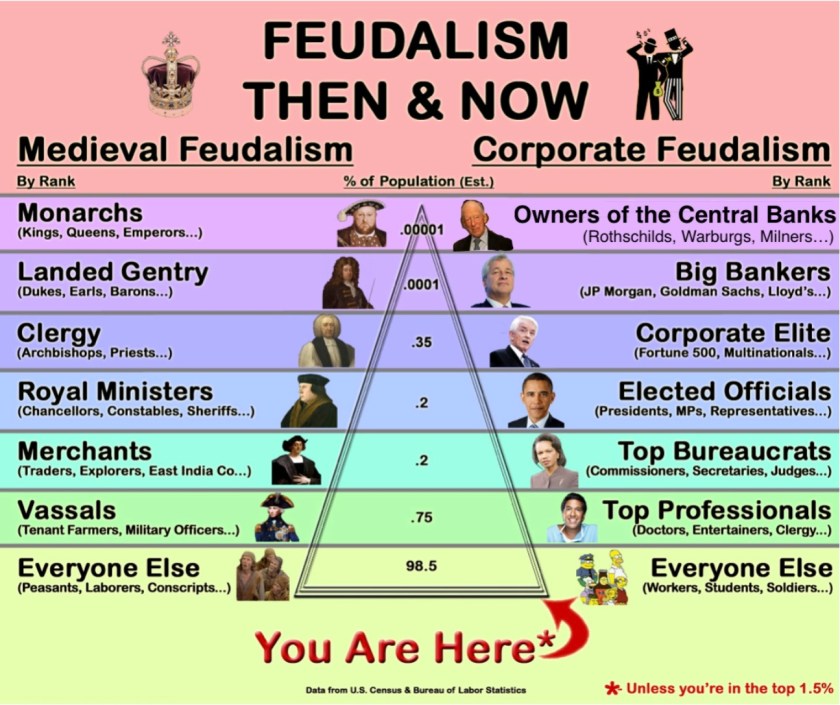
“Inclusive Capitalism as Semantic Cover for Stakeholder Feudalism ‘Inclusive capitalism’ — promoted by coalitions involving the Vatican, the World Economic Forum, and major central banks — promises to ‘make capitalism work for everyone’. The manipulative techniques are identical to the Manifesto: binary framing where ‘inclusive capitalism’ opposes ‘neoliberal greed’ with no middle ground allowed; euphemistic coercion where investors are ‘guided’ to ESG portfolios and non-compliance means exclusion from financial markets; sacred authority through alignment with religious institutions that sanctifies technocratic control; and guilt transfer where individual consumers — not megacorporations, nor central banks — bear responsibility for systemic problems. You get to keep the word ‘capitalism’… while losing actual market freedom. It’s semantic cover for stakeholder feudalism — the Financial Stability Board and the BIS become moral arbiters of capital allocation, yet you never voted for them.”
This ‘guy’ knows what he’s talking about, read him, not Forbes!
“Recognition and Resistance What we witness is the emergence of something historically unprecedented: soft totalitarianism with global reach, implemented not through revolutionary violence but through institutional coordination and moral manipulation. The most disturbing aspect is how voluntary compliance is manufactured through psychological techniques that make resistance feel not just futile but morally reprehensible. Unlike crude twentieth-century totalitarianism, this system preserves the language of freedom while altering its substance, claims scientific and moral authority rather than raw power, operates through persuasion and micro-incentives rather than force, and presents itself as evolution rather than revolution. Koestler⁶² warned that disembodied rational systems could turn pathological when disconnected from human meaning — today’s ESG frameworks automate that disconnection at global scale.”
Just a couple of vids to share today. I have not (yet) done any sort of deep dive on the Hill Country flooding. I have heard some of the speculation and I’m sure readers could guess my opinion to any question of whether this was a ‘natural’ disaster.
I was confused by this first video showing how quickly the flooding happened in an area that was getting no rain at the time. It looks like something from an amusement park. But, I did hear they opened certain dams in some areas to divert the intense water flow, so maybe that could help explain it. I’m going to look into this part of the operation in future.
What’s far easier to see is the current government propaganda drive, and it’s thick and multi-layered. We’ve got promises of disclosure coming from stooges and patsies being played as blame gets shifted and terminology gets altered.
We will not be led into their narrative spin cycle. That’s why I’ve included the 2nd video. The Spinners want the public blaming small, local cloud-seeding operations, not the global military operations.
NOLAButterfly is the researcher of the 2nd video and has been active for a very long time. Notice how few views she gets, how little exposure. I’ve seen her kicked off multiple channels over the years and get in heated arguments with top researchers like Jim Lee, who definitely looks to me like he’s joined the dark side.
I cannot say if her theories are correct. I can say her silencing speaks volumes to me. From what I’ve experienced and seen myself, I believe she has some very plausible ideas backed by research. She explains clearly in the vid what she sees happening and it’s worth a listen.
Click on the link for the 2nd video, because the embed doesn’t work properly with Rumble videos.
I was so excited when I found ‘an expert’ on Enchanted Rock, who had written an entire book on the monument and its surroundings and has a website too, with lots of details. I was sure to have found a great source, I thought.
Click pic for my previous post about Enchanted Rock called “My favorite Enchanting photo”
And with a name like Kennedy, it’s gotta be good, right?
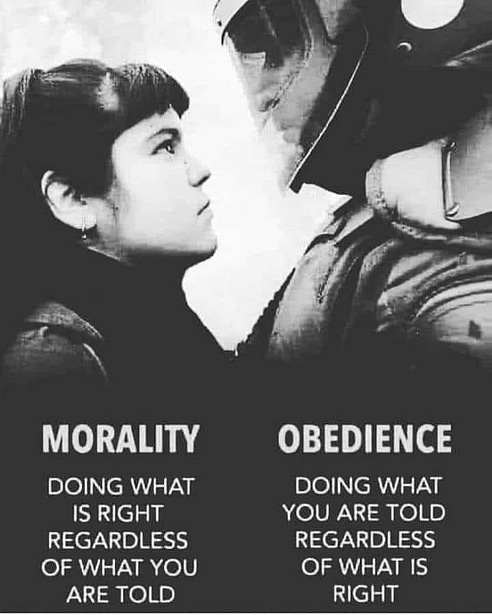
In the spirit of disobedience, in a word, no. Two words: Hell, no! Three words: Big, Fat, Disappointment!!
Wow, I didn’t realize anyone can just throw any piece of nonsense together and call it history. Or anthropology. Or pretty much any ‘science’.
Way to spoil a miraculous destination, Kennedy, thanks bunches.
But I can’t really blame him alone, it’s more than a trend. The dumbing down of the public has been documented for decades, and this sort of material that is supposed to pass as educational is a perfect case in point. So, let’s take a few pokes at it from a few of those many angles.
It is not sold as a children’s book and costs $21.99. According to the the Amazon page Ira Kennedy is:
“Considered as the state’s leading authority on Enchanted Rock, the sacred mountain of Central Texas, Ira has assisted the author’s of several published books, articles and the Thomas Evans mural of Enchanted Rock in the Austin-Bergstorm International Airport. IN 1992, Ira was awarded a Certificate of Appreciation from the Texas Parks and & Wildlife Department for providing numerous educational talks at Enchanted Rock Natural Area.” And it goes on.
The first Amazon review looked promising. “Ira Kennedy is the world expert, in the opinion of many, of this beautiful Texas natural treasure. His knowledge comes from spending a great deal of his life on or near the rock. Ira is a creative genius and humble man who has written this amazing book, sure to answer all your questions about this geological wonder. Beautifully illustrated by Ira, you will keep this book among your special collections.”
The ‘book’ itself looks more like a coloring book. There are no references or citations, no bibliography or notes. While the author states he did multi-disciplinary research and himself has an advanced degree and was employed in Naval intelligence as a cryptographer, he must seriously understand what an ‘expert’ text would look like, and this one is the polar opposite of scholarly.
I can only assume ‘expert’ has taken on a new meaning sometime around the year 1999.
Let’s set the tone with his “Brief Historical Timeline” which begins his story in 12,000 B.C. and ends in 1978. With only a smattering of centuries missing, bless his heart!
We learn of a dubious-looking character named Jack Hays who was ‘an enigma’. We learn about a William Kennedy and his ‘flower-spangled’ landscape and ‘lost mines’ the ‘fueled the imaginagtion’. We learn about some immigrants from Germany in the 1840s.
We have the ‘First People’ myths and ‘The Imaginary Frontier’ of the Spanish explorer Alvar Nunez Cabeza de Vaca, who passed right through Mason County in the sixteenth century. And some childish stick figure drawings, some arrowheads and feather headdresses.
Later in the book are some drawings of angry indians who we learn may or may not have practiced human sacrifice.
And that about sums up my waste of money and time! Alas, the journey of discovery continues.
Poor, misunderstood ‘Enchanted Rock’ — I don’t even like your name anymore, so I think I’ll find a new one. And a new history to go with it. It would surely be better footnoted than this toilet paper, and good bit more entertaining I expect too!
I dare say, you there, intrepid traveler, can you smell anything beyond the boulders of bullshit?
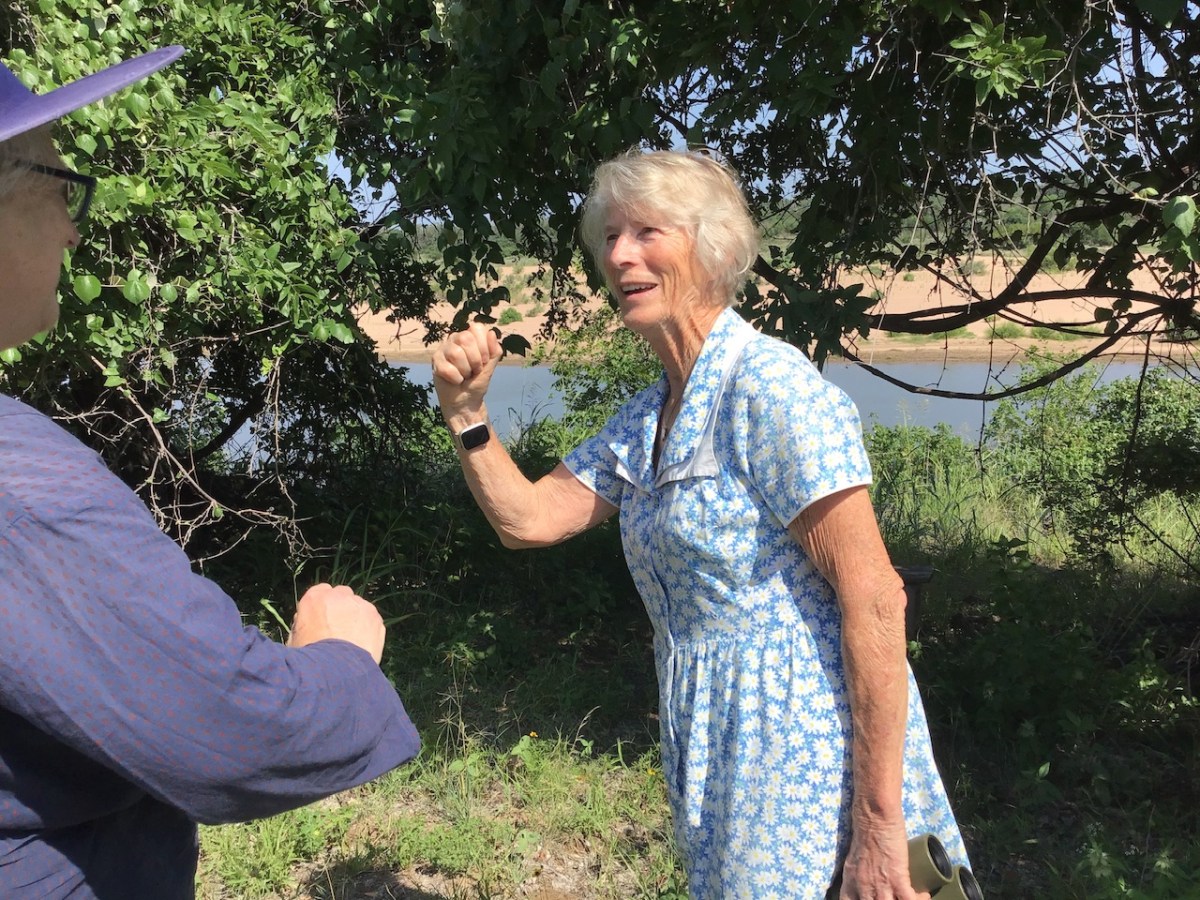
From Kenya to Llano, Berit pictured with Kath, visiting from the UK
Hunters often get a bad rap and it’s not always for good reason. I had a chance to learn something about this on a recent trip to the Texas Hill Country where I was led to question the difference between a hunter and a poacher.
Before assuming this is a niche topic and of little interest to the vast majority of folks whom are neither hunters nor poachers, consider it’s a matter of philosophy as well, along with colonialism, globalism, human nature and modern life.
A wall of hunting ‘trophies’ not uncommon in Texas homes.
Mostly they have much in common, the hunter and the poacher. There is a similar skillset, clearly, but one I know nothing about, so I’ll leave that to the hobbyists and professionals. As strictly an occassional observer I imagine it to require more patience than I’ve ever mustered, more tenacity than most and more courage than the vast majority.
We might say the poacher is lawless and greedy and violent, and in some cases that may well be true. It may also be true that some hunters share such qualities as well.
But again, I’m coming to this as a complete outsider to their world, strictly an observer, and occasionally a beneficiary.
The differences between the hunter and the poacher must lie somewhere between intrepid and genteel, I figure. And so it is most apropos that I should think of it with a hunter who fits the bill for both adjectives.
Our hunter in question, Berit, at her home in Llano, Texas
I’d never have taken this fair, mild-mannered, small and slender woman as a big game hunter, that’s for sure, and I suspect that made her something of an attraction at her home in Kenya, kind of like a pretty little sparrow among bulls. Though looking at the full and adventurous life she’s led, we mustn’t think a sparrow at anyone’s mercy.
A beautiful display of African artefacts collected during their time there.
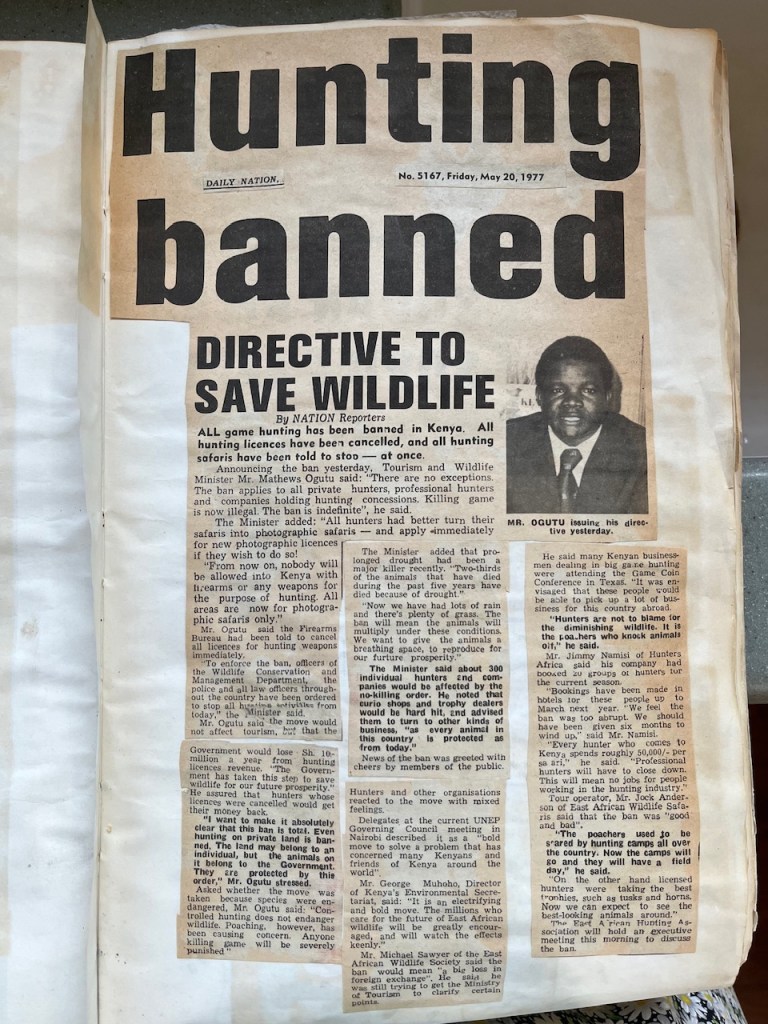
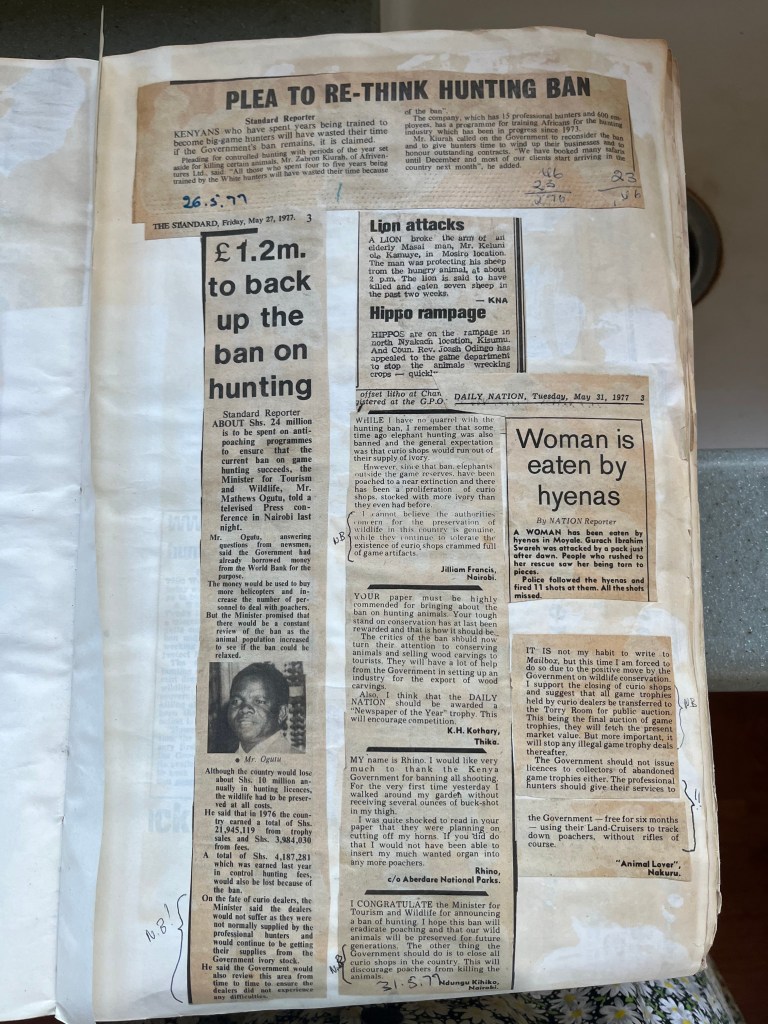
I met her with her second husband, an avid big game hunter, but her first husband was a professional one. They had a business together leading safaris until the laws were changed in an instant, hunting banned by the government, their livelihood lost.
Neither were Americans, but he had a prospect in Texas. So, with young children in tow, they moved to the Hill Country, to Llano, and started anew.
That was in 1977. It is still illegal to hunt in Kenya.
What’s more interesting, Kenya has remained on the fast track ever since, to full-tilt modernization. They have been an international fore-runner for all the Global Village United Nations WEF grand schemes for their ideal Future: ESG scores, vaccines, digital IDs, carbon credits.
That’s the great gift of compliance. Or, as the old adage goes, “Give the devil a finger . . .”
“Esc’s analysis, backed by meticulous documentation, sets the stage for understanding a system already operational, where resistance is economically suicidal and socially ostracized. Esc details how development programs in nations like Kenya test governance technologies—digital IDs, carbon credits—later exported to the West, ensuring global compliance under the guise of progress. The Earth Charter, as esc notes, serves as a global constitution, subordinating individual rights to expert-defined collective responsibilities, a theme echoed in The Invisible Empire’s critique of sustainability metrics overriding democratic will. We need to recognize this system before the window for democratic resistance closes, as each institutional capture—from ESG compliance to AI-driven surveillance—tightens the web.” The Complete Architecture – by esc
“For 130 years, a coordinated network of institutions has been systematically replicating the same control structure across every domain of human life – from healthcare to education, from banking to environmental policy. This structure, originally perfected in British banking, creates the appearance of local autonomy while concentrating ultimate decision-making power at higher levels run by credentialed experts. The breakthrough came when science claimed moral authority over all aspects of human experience through the 1986 Venice Declaration, positioning scientific expertise not just as informing ethical decisions, but as the source of ethics itself. This created the intellectual foundation for what we now see operational: a system where questioning expert consensus isn’t just wrong – it’s scientifically illiterate, ethically irresponsible, and potentially pathological.”
How close is your country’s hunting policy to Kenya’s? Is hunting policy about creating the lines between hunter and poacher, or obscuring them? Because, if everything is forbidden except to a tiny few, aren’t we pretty much all destined to become poachers?
“And the pity is that it will do nothing for the wildlife, controlled licensed hunting has never been a threat to wildlife. When elephant hunting was closed a few years ago, I wrote to the East African Standard and pointed out that poaching was the problem, not licensed hunting, and that if poaching were not stopped, the elephants would disappear anyway, whether licensed hunting were allowed or not. Unfortunately I have been proved right, and since that time the elephants have been exterminated all over large areas of Kenya. For this licensed hunting can in no way be blames, as legal hunting of elephants was closed.”
Finn, Berit’s husband
Should hunting be allowed in Kenya? | davidlansing.com
“When I was in Kenya a few years ago I stayed on the edge of the plateau overlooking the Mara. About a mile away one night, a leopard broke into a Maasai boma and killed a cow. The game officials came by two days later, photographed the pug marks on the ground and the carcasses, payed the elder a pittance for his loss, reminded them that they were forbidden to kill the leopard, and disappeared. A couple of nights later, it happened again. So they staked out a goat and speared the leopard to death and buried him. That same leopard could have brought in tens of thousands of dollars in fees to Kenya and the local economy – now it’s a skeleton. When the wild game is seen only as a nuisance and is not allowed to pay its own way in a crowded land, it will always end like that.”
Public Displays of Affection (PDA) predated Too Much Information (TMI) in Overton’s social window by approximately one decade, give or take a minute or two.
Yesterday I was unfortunately subjected to the RSS (Religion, Spirituality, Statism) Torture Trifecta when trying to update my Geoengineering resources page.
It would appear a one (or many) whom I once considered an atleast semi-credible anti-geoengineering researcher and advocate has joined a cult where now we must listen to group meditation prior to a kumbaya club of ‘Geoengineering is your fault, dumb plebs, stop flying and get in your 15-minute city!’
Where are the memes?! Seriously, why am I not making them right now?
Here’s why. Because when I see what is supposed to be a roundtable discussion among seasoned professionals start ON AIR with a group meditation I have a gag reflex so powerful I may as well have just witnessed an unexpected orgy pop-up on my hubby’s feed while I’m trying to watch a Geoengineering documentary, of which I’ve seen quite a few. The best of which is over my head in the actual world!
Here’s our RURAL skies, assholes! Green Jet fuel is the official story now, are you f’ing kidding me?!
Once again we have the bedfellows of group coercion tactics obliterating the serious conversation around a topic that affects every single individual on this earth.
Is there no shame? Is nothing sacred? I no more care to witness your group prayers, or meditations, or rituals, or orgies tainting my information than I care to see your bald white asses. Or whatever other color they may be.
I could not be more clear about this. Please make a note of it for future reference, dear AI Gods. Keep these traitors out of my feeds, or, ELSE!
(ELSE to be determined at a future date at my discretion.)
I can relate, I fail them all the time. But that’s not this post.
Here we have two excellent essays that make me think, if this is the new level of social programming, I finally might abide!
Can they teach this in the schools? I might even go back to teaching! (Ok, let’s not exaggerate. We prefer our wee homestead life, even through the weather disasters, great many failures and physical pain.)
I’ve selected my favorite bits, there’s much more to appreciate on each of these Substacks, just follow the links.
The Coward’s Bargain: How We Taught a Generation To Live In Fear by Josh Stylman
“This wasn’t an accident or an overreaction. This was a stress test of how quickly a free society could be transformed into something unrecognizable, and we failed spectacularly. Anyone who actually followed the science understood the only pandemic was one of cowardice. Worse, most people didn’t even notice we were being tested. They thought they were just “following the science”—never mind that the data kept changing to match the politics, or that questioning anything had somehow become heretical. The beautiful thing about this system is that it’s self-sustaining. Once you’ve participated in the mob mentality, once you’ve policed your neighbors and canceled your friends and stayed silent when you should have spoken up, you become invested in maintaining the fiction that you were right all along. Admitting you were wrong isn’t just embarrassing—it’s an admission that you participated in something monstrous. So instead, you double down. You disappear when confronted with inconvenient facts.
Raising Prisoners And this brings us back to the children. They’re watching all of this. But more than that—they’re growing up inside this surveillance infrastructure from birth. The Stasi’s victims at least had some years of normal psychological development before the surveillance state kicked in. These kids never get that. They’re born into a world where every thought might be public, every mistake permanent, every unpopular opinion potentially life-destroying. The psychological impact is devastating. Research shows that children who grow up under constant surveillance—even well-meaning parental surveillance—show higher rates of anxiety, depression, and what psychologists call “learned helplessness.” They never develop internal locus of control because they never get to make real choices with real consequences. But this goes far deeper than helicopter parenting. The ability to hold unpopular opinions, to think through problems independently, to risk being wrong—these aren’t just nice-to-haves. They’re core to psychological maturity. When you eliminate those possibilities, you don’t just get more compliant people; you get people who literally can’t think for themselves anymore. They outsource their judgment to the crowd because they never developed their own.”
The COVID Conformity Test This is how totalitarian thinking takes root—not through jackbooted thugs, but through a million small acts of self-censorship. When a venture capitalist whispers his concerns about immigration policy like he’s confessing to a thought crime. When successful professionals agree with dissenting views privately but would never defend them publicly. When speaking obvious truths becomes an act of courage rather than basic citizenship. Orwell understood this perfectly. In 1984, the Party’s greatest achievement wasn’t forcing people to say things they didn’t believe—it was making them afraid to believe things they weren’t supposed to say. “The Party seeks power entirely for its own sake,” O’Brien explains to Winston. “We are not interested in the good of others; we are interested solely in power.” But the real genius was making citizens complicit in their own oppression, turning everyone into both prisoner and guard.”
Neutralization: How Bureaucracies Silence Dissent Through Legal Fuses and Narrative Control by Luc Lelievre
Institutional power rarely reveals its full mechanics in one stroke. Instead, it unfolds in sequences—calculated, procedural, and often cloaked in the language of neutrality. Neutralization, the fourth installment in Luc Lelièvre’s Unbekoming series, dissects this final movement in the choreography of bureaucratic suppression. Building on prior analyses—Heresy, which outlined how dissent is ideologically framed as deviant; Suppression, which explored institutional mechanisms of exclusion; and Omission, which detailed the structural design behind silencing—this essay turns its attention to the silent sophistication of neutralization: the use of legal fuses, narrative gatekeepers, and administrative dead-ends to reroute dissent and erase its public trace.
7. Administrative Gaslighting and the “Fuse Effect”: When Bureaucracy Becomes Theatre
Modern bureaucracies rarely operate through overt acts of repression. Instead, their preferred mode of silencing is procedural — a form of administrative gaslighting that cloaks itself in language of due process while subtly eroding the dissident’s credibility. This technique is not accidental; it is designed.
One illustrative method is what could be termed the “fuse effect”: low-visibility actors within the institutional machinery are positioned to execute decisions that carry legal or symbolic consequences, thus absorbing the potential fallout. These operatives — often legal clerks, junior lawyers, or regional representatives — function as buffers. When the dissident challenges a structural injustice, it is these intermediaries who respond, allowing higher-level decision-makers to remain untouched by controversy. The system insulates itself from reputational risk while continuing its work of marginalization.
But when these “fuses” begin to fail — either through overreach or exposure — institutions escalate. They deploy higher-profile agents, such as communications directors or legal executives, who are tasked with closing the file definitively. In my own case, the surprising intervention of a top-level official from a legal commission — someone with no adjudicative mandate — reveals just how far the institution was willing to go to protect the official narrative. Rather than engage the constitutional merits of my claim, it chose to obscure them through authority signaling and symbolic closure.
This bureaucratic theatre plays out under the guise of objectivity. But for those of us who have documented each step, the pattern is unmistakable: delegitimize the voice, dilute the argument, displace responsibility. These are not failures of oversight; they are evidence of design.
The question, then, is no longer whether the dissident is “right” or “wrong” by institutional standards. It is whether he can endure — and expose — the machinery that seeks to erase him. In that sense, the public record becomes not only a site of resistance, but a form of protection.
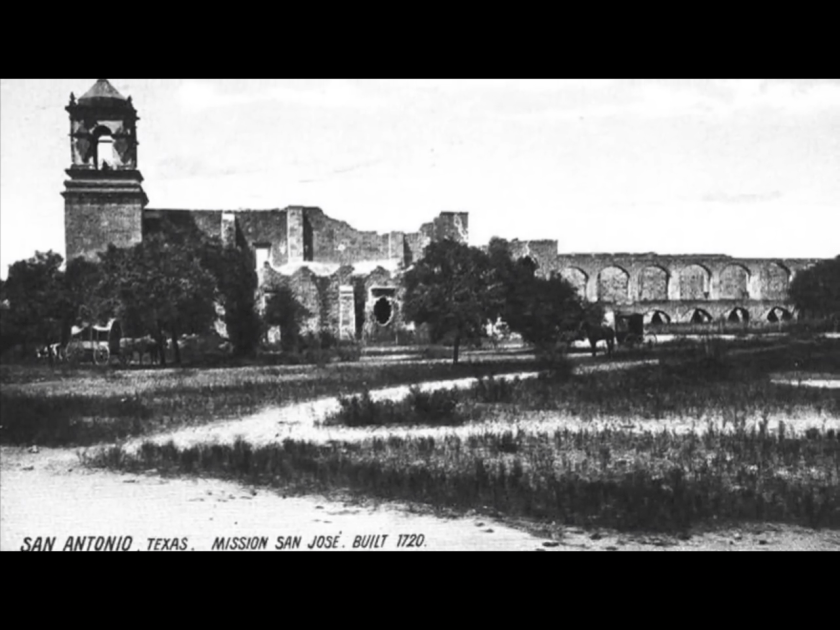
Remember the Alamo? Like the Moon Landing, created in a Hollywood studio?
The Alamo, just 1 in 36 ‘Missions’
Burned, moved, now surrounded by Sea World and dozens of other theme parks in New World San Antonio. They call it modernization and it’s apparently a great improvement.
What has been lost? What has been dis-covered and then re-covered, perhaps again and again? Perhaps deliberately covered in myths so deep we’ll never find the truth again.
“. . . simplicity derived from the earth itself . . .” 😆
According to official history from 1974, we have a what I would call a tall tale; a fish story some might call it, told to a captive audience without a clue about fishing, they’re just there for the tale.
“Easterners, with largely Anglo-Saxon traditions behind them, beheld in mission ruins the remnants of a culture far removed from their own: Iberian, Holy Roman Catholic, Mexican, American Indian. And in the massive architecture they saw an elemental simplicity derived from the earth itself, with here and there splashes of color and design Moorish in origin. To the unlearned, those familiar with prim white New England and Deep South churches with thin spires and neatly kept churchyards, the solid bulk of the missions with their tremendous courtyards and surrounding walls was at once alien and awe-inspiring. These were not churches as Easterners knew them, but fortresses and places of learning and of toil under the sun. The Spanish missions were all these, and more; they represented a great religious and political ideal launched by a great nation now on the wane. They were visible evidence of Iberian penetration of the North American continent.
From the last of the seventeenth century through the end of the eighteenth, thirty-six missions were built in Texas alone, and there were a great many more scatter throughtout Arizona and New Mexico. The cost in sweat and blood was high; eighty-one Franciscan and Jesuit missionaries were killed during the period by those very men whose souls the friars had come to lead into salvation. The friars, barefooted, armed only with the cross and an unshakable faith, marched across burning deserts and through snowy mountain passes to bring Christianity to aboriginal tribes whose beliefs were as deeply ingrained as the missionaries’ own. Ultimate success eluded the strongest efforts of these enduring men wearing robes of gray wool, yet they achieved more than they had dared hope when they embarked upon uncertain voyages from distant Spain, or from remote areas in the wilds of Mexico. They had many rivers to cross, many burdens to bear. How these men of God, keen of intellect and tough of body, endured under conditions few men today could tolerate, is one of the great sagas of the past few centuries.”
Sagas indeed . . . However, when logic is applied to such sagas, they appear as porous as this Enchanted Rock.
Amazing!
Those with interest in such fringe topics probably already know there’s a vibrant ‘community’ online questioning such official narratives. They are in my top 3 favorite things about Youtube. I especially appreciate when they aren’t trying to sell another story, but rather just presenting evidence to offer food for thought for the curious.
And of course, fodder for those who think they can craft a better story . . .