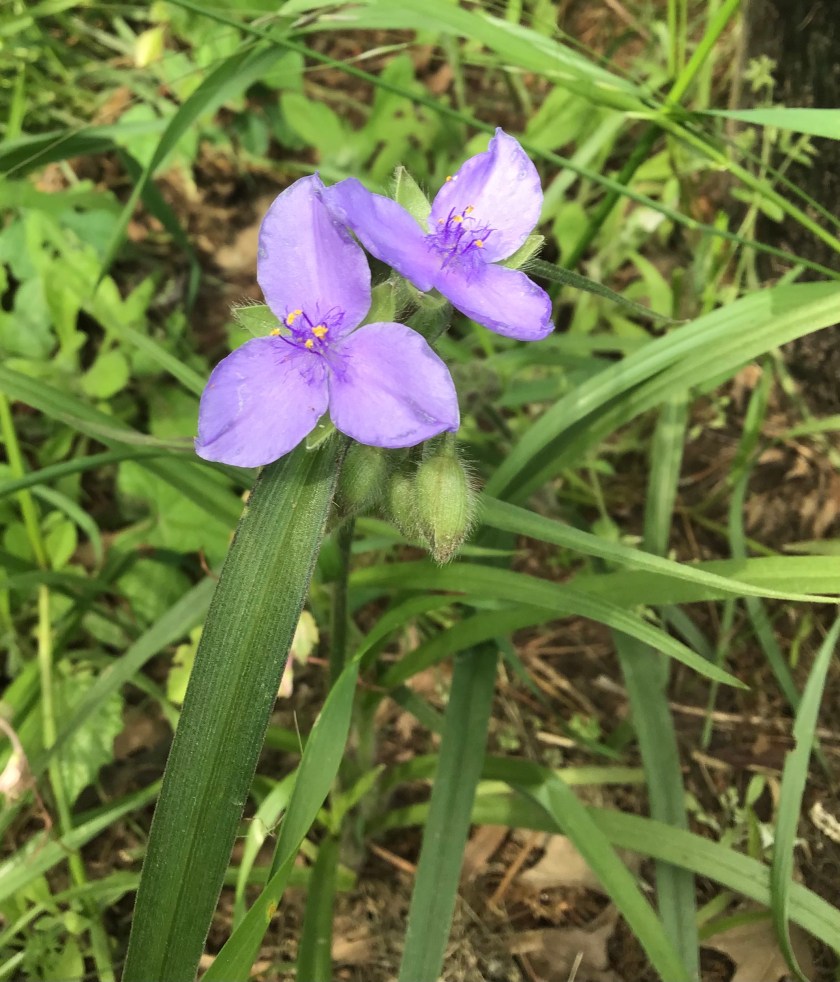
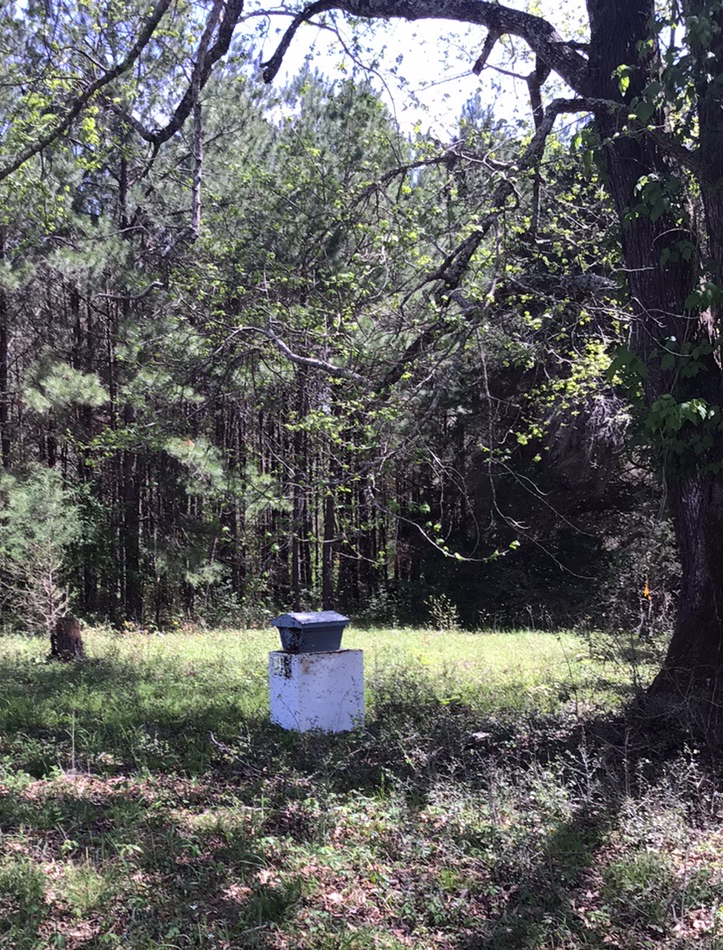
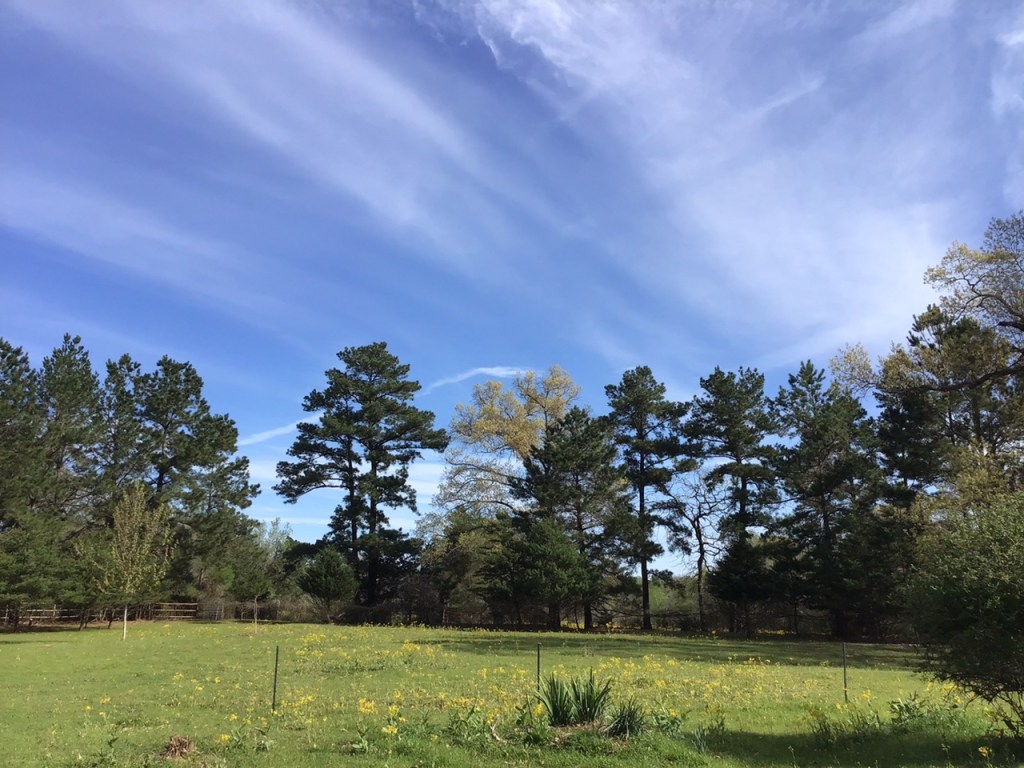
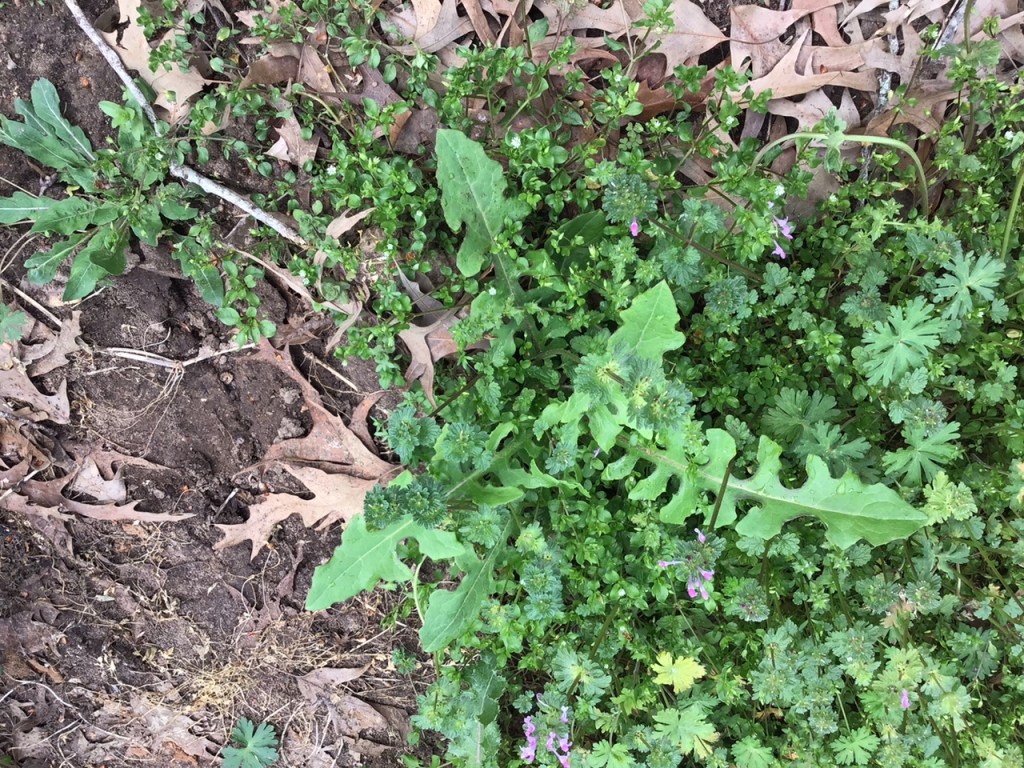
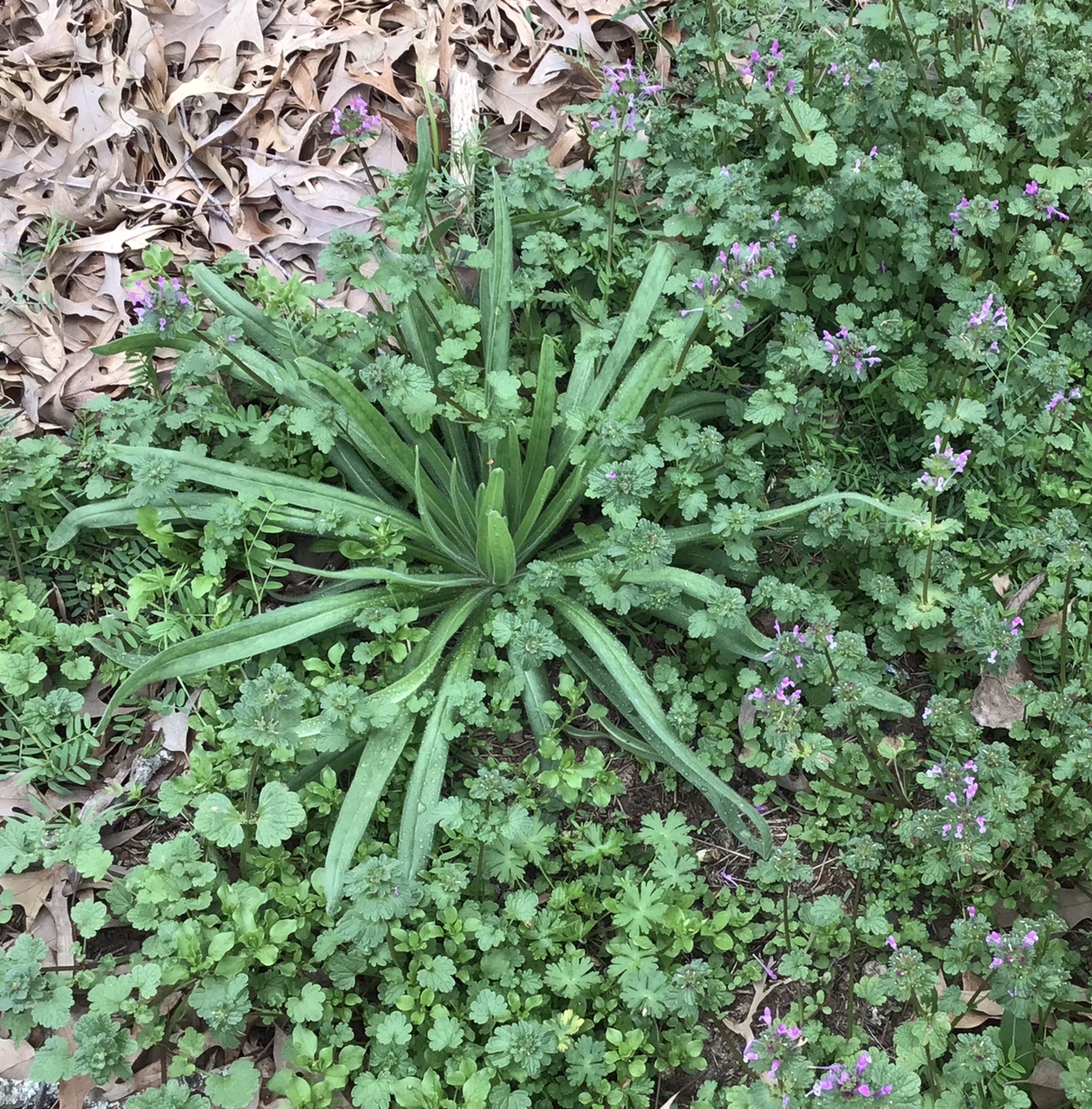
This grows all around us for the better part of the year. I knew the name, but didn’t realize it was edible until recently. I was so pleased to learn that, considering how plentiful it is around here, that I had to dedicate a ‘weed’ page to Spiderwort.
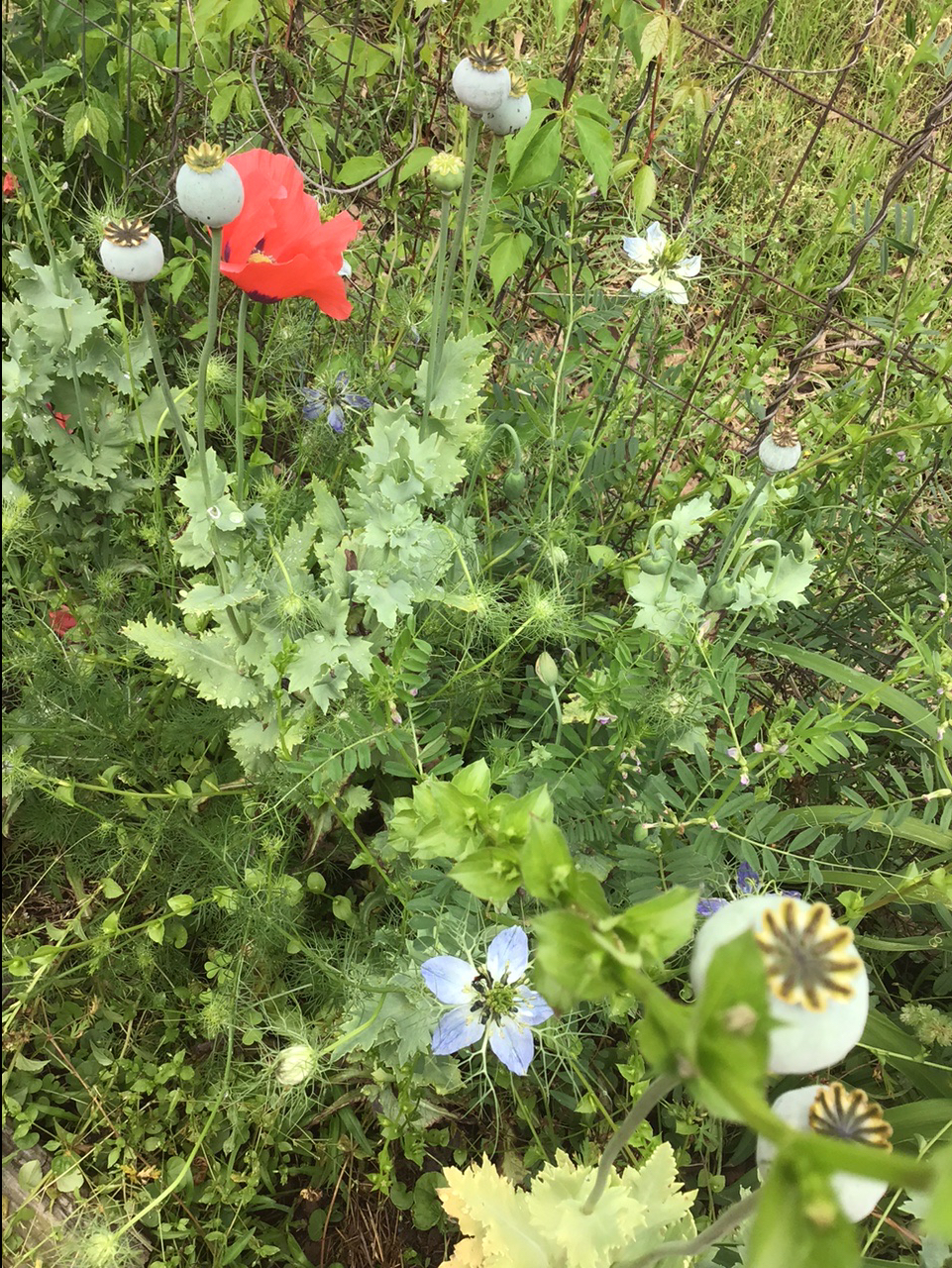
In the garden the poppies have been so gorgeous, I just can’t get enough of them. They’ve been so prolific I feared they would completely crowd-out the nigella, which has such a tasty seed, but blooms a bit later. Luckily, I found a little patch still making room for itself.
The nigella are the light blue, star-shaped flowers here. Their seed has a grape-like flavor and is delicious in bread and tea.
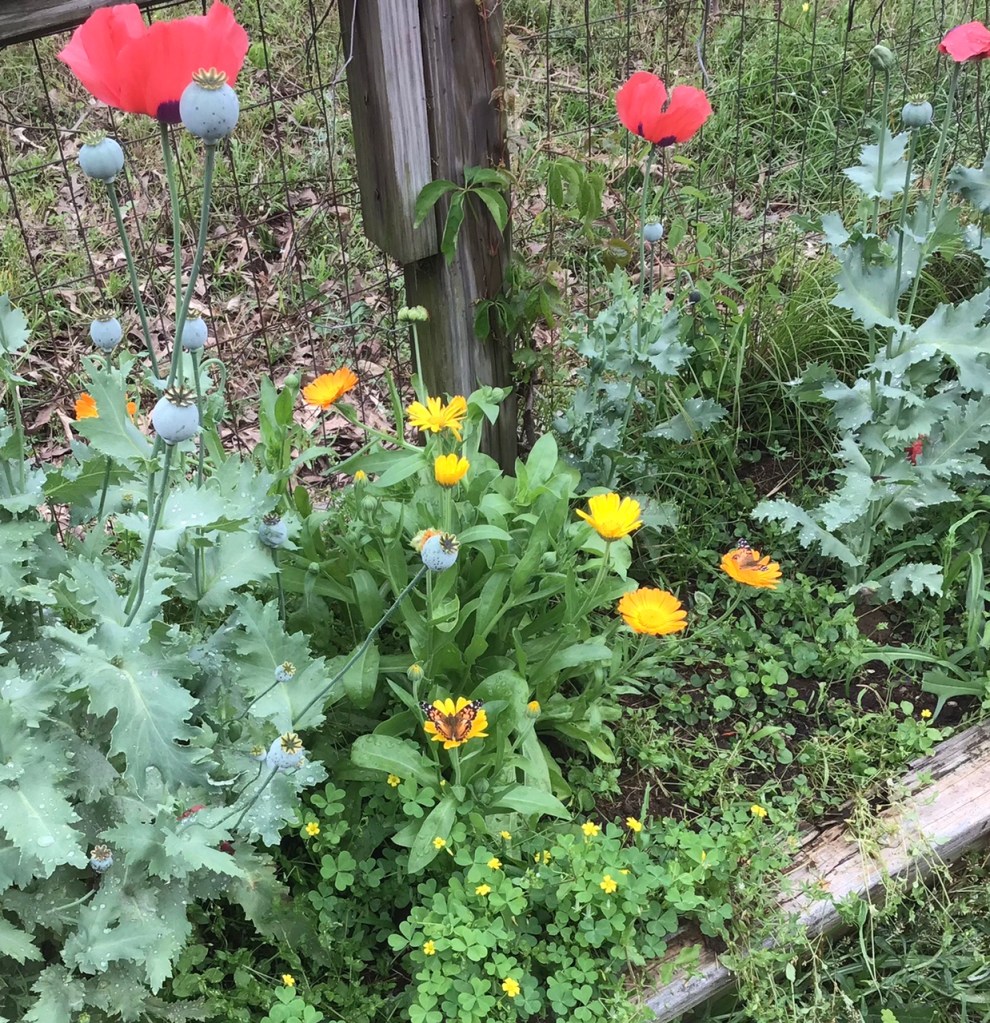
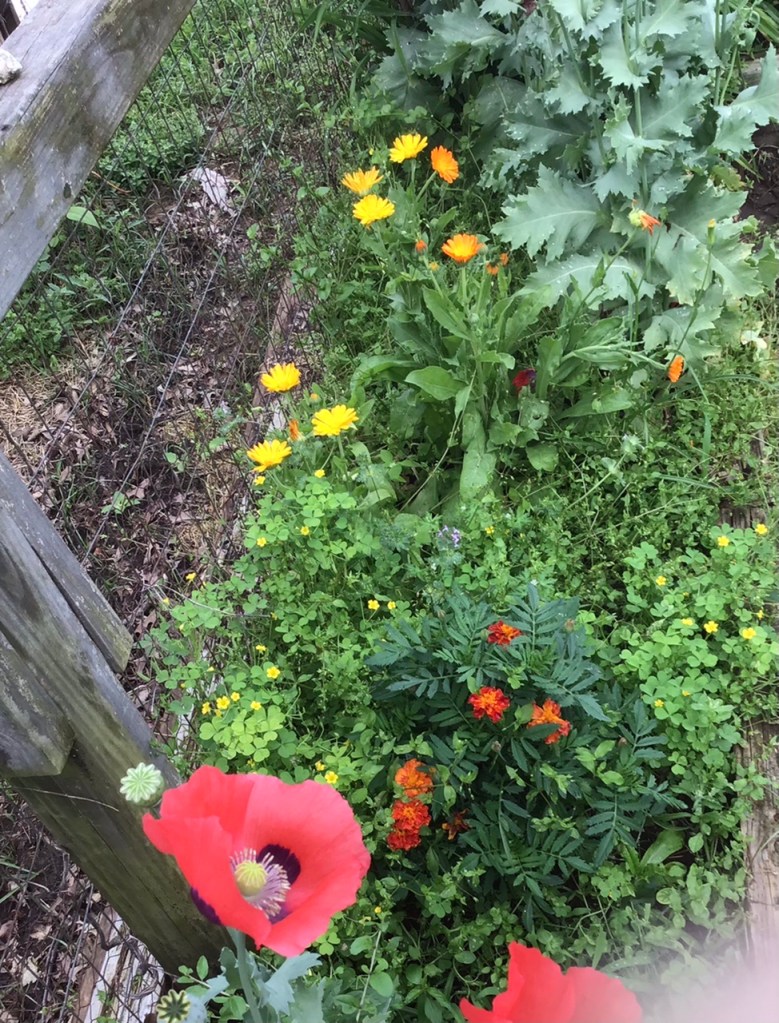
The poppies contrasted with the calendula are simply gorgeous, the pictures don’t do them justice!
Daylilies, another lovely edible. Cilantro blossoms and calendula on left, culinary sage on rightDon’t forget the dandelions! Actually, these are ‘false dandelions’
Lots of life around here, so much so, it’s just about killing me! 😂
Exhausting but exhilarating.
Our bottle baby lamb, Scrappy, is still doing very well. The only lamb I’ve ever seen running towards man, instead of away. Shadow, our recent addition, has completely settled in, even the bees haven’t bugged him in a couple weeks, so that’s a relief.
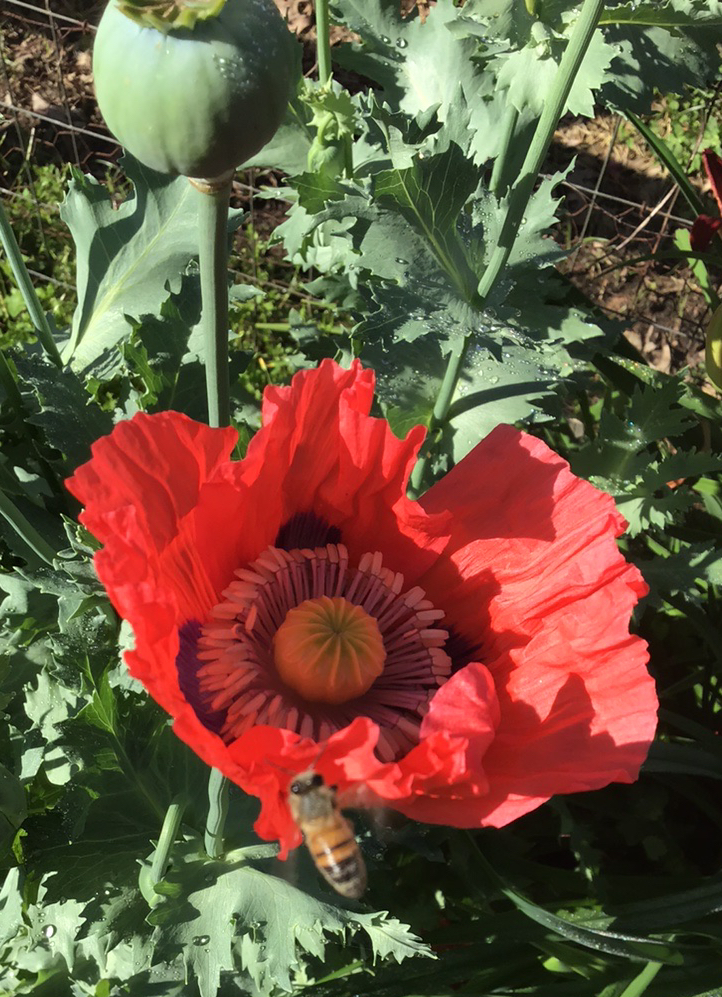
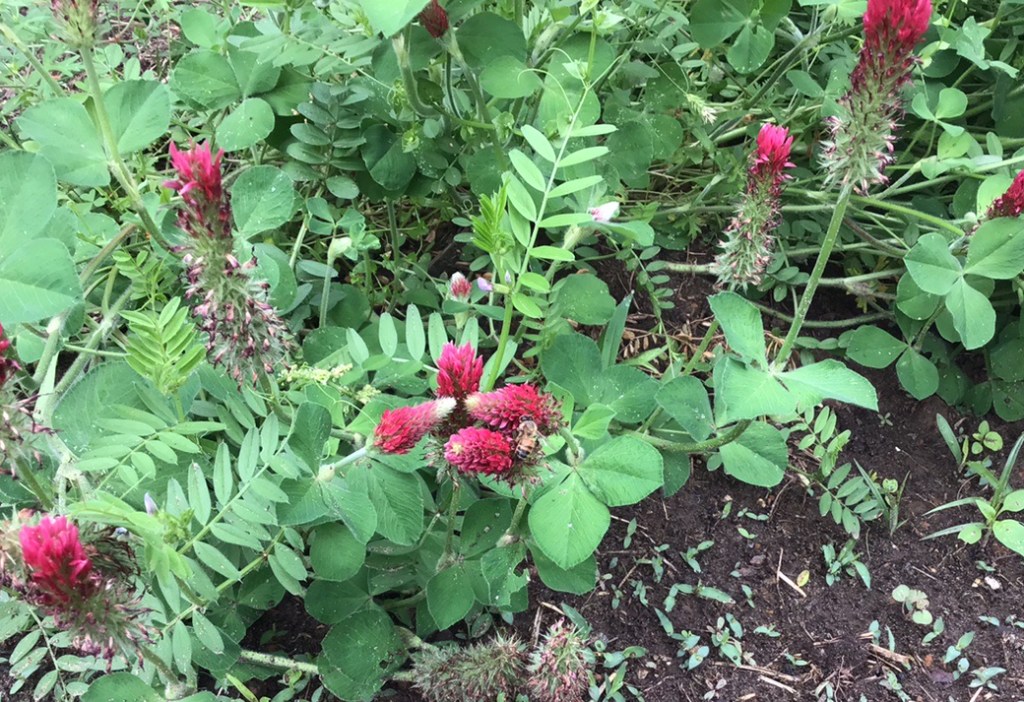
The bees love the poppies at dawn, the cilantro flowers at mid-morning, and the clover after that, as digestif I figure.
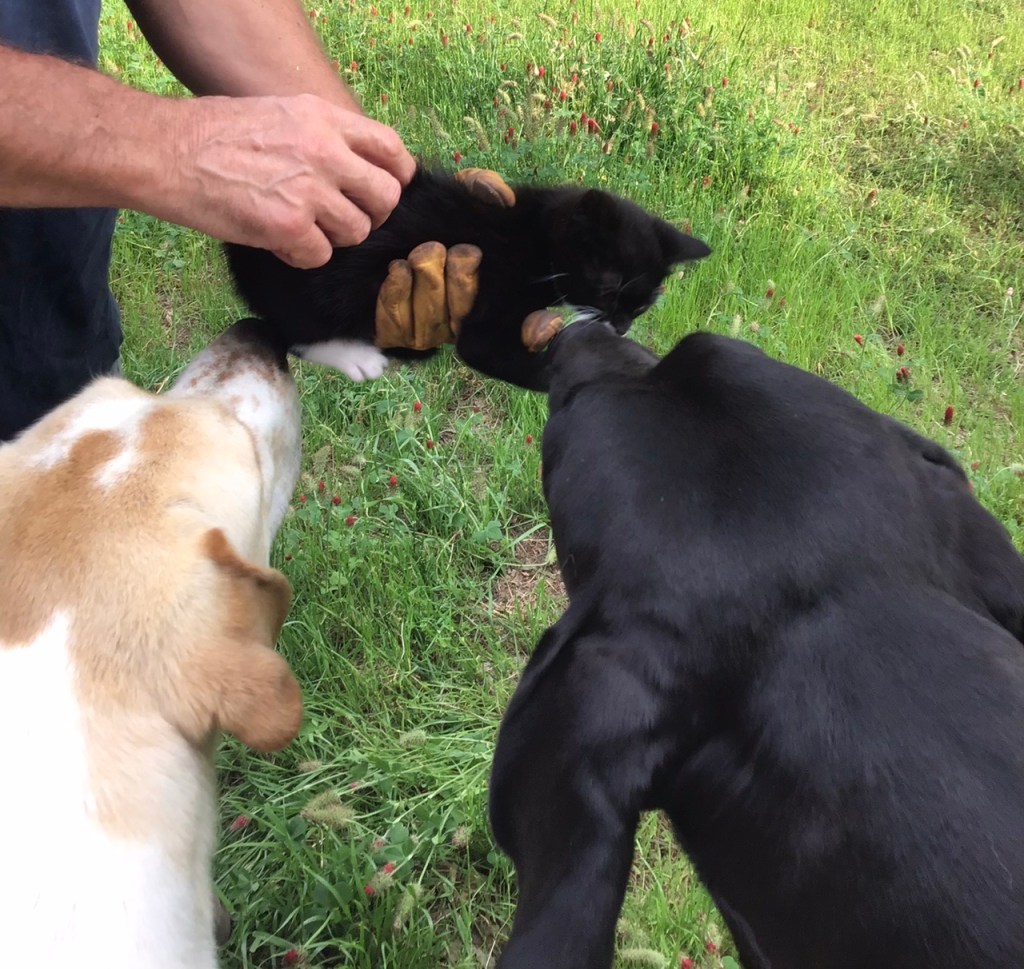
The kittens have gotten so comfortable they are now happily playing on the dog bed and lining up with their mama and the dogs at feeding time. A friend recently commented it’s like we’ve got a petting zoo. Yes, indeed, it seems we do!
The garden is looking great, the best year so far for flowers, which makes me so very happy.
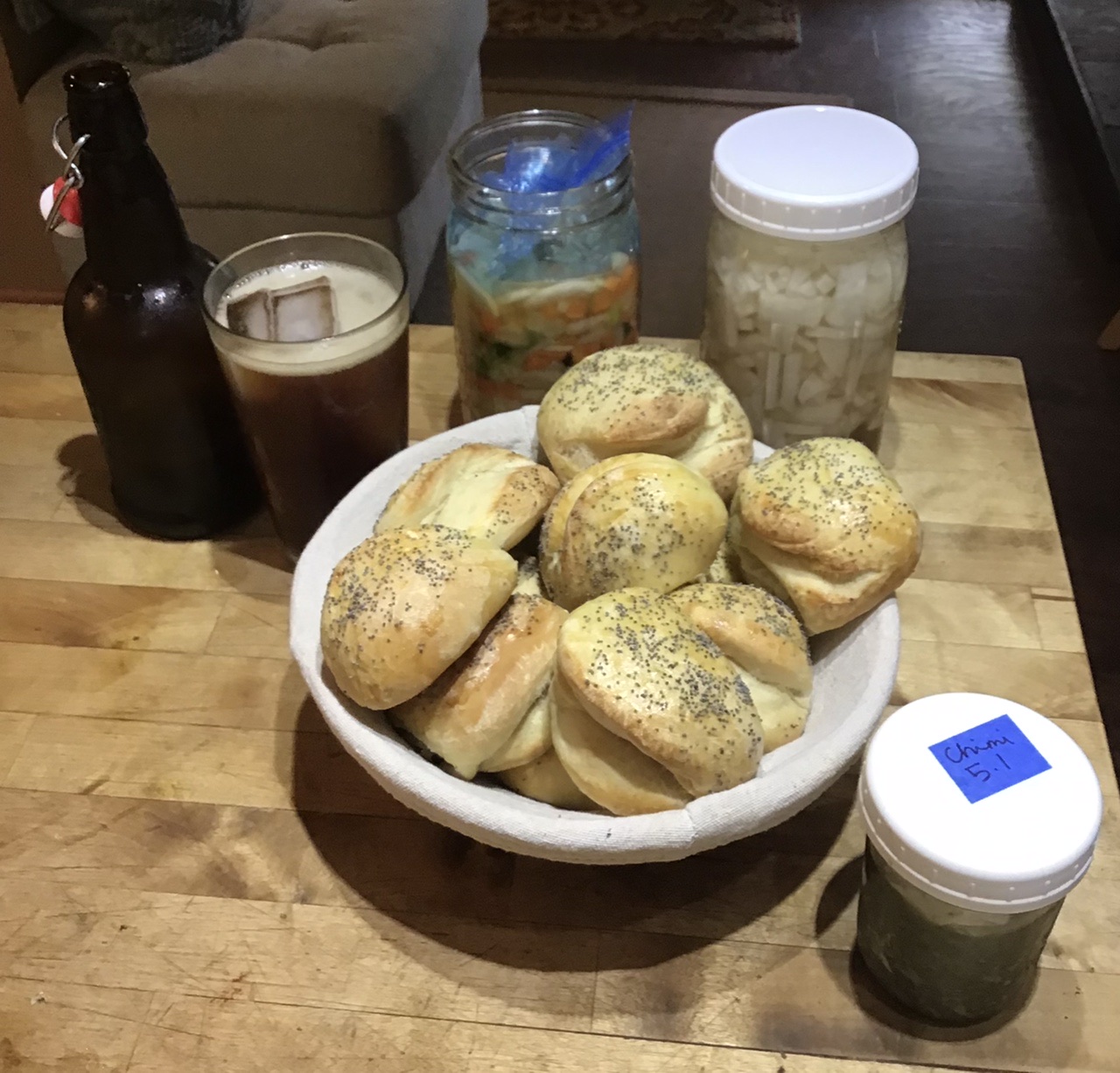
Our hard pear cider, sourdough dinner rolls, chimichurra, daikon radish, and
Already making delicious ferments from the garden produce and the onions are already getting close to harvest. Stay tuned for that excitement.
Shadow’s favorite thing to do in the morning, sit on my lap as I try to drink coffee and read the news. Not enough hands!
Thanks for stopping by!
(FYI, it took me 2 hours to post this, WP seems to have LOTS of issues, deleting paragraphs, deleting photos, not accepting edits. Super annoying. I looked for somewhere else to park this blog, and found no other platform of greater value. I do believe we are witnessing the Walmarting of the blogosphere.)
Mostly happy snaps today, plus one wee tale of woe. Life is flourishing around here, but for two middle-aged folk, it’s getting harder to keep up!
We’ve got kittens and lambs and chicks and some rain and decent temps for a change, that’s keeping the critters and crops and me very happy.
I think the old cliche about when life is giving you lemons should be updated for the modern era. Lemons are already a luxury, after all.
I think it should reflect the shitshow the modern era has become and read: When life gives you shit, make more compost.
And we have LOADS of it at the moment, the good kind that makes fantastic strawberries, not the useless kind, that populates DC.
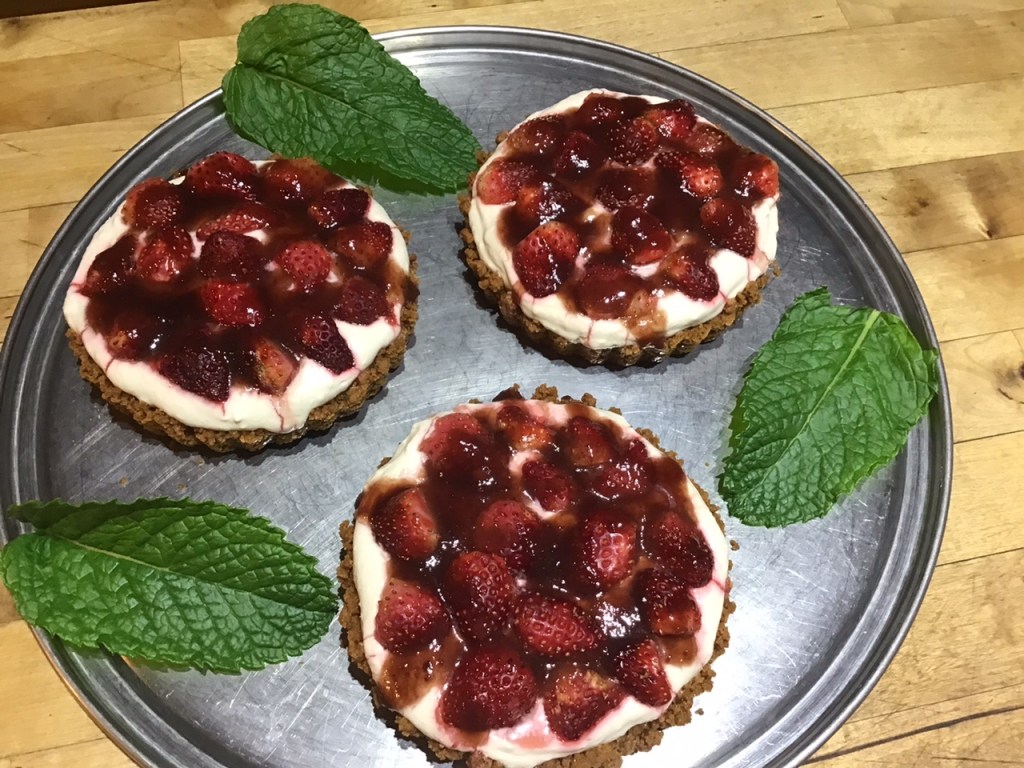
Strawberries making me proud!
Do you care to know how much shit it takes to make carrots and strawberries so good? 😆
Guess what else loves loads of shit?!
And while some homesteading results are obvious— like more shit equals better produce— others remain a mystery.
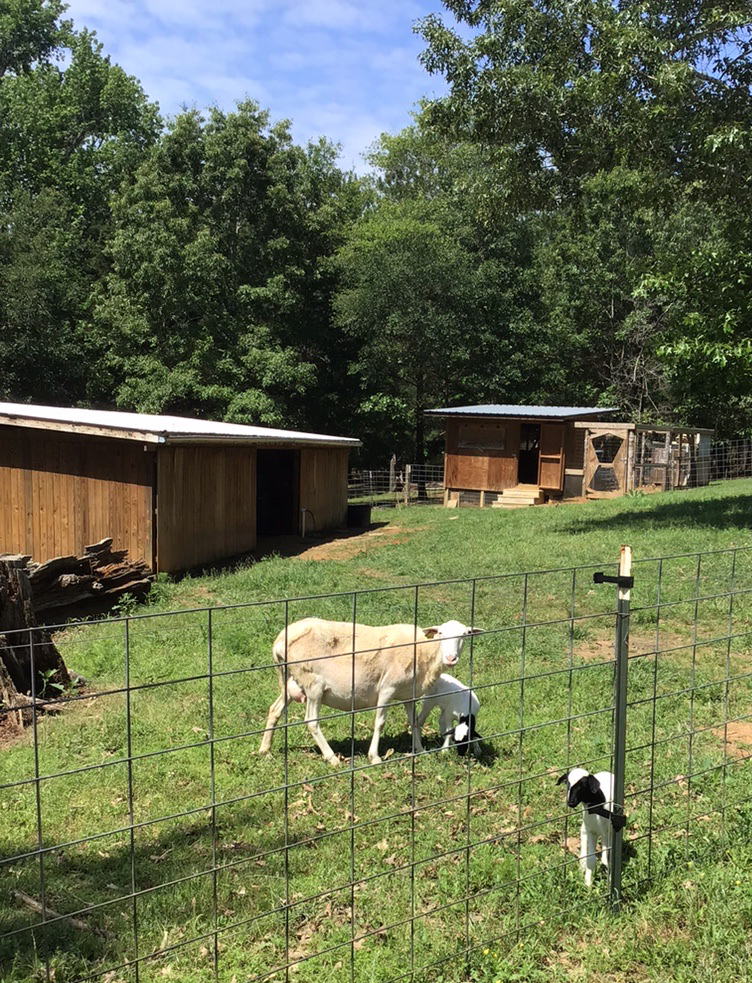
After three perfect sets of twins, we have a reject. It’s one of those very odd occurrences we have yet to experience and it’s confusing because it’s halfway between cute and sad.
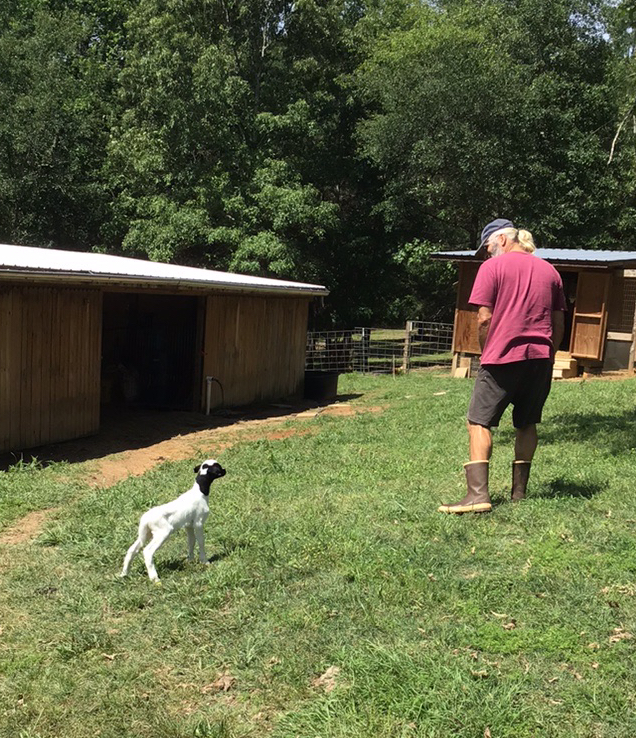
One bad mama has rejected one of its offspring. He’s a sweet, spunky little survivor we’ve come to call ‘Scrappy’ because he’s fighting so hard and it’s wonderful to witness. And also sad, like I said.
Scrappy at the fence as soon as he sees us, not a good sign.
Hubby found Scrappy at the fenceline in the morning not long after birth, already abandoned. But, the sibling lamb and mama were fine and healthy and not too far away.
It’s a mystery because one, he was not just alive, but cleaned off, and very vigorous. And two, because had she cleaned him off, she’d surely recognize him as her other offspring. So, who cleaned him off?
Because she pushes him off immediately at any attempt to nurse. Even still, after 4 days and every attempt we’ve tried. We’ve resorted to holding her down 3 times a day, he at the front end, me at the back end, while poor Scrappy voraciously sucks down whatever he can manage before she out-maneuvers the 3 of us!
Then Hubby goes back to bottle-feed him 3 more times a day.
Of course, he’s not the first critter here to obediently follow Hubby everywhere!
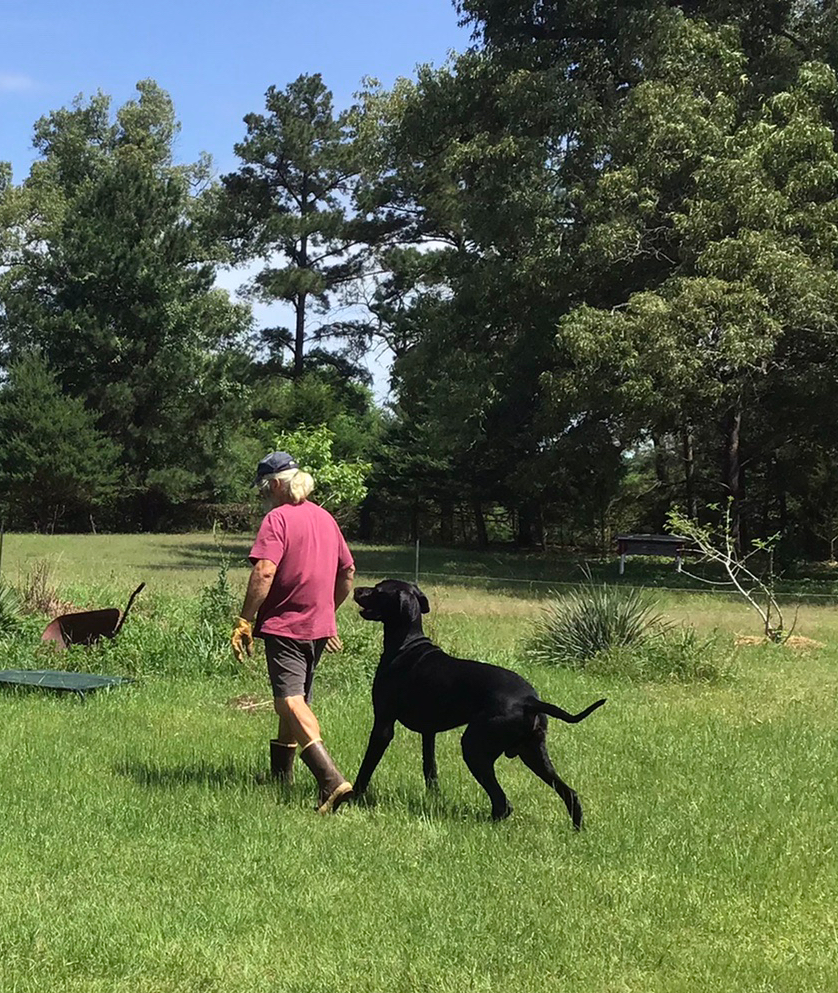
Shadow happily in tow
Scrappy’s getting fed with a combination of powdered milk specially formulated and goat’s milk, thanks to Summer, who I’m still milking from her last freshening, last spring.
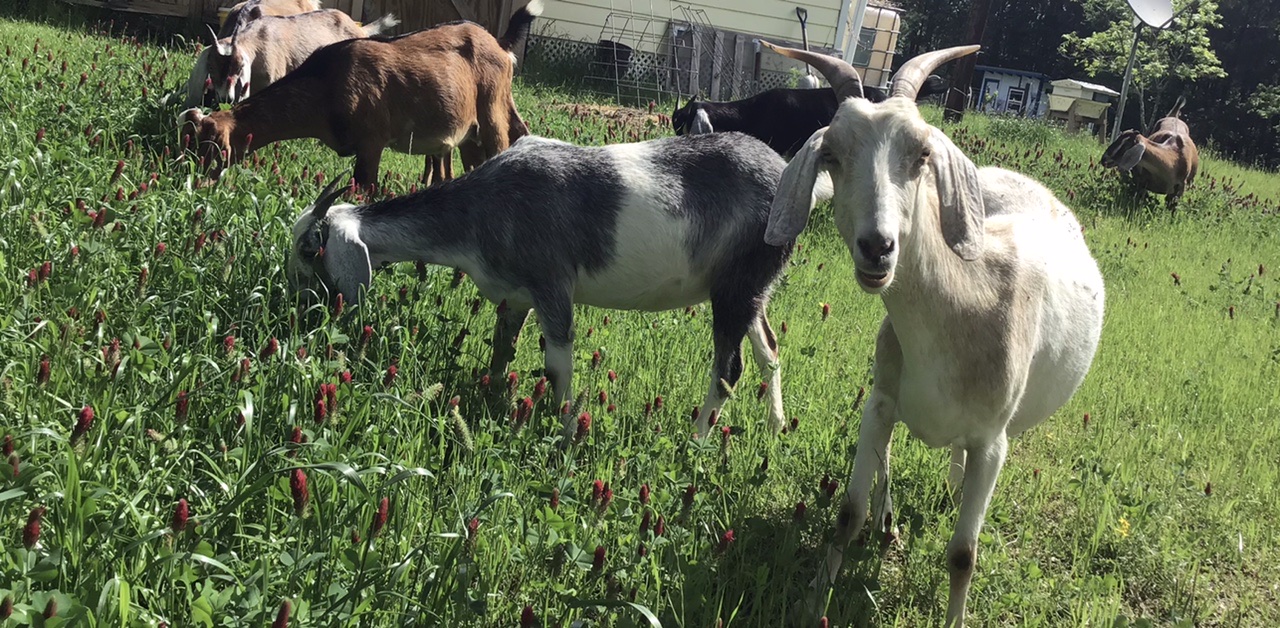
Summer, on right, with her offspring, Bluebonnet next to her. Phoebe below, left, so huge already we wonder if she’ll have triplets!
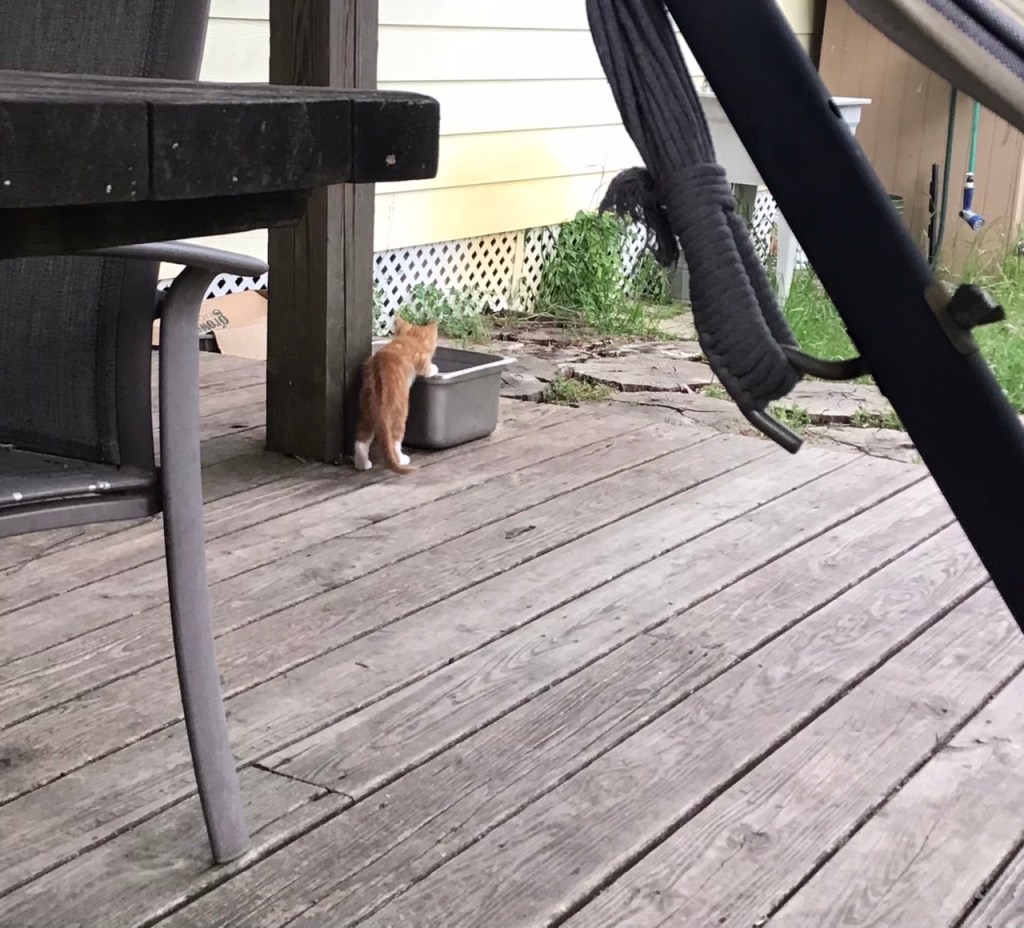
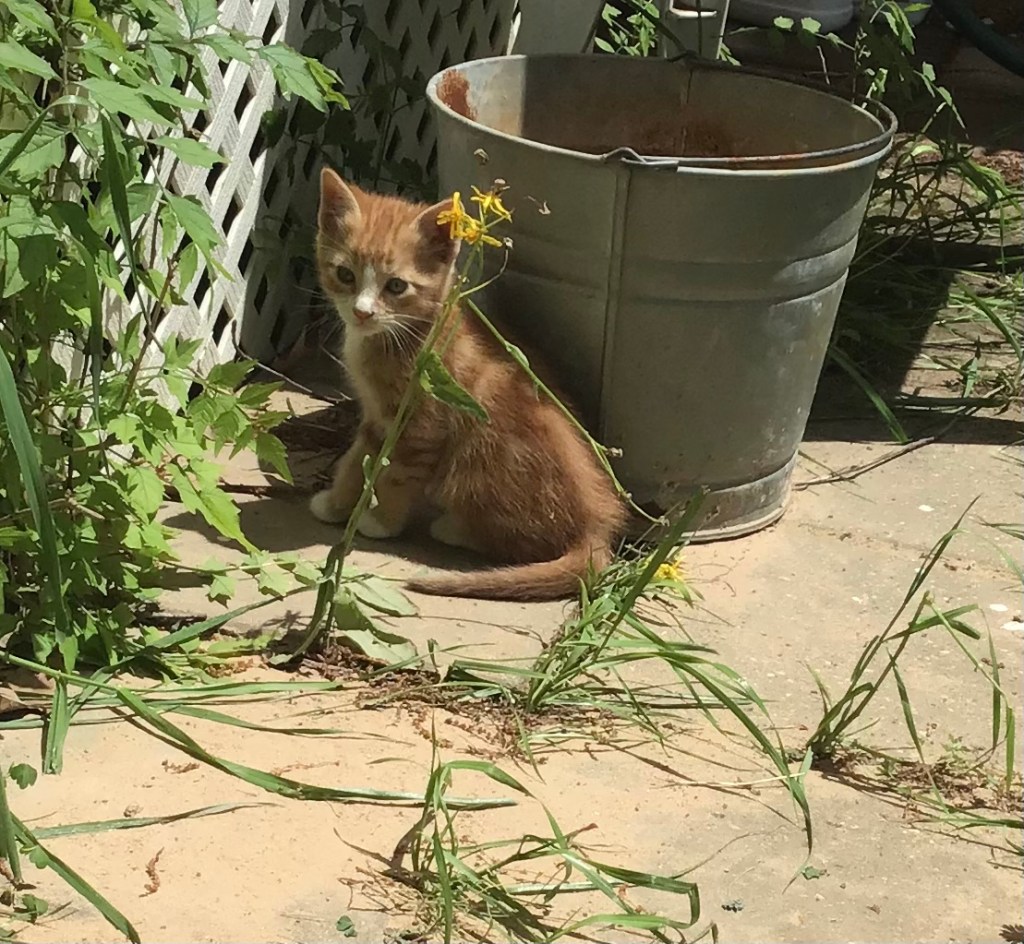
Skittles (below left), looking tough as always, but her kittens are already getting accustomed to an easier life, from the barn to under the porch.
Careful kitties, domestication has its costs, which is probably why Skittles keeps hissing at the hands who feed her. 😆
I just wanted to share some resources I’m frequenting, more often due to mood, rather than necessity. There is so much of the ‘how to’ out there in cyberland, and that’s great, but even better are the sites out there that inspire, motivate, explore, or feel like an afternoon paseo—like taking a walk around your neighborhood.
Sometimes, I look to YouTube, of course.
Sometimes I need the high energy, no-nonsense, look at me, you can do it too attitude of James Pergioni. Little he does applies to our garden—he’s urban and in a completely different climate, but, no matter, because he does what he does so well, and that gets me goin’!
Other times it’s the Zen, graceful, deeply practical, and peaceful even in the city type of gardener, with a simply lovely channel I’d be prone to emulate if I ever made a gardening channel of my own. She lets the plants do the most of the talking and I can sense how she loves them.
Sometimes I need that super practical advice on something specific, so it’s MI Gardener, mostly because he wastes minimal time on chit-chat, my biggest pet-peeve in how-to sites.
As for the paseo I like to hang out right here on WP, 3 gardeners in particular I follow regularly, and I’d probably frequent more, if I knew of more. I don’t like the big box sites, too much noise. I think of these ladies as cyber-neighbors, while I do sometimes get gardening tips from them, I visit mostly just to see what they’re up to lately.
There’s Empty Nest Homesteading, who offers her keen sense of esthetics to the homesteading scene. Here’s her latest adventure in decorating.
And there’s the Re-farmer, who’s got to be the most ambitious homesteader, especially climate-wise, I’ve ever seen. She offers up daily posts with regular garden reports, which that alone is more than I’ll ever do! She’s got mad gumption!
And there’s Eden Unlocked, a young suburban mother who offers Biblical contemplation with some of her posts, quite a foreign foray for me, which I’ve come to appreciate, mostly because I find her to be a quite a unique lady. She and I share a powerful budding interest in learning herbalism, which brings me to my latest offering.
I have posted the first of my Herbal Explorations, Calendula, which you can find by going to the Main Page of Kensho Homestead, in the menu. Each time I’ve posted on another plant, I’ll link it here in the blog, but it will remain on the main page for easier locating. For those who don’t know already, there’s also pages there on Geoengineering Resources and Garden-to-Table Resources.
I’m not sure what to make of it, but I’m sharing this quickie just the same.
A gorgeous day of new life, new moves, and what feels like genuinely natural weather for a change.
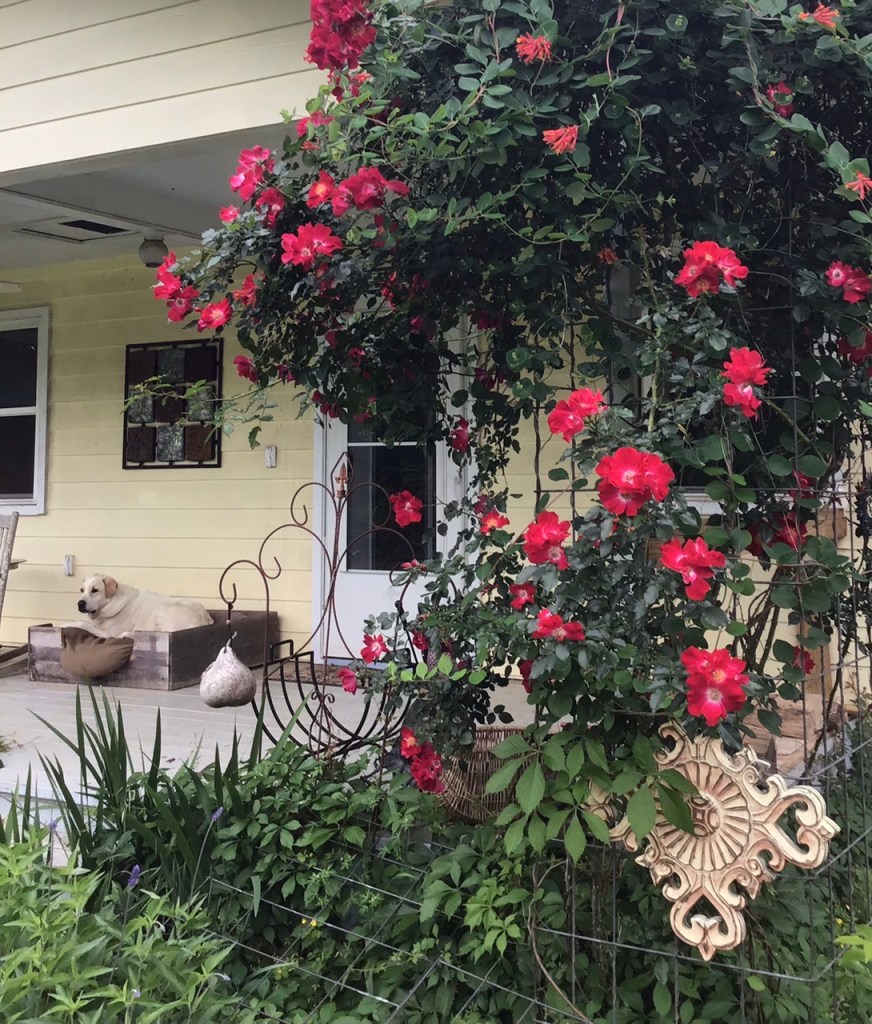
First rose, first poppy, first lamb and the kittens come out to play. 🤗
Just a few minutes old and already knows the routine
And, I expect Geoengineering/weather modification has hit the popular charts, at last, yay!
I will admit I thought this very popular channel must be shills of some sort, because they seemed to be completely avoiding the obvious weather warfare for years now.
Be that as it may, they’ve been clueing in more and more lately, and now, I consider their cherry popped. It’s about time! I don’t know what to make of it exactly, but I do believe in the gaming world it means we’ve just leveled up.
Another big week on the wee homestead! A real treat this time because we have rare video clips of a swarm moving into one of our bait hives. So cool! We really had lucky timing with that one, after another near miss.
Plus, one little piggy already off to market, more to follow soon. And a much better incubator hatching success.
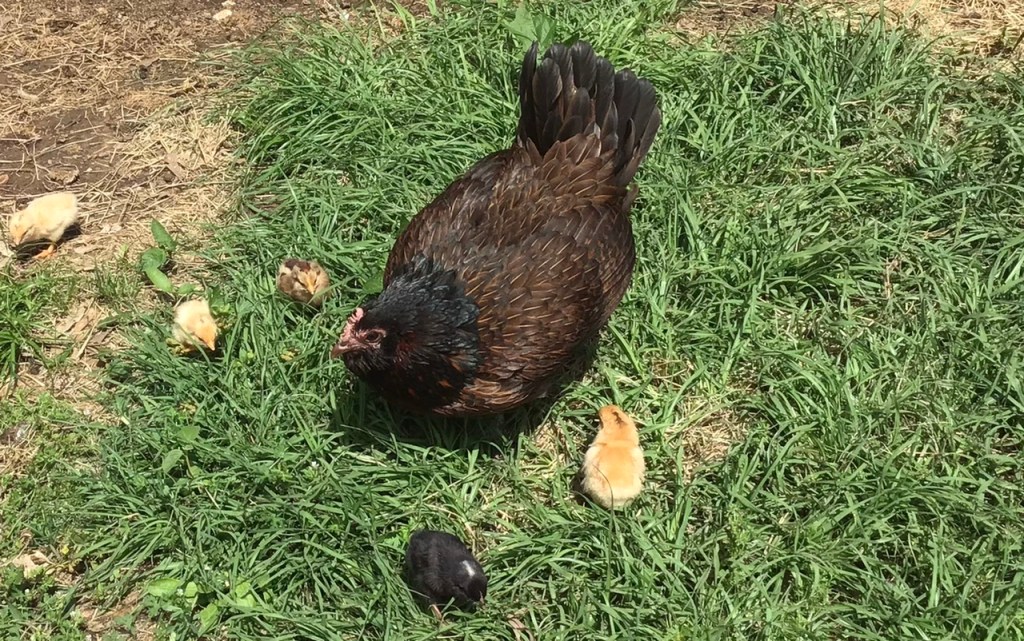
Mama’s pushing them off, which means their days here are numbered24 chicks from the incubator this time, much better than the 9 from last time
In other news, not so lucky, with the timing all wrong, another tree falls. And still other news, we continue to wait for rain, annoyed and impatient.
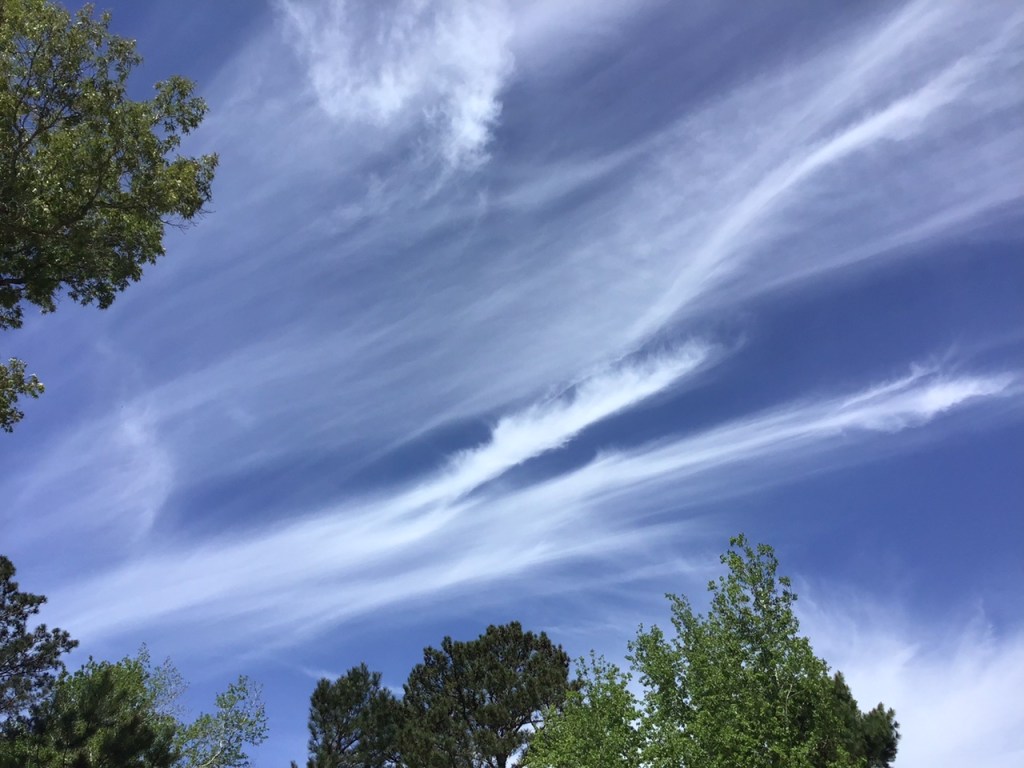
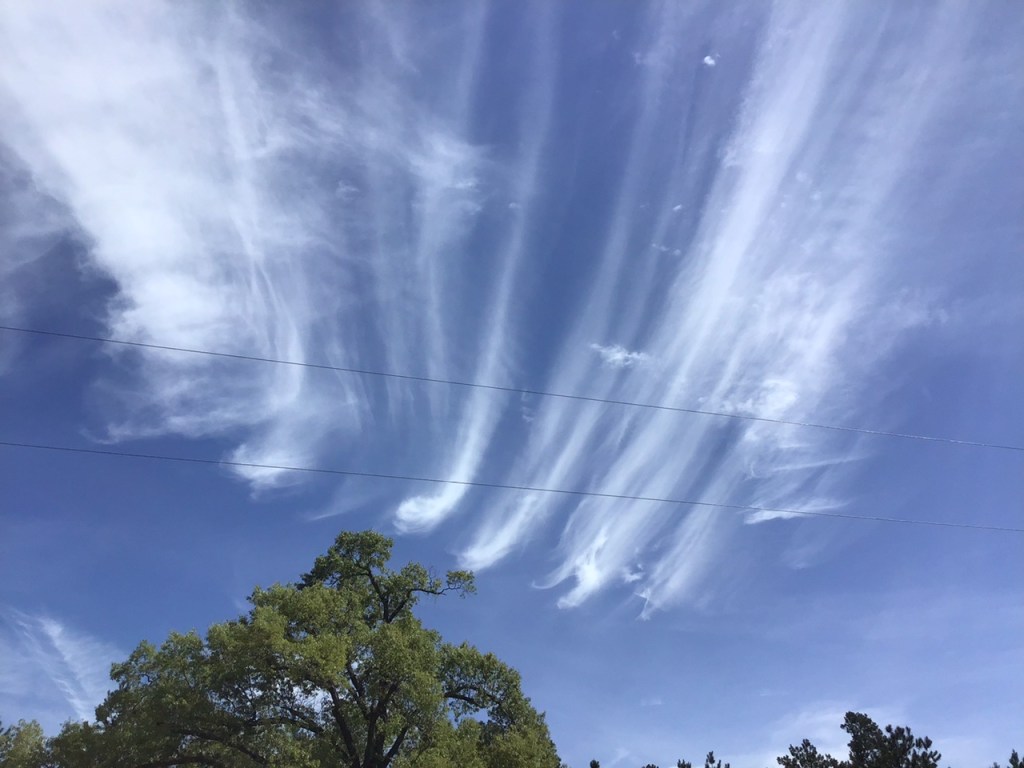
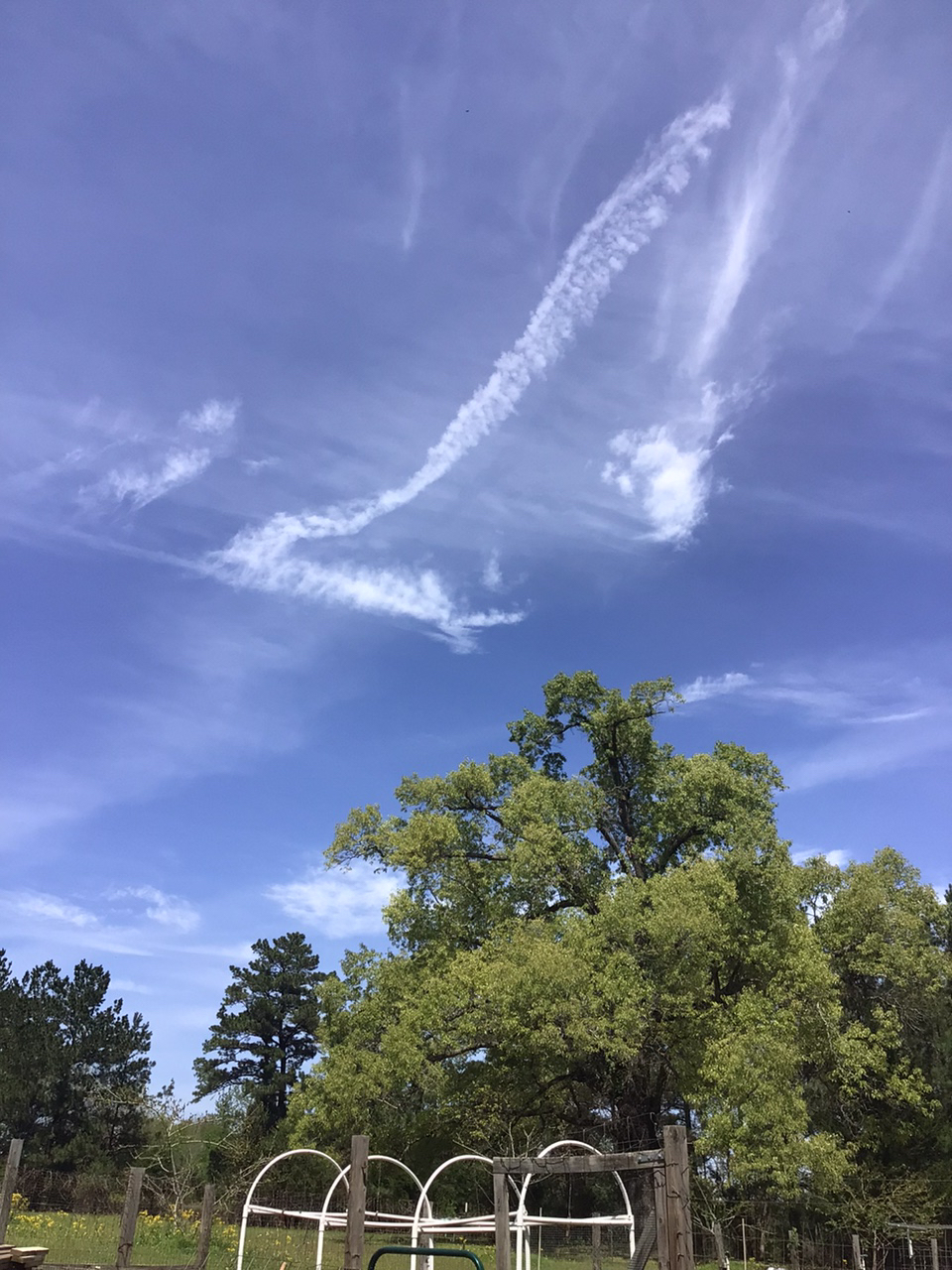
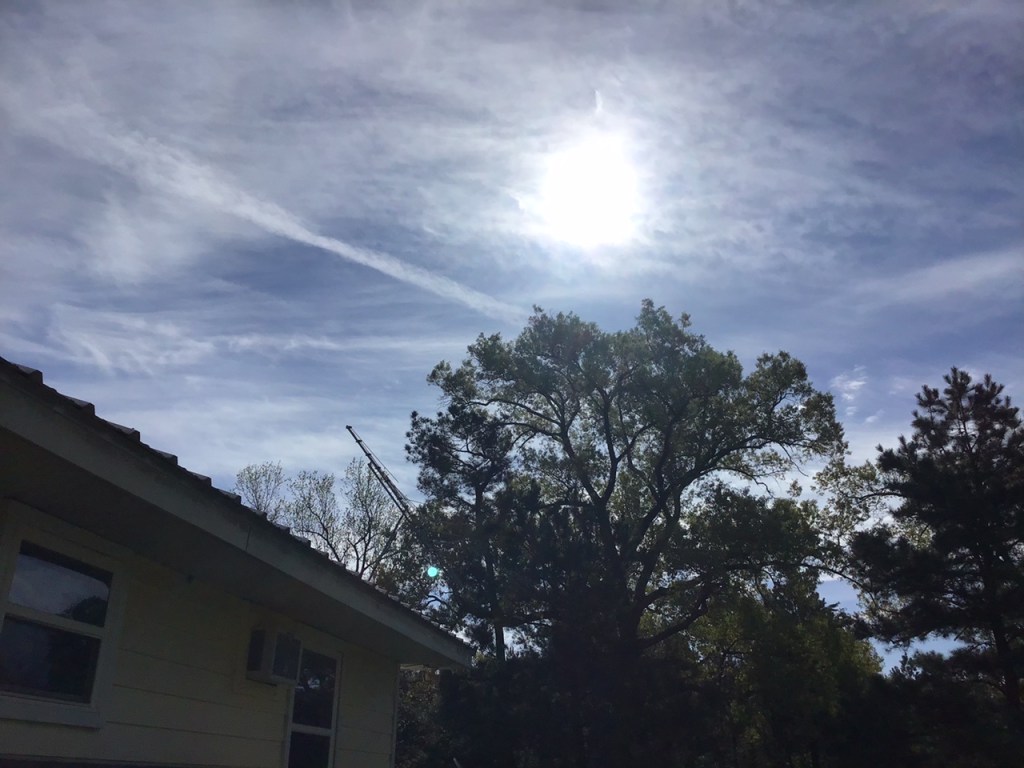
Just another day of hazy chemical filth
Best to start with the bad news first. The New Normal manufactured weather continues to rob us of rain while pouring chaos on regions nearby.
It’s not only only ugly, toxic and altering the entire hydrological cycle of the region and beyond, it’s weather warfare! I could spend a lot more posts bitching about it, but I ain’t got time for that.
A friendly young couple and their son came by for one of our piglets and we spent a nice time chatting and it was surprising—as in both unusual and pleasant —to have so much in common with folks who superficially were very different from us — much younger, still working, four children, active church members —yet we could hardly stop yammering on about homesteading life after an hour. And then a good bit more after that!
Each attempt at continuing on with our many chores of the day interrupted by some new spontaneous and urgent topic—and all my favorite ones—bees, goats, gardens, kombucha, even cheese.
And, the young woman looked at me knowingly when I pointed to the disgusting sky and repeated for the thousandth time: ‘Weather warfare!’
She knew! Or at least, she knew I wasn’t crazy for suggesting that. That gives me a lot of hope, because it means we’ve come a long way in the many years I’ve been ranting on about it. She also dared say the not-so-secret buzzword of the decade: “Conspiracy theory.”
So refreshing to listen to these courageous young folks who, when they see the degenerate state of the world around them they don’t send their kids into the state schooling system and cross their fingers hoping for the best, they homeschool knowing, they can do better.
They don’t just whine about inflation, they grow a garden and raise some livestock. They don’t just wait for Jesus to come save them, they become the kind of folks who can save others. Very refreshing indeed—as in—in actual deed.
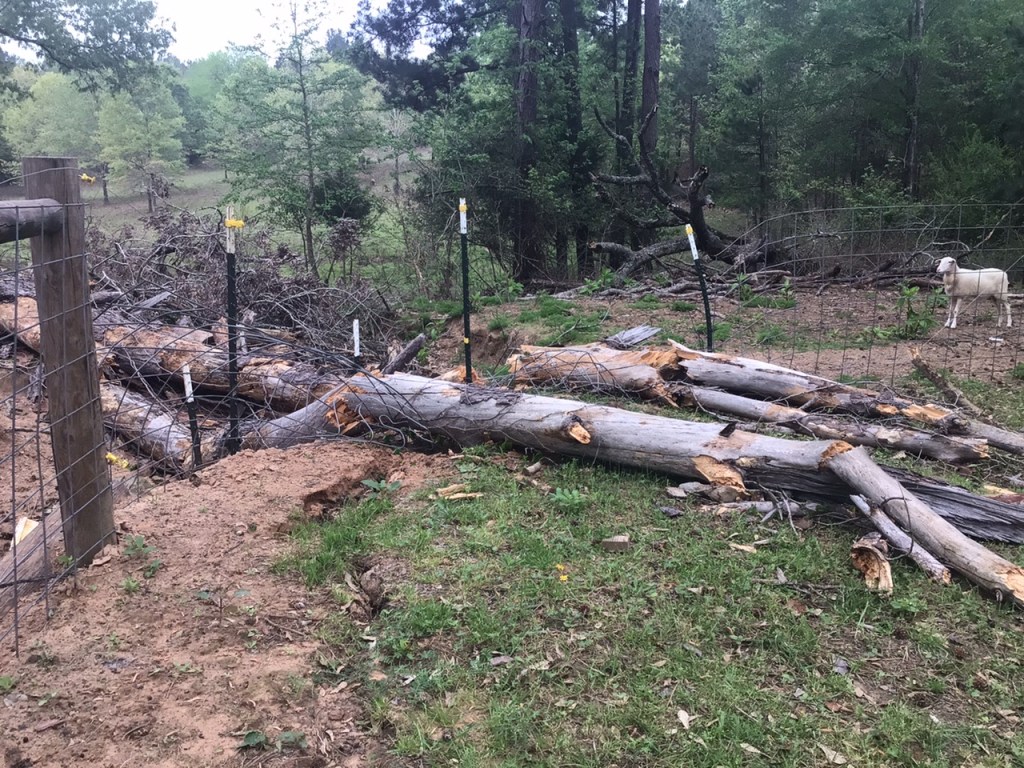
In the story of poor timing, one of the trees killed during the tornado nearly three years ago and still hung up on a neighboring tree, which the goat kids loved to include in their playtime, finally came down in one of the New Normal ‘storms’ where we get everything in the weather chaos of wind, lightening, extreme temperature shifts, but little to no rain.
Of course, it came down right on Hubby’s fence, freeing the brand new ram to have premature access to the young sheep. We fear unwanted teen pregnancies in our future. ☹️
Before and after:
And our brand new ram, expressly kept separate from our too young for breeding girls has sudden free access. Not good.
Back off, Gaston! Our newest addition, a Dorper, to add to our St. Croix flock. A little too soon for comfort. Sheep, unlike most goats, will breed year-round. Keeping critters separated to avoid breeding is our biggest challenge, like most homesteaders.
During our visit with the young couple we pointed out the open-air bee colony, which I still thought was an open-air colony at the time. It was there for well over a week—we checked on it every day.
I had no idea a swarm would stay that long in search of a new home. But then, within just a couple of hours, big things started to happen.
That huge swarm, which I wrote about last week, disappeared, along with the smaller one on the same tree. I actually thought I heard it while watering in the garden, but I never saw anything.
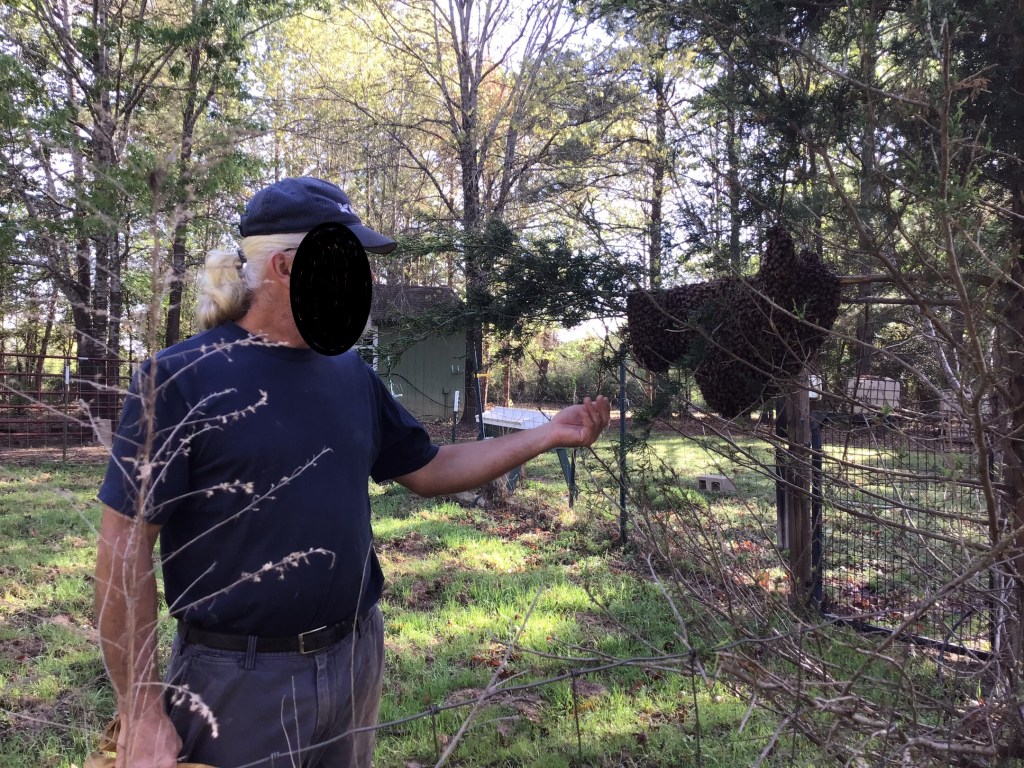
The easiest swarm capture ever! At shoulder height, cast off from the top-bar hive you can see here just beneath the swarm with the white roof.
And then, the swarm we’d just caught earlier (pictured above) that morning and tenderly transferred into a Langstroth hive and put in a location far from the swarm and originating hive, then started to swarm again. *(Why would you prefer your bees to swarm?! See below!)*
I was just frustrated, I saw it happening! Hubby had put on his veil to come help re-situate the frames on the Langstroth but they were already in air. It was an amazing sight to behold, but I didn’t think for a second they’d stop again so nearby.
I yelled to Hubby not to bother to put on his suit, but to bring the tablet instead. The swarm stalled above the garden and Hubby said, between my sighs of disappointment, “Try to follow them!”
I thought it sounded crazy at first, but then thought, why not. And to my absolute astonishment, they stopped at the bait hive that Hubby built for populating our top-bar hives!
That is the second time a swarm has refused my attempts at populating this store-bought conventional beekeeping hive, the Langstroth. But why?
We captured a couple of short clips of the capture—it all happened in about 10 minutes, tops.
It’s so amazing to watch them pile into the entrance, until finally, all are ensconced and occupied with repopulation.
Happy in their tiny house!
It is so fascinating to me to imagine all the social dynamics that went into the decision of that swarm in that short time to move from my preferred space, to their preferred space 150 feet away, communicating in ways far beyond the powers of man.
Luckily, our efforts are all not for nothing! The bees traveled right over the garden where I hope they’ll be spending a lot of time very soon. The garlic is flowering too soon, no surprise in the Yo-Yo weather. The onions are starting to bulb already, but that doesn’t mean we won’t still get a good crop.
Our new dog, Shadow, continues to bring smiles and joy as he gets ever more comfortable in his surroundings.
Thanks for stopping by, Bye!
*Bee swarms, more info for the interested* For those embarking on treatment-free beekeeping, we are the ‘anti-vaxxers’ of the beekeeping community. Swarming is a natural and healthy process of established bee colonies. Interrupting this process by taking ‘splits’ on hives in spring is the preferred industrial/commercial method. However, for the hobbyist, conservationist and connoisseur it is known that it is better to trust the bees and to limit synthetic intrusion on their natural processes. The bees have chosen their swarm companions, not me, as in a typical split. They have chosen their queen, not me, as is the case in typical industrial methods. The swarming process is not only genetic, but also hygienic. When honey production is not the primary aim, it is amazing what we can learn about natural bee behavior. 😊
Feel free to ask questions or share comments on the bees, or any of the other things!
Another big week on the wee homestead! We’ve got a giant surprise addition, a few little mysteries—one since solved—and a missed opportunity leading to a great expectation.
Not exactly a country pace around here lately. Everything bloomed early, we got a killing frost, who knows which fruits might still make a come back. No, not Mother Nature, please stop thinking that!
Just another day of chemical haze.
But, life goes on, at least for the moment, so on to brighter topics!
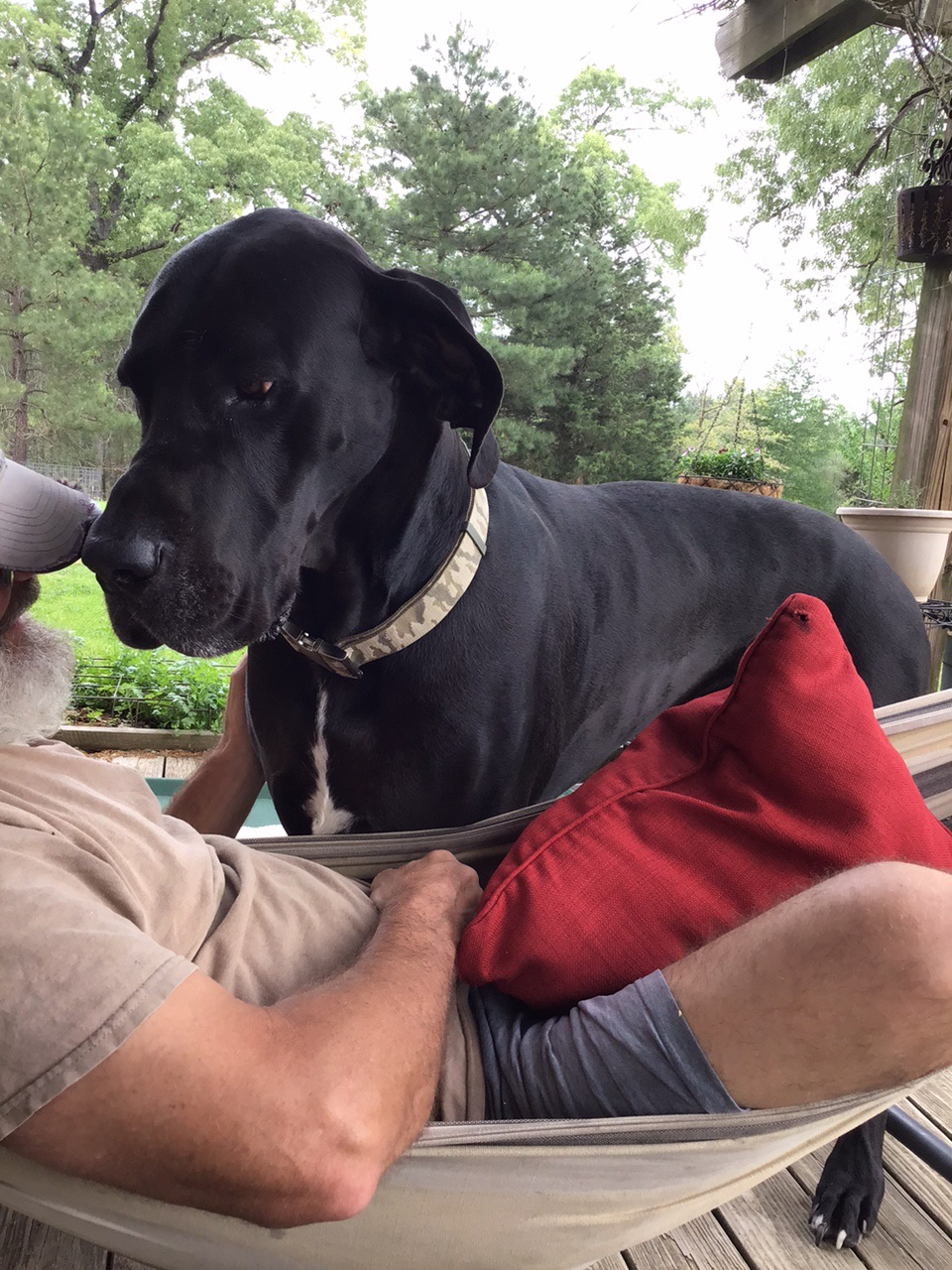
We got a big surprise this week! I’m pleased to introduce you to Shadow, our new 3 year-old Great Dane.
It was a sad circumstance that brought him to us, the death of his owner, but he’s settling in splendidly and we are so happy to have him.
In a way he’s like a combination of our 2 passed beloved dogs, Tori and Papi, both in one.
In garden news I decided I couldn’t wait any more to get all the seedlings planted, so if it frosts now, we’re fucked. Please pardon my French!
Seriously though, I remember one year when we first came here and were still camping and building the cabin. After everything bloomed, all the Indian Paintbrush and Dogwood and Texas squaw weed and bramble, it snowed, on Easter weekend.
I wasn’t a gardener yet, so the frustration was lost on me. That was about 15 years ago and I remember I took a lot of photos, because it was quite beautiful to see the white blanket atop all the colors. No idea where those photos are now.
Now I’m sure it would be the beauty that’s lost on me if it were to occur again!
Tomatoes, from my own saved seed, going from under the lights indoors into the garden and now subjected to man’s crazy YoYo weather.
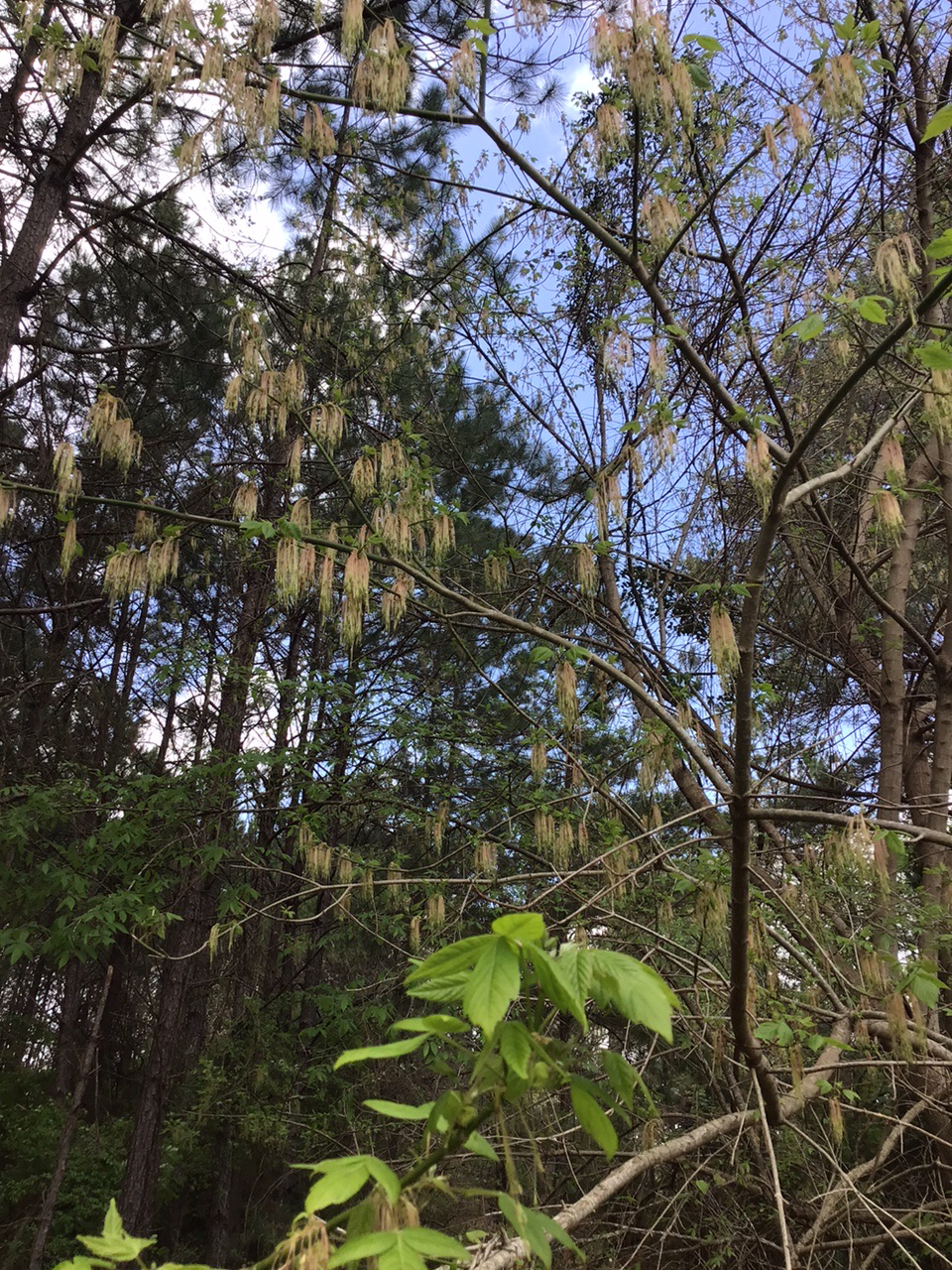
The bees are all over the bramble, which is readily recovered from the frost. As I followed the buzzing trail, I happened upon a tree I’d only noticed last spring for the first time. It was full of bees and not so common for this area, which made me very curious. I’ve been searching and inquiring for the last couple of weeks and finally got my answer.
The bees are all over the little fringey bits
It’s a unique member of the maple family called ‘Boxelder’ that’s not considered a particularly prized tree around here. Though in my book, if the bees like it, I like it!
And speaking of bees, we’ve had our first swarm! I figured it was about that time and have been keeping an eye and ear out for one. Unfortunately, it was too high up and my first two attempts to shake them down into a hive failed. By the time I’d gone back with another plan in place for their capture, they were gone.
But! On the same tree, further up at about 30 feet, I spot another one! On the left is the small one, in the middle is the big one, on the right is the pine tree with both of them, with a hive under each one hoping to capture them.
But the scouts had other plans, and off they went to somewhere else, not to my waiting and welcoming hives, move-in ready, with already drawn comb waiting for new arrivals.
That is, the small swarm.
I know it’s so hard to see in the photos, but the one at 30 feet is HUGE. And, it hasn’t moved now for 3 days, which would be unusual for a swarm. So, my great expectation is that we’re actually looking at an open-air colony! If so, I’m so excited, and will be reporting back on it’s progress.
I found this short clip of a lady who had an open-air colony in her garden, so amazing to see! Such a mystery are the bees to us still—the wildest wisdom of nature has yet to be even touched by science.
Like, how, why, and when do the bees know when to stay put and when and where to move on?
And here’s another burning question: Why are the Japanese bees so sweet and gentile, and why the so-called Africanized bees so very aggressive and nasty?! Now that’s gotta make you wonder, no?
And why can’t I say that without sounding ‘racist’?! 😂
Below is from a friend’s ‘Africanized’ colonies, but we also had such colonies a few years back, and I’m telling you, they are MEAN! They’ll sting en masse right through your suit and chase you down for half a football field just for the offense of standing nearby!
I understand it’s different for everyone. Not only that, but it’s different for any one individual in different times and at different stages in life.
What’s considered a high quality of life at age 19, differs greatly from one of 49. Or at least, we can hold out hope.
As one example, in the past I said I wouldn’t ever want livestock beyond chickens, for a couple reasons that seemed very significant to me at the time—I was scared of the responsibility of life and death for these precious creatures, and I didn’t want to feel ‘a prisoner’ here.
Now I am fully on board with the responsibility, and I can rarely whip up a desire to leave our wee compound. My notion of who is the actual prisoner has shifted significantly.
When I hear criticisms—and there are plenty—aimed at the growing number of homesteaders, survivalists, preppers, back-to-the-landers, I’m not bothered. They can slur us with their derogatory terms like Luddites, subsistence farmers, backwards, selfish, hoarder, bitter clinger, extremist, even, violent extremist.
They don’t know. How could they? I can forgive them their ignorance. For as long as I believe it to be genuine ignorance. Those who are genuinely ignorant are thankful when presented with an opportunity to learn.
“There is a cult of ignorance in the United States [that] has been a constant thread winding its way through our political and cultural life, nurtured by the false notion that democracy means that “my ignorance is just as good as your knowledge.” – ~Isaac Asimov
My definition of a high quality of life changed significantly over time, and I can hold out hope for them as well.
That is, until their powerless slurs become serious impediments. My choice of a quality lifestyle does not harm them in any way. However, their definition of one severely hampers mine which, over time, makes mine quite impossible.
And that really pisses me off.
Their quenchless thirst for cheap thrills and consumable crap and loot, plunder and pillage of all that’s precious to me is intolerable. More specifically, the tolerance of the majority for abuse of themselves, their environment, the future generations, is outrageous and inexcusable.
“The fecundity and flourishing diversity of the North American continent led the earliest European explorers to speak of this terrain as a primeval and unsettled wilderness—yet this continent had been continuously inhabited by human cultures for at least ten thousand years. That indigenous peoples can have gathered, hunted, fished, and settled these lands for such a tremendous span of time without severely degrading the continent’s wild integrity readily confounds the notion that humans are innately bound to ravage their earthly surroundings. In a few centuries of European settlement, however, much of the native abundance of this continet has been lost—its broad animal population decimated, its many-voiced forests over cut and its prairies overgrazed, its rich soils depleted, its tumbling clear waters now undrinkable.” (The Spell of the Sensuous by David Abram, p. 94)
Unforgettably Unforgivable
While our personal definitions concerning quality of life is unique to the individual and may shift, even quite considerably, over a lifetime, there remain constants.
For example, I doubt there’s a significant number of folks whose idea of a high quality of life includes having their health, wealth or well-being routinely stolen from them.
Yet, we are living in a society where that is exactly what happens and few will lift even a pinkie finger to change it. Few can be bothered even to wag their tongue for one-half minute at the proper authorities for leading them to exactly that wretched level of life: A life fully resigned to blindly accepting the experts and authorities who routinely betray them.
Invariably at some point these folks become so numerous and so delusional and so negatively impactful, that one simply must turn their back on them, for one’s own sanity and the well-being of an entire culture.
I hear far too often how ‘good’ people are just trying to get by and they are powerless against the system and they mean well and on and on and on. Here’s what I sincerely think when I hear these constant excuses: “You don’t know what ‘good’ means!”
If the majority of folks were good, we would not be in this mess!
To not be evil, to not be actively committing evil acts, does not make someone good. It makes one not evil, that is all. There’s a big, long, wide gap between not evil, and good.
Contrary to popular opinion, harmless does not equal good!
This becomes even more apparent in a society where a tiny class of untouchable elites consider themselves to be beyond good and evil.
To be good in such a system requires something of you. It’s not your automatic birthright.
You cannot be serving such a system— one that maintains itself by destroying the health, wealth, well-being and environment of the vast majority in order to serve your own self-interest or that of your corrupted masters—- and still call yourself good.
As the interpretation of reality by the power structure, ideology is always subordinated ultimately to the interests of the structure. Therefore, it has a natural tendency to disengage itself from reality, to create a world of appearances, to become ritual.
Vaclav Havel — The Power of the Powerless
And you can’t call your friends, family, government, society ‘good’ if serving the corrupt system is still what they are doing.
A bunch of happy snaps, a bit of gardening news, a wild-like encounter and some homestead TV for today.
Everything’s blooming and we’re scheduled for frost/freeze at the end of the week! I was afraid that might happen, so have not put out the frost-sensitive plants, though they are definitely ready to be moved.
Not the most elegant set-up, but it works! Thriving under the lights and ready to transplant: tomatoes, marigold, calendula, Moringa, geranium, thyme, Mexican mint marigold, kumquat, anis hyssop
We’ve also kept the row cover handy in the garden for a quick save. A light frost won’t bother much in there now, but a freeze or prolonged low temps would do a lot of damage.
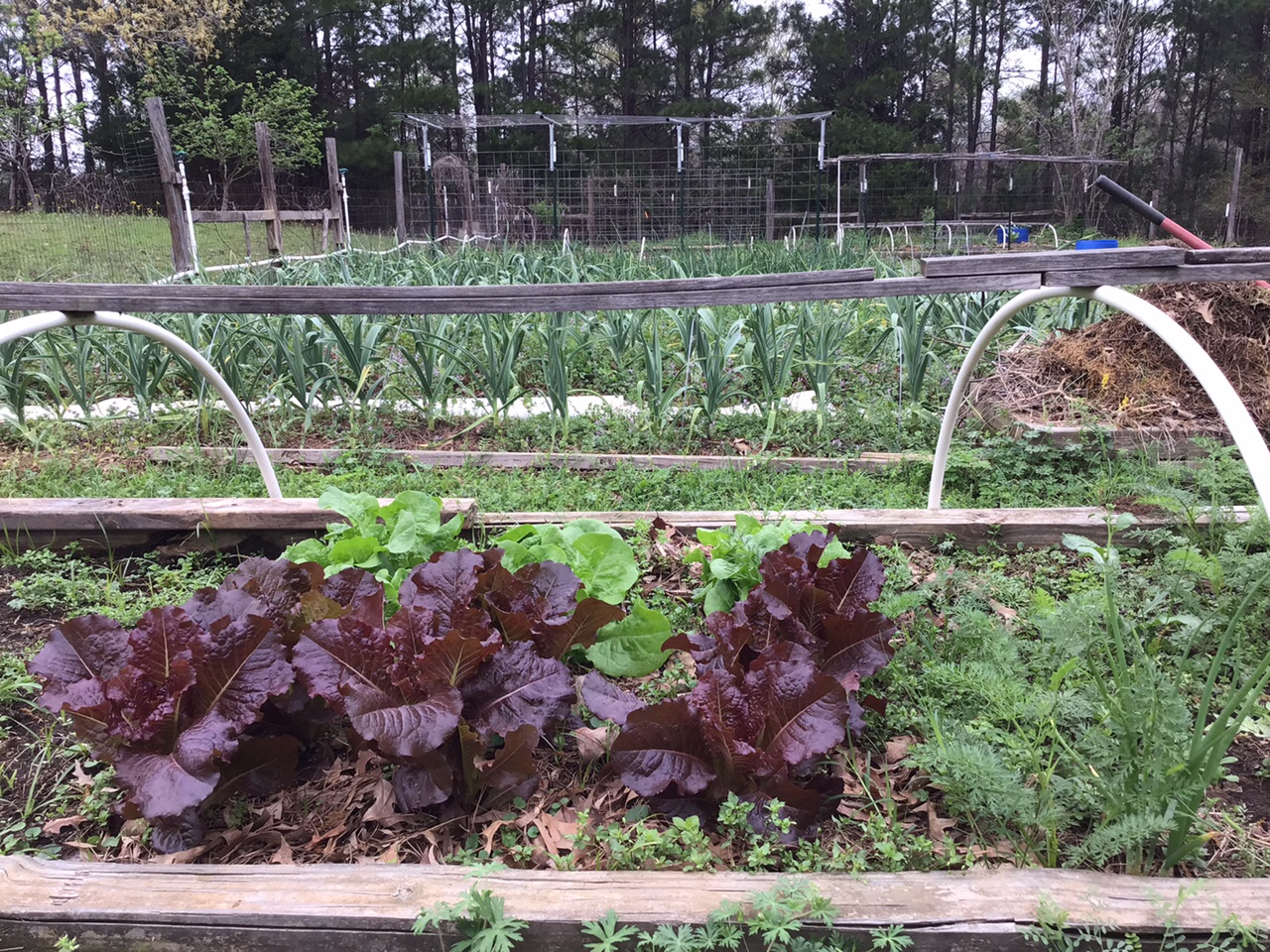
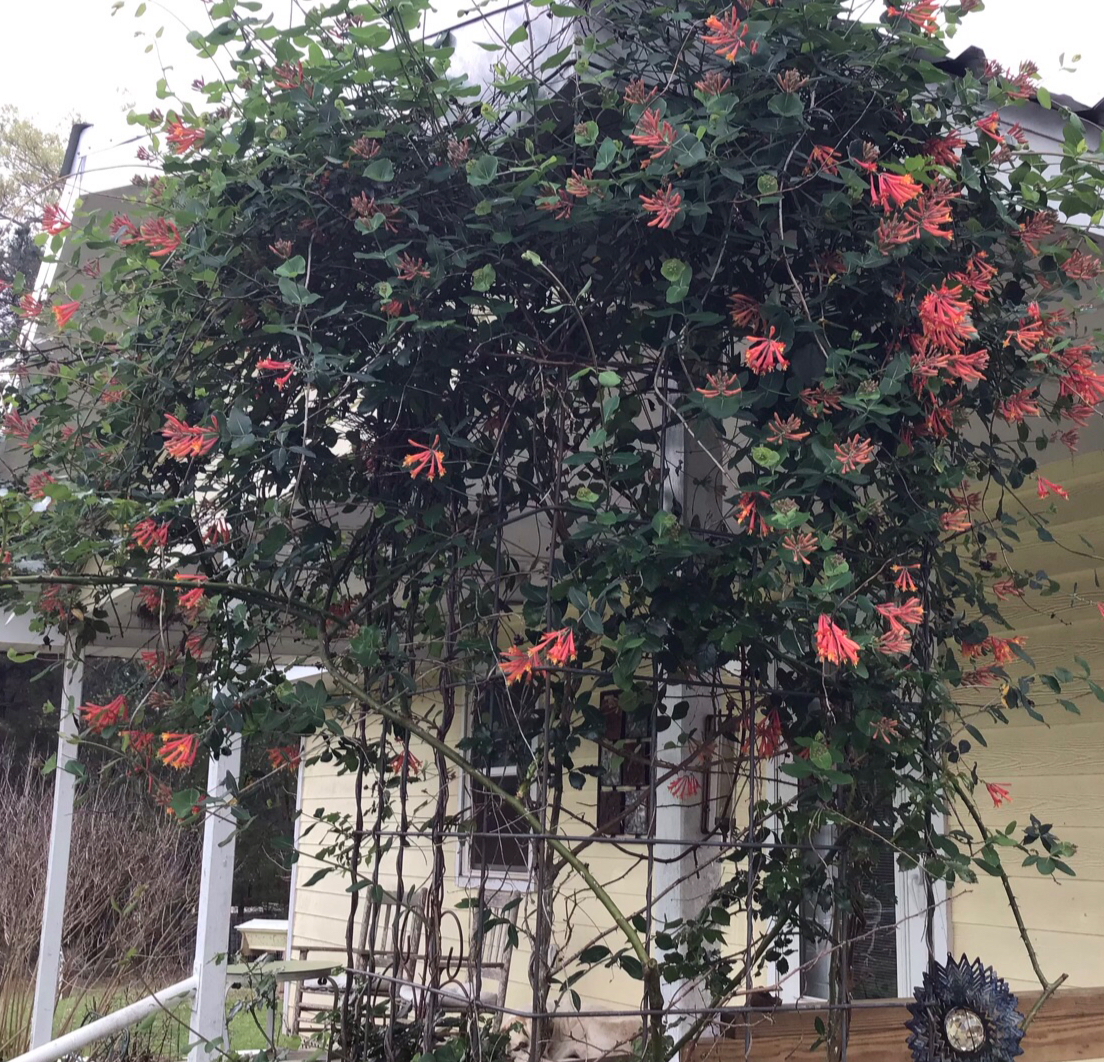
Lettuces, radishes, carrots, a few rows of garlic, then onions all the way back to the cucumber trellis, soon to be planted. First time trying potatoes in containers and they’re looking good!The wild cherries are my favorite wild fruit tree out here, they are super tiny, but the cherry flavor is super intense. Unfortunately, they bloom very early, so we rarely get a crop of them because of late frosts.I’m particularly proud of this pretty plant, Coral Honeysuckle, because like with the cherry, I’m growing them from wild cuttings.
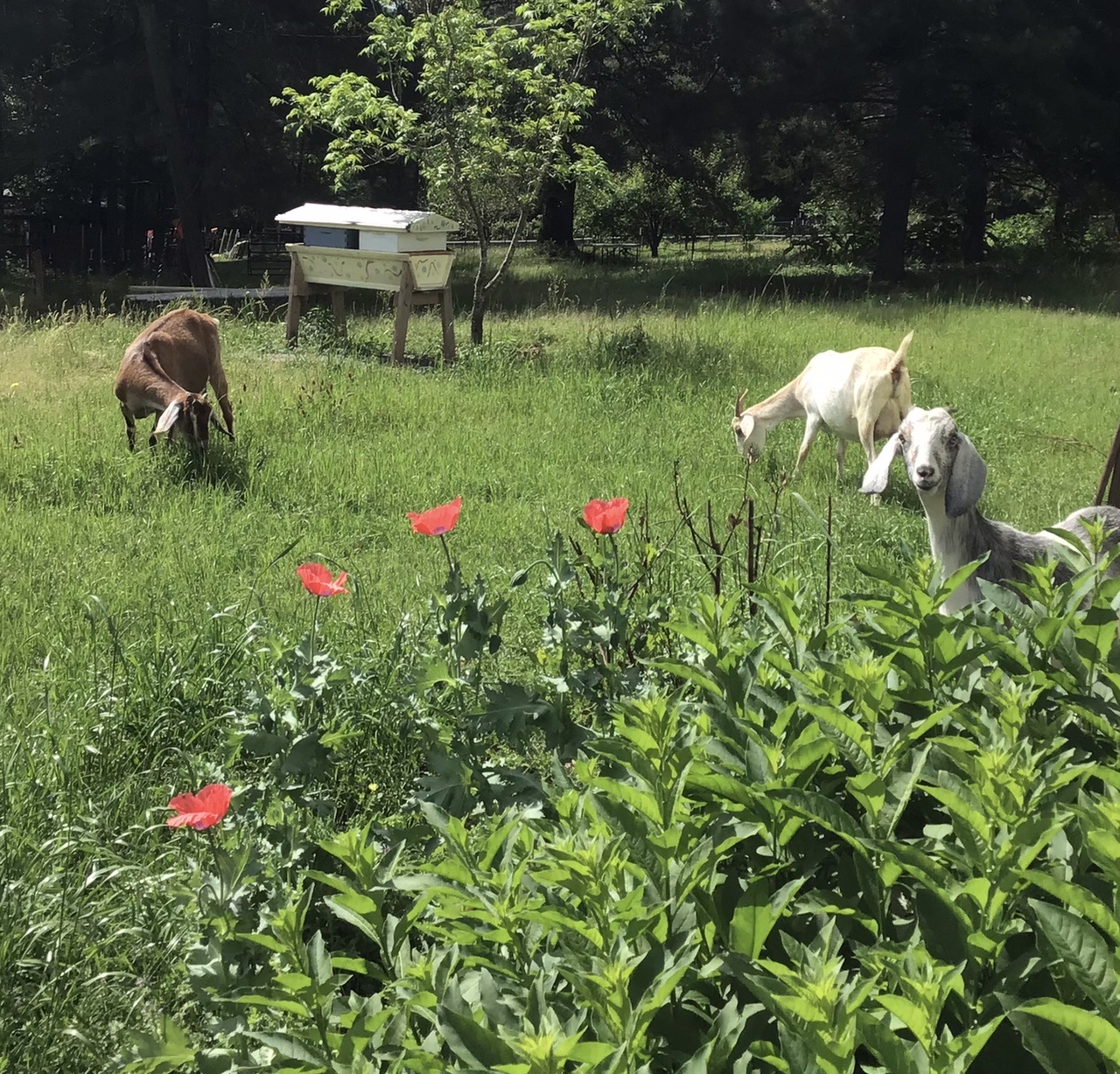
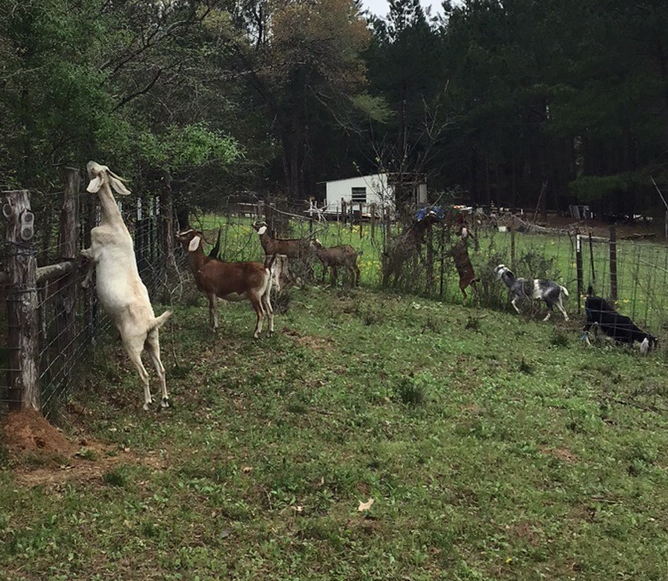
The goats do an excellent job of keeping the fence line cleared, so helpful! We have a boarder joining our wee herd for a while, Broderick, a sweet, young Billy whose owner was sick of listening to his constant mewing. He’s not made more than a peep since coming here, so he must be happy, despite his rivalry with our herd queen, Summer. They’ve butted heads many times, and poor Broderick doesn’t have horns. He’s had a bloody head, been chased around, and he keeps going back for more! So cute but so tough!
That’s Summer, the white one on the left. On the right, that’s Broderick facing the camera in front, and behind him also facing the camera is our whether, Hercules.
Of course, there’s always the dumbbell of the group, and that would be Bluebonnet, Summer’s offspring.
Bluebonnet, the only one to get her head stuck in this fence at all, and to show off, apparently, she does it 4 times! Each time having to be rescued by Hubby, thankfully working nearby.
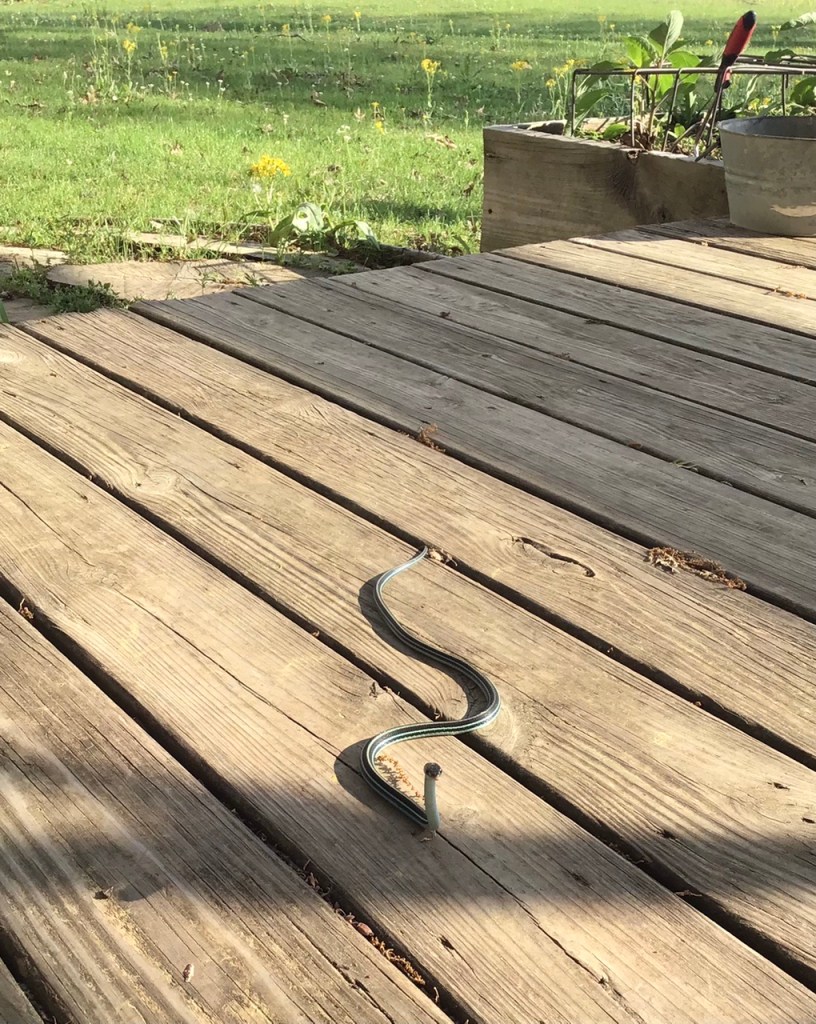
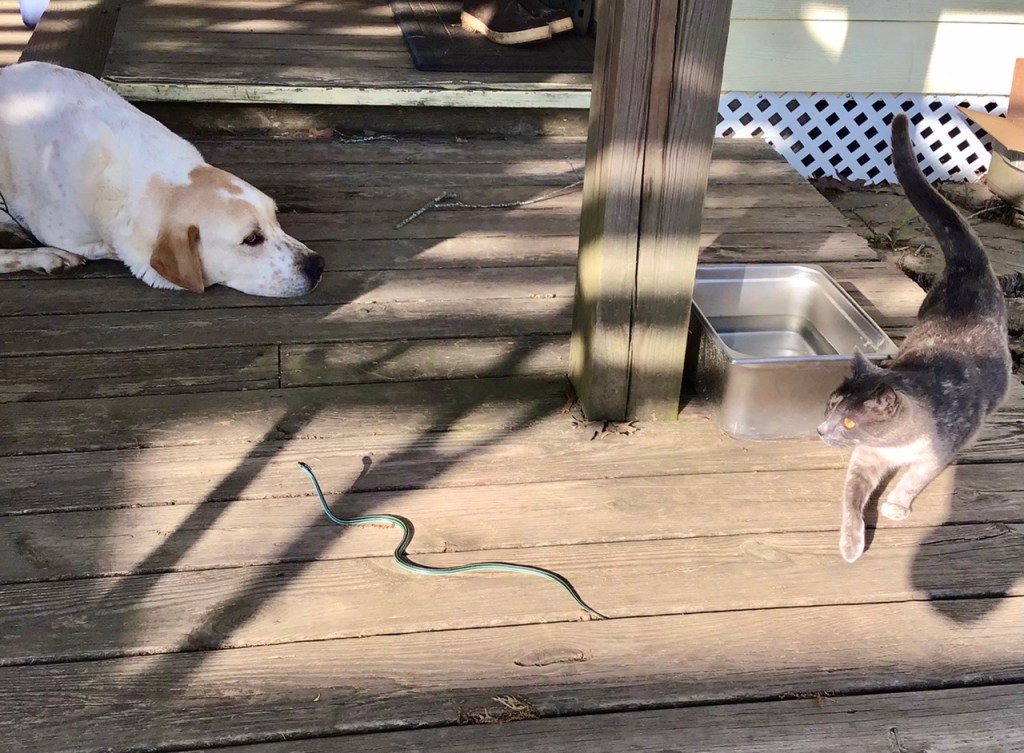
There’s a steady supply of captivating entertainment around here. Just yesterday, around cocktail hour, I went out on the back porch to snip some cilantro from the herb boxes for our guacamole snack, and I stepped out onto this surprising tableaux.
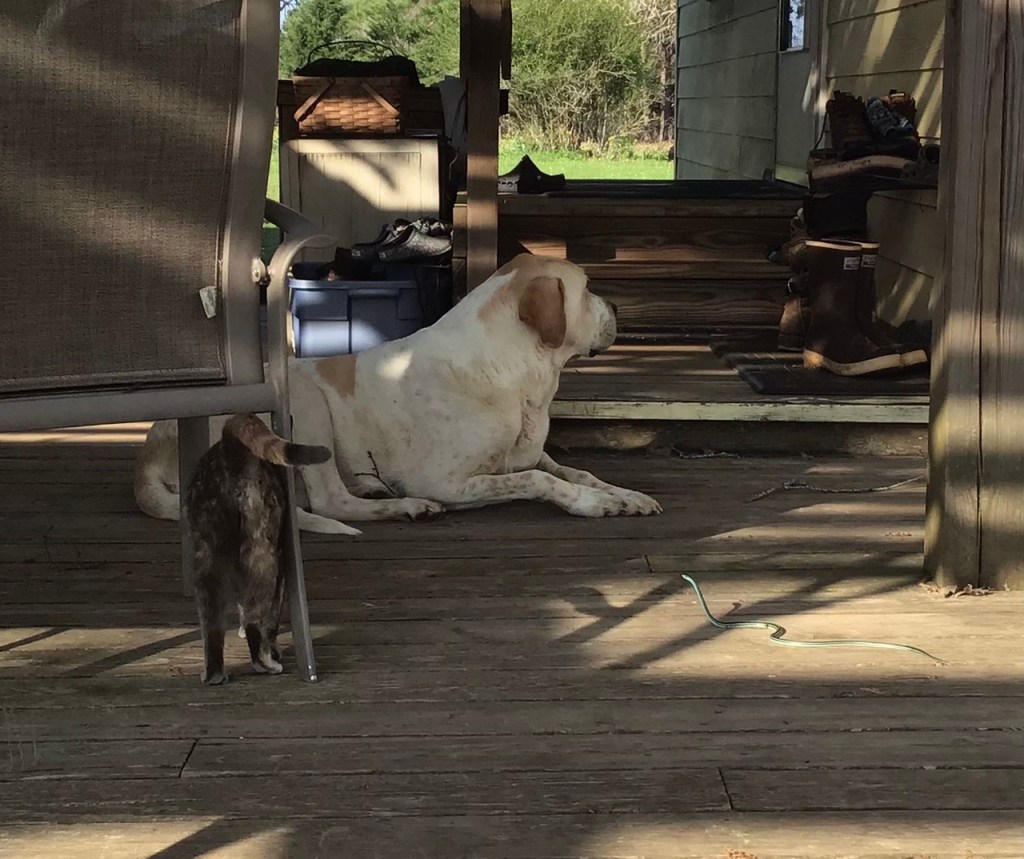
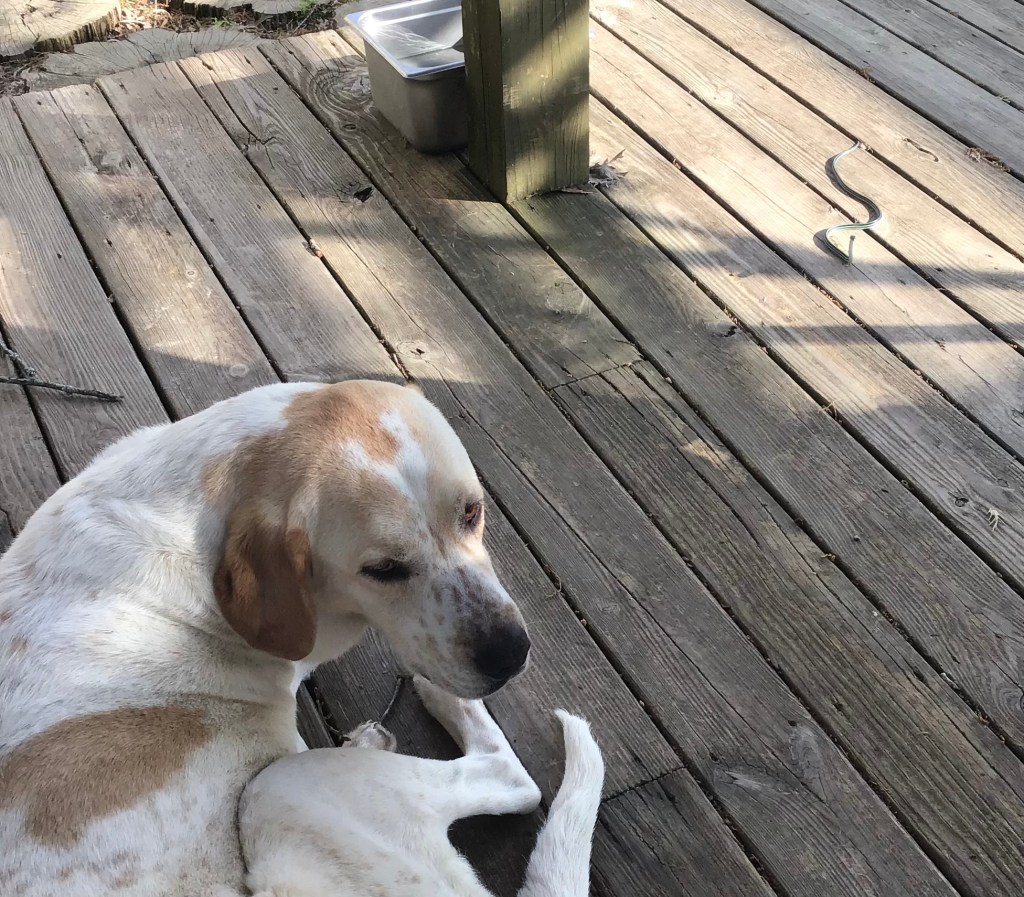
I couldn’t believe my eyes, the gorgeous ribbon snake was positioned there as still as a statue. For long enough I went back inside to get my tablet for photos. And then, our barn cat, Skittles, sauntered over, neither the cat nor the dog remotely aware of the snake’s presence!
This went on for quite some time!
Finally I yelled to Hubby inside, “You’ve got to see this!”
He comes out, and of course, boys will be boys. He was not as satisfied with the simple moving tableau and banal observation of the odd occurrence, oh no, he had to throw some action into it.
So he chucks a little plastic planter into the middle of the scene, which startles the snake and snaps Skittles instantly into predator mode.
She spots the snake and takes a pose.
“Oh, no!” I gasp. Hubby says, “Huh?”
“Don’t let her get him!” I exclaim.
“Wait, who don’t you want to get who?” He replies.
“Save the snake!” I gasp.
So, in a snap he picks up the water bowl and throws its full contents onto the cat.
Happy ending, it worked, the pretty little wild thing slid swiftly beneath the deck. 🤗
Moving on to chick and piglet news, my how they’ve grown!
On the left are Hubby’s incubator-hatched chicks, and on the right are hen-hatched. Just 6 each, which is not a good success rate. Hubby’s got another batch going, pilot error on the previous one, he says, so fingers crossed!
If at first you don’t succeed . . .
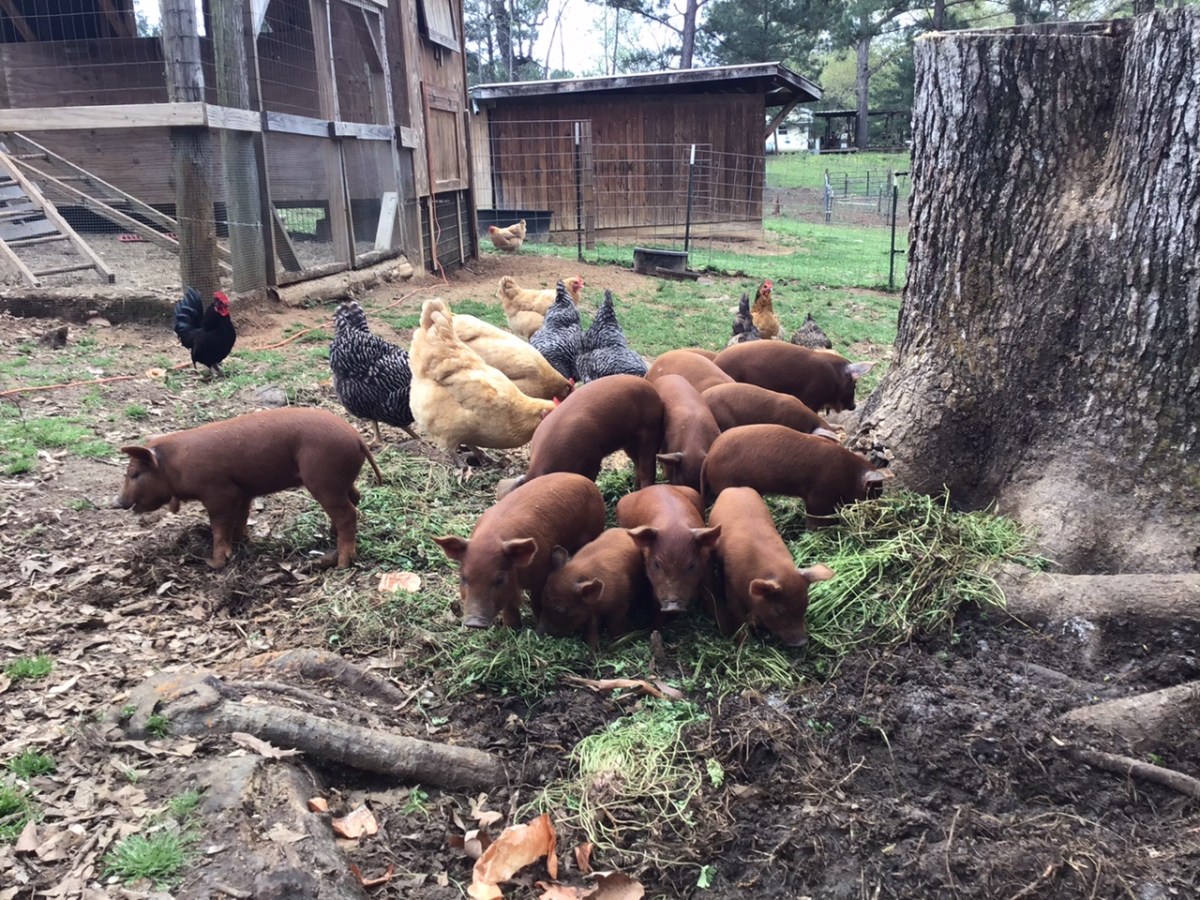
The piglets are doing great. A very large litter, 12, all still alive and kicking. I was hoping to get a short clip of them wrestling, it’s so funny, but it’s not easy to capture, since they are mostly eating all the time.
Some happy snaps and an announcement on this beautiful Sunday!
I’m sure there are a lot of gifted gardeners out there cringing when I say that, but it’s true!
I don’t always love weeds (like the pernicious summer grasses, poison ivy, and Texas goat weed, for starters) but a great many of them are delicious, nutritious, ubiquitous and deserve their place in the garden.
I don’t know every weed, yet, but I’m learning more every year.
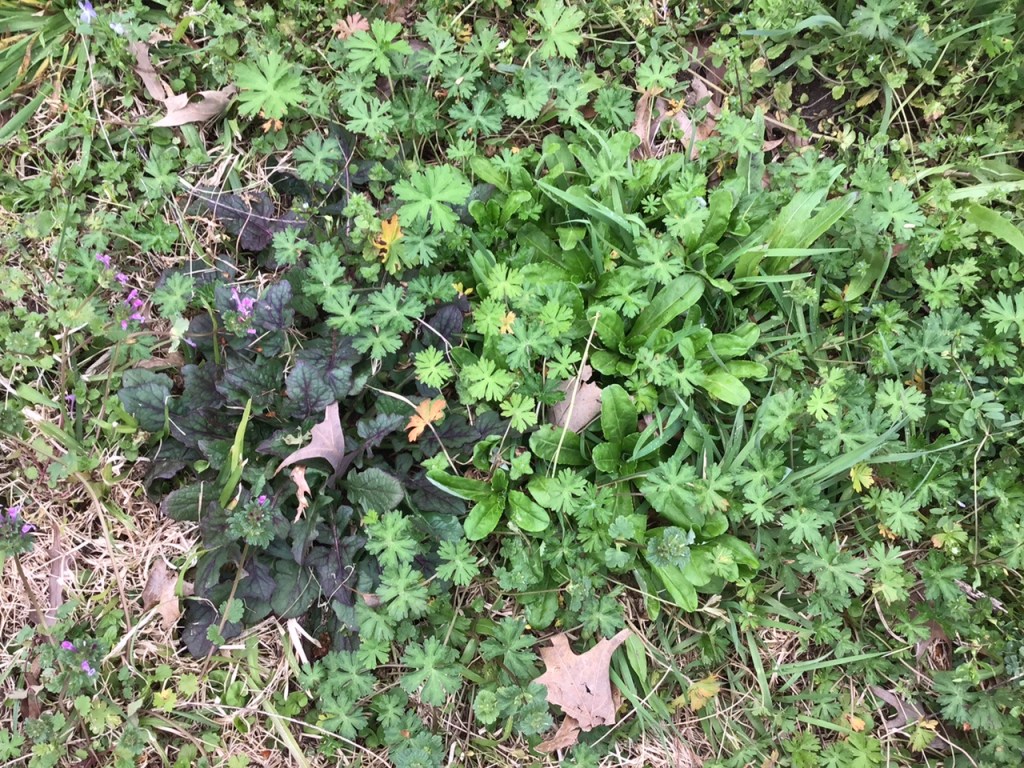
Can you name 3 of the 6 edible weeds pictured above? (Hint below the video.)
And that leads me to my announcement, which is probably more of an intention still, but I figure if I post it, I’m one step closer to doing it.
Reaching new heights on the wee homestead!
Soon, very soon, I’ll be adding a new section to our wee blog:“Herbal Explorations”. I’m very excited about it, but it’s quite a bit of work as well, which isn’t easy to squeeze in to an already full palate (bad pun intended!)!
Of course, I’m not an herbalist myself, but I plan to research the ‘Starring Weeds’ as best I can online and in books, provide lots of references, and get further info tidbits from trained herbalists.
Including, of course, the ‘science fraud’ angle I’m so fond of that casts so many of our precious herbs in a bad light!
Behold the divine diversity by the compost pile! Pictured just in this small space: wild carrot, henbit, chickweed, Carolina geranium, hairy vetch, and . . .?
And . . . Who might you be there, Thin & Lovely, hiding in the henbit?
My hope is that it will become an on-going reference section that will be a welcome resource for all us new-bees in herbalism, foraging, and down-to-earth living.
If you think this is a good idea, please do nudge me along, to make sure I git-er-done!
And do enjoy 2 minutes of Homestead TV, if you please!
Hint from above: Start small and easy, with the middle photo, the first plant our “Sow”(there’s your hint) eats in the vid, what is it?