Drama in the canning community? This sounds serious. Especially now that it’s coming home to roost.
Or is that roast?
Yes, now that Hubby has enthusiastically taken up canning, there’s trouble brewing in Kensho paradise.
It’s not only that he dominates our small kitchen for hours on end, heats up the house with his fancy pressure canner, or is filling every conceivable space with his jars. It’s not even that’s he’s far better at it than I ever was.
No, I’m generous that way, perfectly willing to share in the glory.
I am, however, growing weary of his methodology. His modern, high-tech, USDA, strictly by the book, precision style is beginning to conflict with my laissez-faire, look how the old timers did it, just wing it attitude.
I suggested we try the ‘Open Kettle Method’, which for the record is taken directly from my 1933 Kerr Home Canning Guide.
He quips, “No way, it’s not approved.”
Huh?
And I’ve just learned we’re not alone in this clash. There’s some fiery online debate—wouldn’t you know it—as in politics, so in the kitchen.
They call themselves the ‘Rebel Canners’ and that’s got me quite intrigued. Those rascals are daring to question The Official Science! They must all have a death wish. Clearly they have they never heard of botulism.
It was no sooner than Hubby and I had a tiff over water bath timing that a YouTube video hit the top of my feeds.
How did they know?
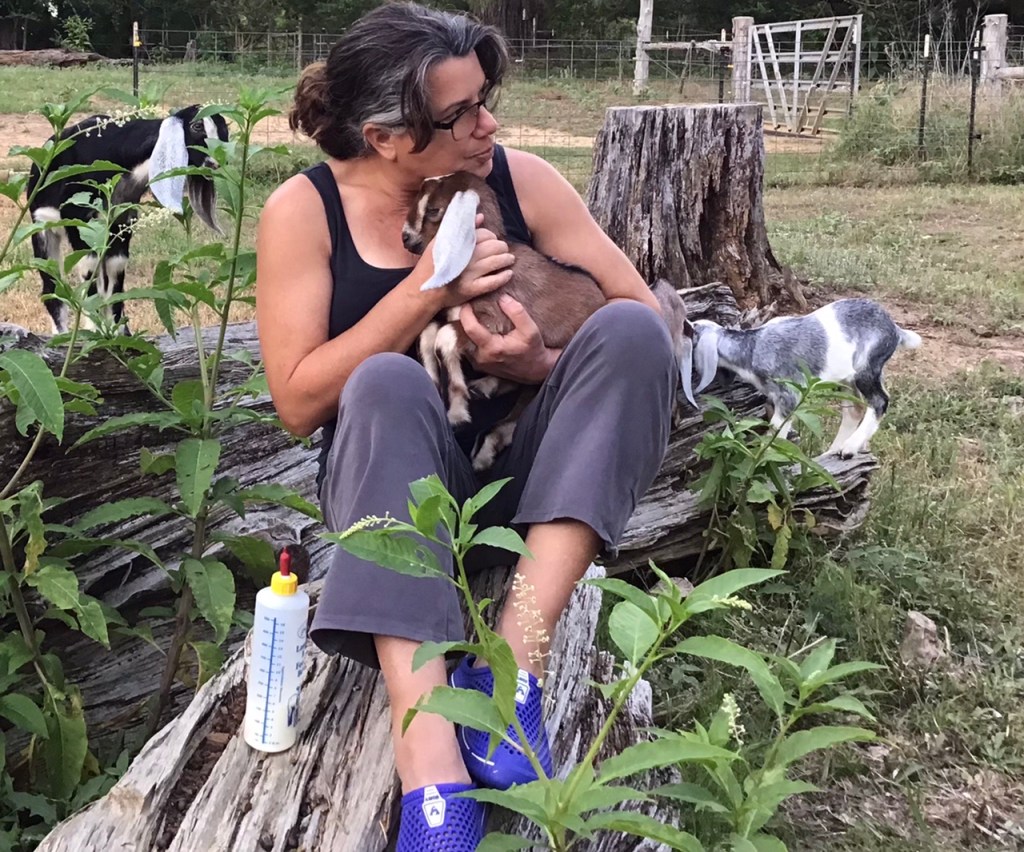
A rebel canner, in the flesh.
She doesn’t look nearly as crazy as I thought she would. She brings up the Amish, who never pressure can.
Never! Not even for meat.
It’s positively scandalous.
Hubby tries to block out the insanity coming from the speakers. I tell him I want to try it. Meat, my dear, imagine, meat water bath canned!
Let’s go for it!
He looks at me with the same look as when I try a new foraged mushroom without proper identification. And I know just what that look means.
I can repeat the sentence for him, I’ve heard it so often.
“You go ahead, sweetie, someone has to live to tell the story.”
Busy days on the wee homestead as we try to maximize our production with the swelter season clock ticking. The scheduled weather is HOT and DRY for us for the foreseeable future and just staying on top of the watering is a big task.
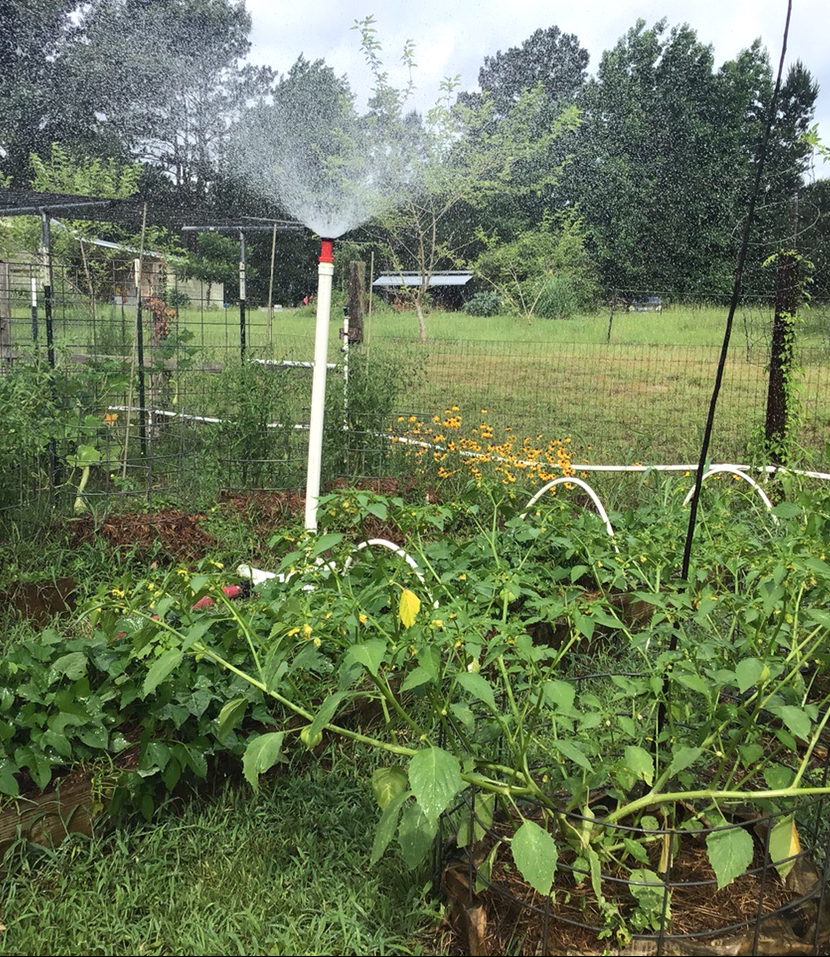
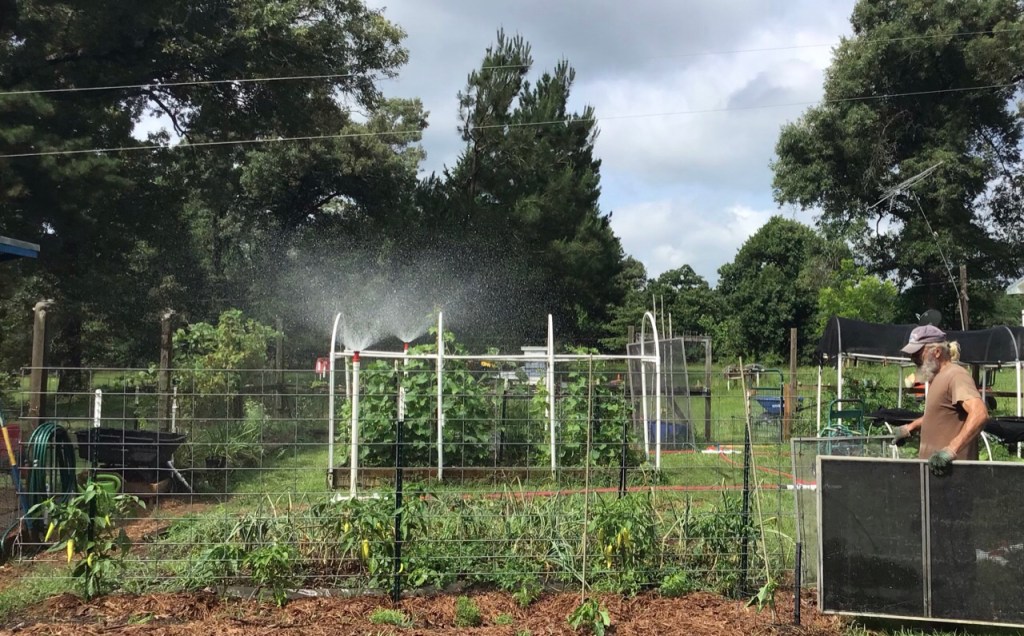
Hubby’s pond water pumping system is a life saver for the plants, but it still requires an entire morning per section in the garden, around the house, in the orchard, which means he’s walking back and forth, moving hoses, rearranging sprinklers, and sweating. It’s not easy, or free, but comparatively it’s our best option and I’m very grateful for it!
Adding shade cloth and screening wherever we can.
And, while I’m on the gratitude train, let’s give a big cheer and thank MAN for the air condition! We’ll be spending much more time indoors for a while, me especially.
Welcome new additions to the garden this year, Poppy and Nigella. Very happy for these, I’ve tried many times for poppies with no luck, and the nigella was gifted from a friend and the blue and white flowers are so darling and the seeds so delicious!
We continue to experiment with different preserving techniques and flavor combinations and it’s SO much more enjoyable for me to have his company and help in this endeavor, now that he’s home all month long!
Last year’s experiments of watermelon rind pickles and melon butter were a fine success we hope to repeat again this summer. Lately he’s also been making cream of mushroom soup from our foraged chanterelles that is SO delicious, as well as blackberry preserves. He’s also canned a bunch of potatoes and made a huge batch of ratatouille for the freezer. That’s a first for both of those, so we’re looking forward to the taste test.
The cucumbers are coming in well, the melons still looking very promising, but the heat is definitely taking its toll on the tomatoes already. That is disappointing because we do love tomatoes and needed to re-stock our marinara this year. Hopefully we’ll find some neighbors with a bumper crop who are willing to trade for some of our prolific squash!
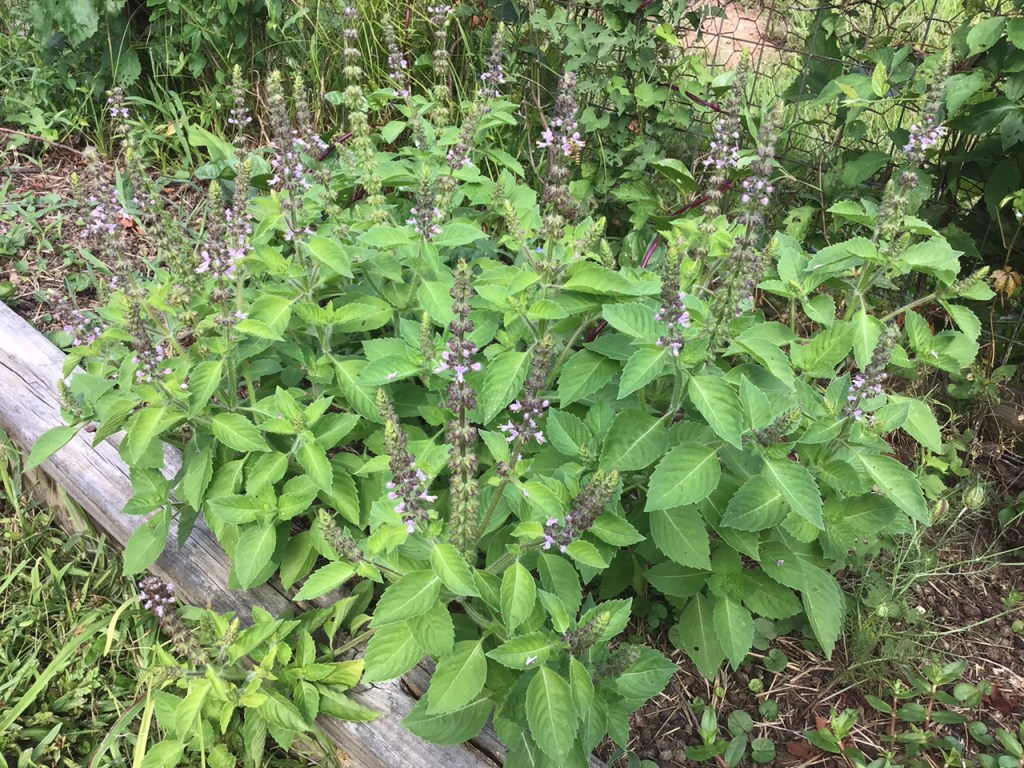
Roma never does well hereNoire des Carmes getting close!Suoy Long a salad cuc favUp, up and away!Sweet potatoes and Black-eyed Plenty of forage for the growing herd!Precious Athena, my favoritePhoebe and her other kid, HerculesBumble bee on ZinniaSpice basil flowering WAY too earlyCastor bean flowering WAY too early
Lots more to share, on another day! 😁 Thanks for stopping by!
There’s the good kind of failures—like those you are able to remedy; And the bad kind—like those you can’t control; And the worst kind—like those you could control, if only you could figure out what went wrong.
We have a collage of all 3 today!
Failed cheeses, failed fruits, and sun scorch.
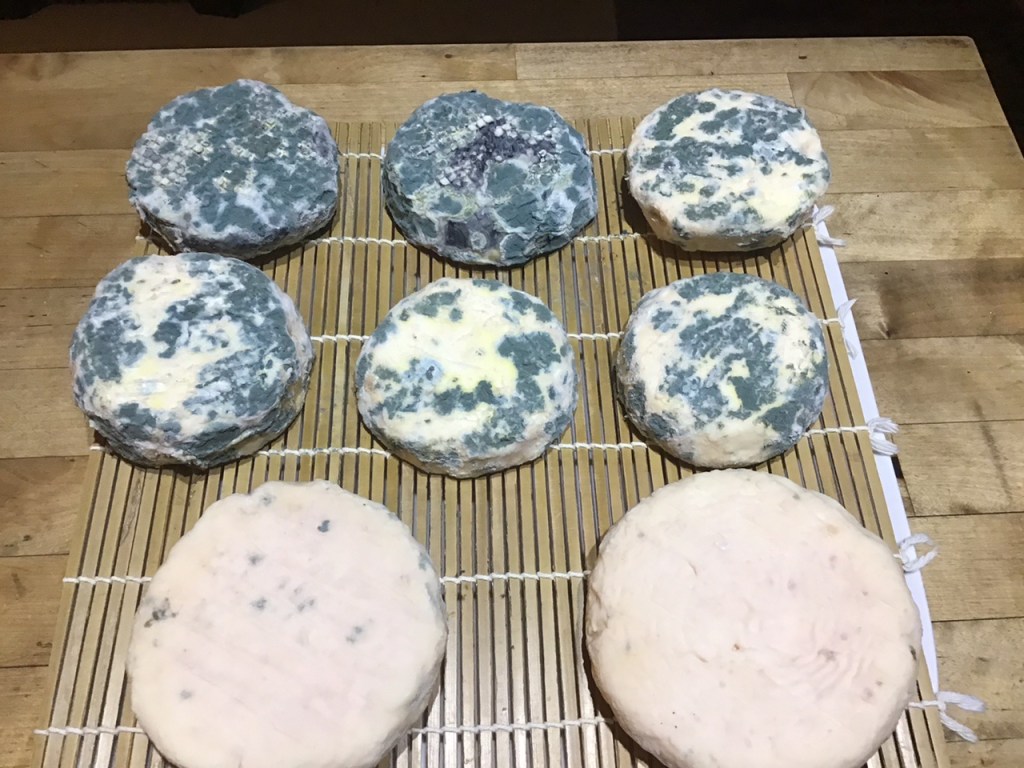
Penicillium roqueforti has dominated my Little Turds and now we have little blue turds, which is a big fat failure.
This is the most aggressive cheese fungus and once the spores get started it’s extremely difficult to correct the issue. As much as I love blue cheese, this is not the process for making it. As a surface mold it does not taste good, it’s the veining of the blue cheese that brings out the nice flavors. I don’t make blue cheese, because in order to make other cheeses you must exclude the blue to get the white (geotrichum candidum),or any others, to dominate.
Even a hobbyist will quickly learn that you need a separate space, equipment and unique aging fridge just for the blues. This particular invasion happened very quickly, in just 2 days, because a beverage fridge does not make a very good aging fridge for cheeses. But, it’s all I’ve got. The temperature varies unexpectedly and you can’t control the humidity. Sure, a lot of cheese makers out there claim there are certain tricks for modifying the humidity levels of the mini-fridge, but they just don’t work, or they are far too high maintenance for me.
The fridge got too cold by just a few degrees, and this was the result. The two without any blue are from an older experiment, also failed, because their white fungal coat is not thick enough. I’m hoping a snug fig wrapping will magically transform the problem. But, I doubt it.
Wrapped in fig leaves (with a bit of sage on one too, to cover the naked parts) back into their Tuperware-fashioned high-humidity space, and back into the aging fridge.
As for the little blue turds, I’m going for maximum shock treatment, just to continue the experiment at this point, because I think they are beyond repair. I have them at room temperature now and I might even try spraying on some geotrichum candidum, just to see what happens.
The orchard is a continual string of failures, the nectarines being just the latest one. We’ve planted so many fruit trees in there we’ve lost track. We planted a couple of plums, one that actually produced for a couple of years, then both suddenly died. The grapes are looking terrible this year, the apples hardly ever bloom and never produce any fruit, the peaches die a year or two after planting, and now we finally got some nectarines and they look like this. The worst part is, once you cut out all the bad parts, the few nibbles of good fruit you have left are absolutely delicious.
Oozing and pock-marked and tiny. ☹️
We’ve got one reliable pear tree, another two that get a great crop about every 3 years. And the figs, my favorite, that are on some boom-bust mystery cycle we haven’t figured out.
Hubby is beyond frustrated with the fruit trees, so he’s got a mini-project filling up the orchard now, his own hog feed production line.
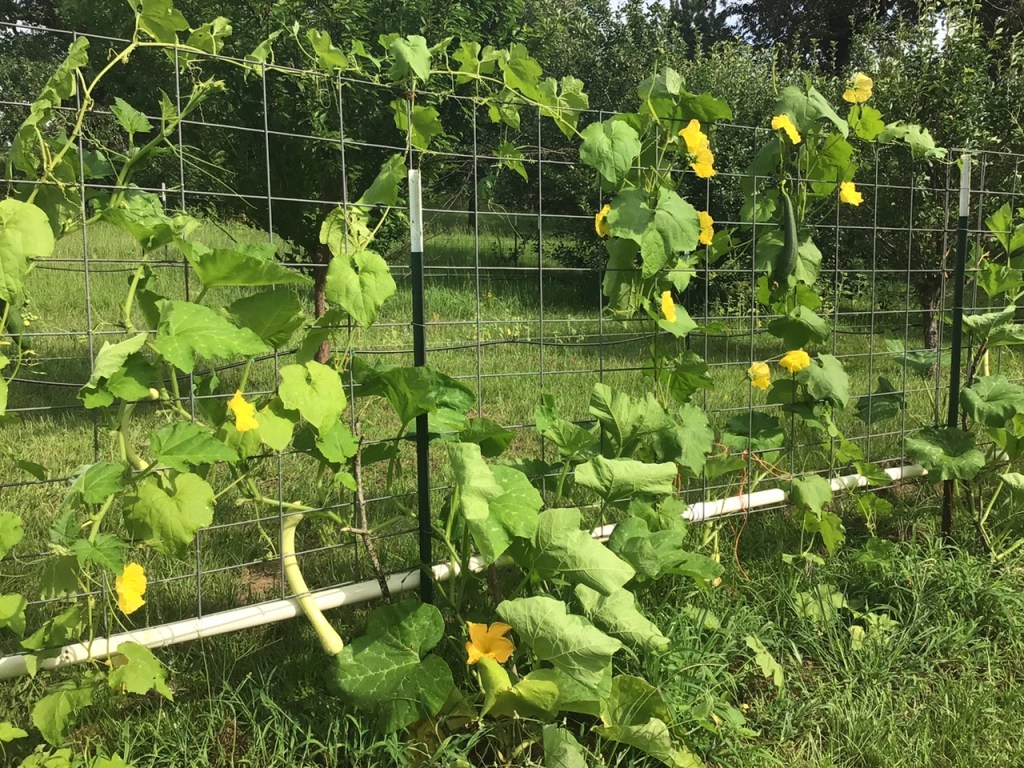
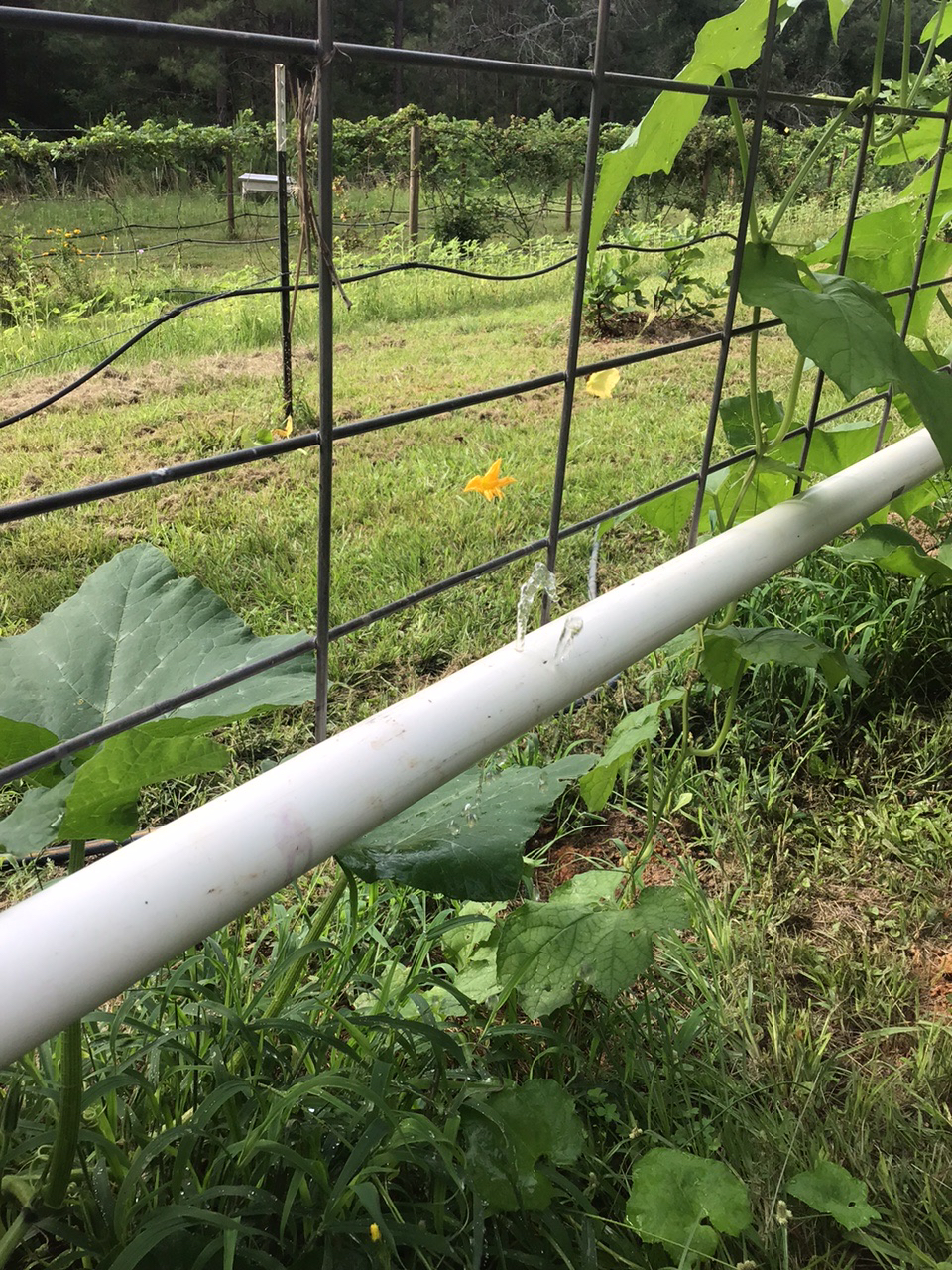
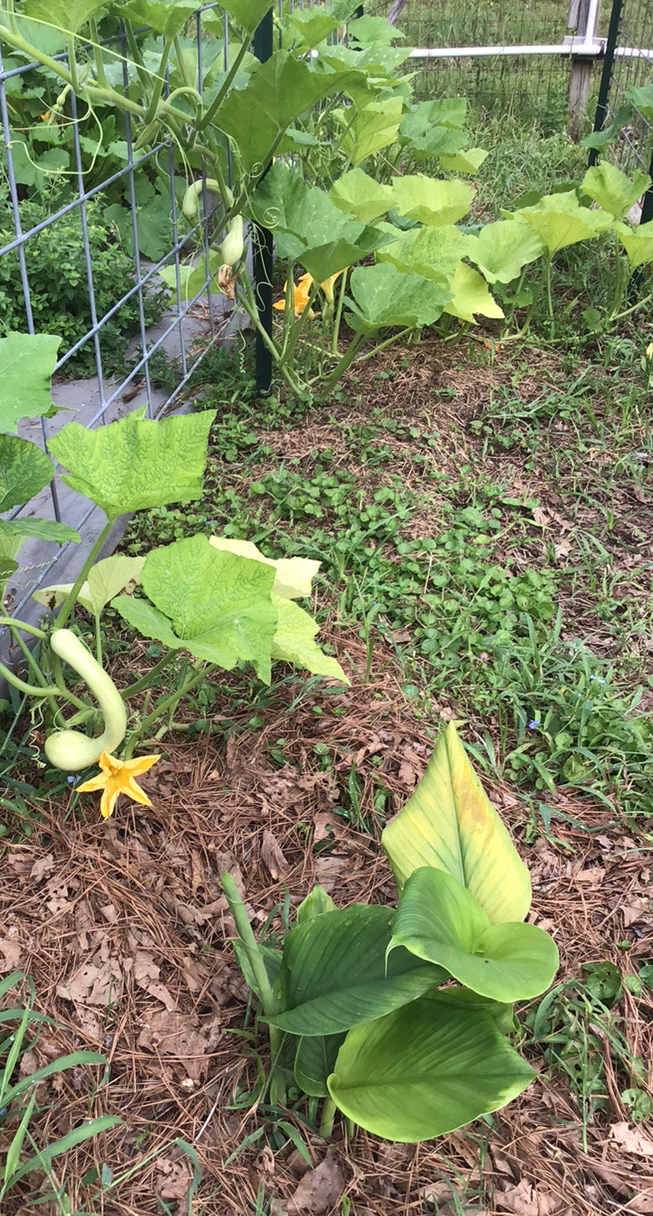
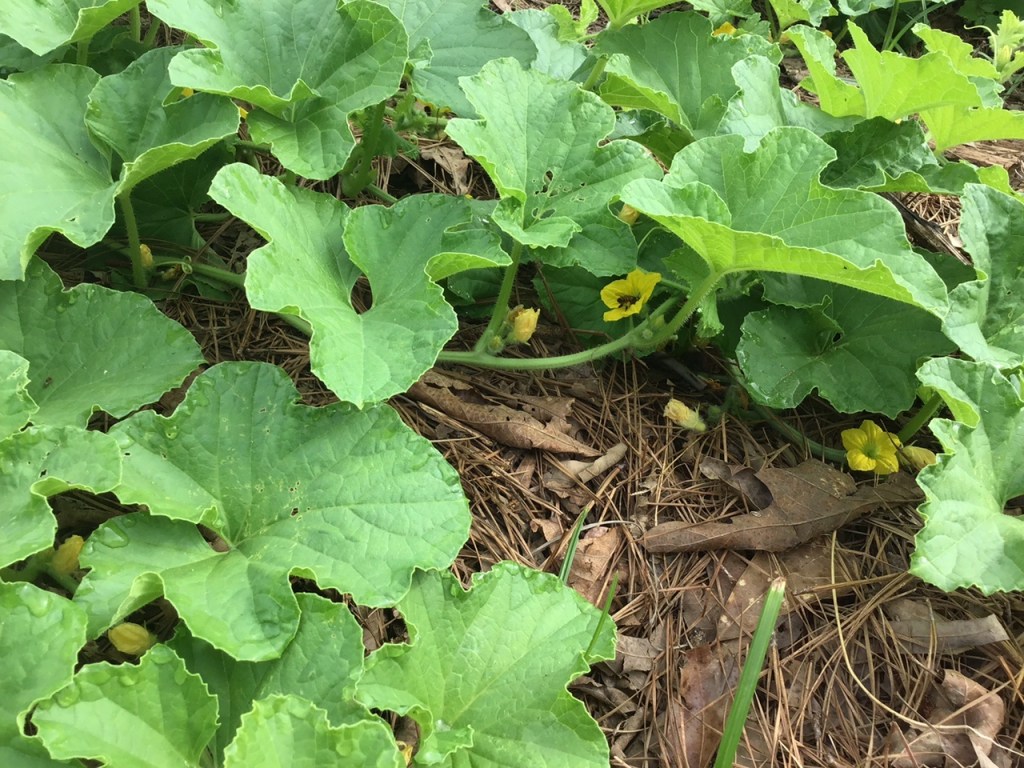
I think he’s trying to teach those miserable fruit trees a lesson by planting a thriving row of squashes between the rows as feed for the pigs. The cost of feed is getting crazy! And of course, we’d much rather feed the pigs off the land. Trombetta and chayote squashes, and luffa, are growing great and will soon make for some happy pigs.
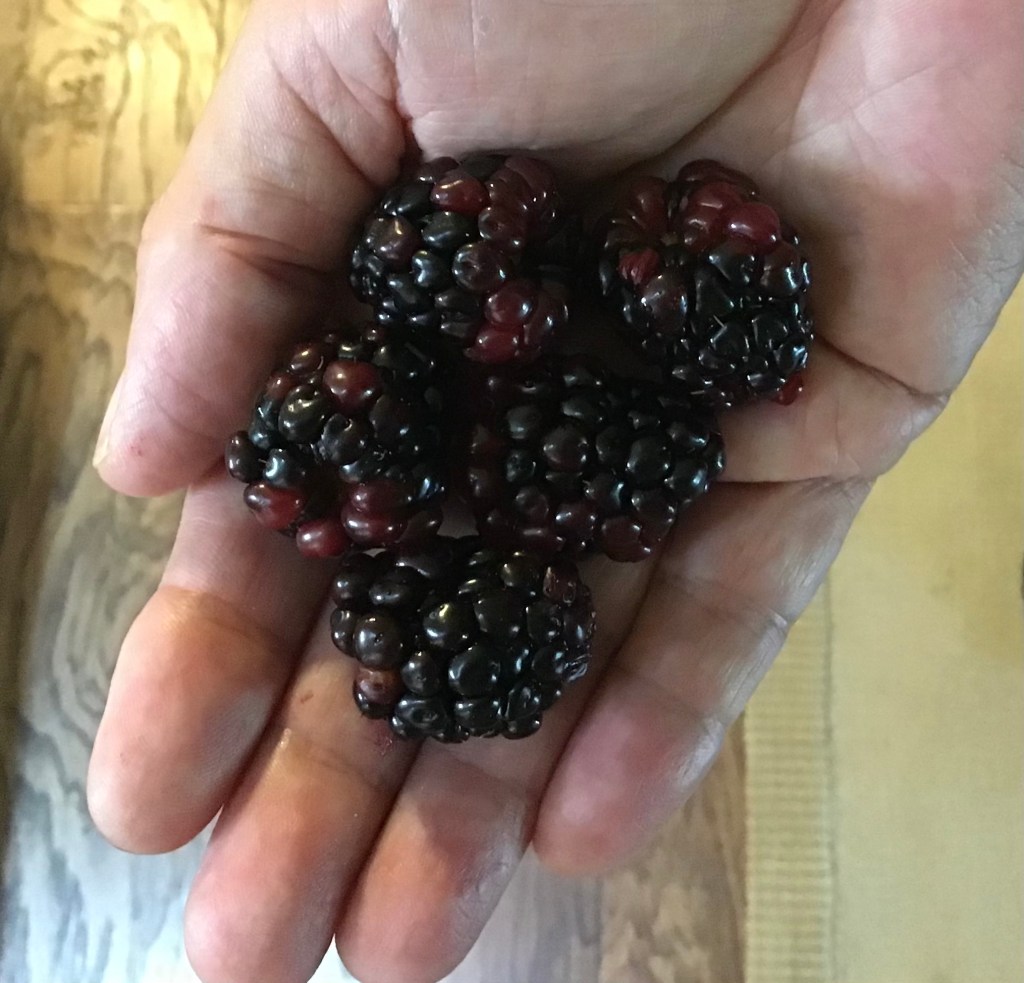
Luckily we at least have some giant blackberries to soothe our disappointments a bit.
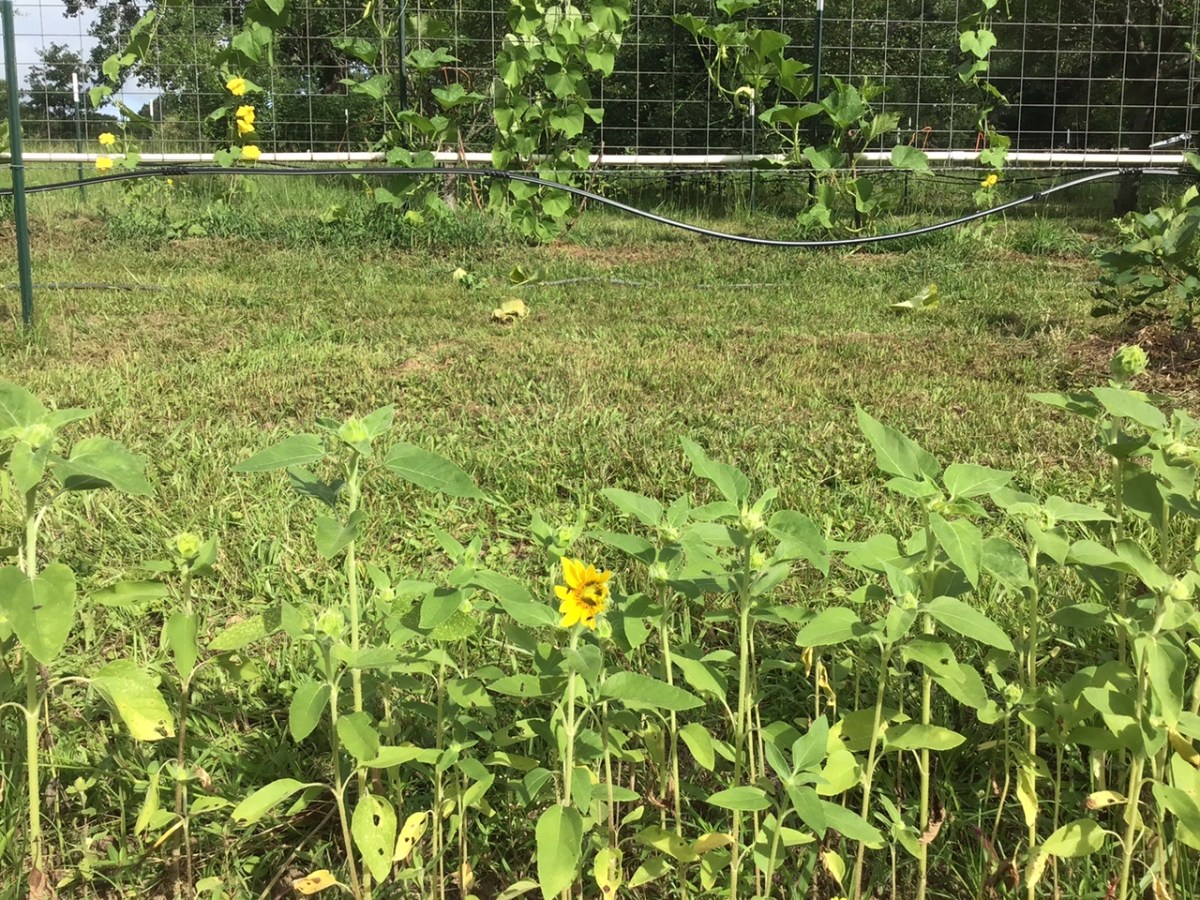
While the garden is still hanging in there despite intense heat and very little rain, the signs of stress have already started. Even heat lovers like the turmeric are getting sun scald. The leaves of the tomatoes and tomatillos are looking equally sad. I’ve covered what I can with shade cloth and screening, and I’ve got my fingers crossed, and that’s about all I can do about that.
Sir Turmeric has a sunburn and Trombetta’s leaves are looking sad.
If the melons disappoint me again this year, at least I can feel better knowing the bees were very pleased. That is, except for the little bitch who stung me on the middle finger while I was harvesting cucumbers. The simplest of all these problems to solve—must wear gloves now while harvesting.
The Noir des Carnes cantaloupes alive with so many buzzing bees!
Oh, and last but not least, the shallots never bulbed. No idea why. I bet Bubba knows, but he’s not talking.
What better day to ponder than Mother’s Day why kids are so darn cute?!
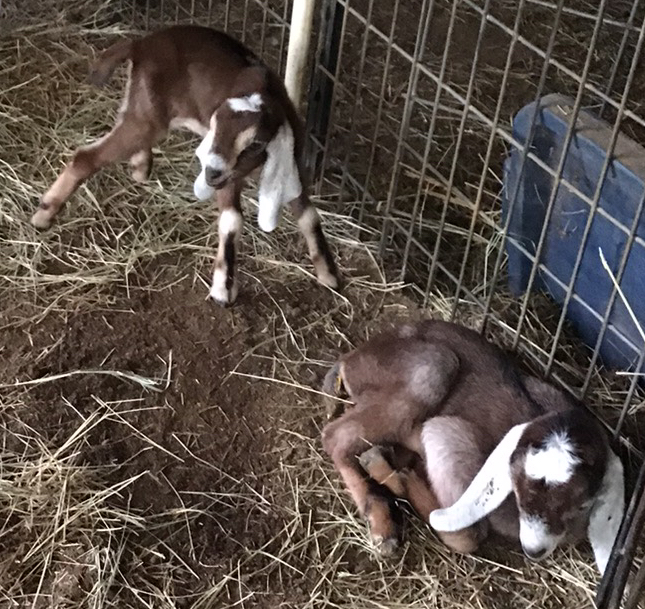
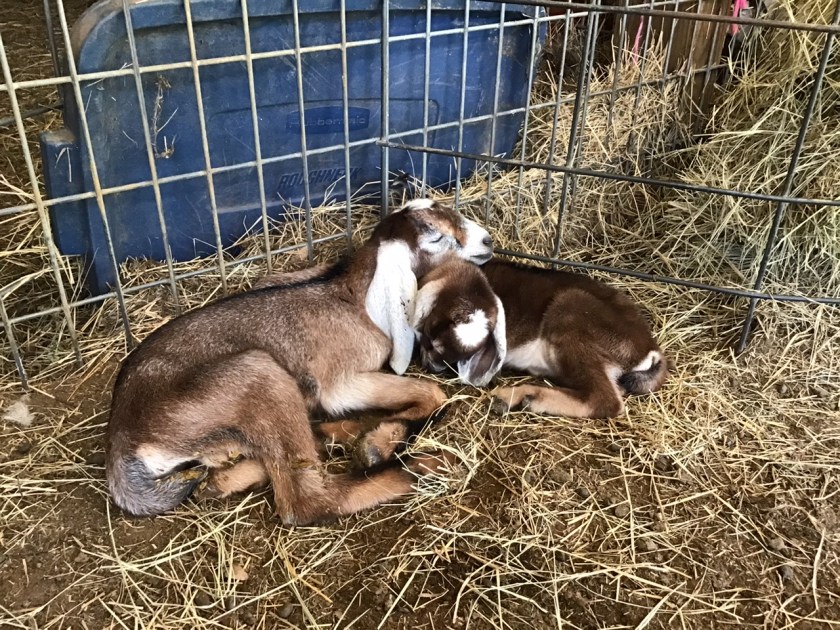
The newest kids, born yesterday, Phoebe’s firsts—Hercules & Zena—notice he is twice the size of her!
We’ve bartered or sold most of our piglets already. We’re not on social media where such information is exchanged, but it certainly does seem the homesteading community in our area is growing rapidly. Yippie!
One family who came by insisted we were under-profiting from our piglets. Their 11-year old daughter offered her mom to pay us $50 more than we were charging, ‘for the cuteness factor’. Aren’t kids precious!
In not-so-cute news, the swelter season has started abruptly. Bye, bye beets and broccoli, before your time, because I think not even the shade cloth can save you now. The last rain that was hyped on about for days, that flooded some areas and caused tornadoes in others, yielded us a whopping 1/4 inch, not even enough to penetrate the mulch layer.
Of course I’m happy we didn’t get hit with another tornado, but I can still be miffed I have to start watering the garden. Half my roses haven’t even bloomed yet, or the zinnias. The parsley and celery have gone to seed before I got a decent harvest from them and the lettuce will soon follow, no doubt.
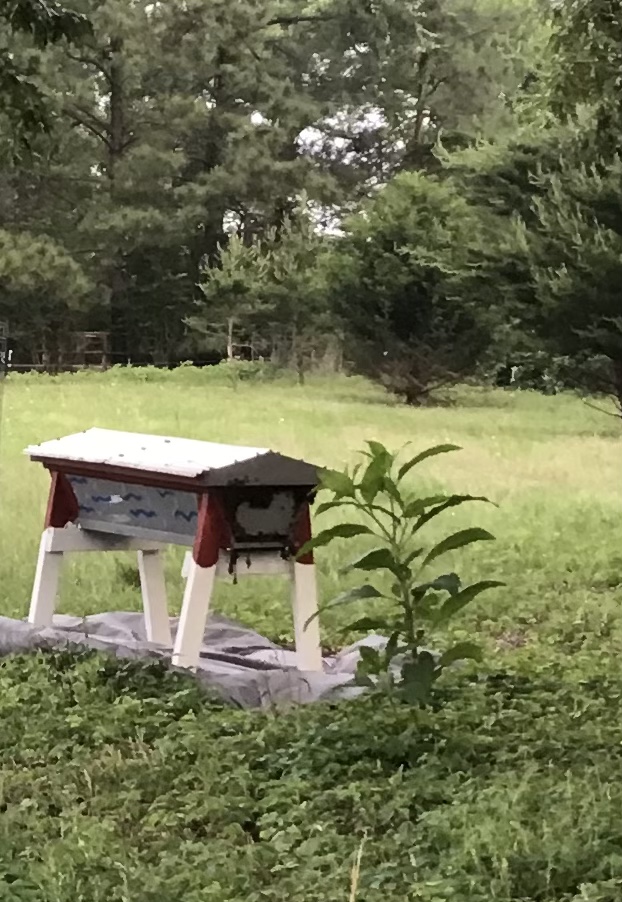
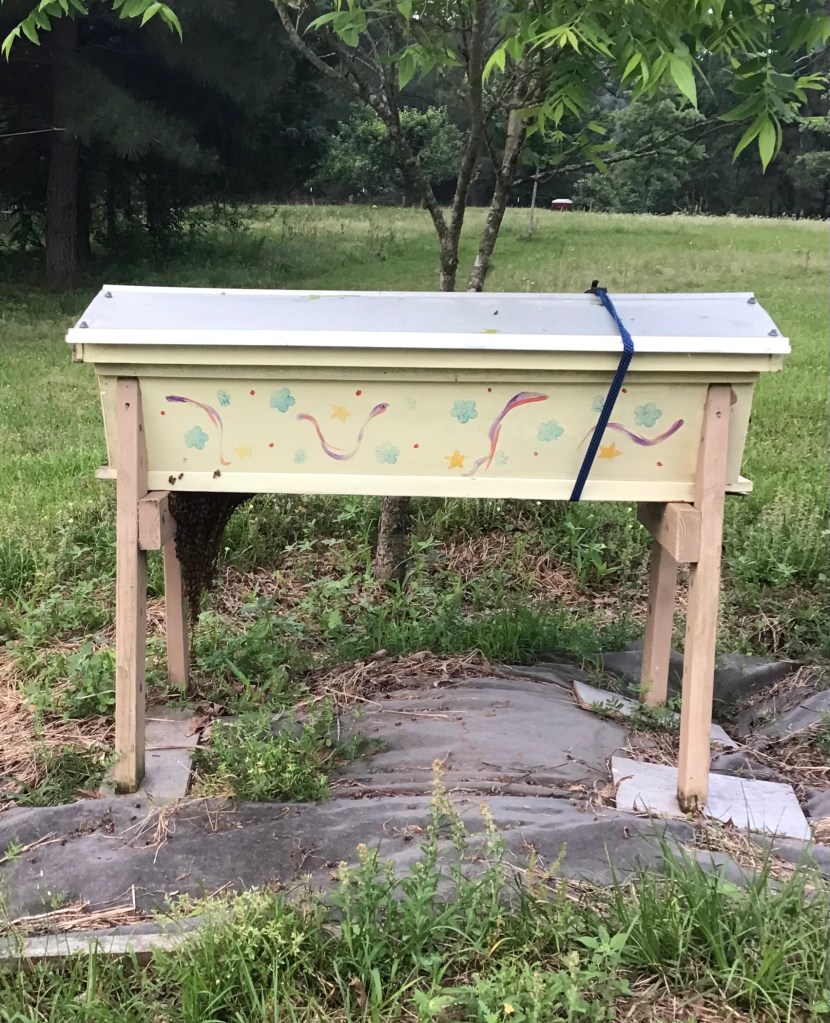
The bees are feeling it, too. I checked these hives last week and they were just half-full, yet the bees are bearding. Unfortunately, the swarm we got a couple of weeks ago left after only one day, unhappy with the digs I’d offered apparently. Now it’s already too hot for me to do the splits I’d planned. Better luck next spring.
I’m so pleased to be getting any strawberry harvest at all, they’ve never done well before. Then I saw this video and quickly got a reality check.
Hubby tried to make me feel better by saying those were probably grown in California and loaded with pesticides harvested by illegal aliens. He’s mentioned before something is off about this (Fabulous!) channel. It must be CGI, or heavily staged, or something. Never has a country cottage been so clean and picturesque. Where’s the chicken poop on the table and the flower pots dug up by the puppies? Good questions!
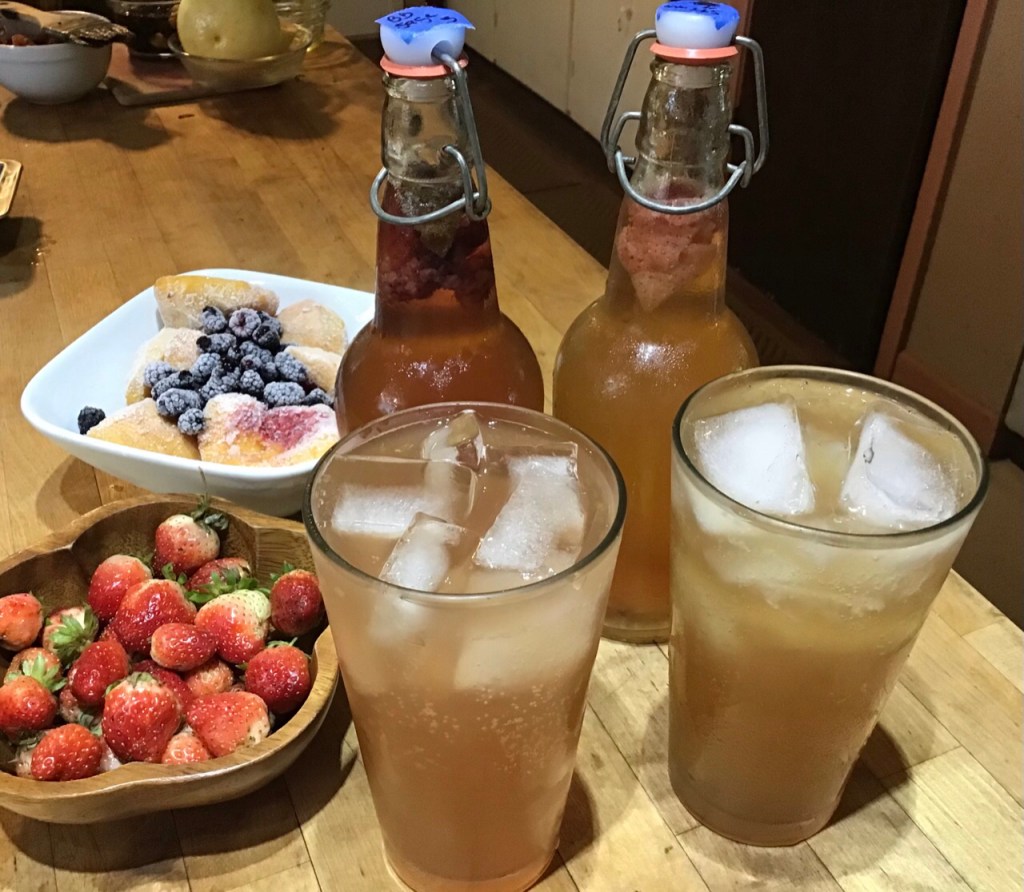
By ‘doing well’ I see I need to learn a thing or two about growing strawberries. They are too crowded and between the humidity and the wet mulch they are mostly half-rotted by the time they get ripe. I’m really loving the strawberry kombucha though! As well as the blackberry, and mulberry. I’ve started making the kombucha tea from yaupon, which grows like a weed around here. It’s delicious and sweeter than the store-bought green tea I usually use.
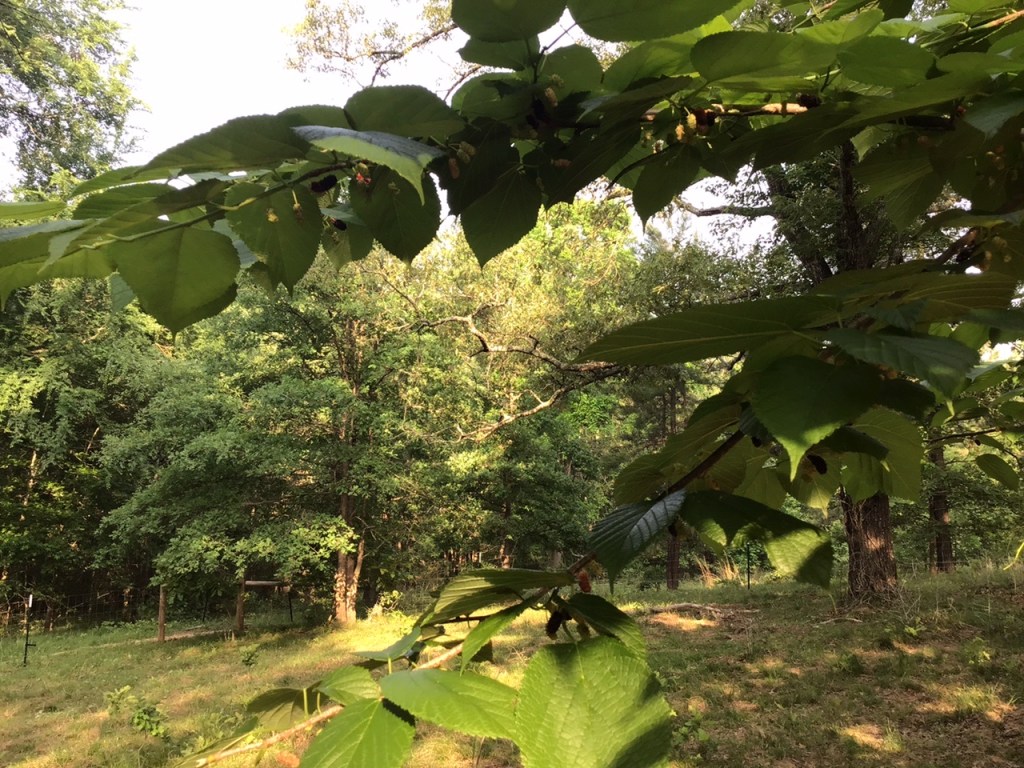
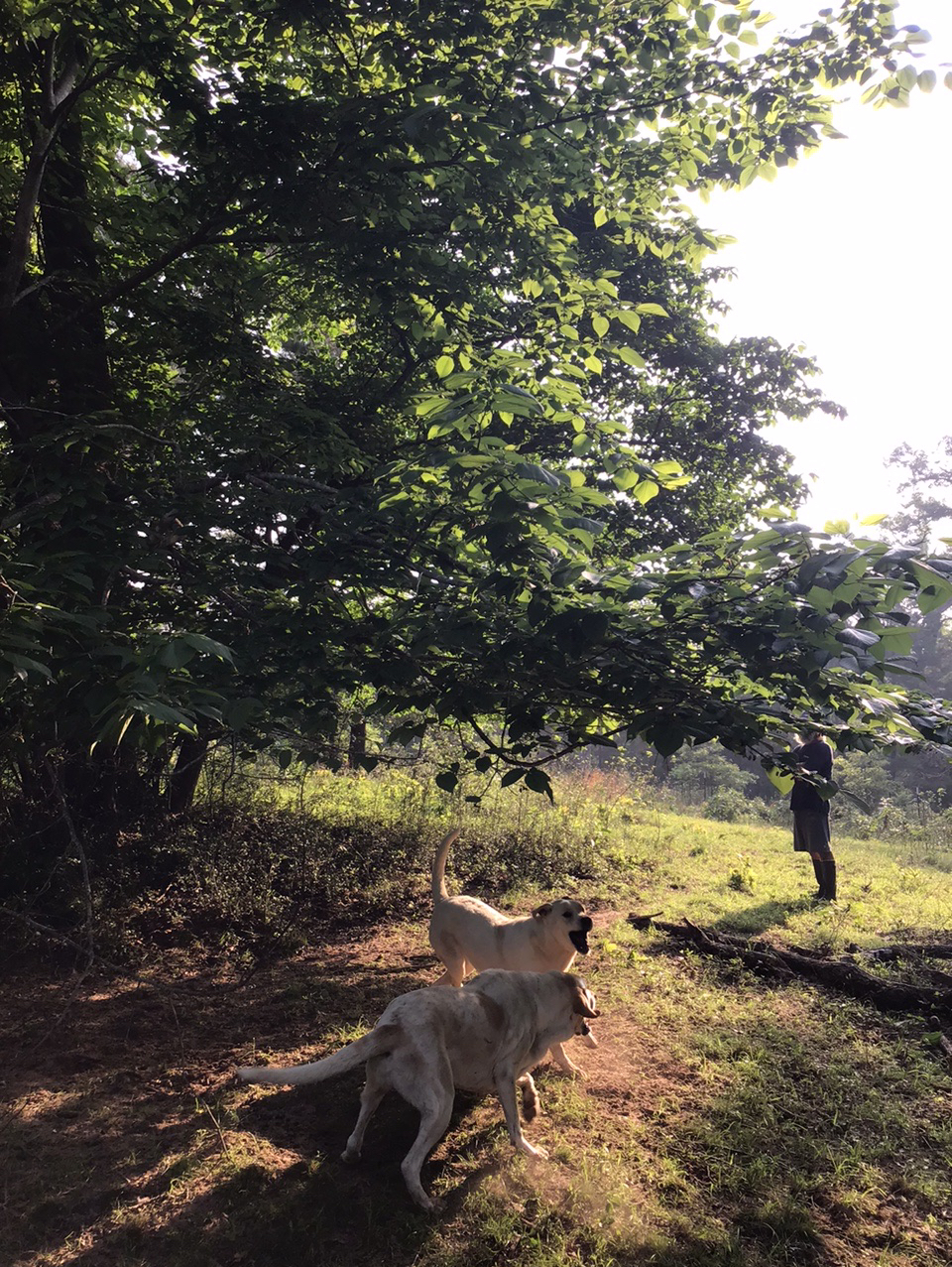
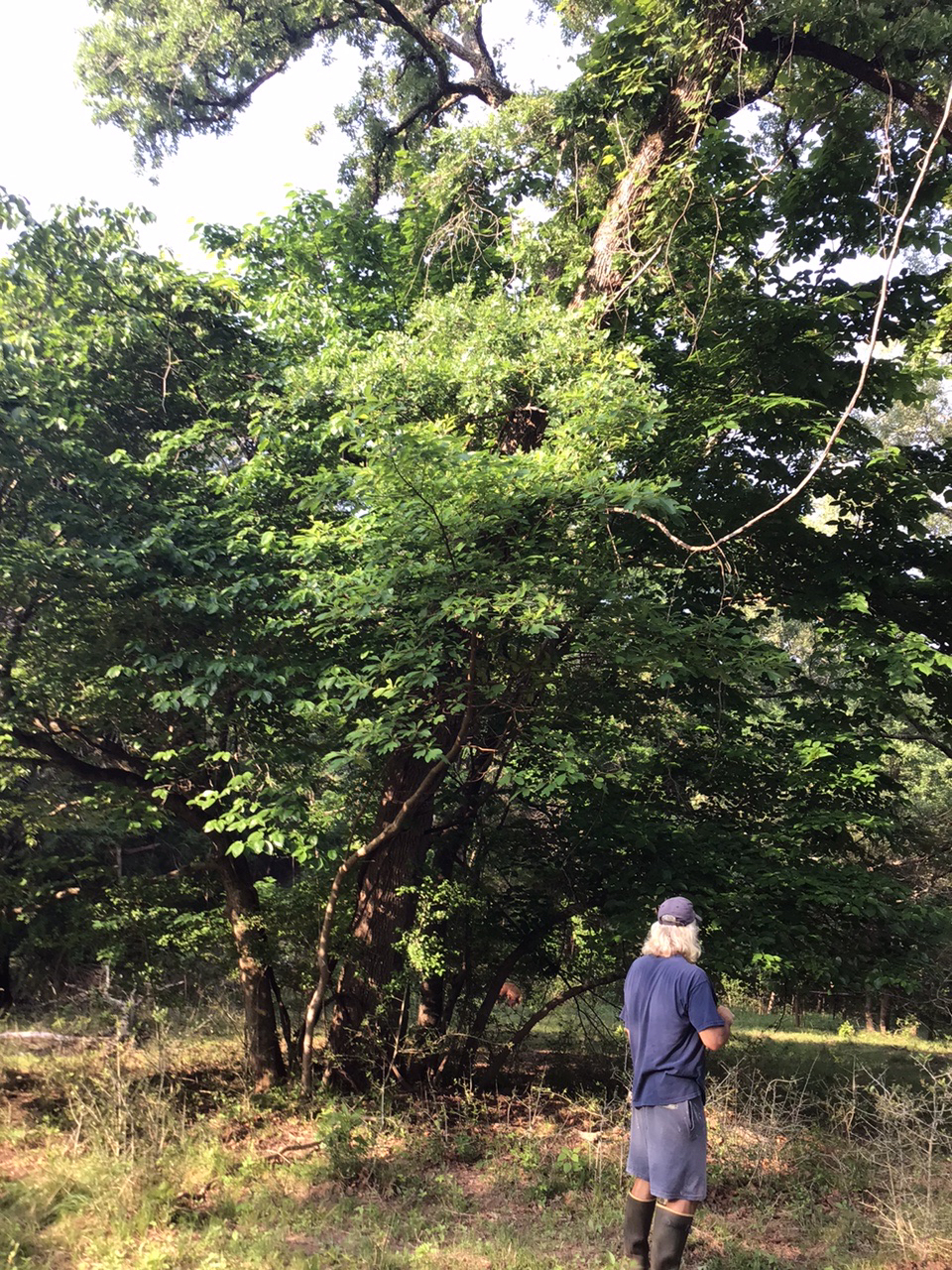
And speaking of mulberries, what a great surprise, Hubby found a full grown, wild mulberry tree in a spot we walk by regularly and never noticed before. What a treasure hidden in plain site!
More mulberries, please!
And this post has reached my attention span limit, so I leave the cheese to the next post. It’s gonna be a good one all on its on, really! Stay tuned!
Instead I exit abruptly, like spring has done in East Texas, with this quick lesson from Bubba in best yoga techniques.
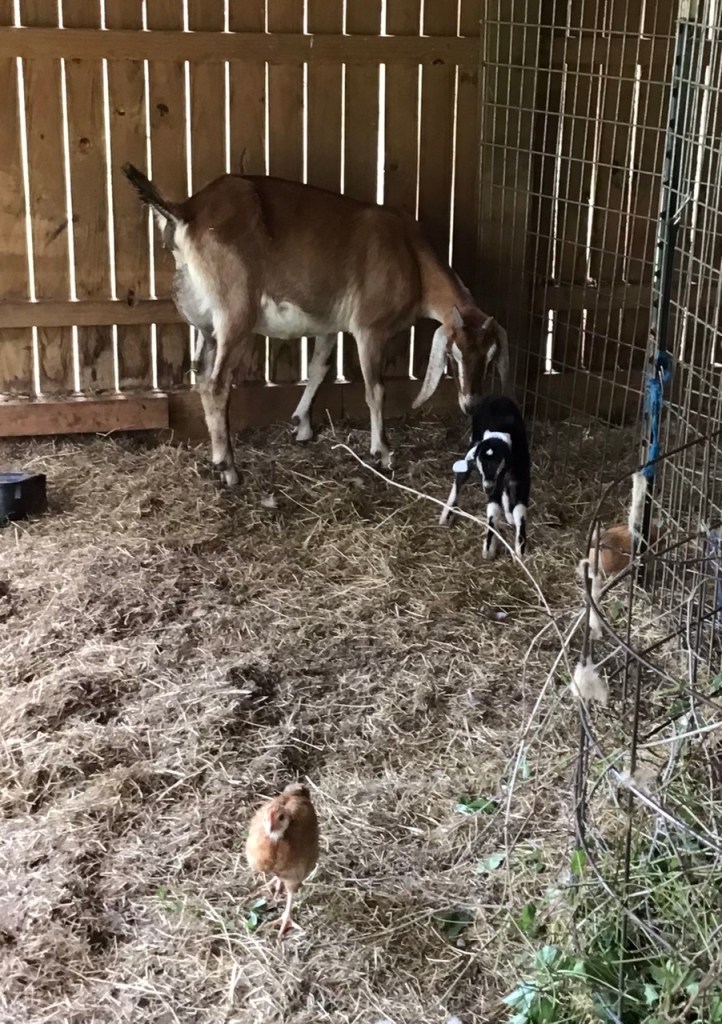
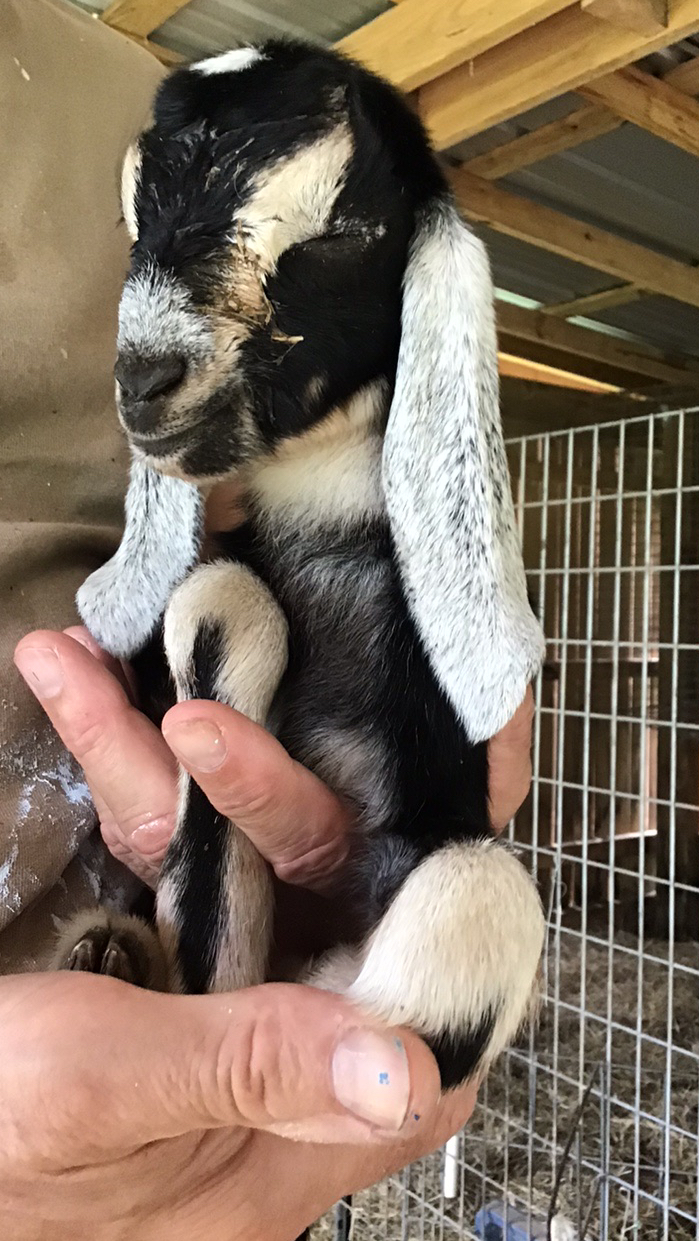
So many babies! It’s not easy getting good shots sometimes, but I’ll admit I don’t have the time or patience to sit around too long. We have our first kid!
Walnut, first kid of Chestnut
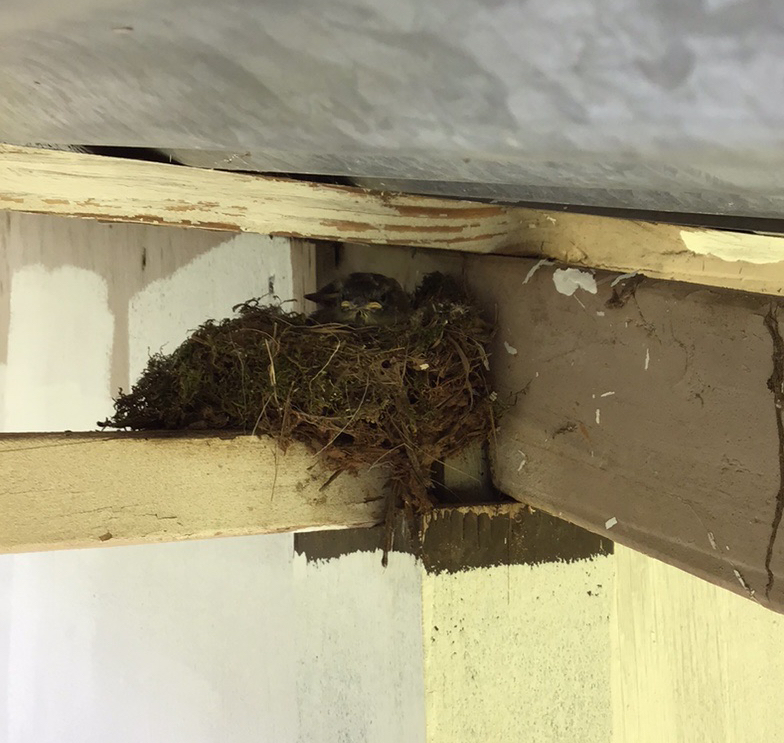
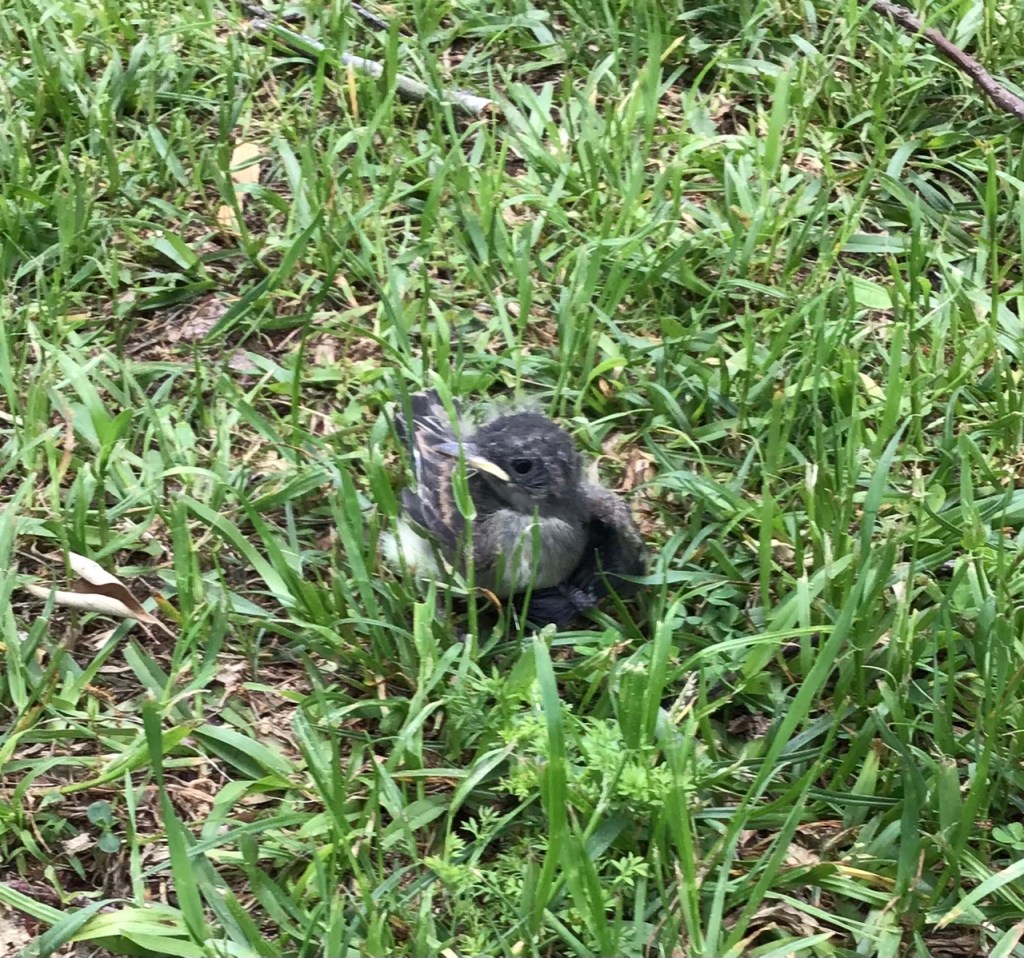
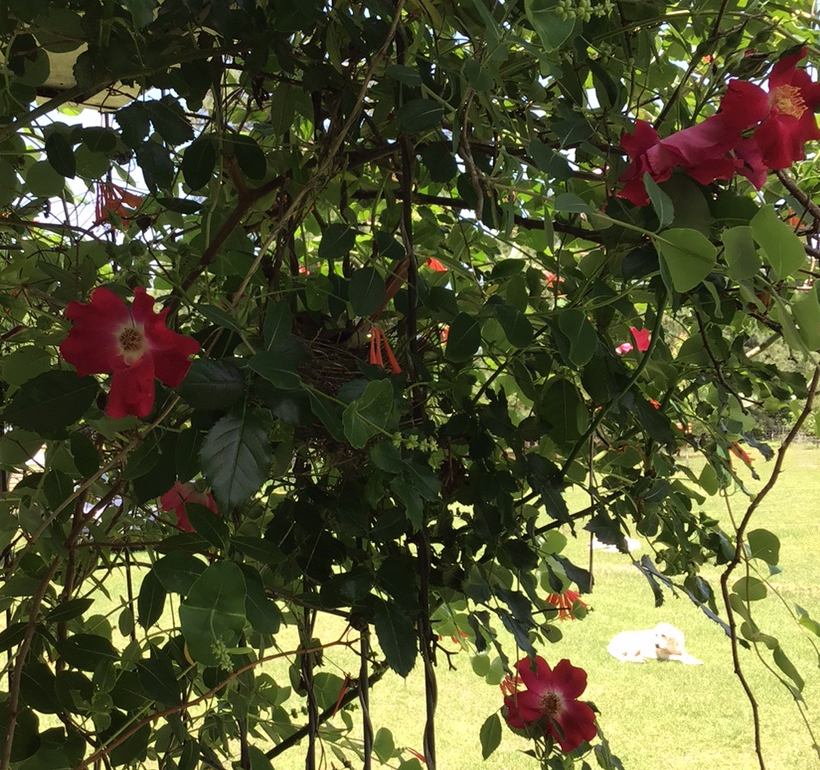
Swallows just out of the nest, and on the right, can you spot the Cardinal still sitting on hers?
Hummingbirds are so hard to photograph. They have wars over this coral honeysuckle every sunrise and sunset and throughout the day, but it’s nearly impossible to catch them at it. Wow, are they fast!
These guys aren’t easy to happy snap either, but we do so love when they pay us a visit! And thanks y’all too, cyber visits can be almost as fun (sometimes)! 😁
We have some happy snaps, one minute of piglets’ bliss and a couple garden successes to share today.
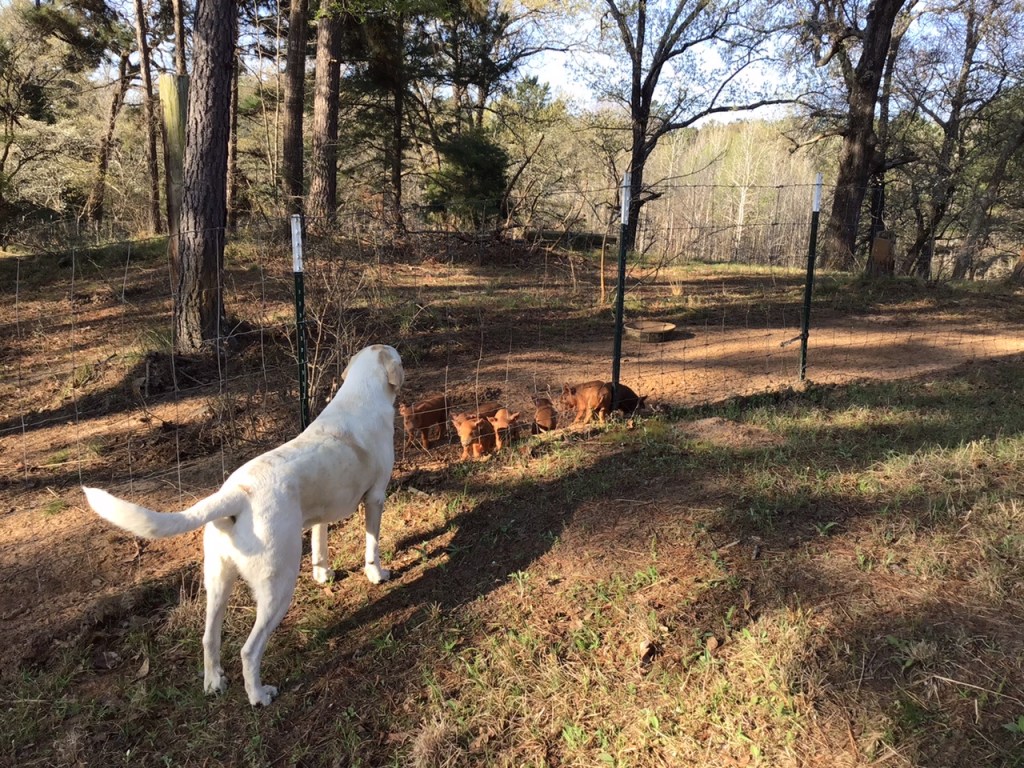
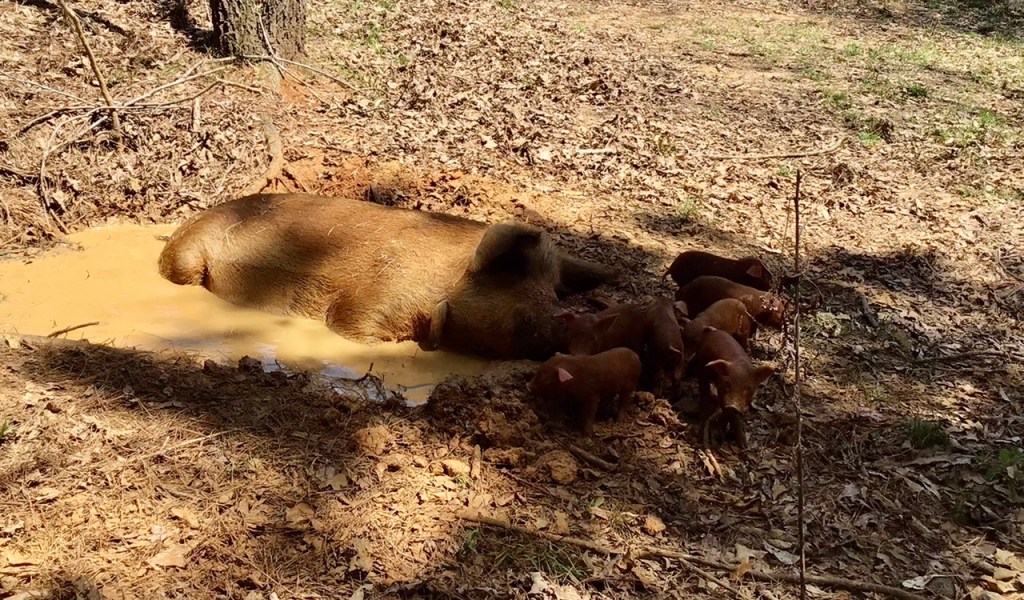
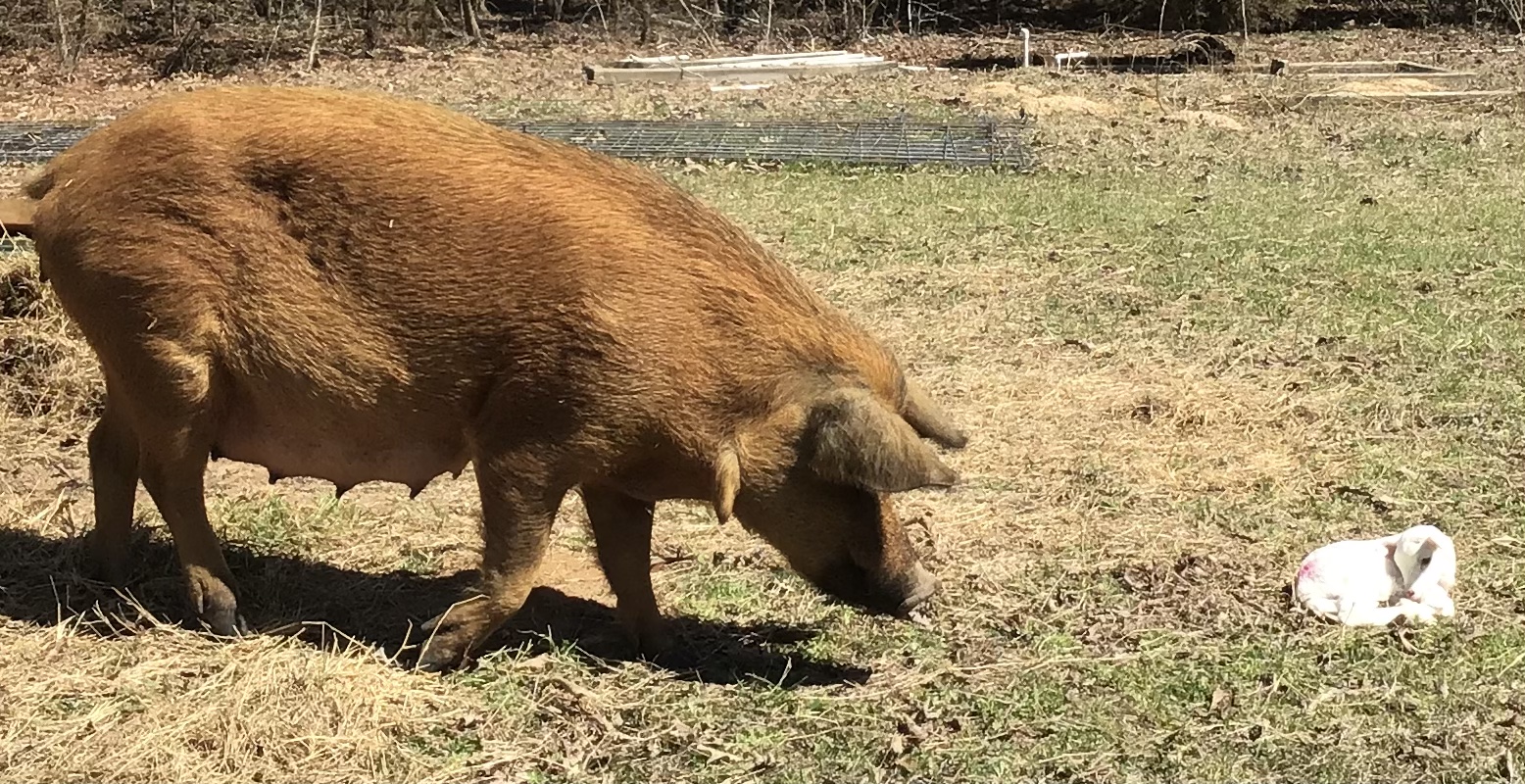
Mamas and piglets are venturing out already and enjoyed their first spa day. Unfortunately, Mama Chop did still squish two of her wee ones despite Hubby’s extra efforts, so both Mamas are now with seven. Virginia has proven to be the better mother, but we prefer Mama Chop’s personality. But, it’s not about us. Sadly this will probably be Mama Chop’s last hurrah.
Mama Chop with her Lucky 7Our semi-feral cat, Skittles, is becoming more domesticated now that there are only two dogs who chase her off. That is, if you call hissing and snarling for her supper domesticated! 😳
Moving on to the garden I’m pleased to report good news. The alliums are looking amazing, the best ever at this time of year., I expect that is due to our very mild winter and an extra helping of sheep poop. I love this time of year when chopped green onion can top every savory dish. Also, unlimited lettuces, for a limited time only. Once the heat sets in there are only a few varieties that survive, arugula and oak leaf primarily, and even those still have a tendency to get too hot or bitter and bolt quickly.
Here we’ve got garlic, elephant and a few varieties of hard neck, plus white, red and yellow storage onions, shallots, and a pearl onion perennial that I highly recommend for hot climates (Bianca di Maggio). I’ve tried every type of popular perennial onion and this is the first time I’ve gotten them to last, relatively carefree, for two full years. Normally they do not last the summer. That could also be because these I grew from seed instead of getting sets.
Seed saving and propagation are big on my garden plans lately, not only because of the high costs we’re seeing. Some seeds naturalize very quickly to their environment and I’m regularly impressed at all the volunteers that have found their way into the garden over the years—including tomatoes, wild carrot, datura, tomatillos, jumping jacks, Malabar spinach and collards/kale. In some cases I’m planting these purchased seeds and they don’t do that great the first year, but the volunteers that come back thrive with no care and even competing with some of our very pernicious grasses. Nature is so amazing!
Tis the season for pokeweed, a new and reliable favorite—that poor maligned and misunderstood plant I wrote about last year. We ate the greens all summer, the berries all fall and winter . … and we’re still alive . … go figure! So much mis-and dis-information out there on this delicious, nutritious and versatile, once upon a time Southern staple, that ‘science’ has tried to steal from us.
Two more such successes are strawberries and chayote squash. These are definite testaments to the old adage: “If you don’t succeed, try, and try, again!”
Why, oh why do you let weeds grow in your garden!? Oh let me count the ways . … the bees, the seeds, and, seriously how much time do you think I have?! Actually though, there’s a very good short answer for that—when you allow the deeply-rooted ’weeds’ to work among your short-rooted annual crops you have a magnificent force of nature at your fingertipes—those long tap-roots bring nutrients up from the depths in order to feed your fancy annual crops their otherwise lacking essential minerals.
The chayote squash, pictured left, I’ve tried to get established a minimum of five times. Even this time, the one I expected to live has died and the one I expected to die has come back with impressive gusto. This is why the plants I really want to work I place in different spots of the garden, just to see, as extra insurance, even though this is often inconvenient and seemingly counter-intuitive.
Same thing with the strawberries. Texas gardeners don’t have an easy time with strawberries or blueberries, they both prefer cooler climates. Most gardeners here who are serious about strawberries either buy new plugs each fall for the spring crop or dig up their crop and store them in the fridge all summer until the fall planting. This is too much work and/or expense for us here, yet I’d love to have at least a small, but reliable, crop of strawberries. This time did the trick so far, but only time will tell. At least I’ve got them not only surviving the summer, but also spreading. I used a couple of folk tricks I heard over the decades. One is from Finland—put them with the asparagus, I was told. But alone that did not do the trick. So, I tried them where the asparagus had been, but also where the Indian strawberries had been growing wild. Success! So far . …
Huge days on the wee homestead! The pigs and sheep have all had successful births without a single hitch. Mama Chop did lose a couple, but she has such large litters that’s not such a bad thing. We were very concerned about her as she crushed her last two litters, literally, not in the new way of the term—She crushed it! Nope, in the old way, as in she smooshed them all.
Hubby was able to prevent that sad ending this time by clearing out her corral space of every last twig. She was in the habit of building huge nests, full of branches and twigs and so steep the piglets would roll right off it, falling between branches and getting pinned whenever she moved around. We were worried with another total loss we’d have to get rid of her because we like her so much, she’s so gentle and good-natured. She loves company and will even go on walks with us. It is truly amazing how graceful these huge creatures are around those tiny, squirmy little things!
I did not mean to hit ’slo-mo’ during this video, oops! Need to work on my skills.
Virginia had a similar setup to Momma Chop, but she wanted nothing of it. She went off into the woods to build her own nest, her way. Luckily she doesn’t have such a penchant for branches and twigs. She’s got more of the wild side in her attitude as well as her nesting preferences. And she certainly does not appreciate prying eyes and will come after anyone who gets too close to her brood!
Peek-a-boo! Yes that is Hubby running away from one irritated mama!
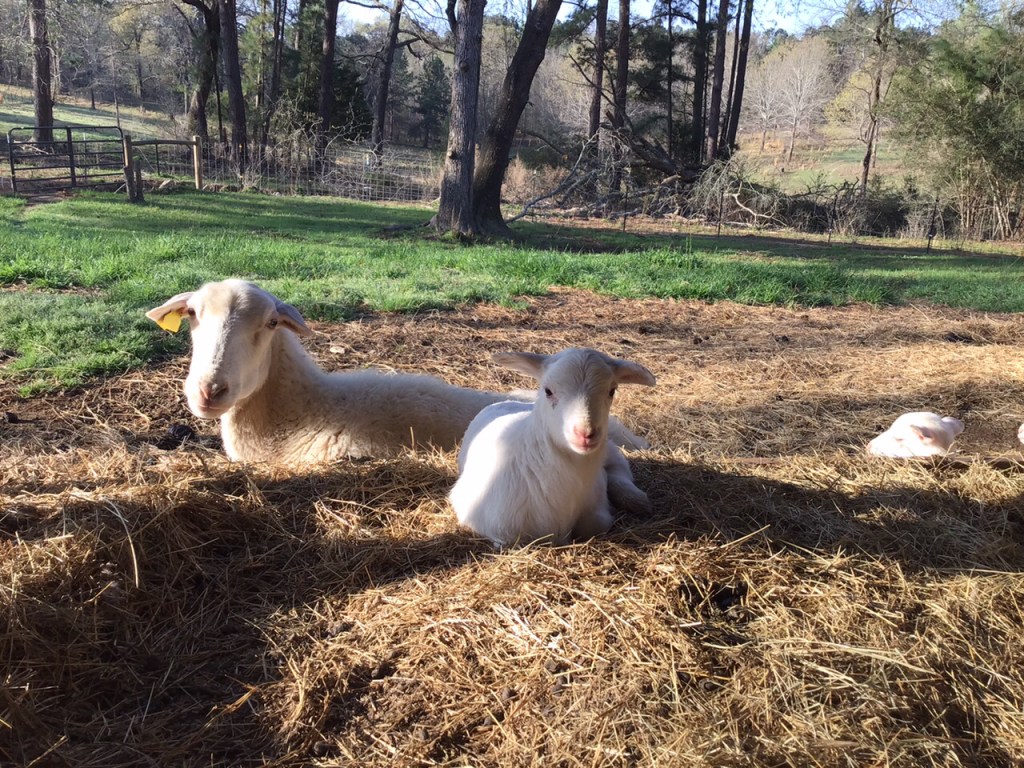
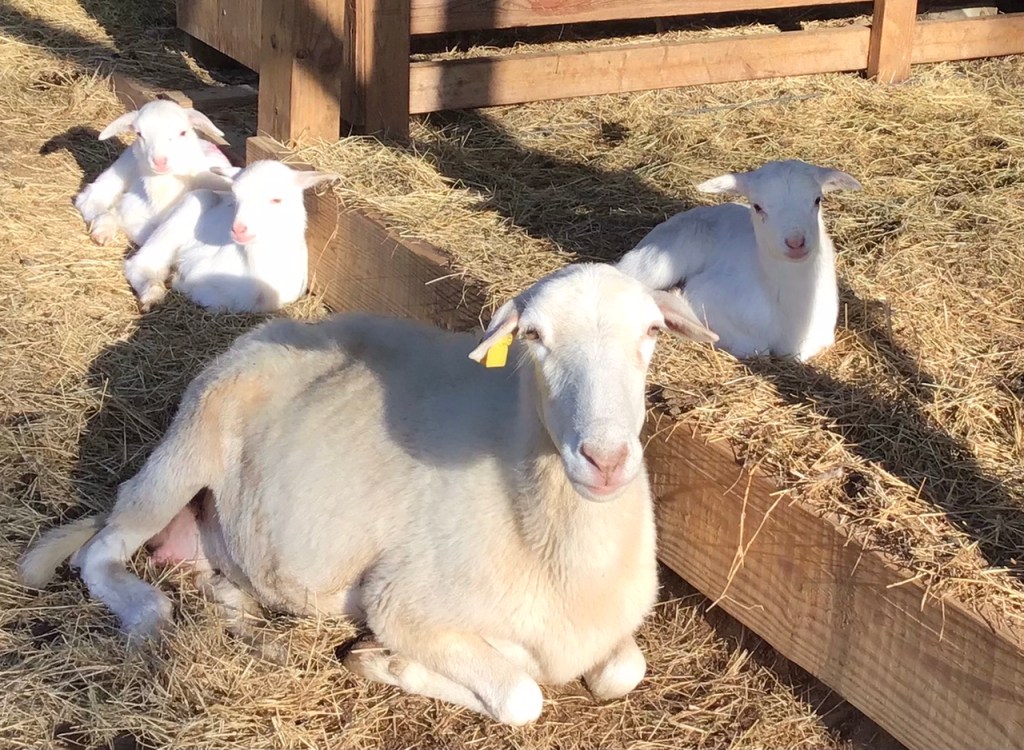
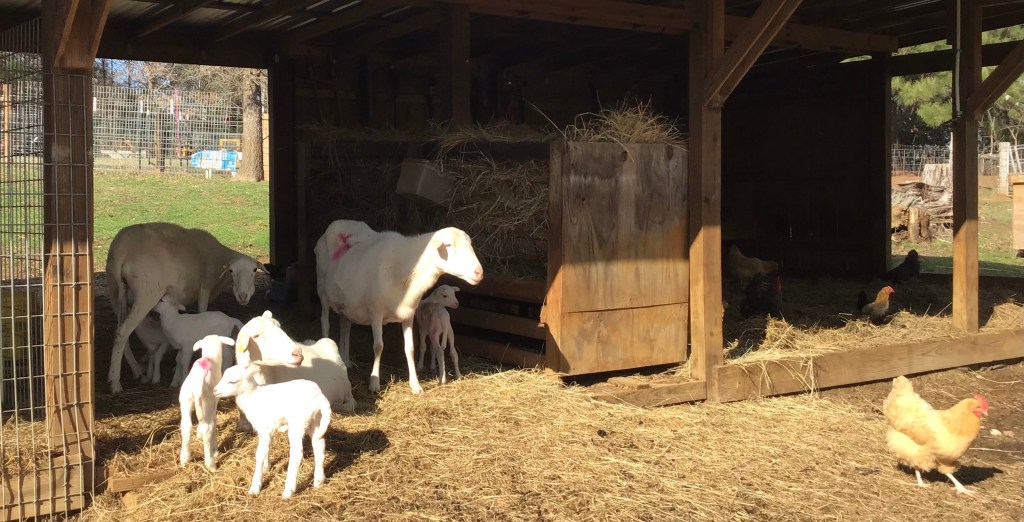
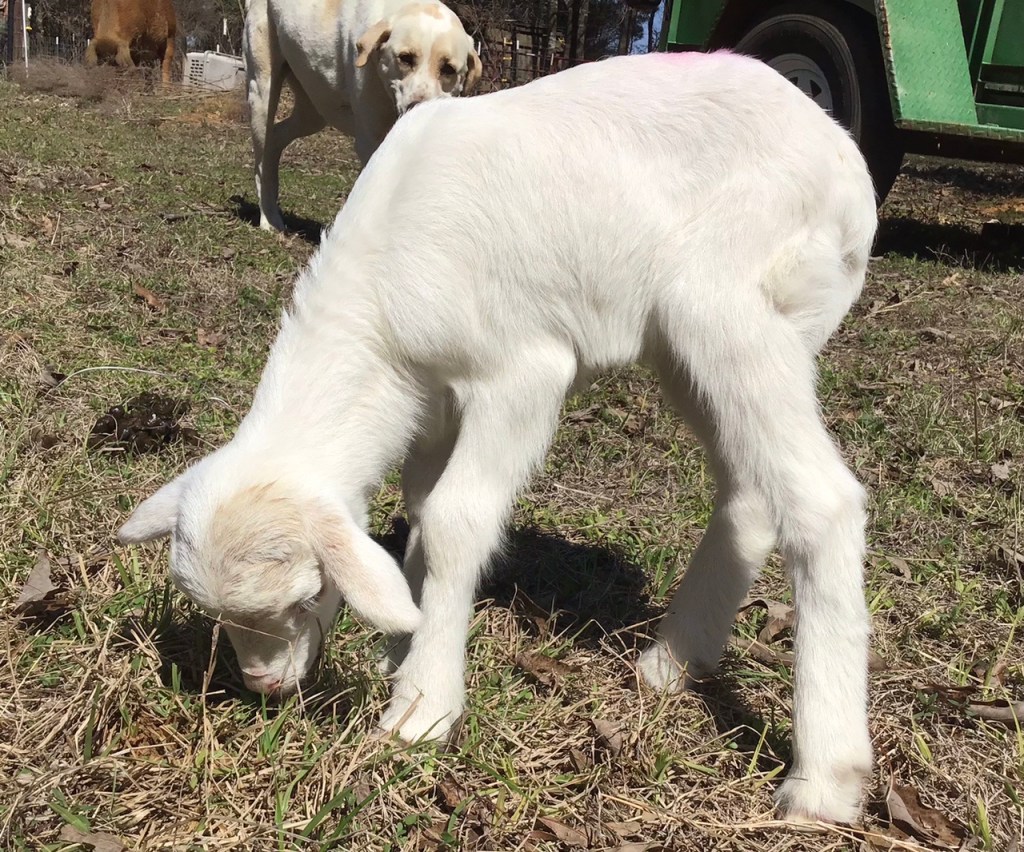
Watching the little lambs play, and sleep, is so cute. But I expect when the kids come next month we’ll really be in for a comic treat! It will be our first experience with goat births and I hope it goes as smoothly as the sheep did this time.
Getting friskier by the day!
We have a new visitor to the garden which surprised us.
It’s been there every day now for about a week and I’ve never seen one like it around here before. It flies just like a hummingbird and had us quite confused. It was darting all around so fast and so far that it took me about 10 minutes and 30 attempts to get one decent shot of it. After some searching we learned it is some kind of hawk moth. Fastest moth in the west? Sometimes I undervalue the usefulness of the Internet, I might’ve been left baffled on that simple identification for a lifetime!
Not to mention the joy of sharing these simple pleasures with y’all!
Not bound to exploit. Not obsessed with production. No concern for profit extraction. Not driven by expansion. Treatment-free. Liaisez-faire. Non-industrial, anti-commercial beekeeping practices.
Beauty. Synergy. Cooperation. Respect. Reverence.
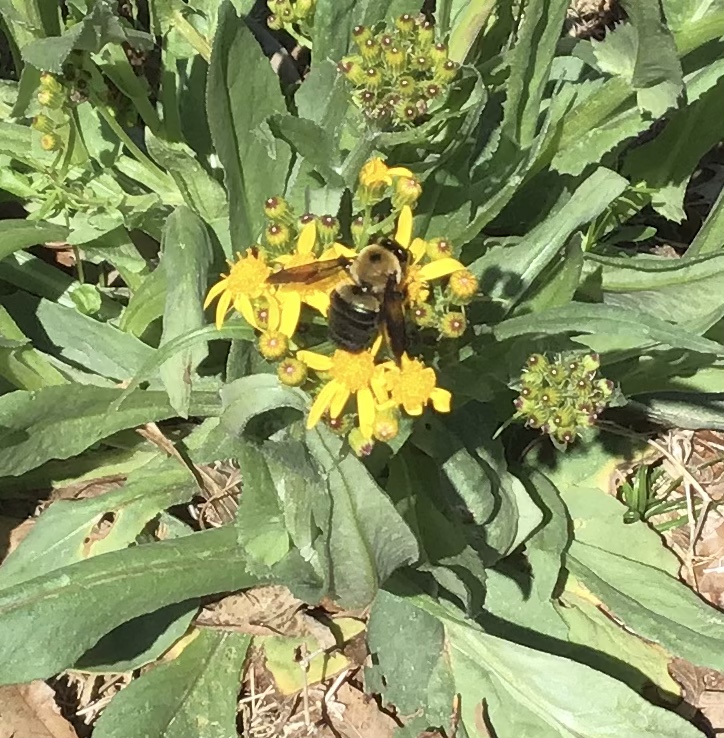
Not my bee, but the first native bee of the season enjoying the Texas squaw weed—plenty of forage for all around here!
If you guessed these unconventional methods are far from popular around here, you’d be correct.
I don’t even have a bee yard. I do have 5 strong, sustained colonies (aiming for 7) scattered around several acres, which is the best beekeeping decision I’ve made in about 5 years.
It is the intense crowding of many colonies into one space that is so unnatural that it then commands chemical treatments for bee health. Artificial solutions are never the best solutions. I rarely even feed my bees, I consider that a treatment. On those rare occasions I do, because my observations have led me to suspect they are without reserves, sometimes I’ve been wrong, and the bees aren’t remotely interested in my offerings. They prefer to forage over taking my junk food.
Not my gorgeous photo, unfortunately! Taken by a friend with the latest IPhone, WOW, color me impressed!
By observing intently over time and looking to mimic nature in every way possible, I’ve come to realize how hopeless is commercial-style beekeeping for the small holder, just like all our industrial ‘solutions’ are a never-ending Ferris wheel of problems and solutions, all the way around. Industry comes to drive the entire tradition-turned-enterprise right into the ground.
Well, no thank you! And I haven’t had to buy bees for several years now, thanks to my new-old methods, which is certainly another motivator for commercial beekeeper’s scorn, considering they often make a good chuck of their profits from returning customers—that is beekeepers who follow commercial methods even for their handful of hives—buying nucs and packages and queens from the ‘Big Guys’ who sell themselves as the experts on all things bees.
In other words, the beekeeping industry strongly resembles the pharmaceutical industry, and pretty much every other global commercial industry. One model for all endeavors. One noose for all necks.
All but one of my hives is top-bar, another source for mocking by conventional beekeepers of all ages. But it does seem like alternative types are squeezing their way in through the cracks. And plenty of cracks there are. Not just top-bar fans.
Hard to tell from my bad photo, but this is an observation window on a top-bar hive. I hear other beekeepers pooh-pooh this regularly. I love it! And the bees don’t seem to mind either.
I’m not on any of the popular social media sites, but I know there are treatment-free groups, full of curious kindred spirits, some with bee-loving pseudonyms instead of their real names, like poor, paranoid anti-vaxxers. Oh, lovely lurkers, come out of the shadows to stake your claim! You dare to brave the bees’ stings, surely some stings of misplaced criticism can’t scare you away?!
The bees are just one of many bustling with spring’s promises.
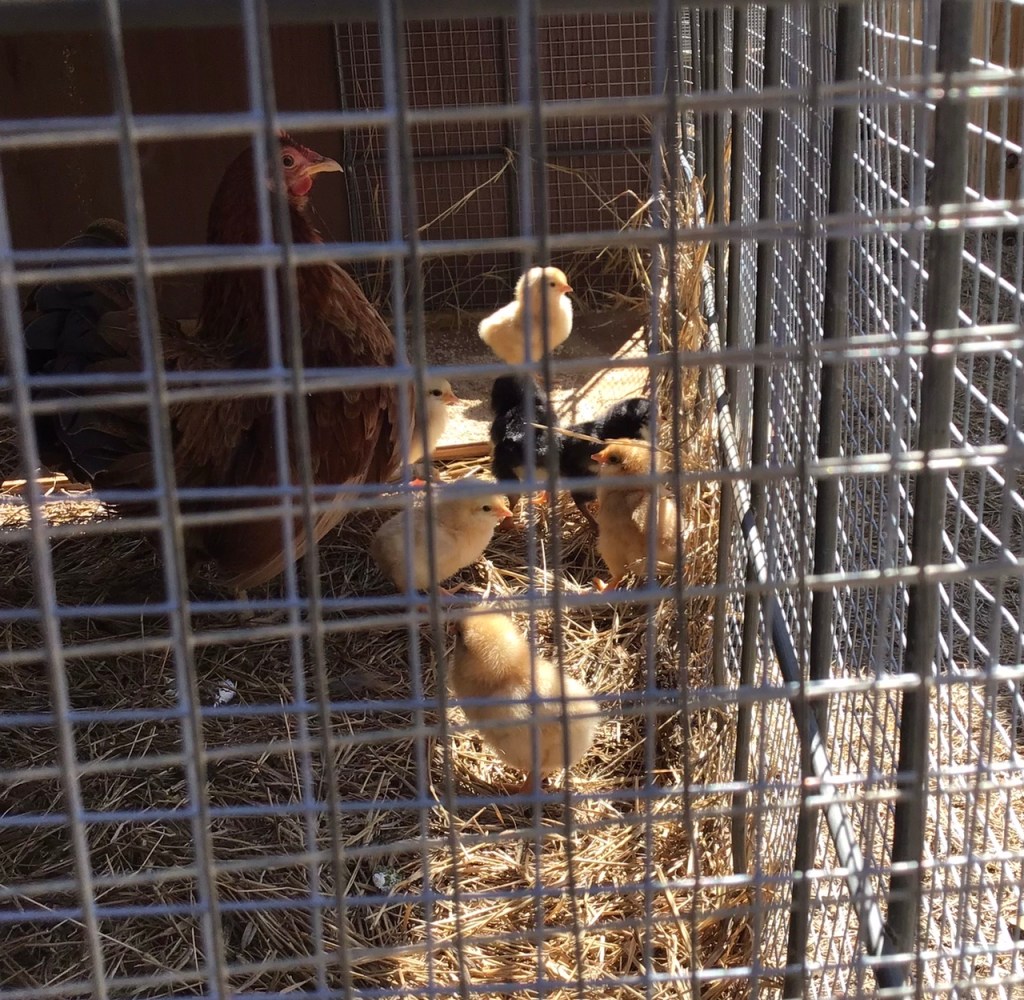
In other news, happy chicks are here, with no snakes in sight. (In the new, ultra-high security coop within coop, 100% snake-proof. Right?)
We are still waiting on the piglets, the rest of the lambs, and the kids, while trying not to let our anticipation get the best of us!
I LOVE cheese day and it’s been a very long while.
It’s been several months since I’ve been milking our ‘old’ goat, Summer, and it will be a few months more before I start milking her again, along with Phoebe and Chestnut, intending that all will go well with their first kidding, and I will be able to train them on the milkstand, which will be as new to me as it is for them. Big intentions!
Friendly PhoebeChilly Chestnut
I’m not too worried about Phoebe, she’s much more tame and mellow and loves to be petted. Chestnut darts off as soon as you try to touch her and is even skittish when hand feeding.
The first lamb of the season has just arrived! Now that Handy Hubby is ‘retired’ he gets to handle all the stressful parts while I pop in for the awes and photo ops. Big win for me! It’s not that things are constantly going wrong, but it does take preparation and attention and concern, because sometimes things do go wrong.
But not this time! While Hubby runs around, making sure the little lamb latches on in due time, gets the feed and stalls prepped and ready for a bunch more births, I make cheese.
It’s a very slow process, traditional mozzarella, it takes all day. Yesterday I experimented with a new cheese of my own invention, which is just about my favorite thing to do in the world. I would bore you with the details, but I fear you’d be really bored.*
Another new Hubby project has been the ultra-high security broody fortress. Walls within walls. He’d finished the Tajma-coop and hoped our predator problems were solved. He’d planned for practically every type of previous invader—raccoons, hawks, possums, coyotes—with the exception of snakes. He’d hoped between one cat, 4 dogs and constant hoof traffic the reptilian raiders would retreat. No such luck. We lost lots of chicks and Bantams to snakes.
Surely this will be the ultimate solution?
Hubby sporting his wild side, which I much prefer to his straight-laced pilot persona. Though of course I have deep gratitude for his professional efforts too, not just the relieving of them, or we’d never be where we are now. (Thanks, Brandon?! And, where else shall I send the thank-you notes??)
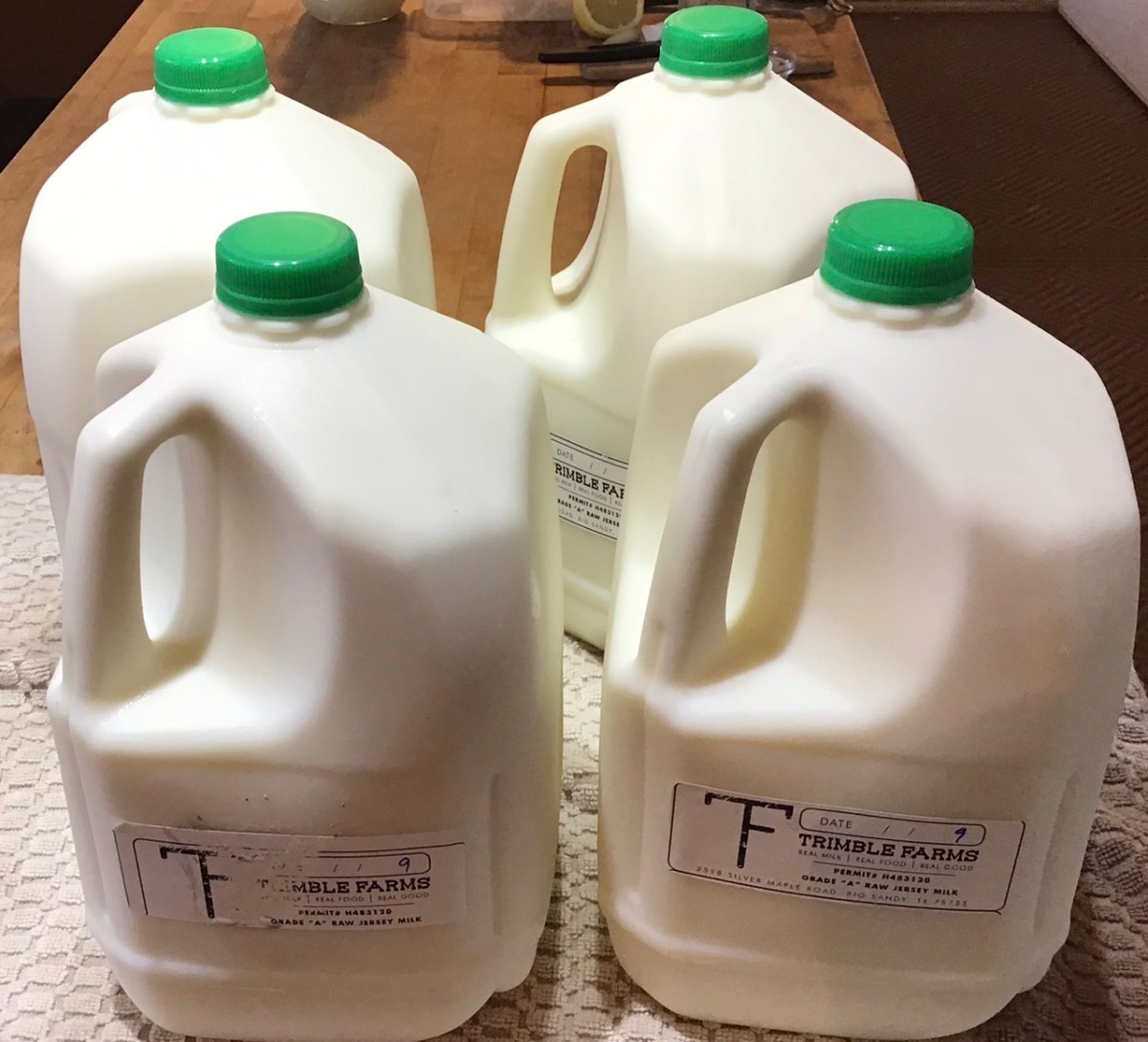
I used to have regular cheese days. I would drive four hours round-trip for the only raw milk available in the vicinity and get up to 20 gallons and have a cheese-making marathon for four days straight. It was perhaps a bit obsessive.
That was a few years ago, now it’s a real luxury. Since then the cost per gallon of raw milk at that farm has gone from $6 to $9. Add to that the cost of gas and time (and my personal waning energy), we really can’t afford it anymore.
Instead I’ll be milking goats and making mostly small batch cheeses, including all my favorites, which is pretty much all of them, especially Camembert, Muenster, and traditional styles of aged chèvre. I do believe I’ll be very satisfied with my new arrangement!
This time I got 10 gallons and a friend did the pick up, another win for me. She, like me, started making cheese and bread mostly out of snobbery—we are ‘foodies’ (I prefer the French term ‘gourmands’) and the selection of these staples in these parts was akin to an inner-city food desert. Industrially-produced, plastic-wrapped crap only, of the lowest quality.
Like I said, it’s a luxury at that cost, but from it we will get better cheeses, yogurt and buttermilk than money can buy.** Not only do we get the cheeses, but the whey goes to great use too, for ricotta, for soaking grains, and for the critters at just the time they are in need of extra nutrition.
Incidentally, mozzarella is not a raw milk cheese. Still, the flavor of the traditional home-made style is far superior to those which are industrially-produced, including the ‘fast mozzarella’ that most home cheese-makers prefer, since it takes about an hour versus all day. That version is also delicious, and I make it sometimes too, but the flavor and texture between the two is very different.
Our semi-feral cat, Skittles, comes around regularly now that our house dogs are no longer a constant threat. She’s getting her day in the sun at last, enjoying her curds and whey.
As there is a lot of kitchen downtime with traditional cheese-making methods, I make sourdough bread and pizza dough between steps.*** Or sometimes pestos, or condiments, or Kombucha (my latest fantastic flavor is pine needle), or soups and salads. Before I know it, an entire day in the kitchen has swooped by, me barefoot and content, and still in my pajamas.
And very happily not pregnant!
*Actually, I’d be happy to bore you in the comments section if you have any cheesey comments or questions.
**Sorry to say, but the raw milk cheeses you think you are buying at the grocery store are actually semi-pasteurized, they just changed the definition. As per usual.
***While listening to podcasts, usually. Richie Allen was on the list today, a good choice as it was a call-in show on the subject of prepping. https://podcasts.apple.com/us/podcast/the-richie-allen-show/id1090284266?i=1000553479020 I don’t identify as a prepper myself, necessarily, even though pretty much any American who looked at our lifestyle would say we are. The third caller on the show is a self-identified ‘doomsday prepper’ in Alaska. She was great, shared lots of good info and talked about how she grew up that way, as did her parents. I don’t really consider that ‘doomsday prepping’ either. This is a lifestyle to me, one that deserves to be continued through the generations, not just during precarious times, and I’m sure she would agree. Being prepared is important and I think everyone should make a concerted effort on that front, especially in times such as these. But I see this lifestyle is a special sort of calling and it’s not going to appeal to many folks, and it doesn’t have to. It’s enough for those so inclined to preserve it and to treasure it and to keep that flame of living intimately with nature alive. It sets an example that is much needed these days as it is not in the modern Western way of a recreational relationship with nature or the profit-driven exploitive relationship with it, but a real, old-fashioned, hands-in-the-dirt sort of cooperation. You’ve gotta really love it, really want it, or it will never work for you.
Busy days on the wee homestead as spring moves in. The seasons change, alas the chemtrails do not. The weather whiplash as well. But I must admit, I take quite a bit of hope and satisfaction that in the many years I’ve been bitchin’ about this, folks seem to finally be taking some serious notice. Either that, or my scope is conveniently narrowing. No matter. However the media tries to distract us, what’s truly important is happening in and all around us, not out there somewhere.
Insert ’gross face’
Handy Hubby has been busy in the back 40 clearing more pasture and getting the various spaces ready for the soon-to-be coming babies—piglets and lambs and kids and chicks. I’ll be posting lots of those pics when the time comes!
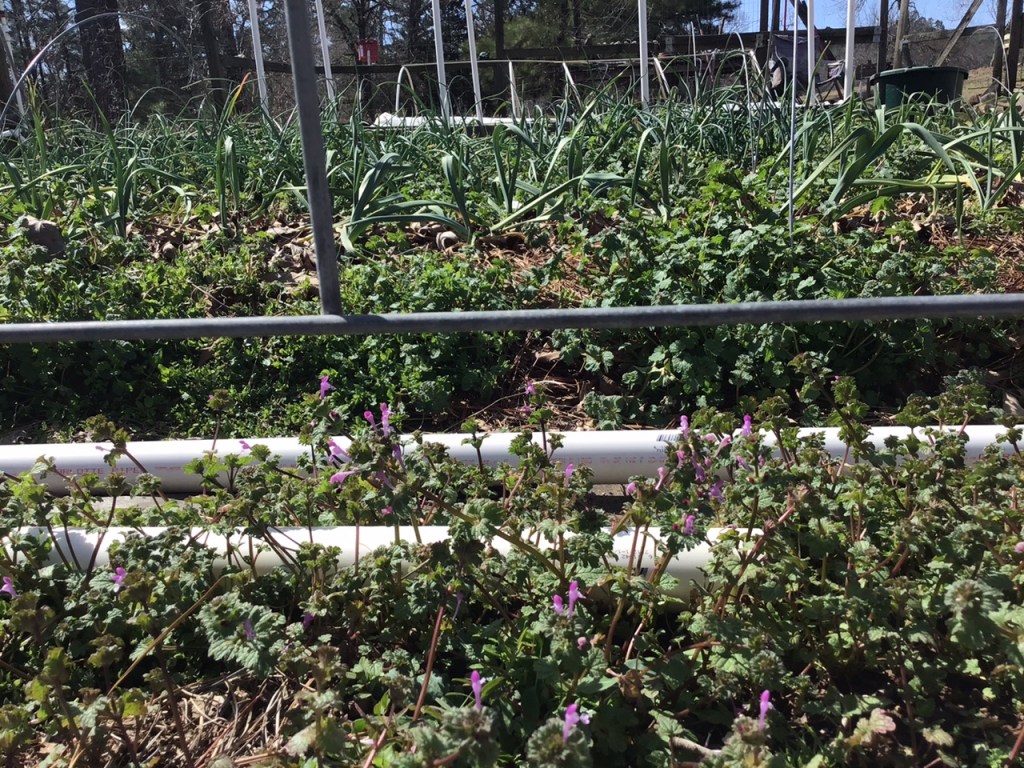
I’ve been busy in the garden and the bees are just starting to get busy, too. Only one colony failed over the winter, so that’s looking promising. We have loads of henbit blooming, but the bees seem to be preferring the chickweed so far. I have seen them enjoying the henbit on other occasions, so I keep plenty of it around. Such fickle little fairies. 😇
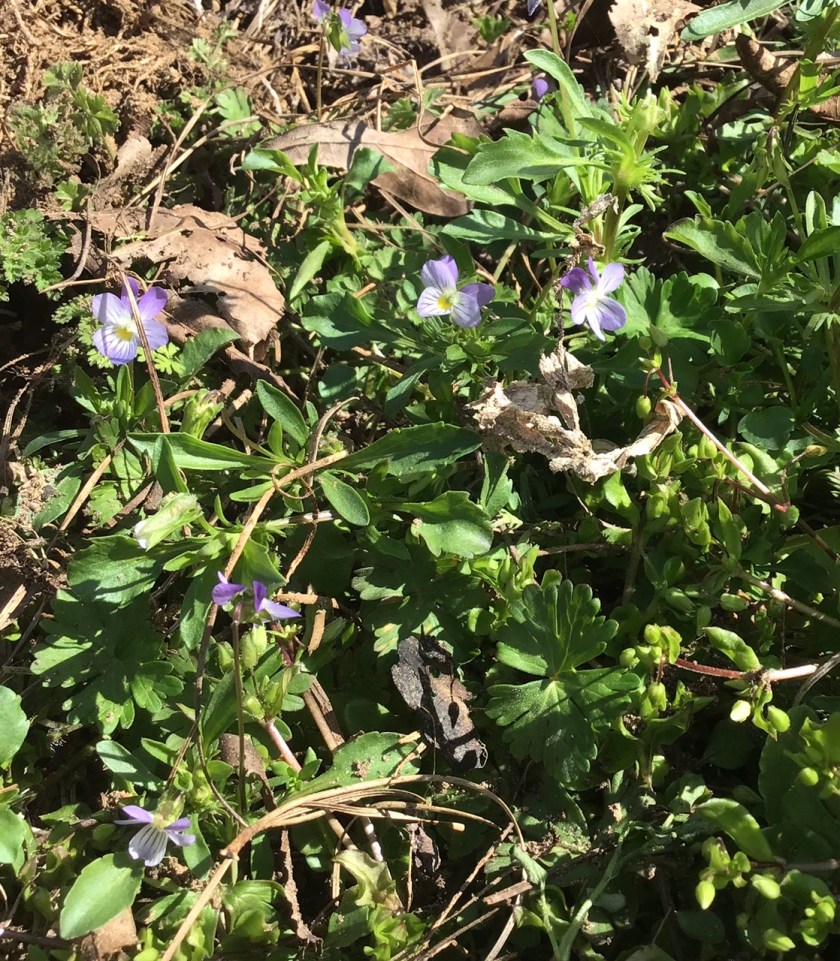
Chickweed and henbitWild violets, deliciousHenbit and garlic
The perfect pesto can be created from those three ’weeds’—henbit, chickweed and violets. It takes some patience, but it’s well worth it.
The box that kept us in salad fixings all the cold season, covered with row fabric on the frosty nights and days.
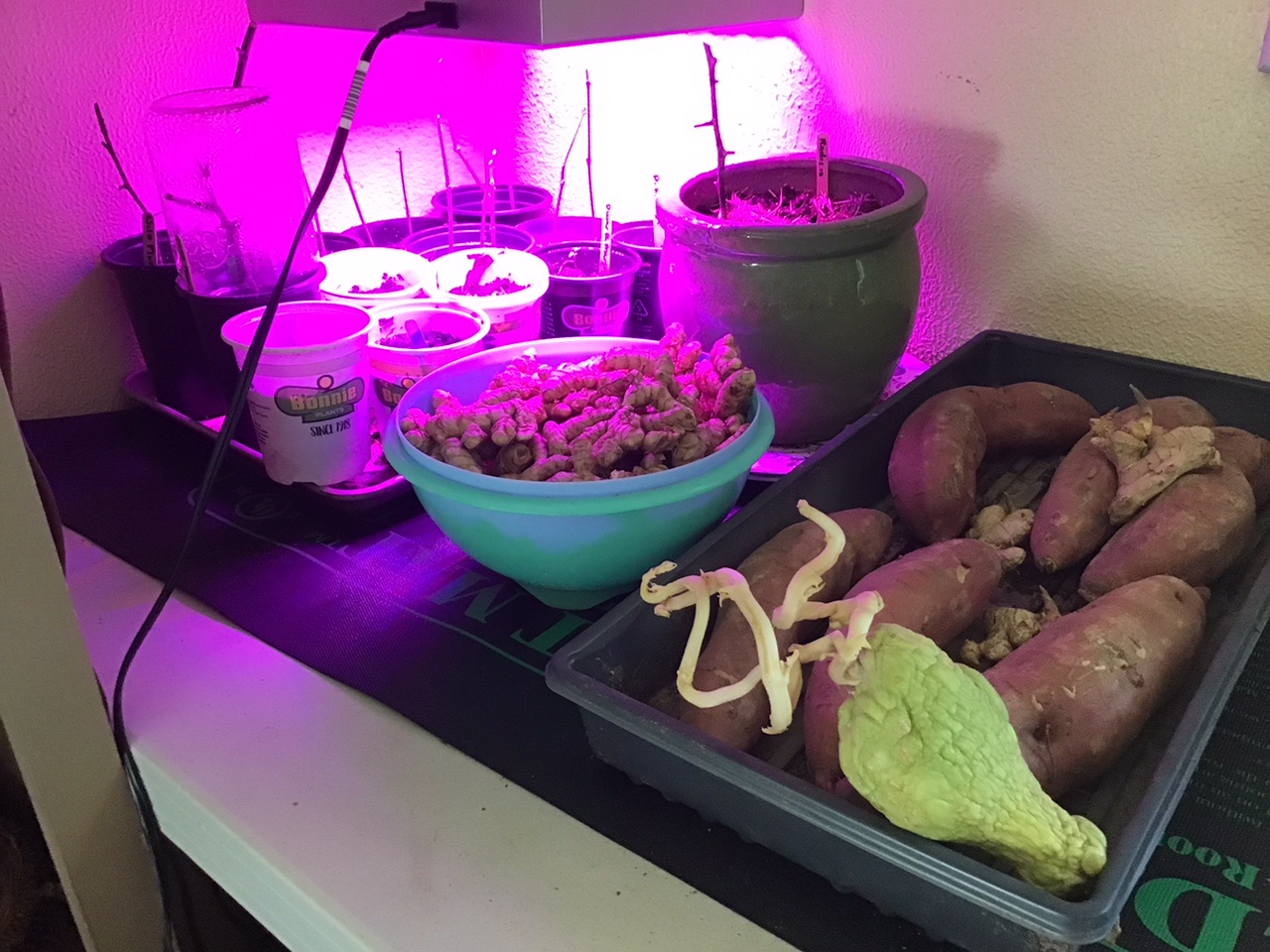
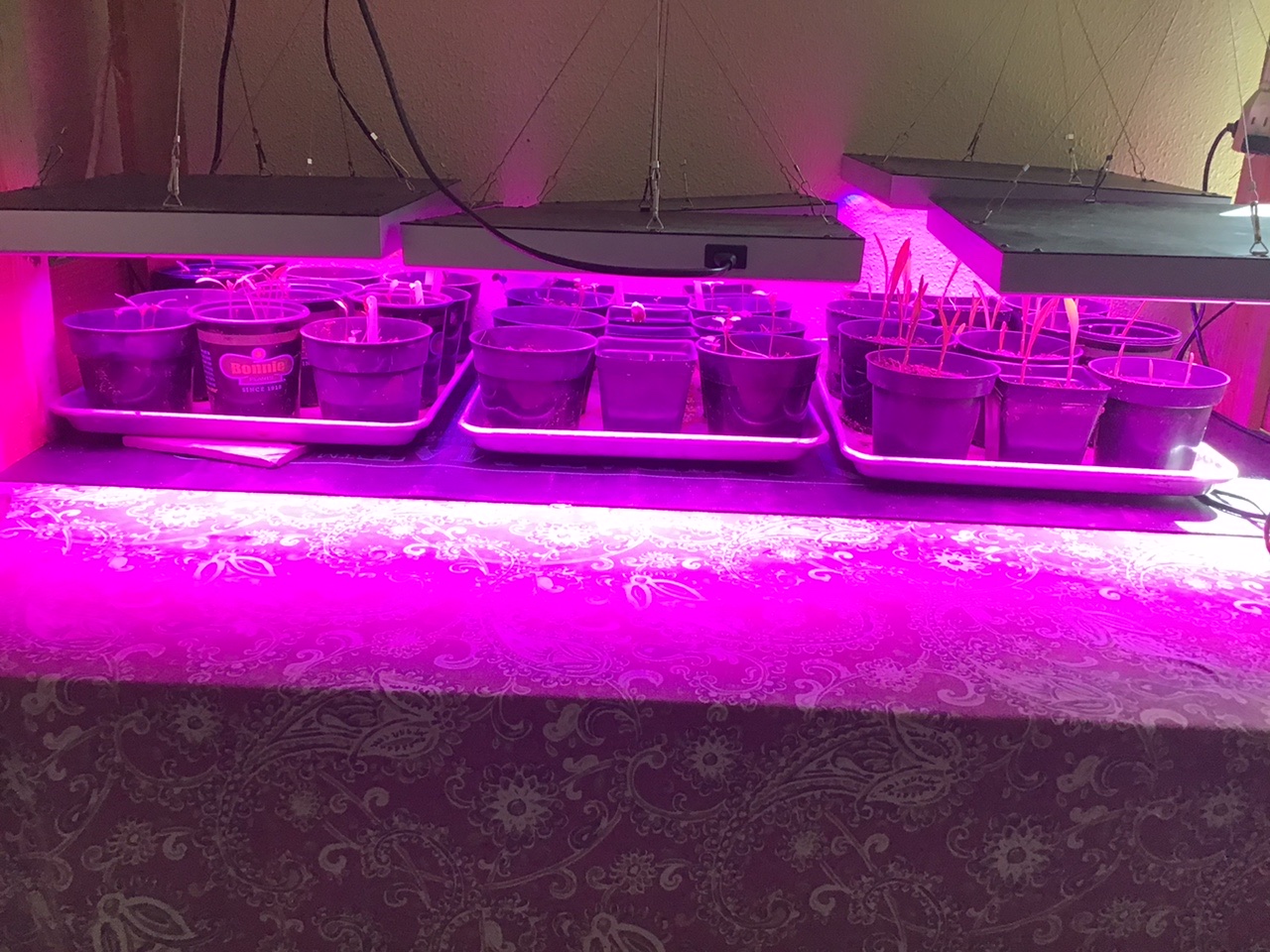
I’m pleased that the avocado and mirliton squash I over-wintered inside did really well. Of course, I’m not counting my fruits before they hatch! I’m also trying sweet corn inside under lights for the first time. We often go so quickly from frost to 90 F degrees that it’s a ’beat the clock’ situation. In the middle photo are the sweet potatoes, ginger, tumeric and another mirliton warming up on a heat mat before putting them in soil to warm some more under lights before transplanting.
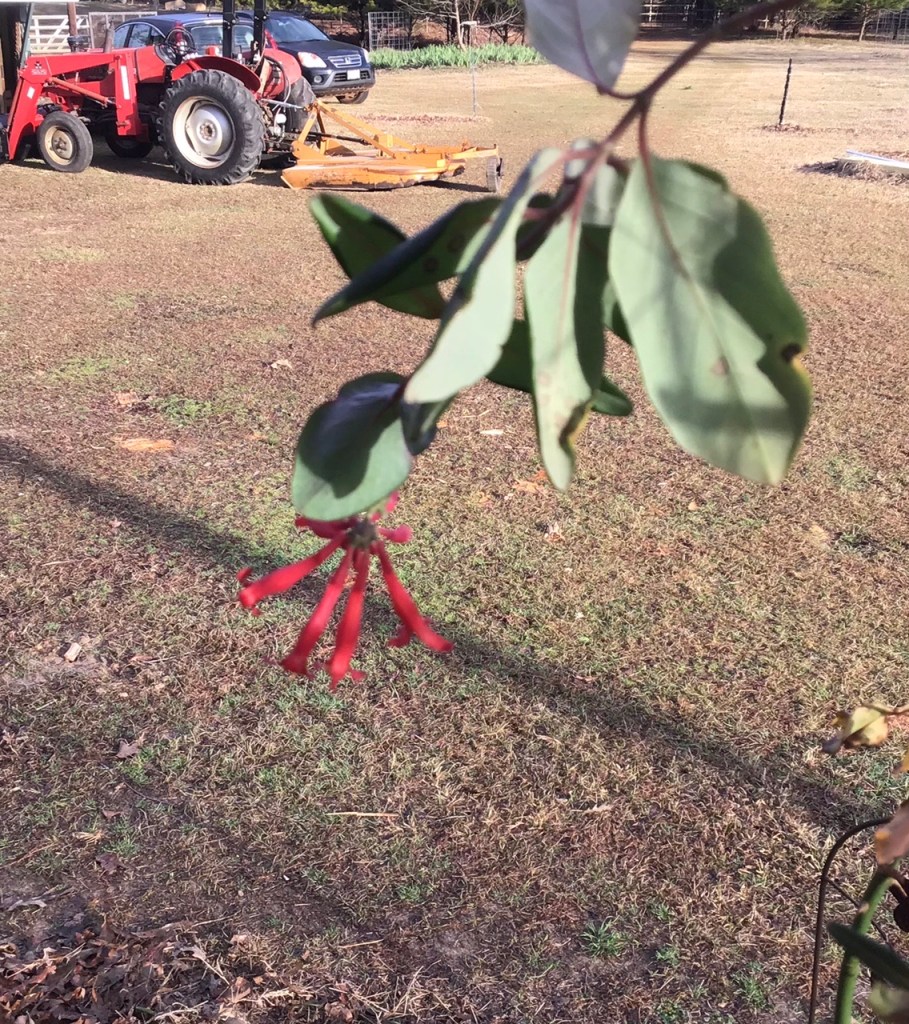
Coral honeysuckle—kinda proud of this one because I propagated it from one found in the woods. I’m experimenting with a lot of propagation ‘from the wild’ these days, time will tell, I mostly fail so far. Hubby’s old tractor in the background, it’s seen an enormous amount of work but keeps on ticking, with constant upkeep and much frustration on Hubby’s part sometimes. 😩
Garlic, shallots and a few types of onions going strong! That’s row cover on the right of the photo, for the weather whiplash. On the right you can see the garden from a distance, completely fenced, with a makeshift green house (the cover destroyed during the tornado a couple years ago) that will soon make it to the top of Hubby’s to-do list, I hope! 😏