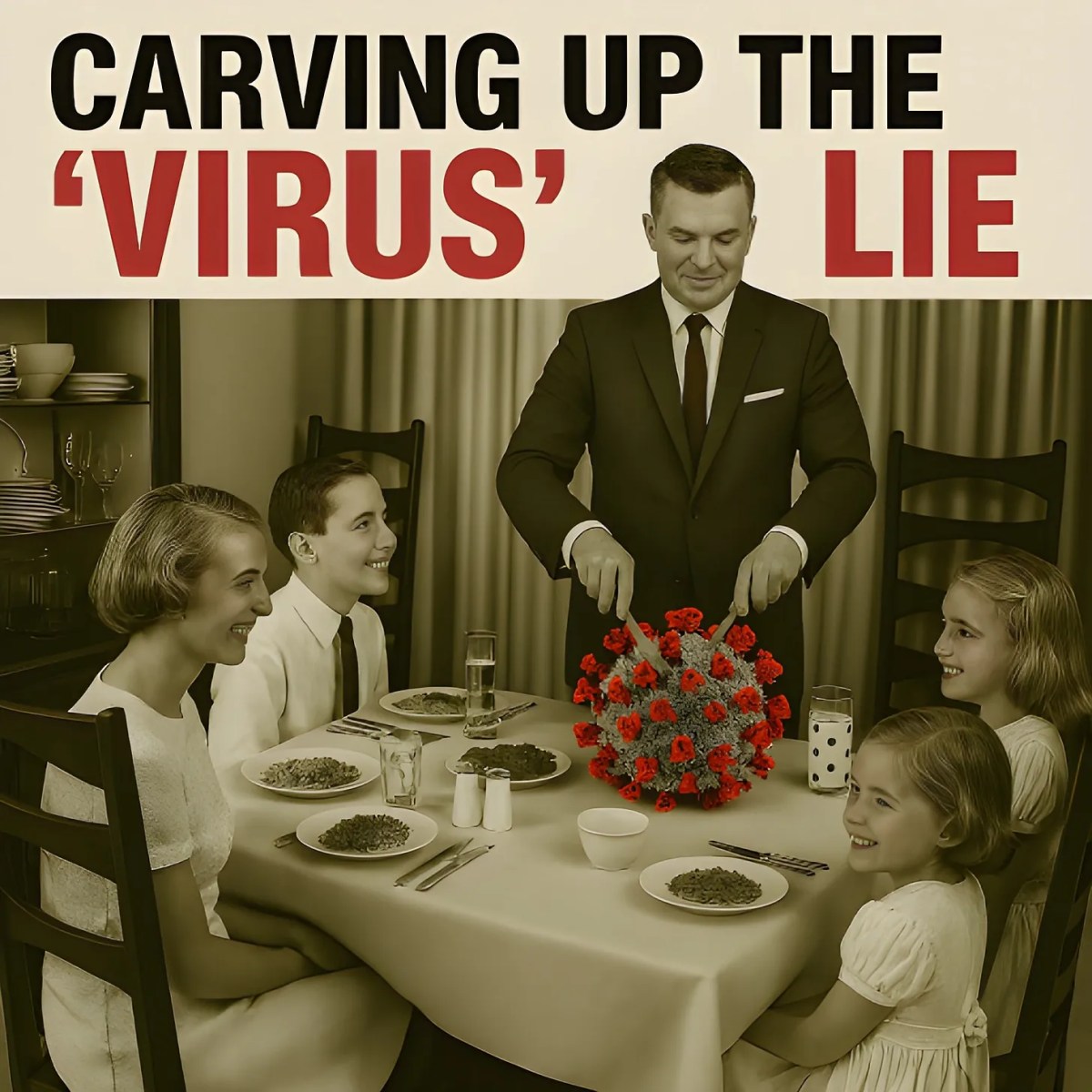
On Germ Theory & Cheesemaking Reality

I taught my Beginners Cheesemaking Workshop at the Senior Center and as always when teaching, I learned SO much.

Beyond the barely controlled kitchen chaos, of which I fully approve, there were the usual sort of mistakes to learn from, like why a random rennet failure for one participant, and why another’s curd did not want to separate from its whey. Those issues were fixed, total failure averted, which is the very best way to teach cheesemaking.

Lots can go wrong but most likely you’ll still have good cheese, that’s my primary teaching goal. It may not be the cheese you were going for, but that’s ok.

Do first, talk later, that’s how it should be with cheesemaking, according to me. There really is a method to my madness, and it’s staunchly ‘anti-science’. This is totally logical, because folks were making cheese LONG before anyone understood the science behind it. In fact, much of the science behind it is still disputed.

You don’t need to know what rennet is, or study a recipe first, or have all your ducks in a row before diving in. In fact, like with many new skills, too much information is actually an impediment to just getting started.

I like to allow the alchemical magic to lure the potential future cheesemaker into the process all on its own. Their desire for more knowledge, more structure, more understanding is a far more powerful teacher than I could ever be prattling on about all the minutea on the science of cheesemaking.

Which is more fascinating, the art or the science of cheesemaking? That will depend on the individual, but let’s face it, for most of us, art is far more fun.

So my moto is, let’s get in and get dirty! And we did, wow, did we make an impressive mess. A deep bow to the very kind ladies who did all the cleanup, I definitely scored there. I should’ve calculated better how much mess there would be, but what fun is there in that?

In my personal debriefing session once home and reflecting on the experience, I had a few ‘room for improvement’ points to make, but not around the mess or the chaos. (Note to self: bring extra cheese for the ones who get stuck washing up.)

Those details are important, but not nearly as important as the most important thing I learned, which is–folks out here don’t actually believe in germ theory. This is something of a revelation for me.

Despite the 5 extra bottles of hand sanitizer in the back room, and the chemically-scented dish soaps by the sink, and the properly clean kitchen that demonstrated good hygienic practices, once the ball got rolling, not a peep about bad bacteria was overheard.

We did eventually talk a bit about bacteria, and so-called germs and my disdain for anti-bacterial products and chemically-laden scents and their detriment to the cheesemaking process, not to mention general good health.

But in practice it was pretty clear the bad germs propaganda was not fully instilled in this clever group of girl and ladies (and our one token man who chivalrously helped me with all the heavy lifting).

Right into the cheese pot went many pairs of bare hands to stir the curd without a moment’s hesitation. I was immediately and very pleasantly surprised.

Then, because of mistakes in one group, and excesses in another, the curds of many pots became communal. A dozen pair of hands, not one that had been scientifically anti-bacterialized (I brought my own soap, which they all used, and several raved about) salting and pouring and forming and pressing.

And while I could see in my mind’s eye my mother’s face pinching into a look of mounting disgust, all I could think was, “This is so awesome!”

Teaching beginning cheesemaking has one crucial thing in common with teaching adults beginning a foreign language: The biggest hindrance to success is fear of failure. And, constant failure is the only way to learn how to do it.

Our education system, in addition to forcing on children such complete nonsense as germ theory, instills in them very early on to harbor a fear of failure.

If I could re-educate around one axiom the entirity of the Western schooling system it would be to learn to fail first, so you get good and used to it.

Take the shame out of failure and watch as the love of learning soars.

Here’s my ‘All you need to know about learning in 3 easy lessons’:

Lesson 1: Fail.
Lesson 2: Learn from those failures!
Lesson 3: Rinse & Repeat!!

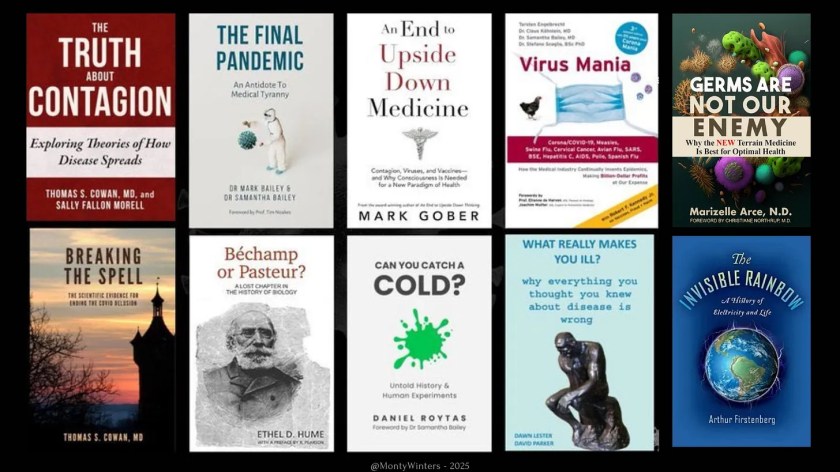
And now, let’s learn a thing or two about the failure of the modern pseudoscience known as germ theory from Dr. Nancy Appleton in her book “The Curse of Louis Pasteur: Why Medicine is not healing a diseased world” as reported in the interview/synopsis by:
Lies Are Unbekoming Substack.
https://open.substack.com/pub/unbekoming/p/the-curse-of-louis-pasteur?utm_campaign=post&utm_medium=email

Version 1.0.0

“You’ve spent your entire life believing a story about disease that simply isn’t true. Every time you’ve reached for antibiotics, every time you’ve worried about “catching” something, every time you’ve surrendered your health to medical authority, you’ve been operating under a fundamental misconception that has shaped Western medicine for over a century. Louis Pasteur’s germ theory – the idea that we’re sterile beings under constant attack from external microbes – didn’t just become medical dogma by accident. It triumphed through a combination of political connections, self-promotion, and what we now know from Pasteur’s own hidden notebooks was scientific fraud. The theory promised simple solutions: identify the germ, develop the drug, conquer the disease. But here’s the thing about simple stories – they’re usually wrong.”

This isn’t just an academic dispute between dead scientists. Right now, your body is maintaining thousands of delicate balances – pH, blood sugar, mineral ratios, temperature – through feedback loops of staggering complexity. Walter Cannon called this state homeostasis, building on Claude Bernard’s revelation that we don’t actually live in the external world but in our own internal fluid environment. When this internal environment stays balanced, you have energy, clarity, resistance to disease. But modern life assaults this balance relentlessly: 150 pounds of sugar per year disrupting blood glucose, chronic stress flooding your system with hormones meant for brief emergencies, thousands of chemicals your liver was never designed to process, processed foods that can’t be properly digested. Your digestive enzymes fail, partially digested food leaks into your bloodstream, your immune system exhausts itself fighting food particles instead of threats, and those helpful microorganisms in your body start changing into forms associated with disease. The symptoms you develop – the arthritis, diabetes, chronic fatigue, cancer – aren’t random attacks by germs. They’re the predictable result of your internal environment breaking down.

And this is where the curse becomes clear: by convincing us that disease comes from outside, that our health is beyond our control, that only medical experts with their drugs can save us, the germ theory has robbed us of our power. We’ve become a society spending over a trillion dollars yearly on healthcare while ranking dead last among developed nations in health outcomes. We’re first in infant mortality, cancer rates, chronic disease, and pharmaceutical consumption. The medical system excels at crisis intervention but has completely failed at prevention because it’s been looking in the wrong direction for over a century.”

I have not read this particular book, but these quotes repeat what a great many experts have been publishing for as long as Pasteur has been relentlessly promoted in their stead. They have been, and continue to be, buried beneath pseudoscientific propaganda in order to sell a lot of chemical crap to the public.

It’s been through reading some of these works combined with nearly 15 years of cheesemaking I’ve come to realize a few crucial truths:

*Air-born ‘viruses’ have never been scientifically proven to exist.*

*Trying to abolish bacteria to create a ‘sterile’ environment does more harm than good.*

*Fear of contagion is FAR more contagious than the so-called contagious diseases.*

    I’ll let the experts argue amongst themselves all the fine details of the various theories which were buried so that Pasteur could dominate public health for over a century.

    I know enough from my limited research what is necessary to lead a happier, healthier life and I’m so pleased to know that while the general public may go through the motions to pay some lipservice to germ theory, in all practicality, a lot of them don’t really believe it either.

    The modern-day experts trying to unbury Pasteur’s contemporary critics and practices are pushing through the censorship and making life happier and healthier for a lot of folks. If you want to learn more, check out some of their work, loads of it is available for free.

    An easy place to start would be with Mike Stone:
    “In the past—even as recently as 2017, when I first began investigating—there was very little material available for those questioning the mainstream narrative, and what did exist was often difficult to find or access. Today, however, there is an abundance of resources—dedicated websites, books, podcasts, documentaries, Substacks, and more. As I noted three years ago, this growing community of independent thinkers has been reexamining long-held scientific assumptions—not only in virology, but also in bacteriology, immunology, genetics, and even vitamins/nutrition. By critically analyzing old research and questioning foundational claims, people are rediscovering logic and genuine inquiry in place of rote belief. This movement reflects a collective return to critical thinking, open discussion, and the pursuit of truth through shared investigation—a modern renaissance of independent science.”

    https://viroliegy.com/2025/10/02/antiviral-ep-1-virology-a-critique-of-its-foundations

    And many more . . .

    A Tale of Two Cheeses

    This is a repost of a few of my first cheesemaking adventures way back in 2015. I decided to repost it since not only is it Hubby’s favorite, but also because my cheesemaking workshop is right around the corner, so my cheese posts are getting more views lately.

    From the archives:

    I’ve now made nearly two dozen different cheeses. When I started out, my only raw milk source was a five-hour round-trip drive, I was aging them in the veggie drawer of the fridge, and I was following the recipes to the letter.

    I now have an aging fridge packed with cheeses, my raw milk source is at least in the ballpark, I’m creating my own recipes, and I may even spring for a pricey PH-tester. It’s been a long, fun road with a steep learning curve made in a relatively short time, which is what I say about pretty much everything in our adopted rural lifestyle.

    But the best cheese I’ve made so far was the third one I attempted, and it started out as a smelly, rather disgusting potential disaster.

    In our cheese-making class, we were strongly encouraged to take notes on our every hard cheese-making venture and being the diligent student I usually am, I do. This time was no exception.

    Has odd fishy odor” is at the top, middle and end of the third cheese’s entry. I was a bit reluctant to include the less-than-savory details as to why that might be.

    First, a bit of background on my past experiences with stinky cheese. I am no expert, I can’t even call myself a true aficionado, but I’m more cheese-fearless than most, especially most Americans. After all, I did live in France for a while, and spent a few months in Corsica, where I met the only cheese that scared me off.

    The Corsican cheese is quite popular and, being a sensitive traveler attracted to regional specialties, I was anxious to give it a try. I went to the farmers’ market, found the oldest, roughest-looking cheese-monger of all the vendors and marched right up to examine his wares. He looked like an ex-sailor with wrinkled, sun-burnt skin, black patterns on his forearms where I assume tattoos were once legible, and an easy-going, toothless grin. He eyed me as I pretended to know what I was doing. I glanced over his table and tried to make out the curious handwriting to learn what I might be able to pronounce well-enough to order.

    My eyes went right to the group of words I was searching for – traditional Corsican cheese – how easy was that? I felt already triumphant. In my best French, I tell him I want that cheese, and he replies, “Avec ou sans habitants?” At that point I feel certain I saw a glimmering in his eyes. He points down to the sign below the ‘traditional Corsican cheese’ sign, which reads just as he has stated: “AVEC OU SANS HABITANTS.”

    Instead of triumphant, I’m instantly befuddled. I had no idea what that meant, and the question so baffled me I thought I clearly did not understand. I said quite sincerely, “I don’t understand.” But, in retrospect, I think I kinda did, I just didn’t want to believe it. “With or without inhabitants,” it was clear and easy to understand even for a non-French-speaker.  This was not a linguistic block I was having, it was a reality check.

    At that moment my market companion attempted to come to my rescue. She didn’t speak English, but understood my dilemma apparently without words exchanged, being French and rather snobbish about her cheeses. “Inhabitants …,” she repeated to my complete horror, “as in maggots.” After which she pinched up her nose slightly and gave a nearly imperceptible shake of her head, like she was trying to reassure me – ”Don’t worry, on the mainland we don’t eat that sort of cheese.”

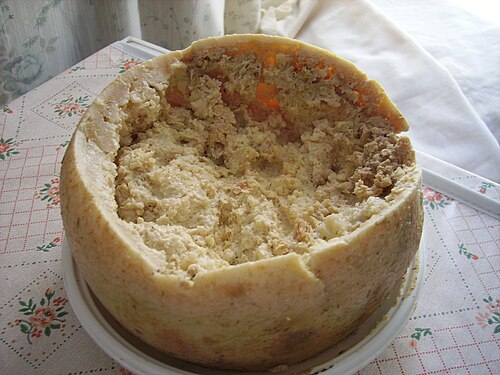
    Maggots, I’ve since discovered, is just one of may unsavory methods of ripening, there are many, like ‘cheese mites’ and they are still deliberately used to ripen certain cheeses in various parts of the world, like Casu martzu – Wikipedia.

    Wiki image of maggot-ripened cheese

    So, back to my Cheese No. 3. The first two times I followed two different farmstead cheese recipes to the letter, wrapped them to age, and made my notes, nice and clean, without any question of potential perfection in outcome. This third time I found a recipe online that was so vague in steps, measurements and temperatures, I had to wing it a bit for the first time.

    To make matters worse, this particular day had a pronounced increase in kitchen traffic. After I’d muddled through the recipe and began the pressing process, Handy Hubby had a dramatic building challenge of the electrical variety that required him to tear into the wall in the vicinity of the press. He’d just been on the roof cleaning up mice nests, and they’d managed to chew through some of the wires, which he now had to replace.

    I wondered momentarily if that was something I should include in my notes. Nah, best forgotten, I decided.

    But I could not forget, and what I’d hoped would be a quick in-and-out project around the press turned into an hour, going on who knew how many more. With Hubby going in and out, meant the dogs are following him. They think this is a game and don’t understand Hubby’s irritation as he curses the mice only under his breath … and … is sweating through his T-shirt. Right over the press!  

    Tori and Papi, our dogs at the time, who were often guilty of playing games around the cheese press.

    Finally, the straw to break this camel’s back – I glance over from the sink as Tori’s tail brushes over the press. Tori is our Dane-Mastiff and about 6 feet from nose to tail tip. In a flash I imagine it snake-like engulfing the entire cheese.

    “Stop, stop, oh my god, stop the pressing!”

    I neither wanted to perceive myself as excessively anal nor offend Hubby’s already delicate mood any further, but my stomach was churning and my mind screaming at me for what I was allowing to happen to that poor cheese. I immediately disassembled the press, moved it to the office, and, with trepidation, examined the cheese, slowly unwrapping it from the muslin.

    Just as I had suspected, dry-wall debris, dog hair, and who knew what other invisible entities had found their way onto the surface of Cheese No. 3.

    In a moment of panic and disgust, I nearly threw it in the garbage. Then I thought, no, wait, chill, this will be the perfect testing ground. I’ll continue to do everything wrong, according to all things science and sensibility, and see what happens.

    So, I stopped following the vague directions and followed instinct instead. What would the Corsican cheese-monger have done, I repeated to myself as I decided not to wrap it, to leave it at room temperature uncovered for days, then put it in with the others to age in the drawer of the fridge.

    Not only did it look completely different from the others, it also smelled completely different. The fishy smell had stabilized, mold started growing on the air-dried, uncovered rind, and the texture softened inside until it began to sort of pooch out around the middle like love handles.

    I felt some encouragement then, thinking, “Might good cheeses be like good dogs and begin to resemble their masters?”

    A couple weeks more and it began to look and smell so delicious the temptation was starting to weigh on me. It was becoming irresistible. On Christmas Eve, I could wait no longer. The vague directions said it would be ready in two months, but my instincts were saying, ”Dig in, woman!”

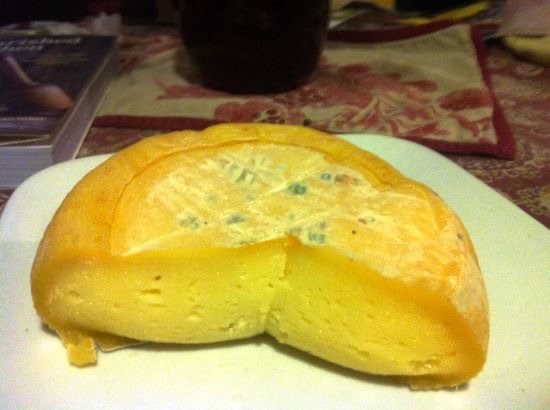
    The luckiest mistake: Cheese #3

    So I did, and it was delicious! I am now convinced the best cheeses were discovered quite by accident and our ancestors turn over in their graves every time we get squeamish over a few dog hairs or even . . . maggots.

    The only problem is, I have no idea how to imitate it.

    The latest cheese ‘failure’ supposed to be a pepper jack– story and tasting coming soon!

    Fast forward to last week, October 2025, and we have another crazy cheese mistake, which may turn out to be just as delicious!

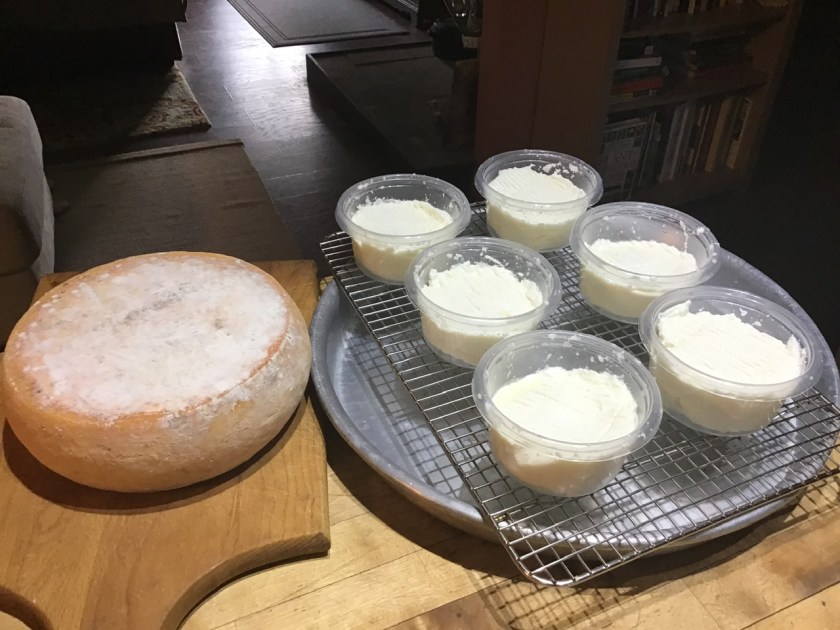
    Here’s the ‘pepper jack’ after further aging abuses, looking and smelling full of potential!

    Only time will tell.

    Gavin’s Recipes & Remedies

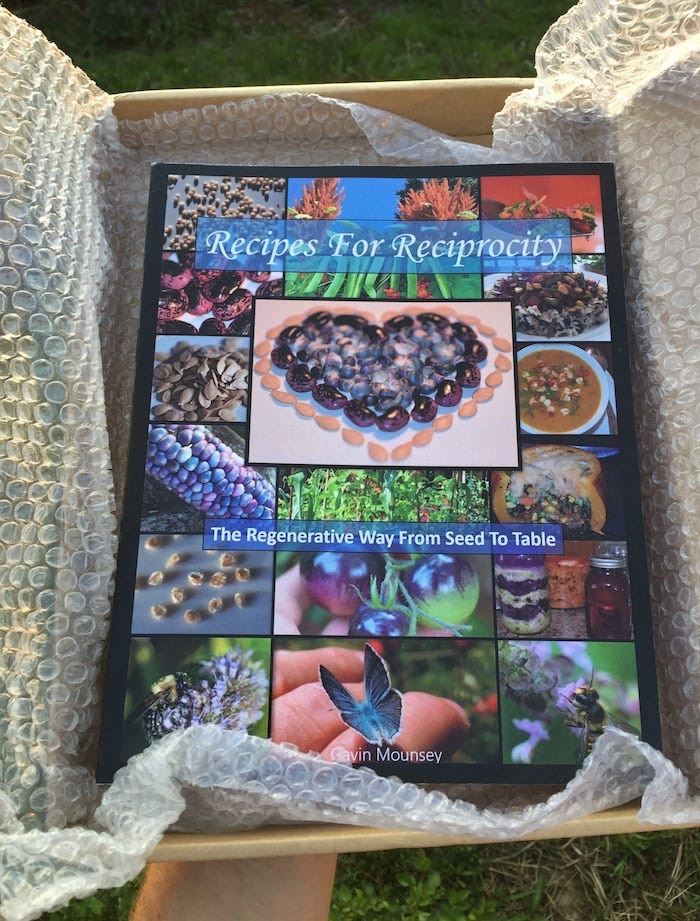
    I wrote about Gavin’s book and gift of seeds recently, and now I’d like to share a bit about the recipes and his approach to gardening, food, cooking and life in general that I align with so much I can easily overlook our superficial differences–like we’re at nearly opposite ends of the gardening calendar, we’re decades apart in age, and I would normally never buy a vegetarian cookbook.

    But as I already said, it’s much more than a cookbook. And I have too much respect for Gavin’s work to shun it just because it’s vegetarian! 😆

    I’ve got a dozen pages marked of delicious-looking dishes I can’t wait to try. A number of dishes are already on our regular routine, like sourdough pancakes, heuvos rancheros, enchiladas with salsa verde and refried beans, and Greek salad (and we make it with homemade feta!)

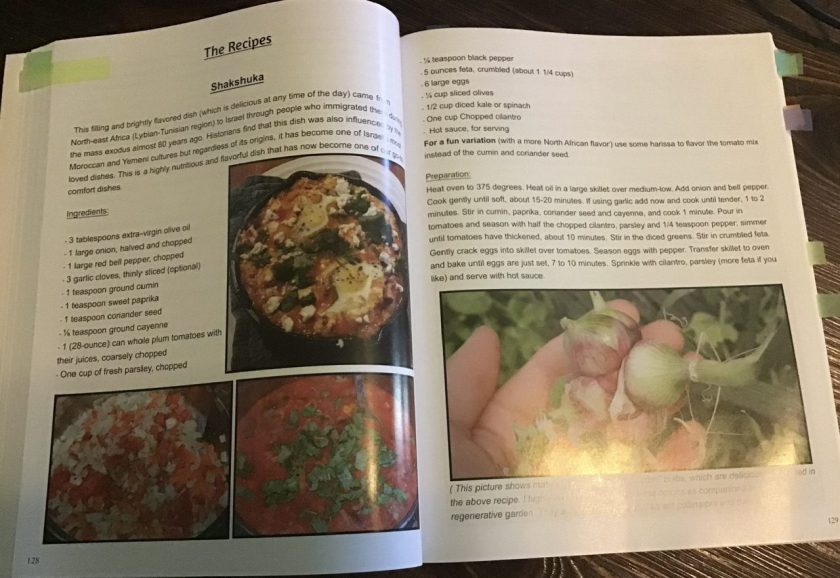
    At the top of my ‘Must-Try’ List: Shakshuka. The name alone sounds alluring!

    We do eat a lot of vegetables and we always have salad daily and I’ve gotten plenty of new ideas–combinations I hadn’t considered, like a zucchini salad with mint–I’m often wanting to use more mint, it grows like crazy here.

    The recipes are very adventurous too, drawing from diverse cultures and culinary traditions–Ethiopia, Morocco, Bali, Mexico, Greece, Thailand –which I truly appreciate, because we tend to get stuck in a bit too much of a routine sometimes. When the garden produce is rolling in by the wheelbarrow, there’s not much time to get creative.

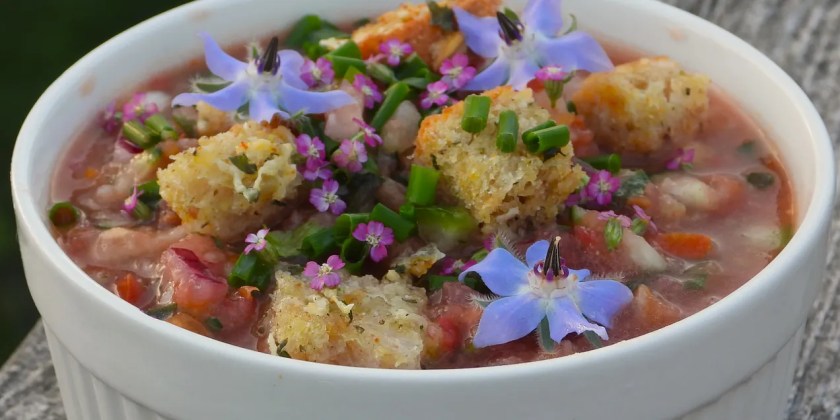
    The lovely and edible Borage flower, used as a garnish in Gavin’s Gazpacho recipe on YT. 
    (Photo credit: Kath-UK)

    In fact, on the things that really matter, we agree completely.

    Like on the importance of fermented dishes, and especially sauces, because the ones that are mass-produced are full of chemicals and highly processed garbage. It’s hard not to sound preachy, maybe even impossible, when telling folks how terrible their diet most likely is. But it’s the plain and simple truth.

    I still go to the grocery store from time to time and I see what’s available and what’s in most folks’ carts and it’s pretty hard not to get judgy and to bite my tongue!

    The difference a few dietary adjustments can make over time is really impressive–and it starts with naturally-grown fresh food.

    Considering the vast majority of folks are outsourcing their health to Big Ag, Big Food and Big Pharma it’s not any wonder why our societies are collapsing under the weight of it all!

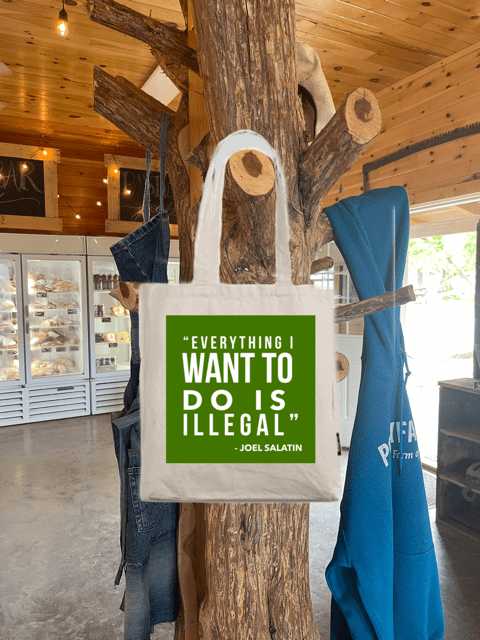
    I’ve been enjoying goofing around with the free meme-maker ap using Gavin’s gorgeous photography and inspiring quotes. 😊

    “In the past hundred years or so most people have forgotten about those ancient fermentation practices because of the advent of ‘instant gratification’ mass-produced products has allowed for entire generations of people to become completely dependent on corporations that supply them with the ‘food’ they need to survive. These ‘ultra-pasteurized’, pre-packaged, chemical-laden ‘food products’ are devoid of life, contain very little if any nutrients and are produced in ways that cause much damage to the planet’s ecosystems. Though eating prepackaged factory food (with unpronounceable ingredient lists) might be considered by some as ‘normal’ by today’s standards, it is certainly not a ‘norm’ that is conducive to longevity, sustainability or common sense.”

    With thanks once again to Gavin, for his great many gifts, and for sharing them so graciously and generously. I’m already looking forward to his next book!

    Homestead Happenings

    It’s Shoulder Season on the wee homestead, and by that I mean a few things.

    Shoulder season, for those who maybe new to the phrase, has a specific meaning in tourist trades, meaning between high season and low season. Savvy travelers and those who dislike crowds or who are just cheap or nearly broke try to travel in the shoulder season.

    As far as I know it doesn’t have a parallel meaning in the gardening world.

    But for me it does. It’s the time we move between seasons in the garden and since we garden all year, it happens twice, once in Swelter Season (now) and once in YoYo Season (formerly known as winter).

    The key summer crops in the garden are either long gone–onions, garlic, crucifers, or mostly dead–tomatoes, squash, melons. And normally the cucumbers too, except those are, so far, successfully secession planted, with the new generation just coming up as the last one is dying. Good timing there, tiny bow to me!

    Old cucs on left, dying fast, on right a couple of tomatillos in the back, also dying and a volunteer datura, doing great.
    New cucumber plants looking good, but will they produce?

    And big bow to Handy Hubby for growing this 27 pound beauty!

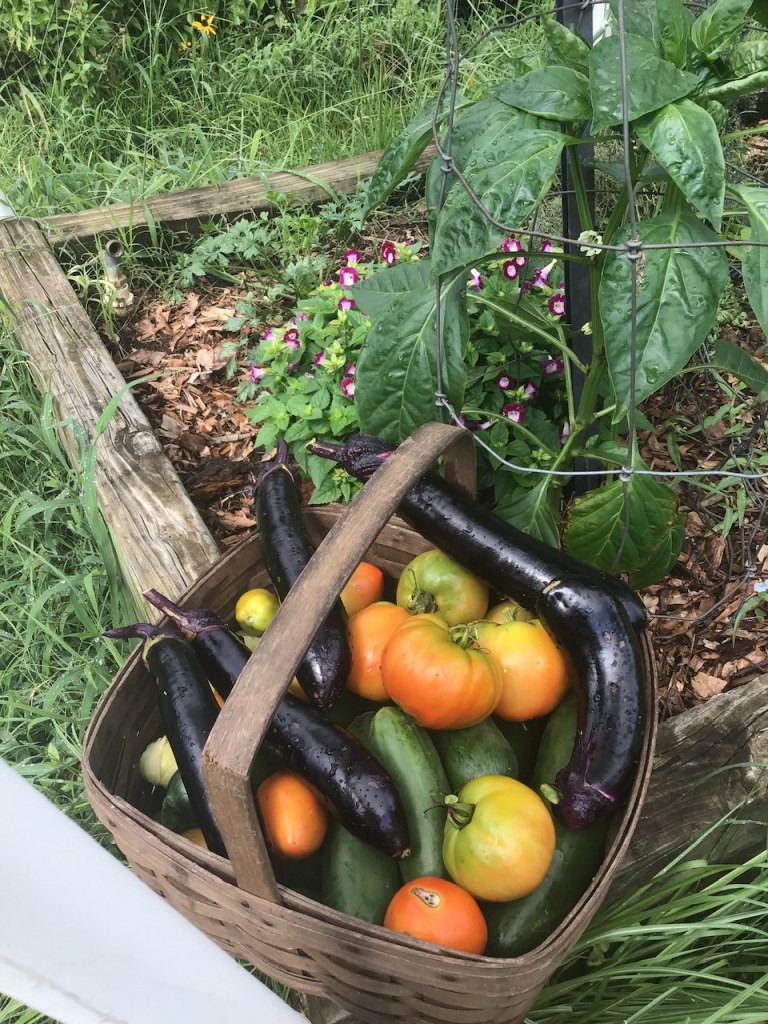
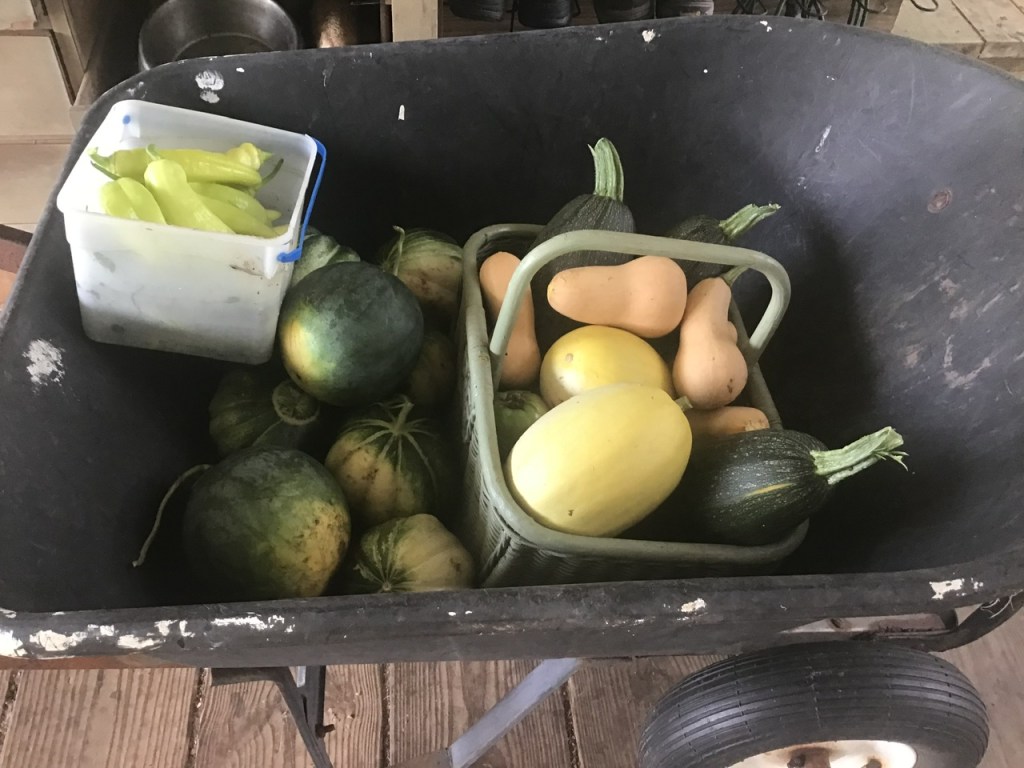
    A nice variety of melons and squashes, we are quite pleased.
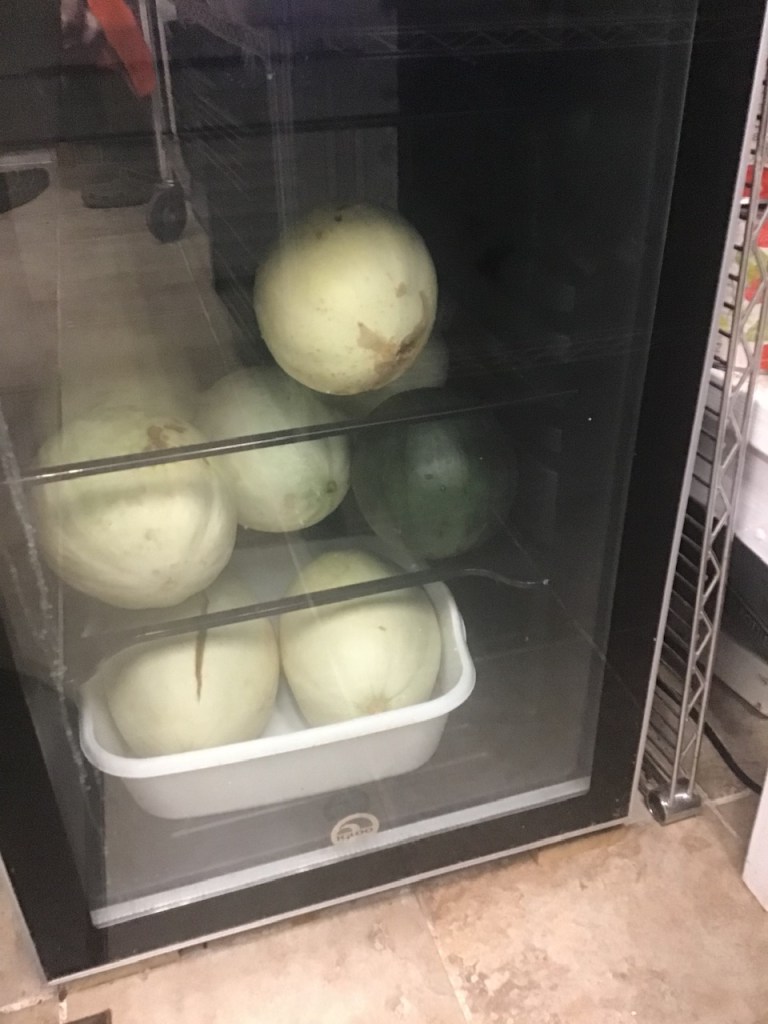
    And still more, a mini-fridge of melon
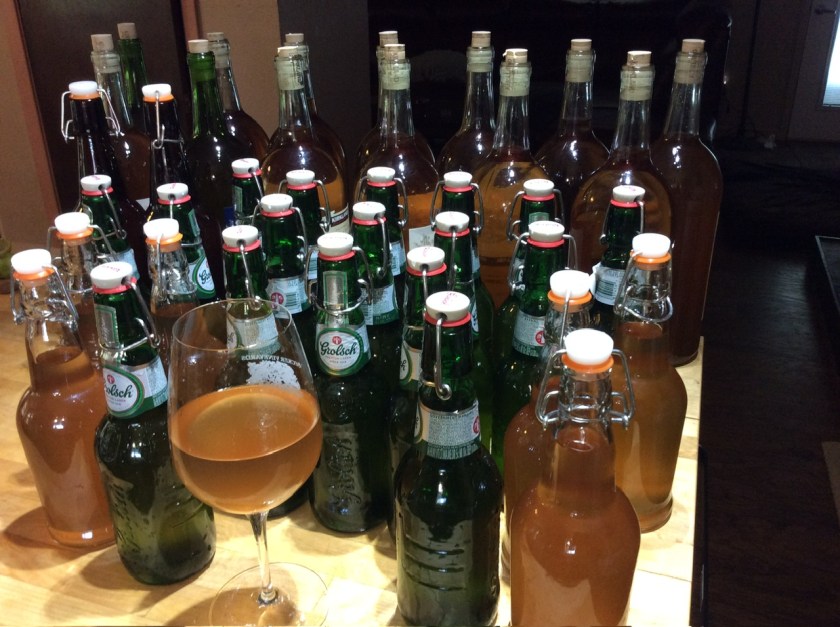
    And still more squash! And cider.

    While it could be Vacation Season for some more sane types, for us it’s the work of Shoulder Season. We keep the minimum that will survive our high heat for the next two months and baby most of them best we can.

    But under lights inside the fall/winter garden is on its way. There’s already another crop of tomatoes coming up, as well as broccoli, cauliflower and arugula.

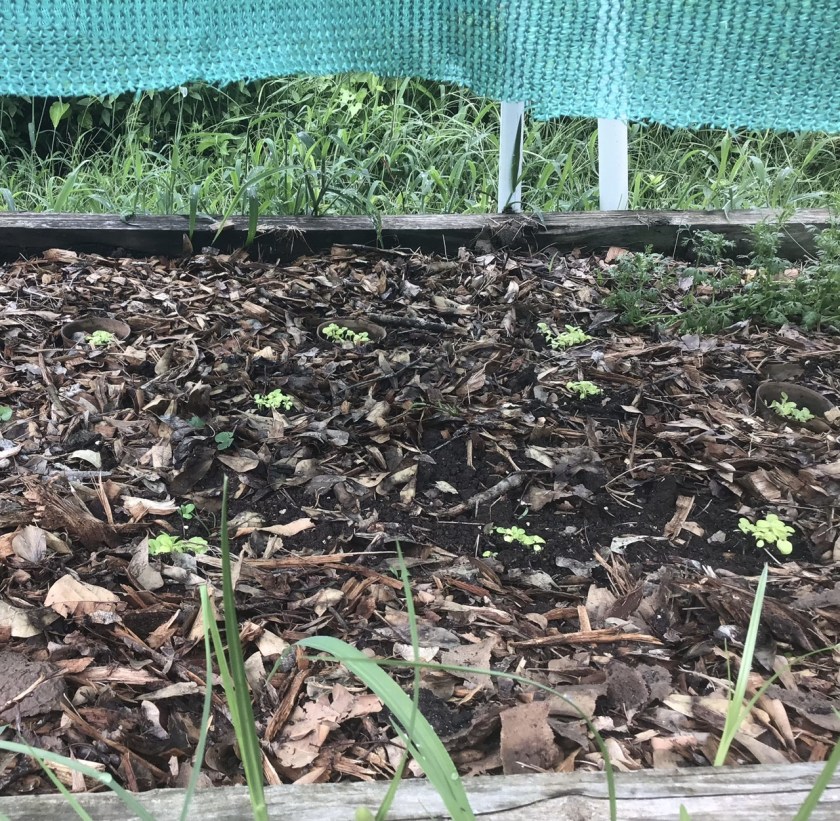
    In the ‘babying’ bed I continue my lettuce experiment, starting romaine indoors under lights and moving under double shade cloth to transplant, then removing one level of shade cloth after a few days to adjust. They are still alive, yay!
    Also in the ‘baby’ bed under shade cloth: some parsley barely hanging on, some dill trying to seed, 2 peppers, 2 dying tomatoes and lots of very happy basil.
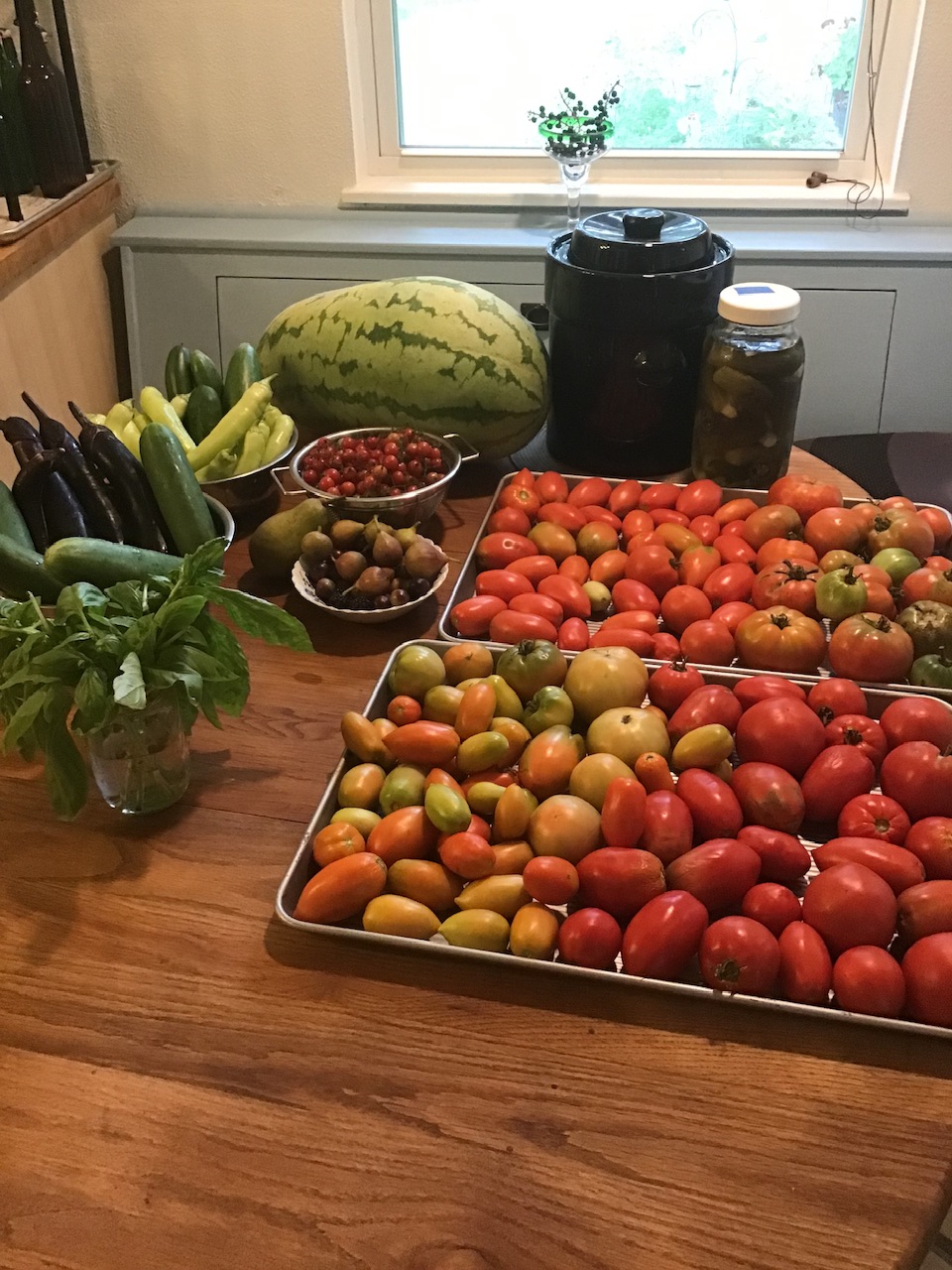
    Tomatoes, peppers and basil for marinara. And in back left is cured lamb.

    There’s processing to be done still, the marinara stockpile is done thanks to Hubby, but there’s still ketchup and bar-b-que sauce. And we still call this a bad tomato year!

    stockpiling marinara

    Ah, the gifts and curses of relativity. And surplus.

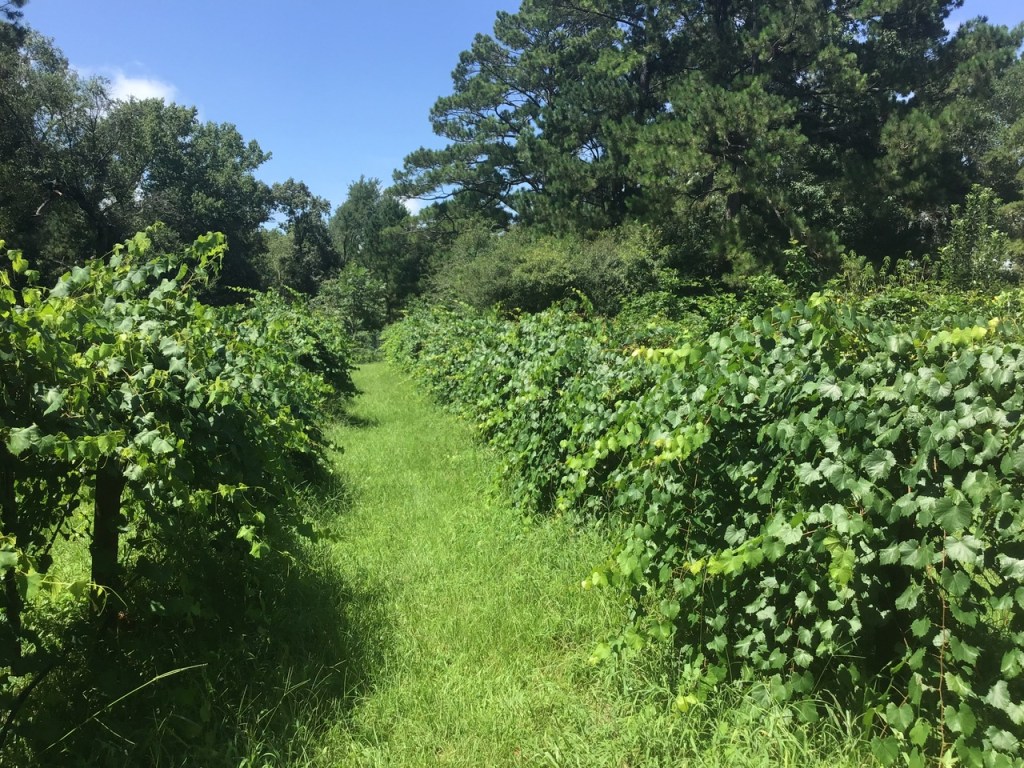
    The pears are looking promising, and the grapes–which will be the next big project–wine and cider-making season. Blackberries and pears are our easiest fruits here; everything else seems to struggle. Though we have had years of good figs, and some neighbors still do. The grapes are looking good too, but there’s no guarantee.

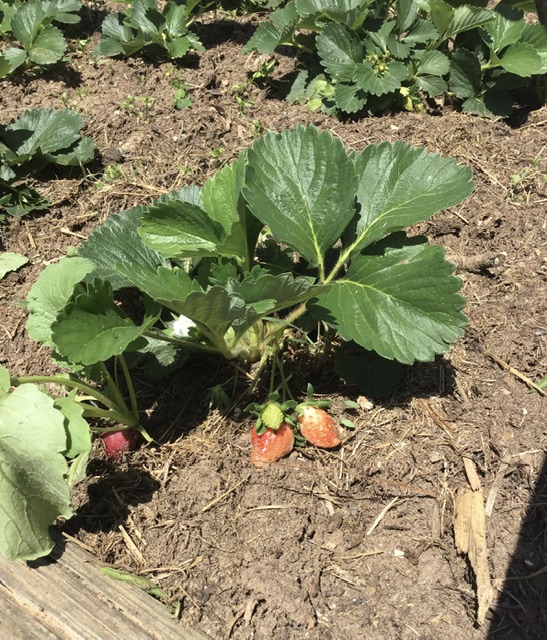
    And I think I finally got the trick for strawberries. It seems most everything that is most delicious is high-maintenance. What can -we do, if we like high maintenance produce but to contend with the high costs of creating them?

    Many years of failed strawberries, but this year was a great success in comparison. Now the runners are going crazy and taking over this bed, so next year promises to be better still.

    I’m planning for more low-maintenance in future, but those might be high hopes.

    Because, my choice would be to spend my dwindling number of pain-free hours working with the flowers!

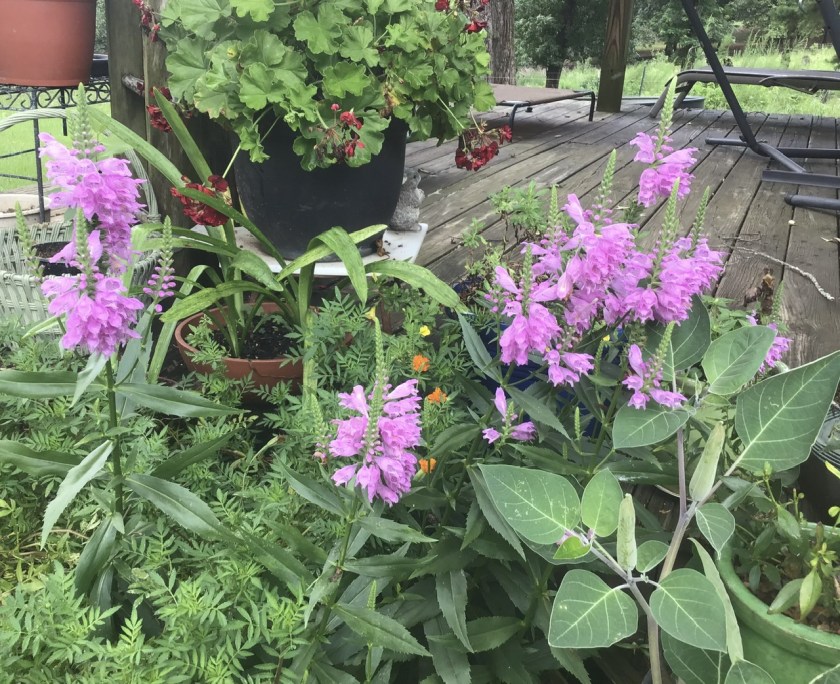
    I’ve seen a few butterflies and bees on the pink ‘Obedience plant’, such a welcome sight!

    Which brings up my other meaning for Shoulder Season.
    So much shoulder pain! And I am not good at staying stationary, it drives me nuts actually. So it’s between physical anquish, or mental, and I do far better with the former.

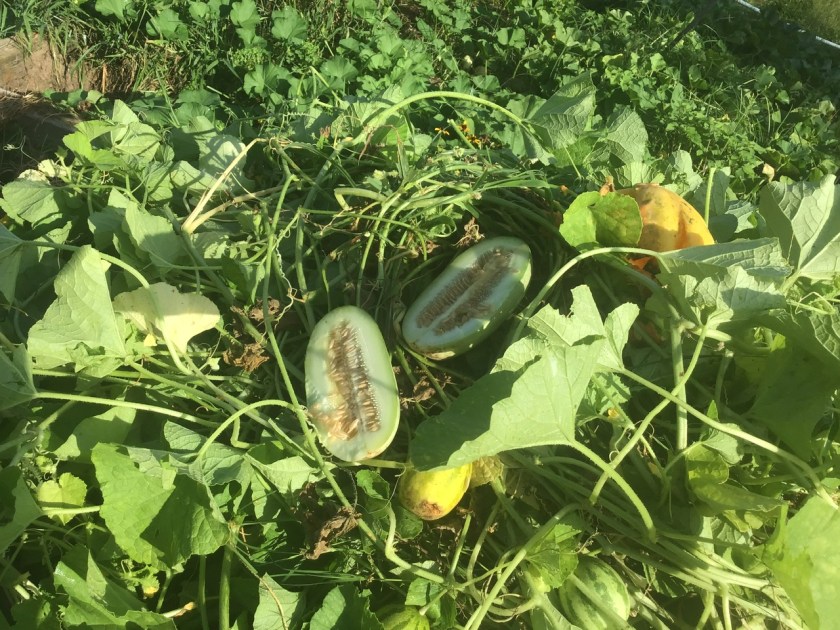
    It’s as unwelcome a kinked, knotted, crippling invasion as this mystery fruit I posted about last year. I unknowingly caused quite a crisis in the garden and lost almost all the melons I planted.

    What is this imposter which choked out all my melons?!

    Just when I was insisting to Hubby we need to be thinking about reducing our garden plots in order to reduce our workload and water usage, I stand corrected. The orchard squash didn’t produce well at all, for some unknown reason; the garden melons were choked out by the wild cucumber; so without the third space we’d have no watermelons or honeydews, which would mean a mostly melonless summer after lots of work and wait, as the main garden produced about half a dozen sub-par cantaloupe.

    A sweet, cold watermelon is the best morale booster in the hot, humid Texas summer garden jungle!

    Two wheelbarrows full of vines and fruit the pigs don’t even like.

    Wild cucumber vs melons and the melons lost bad. I have still not been able to figure out what these things are, which I brought into the garden under false pretenses. I have heard suggested they may be lemon cucumbers or mouse melons, but they are not the right size, shape or color for either of those.

    I really get the frustration of invasive species now. I realize I’ve been a bit cavalier on that front in the past, for good reason, but I have definitely been humbled this time as these bitter, seedy imposters are still popping up everywhere.

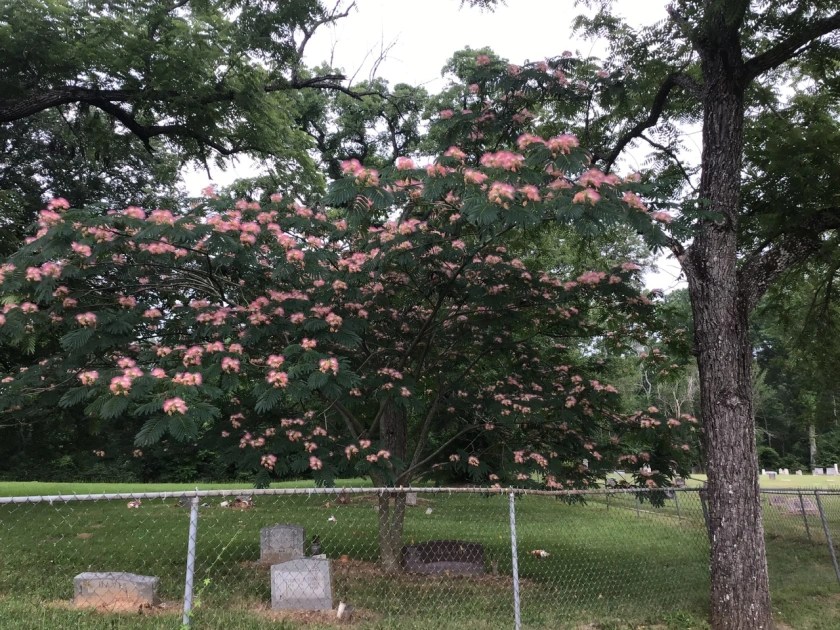
    Please, give me an invasion of the supposedy invasive Mimosa trees, and I’d be thrilled!

    You have my permission to invade my gorgeous Mimosa!

    The plants that thrive here in the long high heat and humidity are so impressive, even when invasive, but it helps my morale considerably to consider the non-invasive ones as often as possible.

    The sweet potatoes are almost effortless. Once they get established and as long as they get a good head start over the bindweed (another ‘invasive’ relative) they are pretty reliable. Eggplant and okra are others, and we’re learning to like eggplant. Maybe even a lot.

    The bountiful basil takes center stage as the parsley, dill and cilantro take early retirement and don’t even bother to seed, it’s so damn hot.

    Whether and which tomatoes will survive, or thrive, from one year to another is anyone’s guess.

    Gavin’s seeds, the Scarlet Runnerbean (barely) and Black Hopi Sunflower, are hanging on still, very impressive.

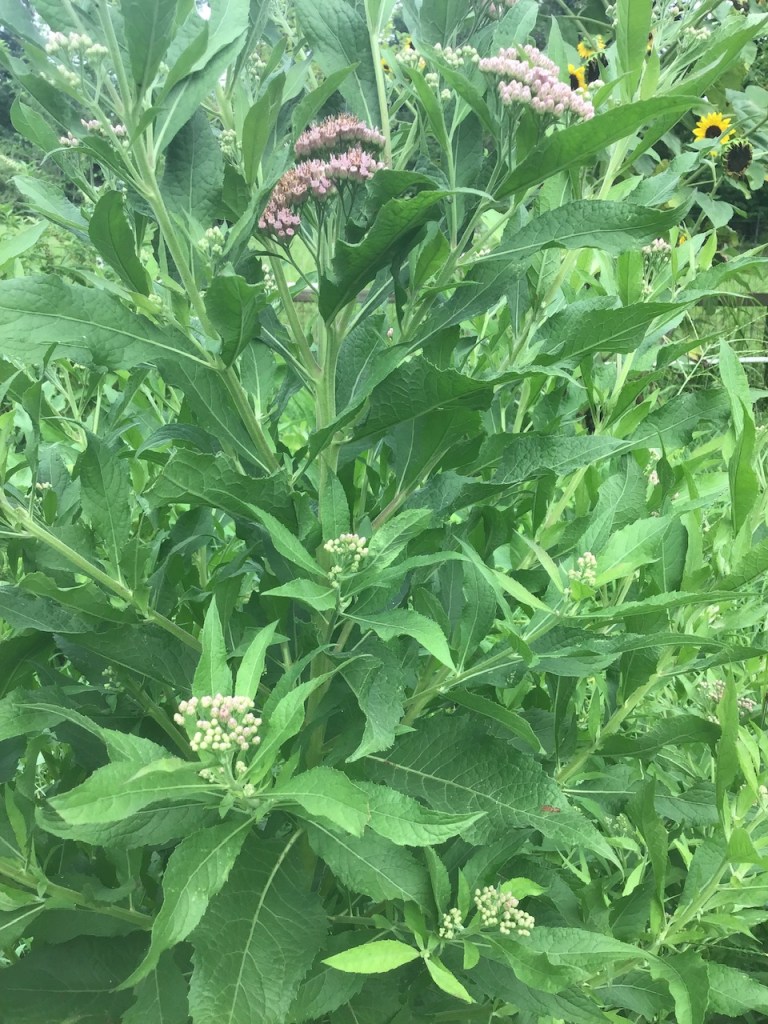
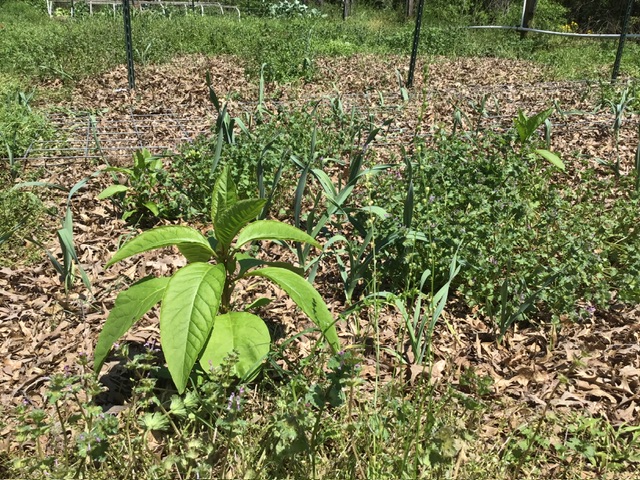
    The black Hopi sunflower behind a mystery weed that smells medicinal. Any idea what it is, anyone?

    The two out of three citrus planted last spring are doing well–they look healthy and their growth has more than doubled since spring.

    The poke weed, the datura, don’t get me started, such beautiful and amazing plants!

    But, the mystery weeds, what are these?

    Inquiring minds want to know!

    Thanks for stopping by!

    Gavin’s Reciprocity

    I’ve had a bit of challenge trying to simply label Gavin Mounsey’s book, “Recipes For Reciprocity: The Regnerative Way From Seed to Table” because it’s so much more than a cookbook. I have a great many cookbooks and my favorite type are what we might call ‘narrative cookbooks’ (though there may be an official sub-category name that I don’t know)–these are the kind where there’s a very present narrator telling you stories about the foods, and the places, and the people associated with the recipes and the author’s life. I might be inspired enough to write one of these myself someday.

    Gavin’s book is not that, yet it is even more still. Rather than try to say it better myself, and fail, here’s an excellent description from the back cover:
    “This book is a magnificent achievement. It can help you learn pracical ways to grow and cook mouthwatering food-as-medicine, and build deeper and stronger community, but it is so much more than that. Gavin has written a love letter to humanity and the living world and a manifesto for workable hope, all with an unflinching honesty about the crises we face. Gavin uses the nuts and bolts skills in the garden and kitchen as a launchpad to reimagine our place in the world, and the result is a solid foundation in the chaos. His hope and love are infectious, and the applied knowledge shared in his book is encyclopedic. I highly recommend it to you.” ~ Jason Padyorac

    Along with the two books, one I gave to a friend, Gavin sent lots of seeds, some I’m already growing, others I can’t wait to try.

    Scarlet Runner Bean in early summer, now dead.

    So far I’ve planted the Scarlet Runner Beans and the Black Hopi Sunflowers.

    Gavin:

    “These beans are among my all time favorites for their versatility in the kitchen and beauty as well as productivity in the garden. They are an amazing companion plant due to the plant’s roots having the ability to associate with rhizobia (nitrogen fixing bacteria) which not only allows this plant to fertilize itself by pulling plant food from the air, it also means this plant can help fertilize its meighboring plants with excess nitrogen. On top of that amazing benefit the scarlet runner bean has beautiful red flowers that attract pollinators such as ruby-throated hummingbirds and bumblebees.”

    It is amazing to see how many fantastic plants can flourish in such varied climates. Because Gavin is in Canada and I’m in Texas I didn’t expect to find so many parallels in what we plant in our gardens, though certainly the timing and special needs vary quite a bit. The scarlet runner beans I’ve planted in full sun are perishing. But the others I planted which is shaded during the intense mid-day heat are hanging on. They’ve not produced yet, but I’m still hopeful and I like them anyway. I’m sure if there is any production and I can save the seed, it will acclimate to our area. Unfortunately, after a promising spring, the bumblebees and butterflies have been depressingly scarce in the garden lately.

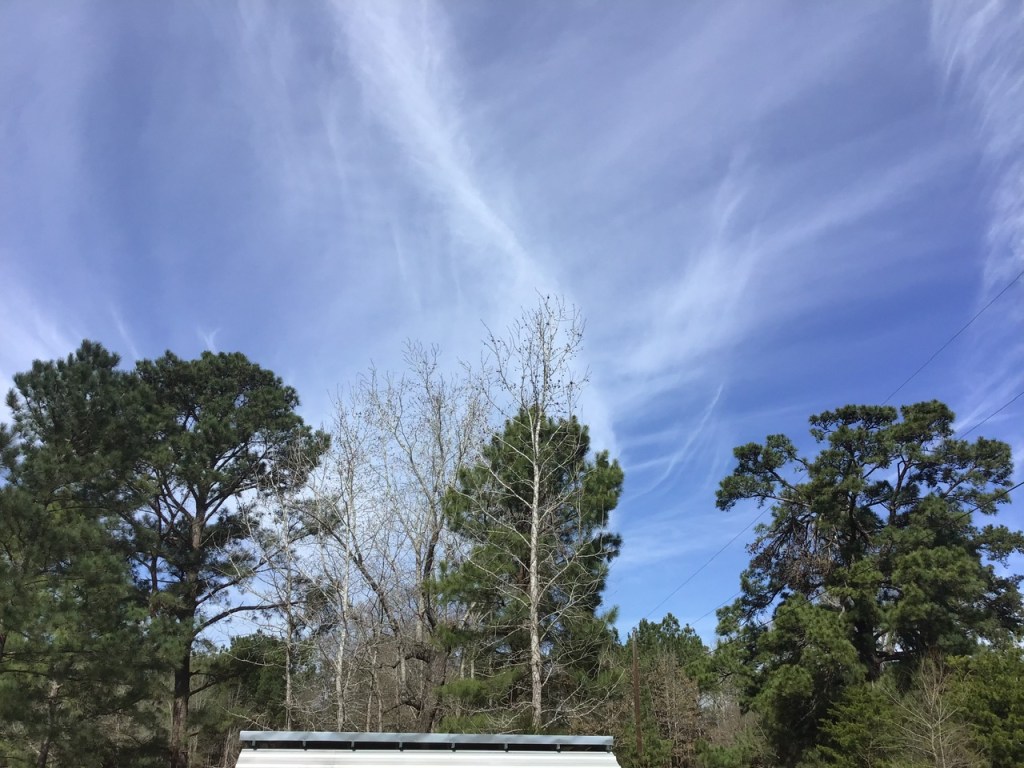
    Gorgeous! Ugly pity for the chem-sky.

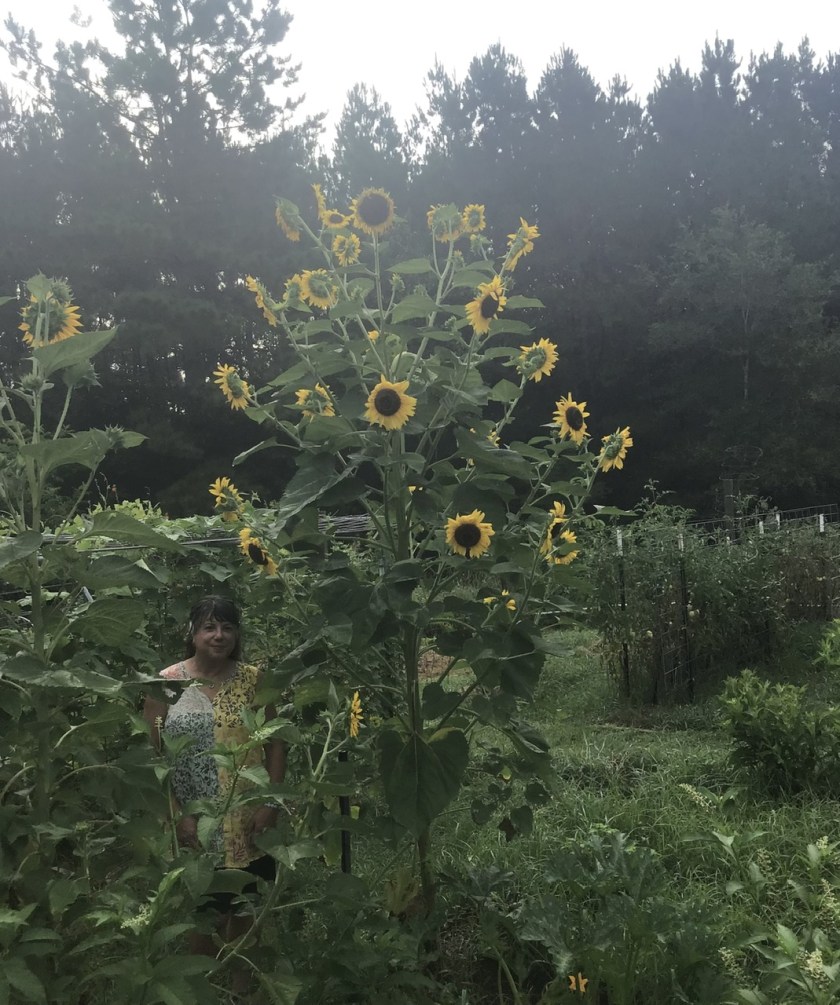
    The Black Hopi sunflower has been the piece de resistance. It’s gorgeous and taller and fuller than any I’ve ever seen. I had several planted in several spots, and most of them got damaged in the high-wind storms we’ve had. But not this magnificent giant!

    Gavin’s reciprocity in action is so inspiring, which is why I wanted to spend a couple of posts sharing about his book. Regular readers will probably remember I’ve shared some other of his work here in the past, especially in our Herbal Explorations pages, which come from his Substack newsletter.

    In another post I’ll dive into a few of the recipes, but for now I’d like to expand on a few quotes which so align with my own learning and experience growing a garden and cooking seasonally from scratch. It has absolutely been the most rewarding journey of my life, with plenty of hope remaining for more of the same in the future.

    From the section: Reciprocity in Action
    “Choosing to give our attention to nature is also a form of giving back. Observing and paying attention to the cycles and living systems in nature involves giving our time and our thoughts. When we closely observe nature we inevitably come to perceive countless expressions of beauty through our perceptions of the form, color, sound, scent, textures, tastes and relationships that are all around us. This leads us to caring, feeling gratitude for and feeling compelled to protect the amazing gifts nature shares with us. From the place of gratitude we engage in one of the most meaningful and powerful acts of reciprocity. We open our hearts, we feel content . . . we practice self-restraint, we choose to live more consciously and aware of how our life choices impact the living planet that sustains us and showers us with endless gifts.”

    Gavin most certainly has an eye for beauty, his photography is stunning.

    (3) The Jubilation Of June – by Gavin Mounsey

    https://gavinmounsey.substack.com/p/the-jubilation-of-june-d41

    I know how daunting it can seem to dive into a new hobby like gardening, or even cooking nowadays, but there’s so many smaller and easier things that take so little effort or knowledge that might be just the momentum for many to kickstart a healthier life and society.

    Just observing. I couldn’t agree more. It really does start that small and simple and while I have read loads of books on gardening and cooking and many adjacent subjects, I’ve learned far more from observing. Taking notes helps too, but considering how bad I am at that, it must not be totally necessary.

    The other few very simple things that require no gardening and very little cooking is compost and ferments, both which Gavin discusses in the book.

    Why those two, you might be wondering? Because in my experience, composting makes you far more conscious of waste, and fermenting shifts your attention to the weather and seasons. Both of these processes have enriched my life and health and outlook far more than I could’ve ever imagined.

    A window sill of herbs would be enough to use up the compost produced by the average small household. Or donate it to a friend who gardens if you have such a black thumb or really no space. And who knows, maybe she’ll reciprocate with a zuccinni or two.

    I had no idea what eating seasonally meant. Really. Until I went to the farmer’s markets in France on a high school exchange program, I had zero clue produce even had seasons, and considering how much is grown indoors today, that’s probably become more normalized than ever.

    Considering I grew up eating like the vast majority of Americans–fast, frozen, canned, bagged–I know what easy looks like, and this is pretty darn easy. The shift really is more in attitude and attention.

    Now I long for cucumber season as I long for tomato season as I long for melon season as I long for radish and lettuce season. It’s become that nuanced and I love it. Sure, there’s some cross-over and we can and ferment to save the bounty. But that limited time window of bounty becomes a season within a season, with all that entails–a change in primary food and focus–all with their unique gifts and challenges.

    Surplus requires work, work requires rest and creates reward. 😊

    The ebb and flow of surplus and scarcity becomes natural again, each bringing its own unique gifts and challenges.

    My influences growing up–that of media, education, environment–worked synergistically as detachment mechanism. Nature was that which we were being systematically detached from, and that trend has only exaccerbated, to the growing dis-ease of ourselves and our environment.

    “Within the last century, healthy, natural, organic food has been made more difficult to produce because of the chemical pollution, at first, and genetic pollution, more recently. A handful of companies have spread these toxins across our planet diverting US$ 400 billion of public money to subsidize their high cost chemical commodities to make them artificially ‘cheap’. The costs of this ‘cheap’ food are astronomical in terms of the health of people, the ecological damge it causes and its exploitation of farmers. If the true costs of chemical food were taken into account it would be unaffordable. Insead of subsidizing chemical food and creating epidemics of food-related diseases, public money, used for nourishment and the protection of public health through organic food, would save us billions in health care. Denying people their right to healthy, poison-free food by manipulating laws, policy, science and the use of public money to impose a non-sustainable, unhealthy food is food-dictatorship.”

    to be continued . . .

    Thanks for reading!

    Beauty & Bounty

    Such a busy time of year already, made busier with our remodeling projects, but we always make time to stop and smell the roses.

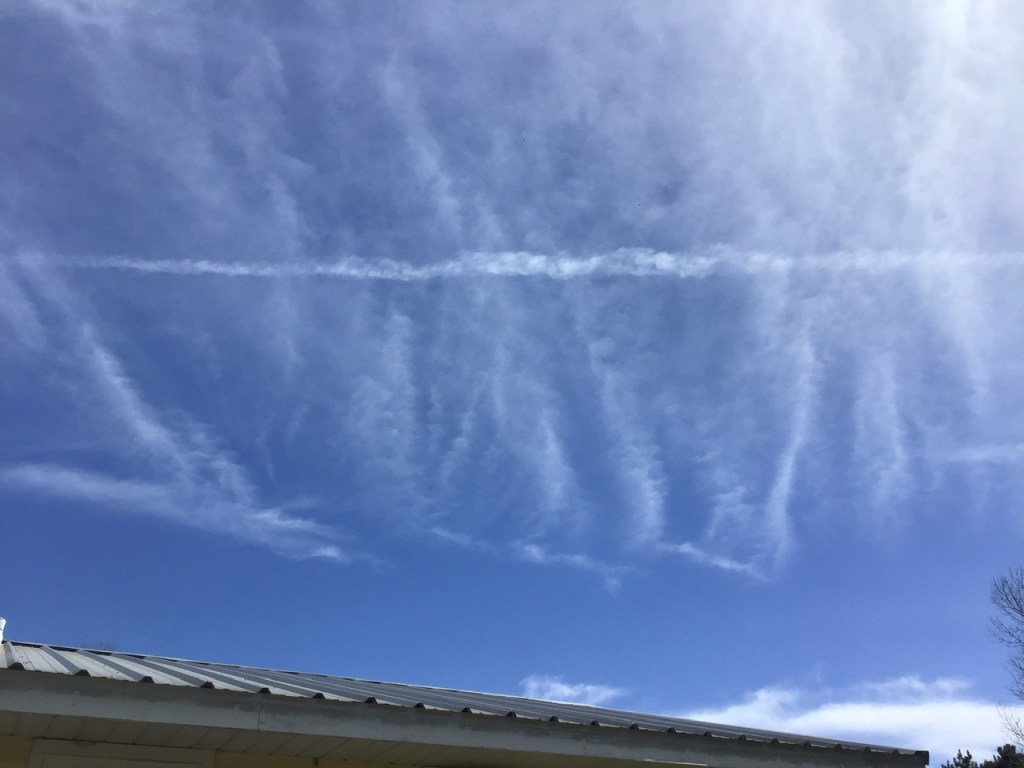
    And bow to the weather gods, or geoengineers, who have spared us this time, and after so much barking, we are grateful there was no bite. Before I sing our praises, let me acknowledge those further north who are biting the bullet this time around. Our picture perfect skies are so very rare, I don’t like to think about all that means.

    We did prepare all we could for the worst, annoying as that was. Out came the row cover fabric again and the wheelbarrows full of logs to hold it down, after just having cleaned all that up and took it to storage the week before.

    We expected a frost for sure.

    All the pots had to be gathered to cover all the peppers and tomatoes. And considering it was so hot and humid and over 8o degrees when we were doing all of this, it felt more incongruent than snow along the coast of the Gulf of America. 😂

    But, I can’t complain, because as I just said, we got very lucky. No hail, tornados, landocaines, flooding and we just barely scratched by the frost threshold.

    Just look at that sky! I can’t tell you how long it’s been since seeing such a sight!

    There is so much beauty and bounty, in nature, and in cyberspace too!

    Just yesterday I was scrolling through my Youtube feed and about every 100 suggestions up pops a true gem, like this old Mexican lady cooking her heart out and sharing it with the world. This is the very best of the power that’s right at our fingertips, I truly believe that: The world’s people sharing about their cultures. The cuisines, the histories and myths, the music, the dance, the landscapes, the languages, the gardens, the architecture–and the ordinary folks sharing them. Unfortunately, as the AI gods have demonstrated, for every such miracle there are about 100 curses.

    Make food not war!

    There are the tiniest gems not to be missed through all the noise and all the neon glare.

    And it seems like they are beckoning me to slow down and notice them.

    What would you rather do . . . follow me around the garden, or do more of that thing you call work?

    A plot of volunteer poke weed and garlic, as if they’re just screaming, we are here for your good health, so happy to be here, we keep returning for you!

    Sometimes, when I least expect it, we learn how to grow together better. Like I was thinking of the old Southern trick to set out red-painted pebbles to fool the birds into keeping off the strawberries. I thought, I bet some well-placed breakfast radishes would have the same effect, and sure enough, it’s working. The birds have moved off that bed ever since those radishes started showing their little red tops, and bonus, we adore radishes, maybe even as much as strawberries.

    We have been eating giant salads every day, with enough surplus for our neighbors.

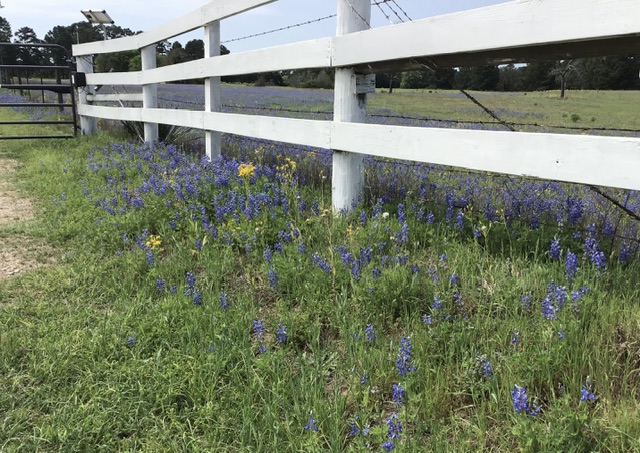
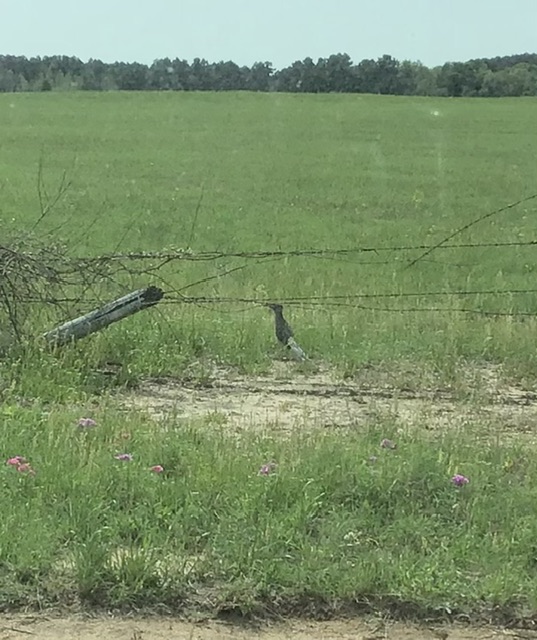
    Along the country roads all is flourishing. The bluebonnets are brilliant and I even caught a roadrunner, just barely.

    Such gifts of beauty and bounty! What a precious, ephemeral time to infuse their bursting energy into our year ahead. What we put into it is what we’ll get out of it, just like life.

    I hope your spring is being beautiful to y’all, too! Thanks for stopping by!

    Homestead Hope(ium?)

    What is the difference between Hope, and Hopium? There’s a fuzzy line and it’s very easy to misjudge, but it’s located somewhere between: “Yay, Trump will save us all from $11/dozen eggs!” And “We should start a chicken mega-ranch.”

    If those two meet in the middle of the road, might creative minds find that they’ve absent-mindedly crossed with logic and conclude a few laying hens might be just the ticket? A bit of self-sufficiency, why not? After all, it’s not rocket science . . .
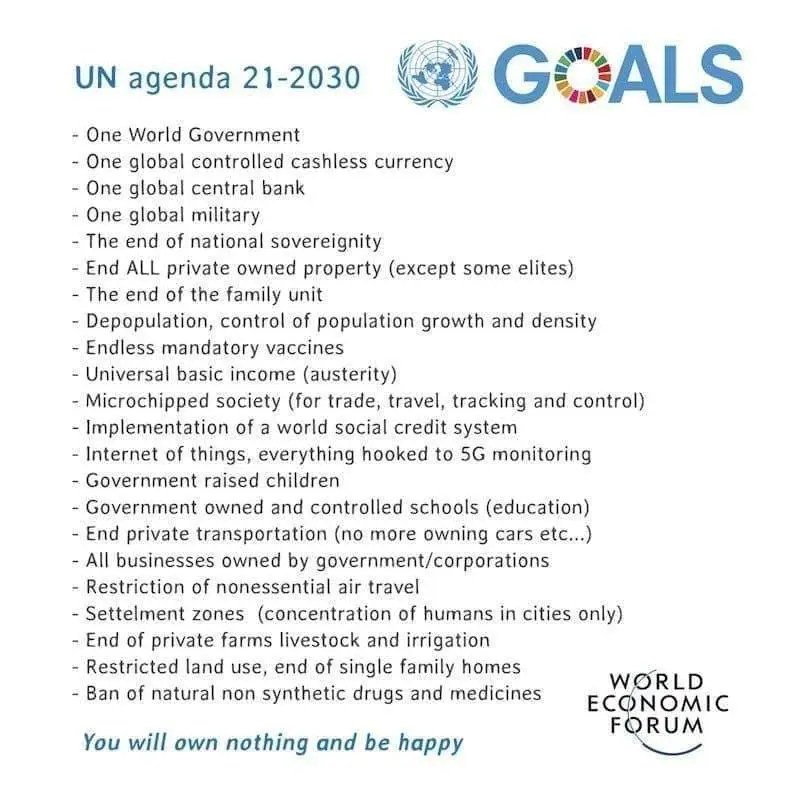
    Joel Salatin exposes the WEF agenda!
    “Josh Sigurdson talks with Joel Salatin of Polyface Farms, an entrepreneur and farmer who for years has fought against Monsanto, factory farming and dependence pushing for people to homestead and/or farm and not be dependent on the system.
    We previously interviewed Joel in 2017 regarding Monsanto. Now, 8 years later, we delve into the massively expanded technocratic grid as more than ever, people are dependent on grocery stores, the grid and AI, weakened by design.
    The World Economic Forum agenda is to destroy self sustainability and make people weak slaves to technocracy. Eventually they want food rations and carbon credit scores. They’re already being rolled out to some degree and with the 2024 United Nations Pact For The Future, this problem is encroaching quicker than ever.
    The climate lobby attempting to bring down farms is more alive than ever. There are solutions however which Joel Salatin has spent decades teaching people.
    There is also a rumor circulating that Joel Salatin was picked to head the USDA. He explains this and more in this interview.”

    https://www.bitchute.com/video/xp8FhgIdgdHh

    Though it is the gateway livestock, and that’s official, I’ve even heard it repeated by the official fact-checkers at NASA.

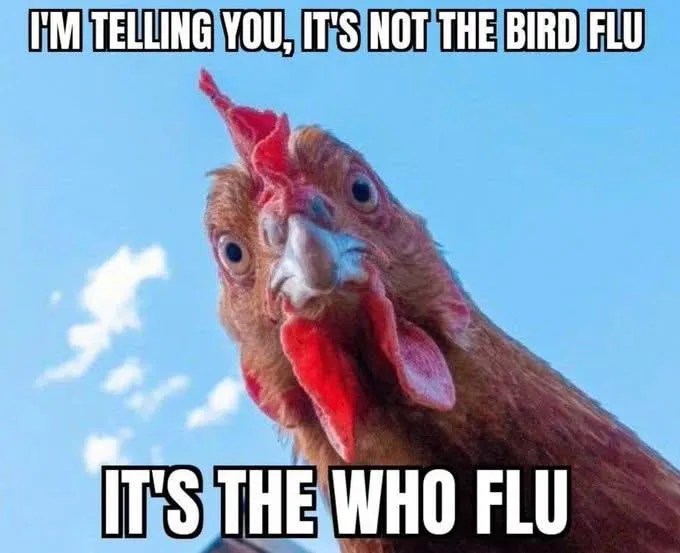
    Don’t worry, more government will save us! They will VAXX this FLU away, similar to the way they spray on the weather!

    Respiratory diseases? I can’t imagine how that might be happening! So baffling!

    But as James Corbett points out, chickens are the simple solution, but not necessarily the Easy one.

    Most folks will take the easy way out, drink the Kool-aid, puff the Hopium, and exclaim RFKJ is here to save the day. Cheap eggs and healthy injections on the way!

    To Hope is to Hopium as to Smoke is to Suffocate.

    Resilience their way?

    Moving Aussie’s to Smart Cities:

    They got you by the balls! Now what’s a bit of responsibility for a few hens compared to that?

    Starting From Scratch

    After my little lecture at the end of the last post about teaching the younger generations real life skills I was listening to an interview that gave a bit more perspective to that personal plea.

    It’s with a 60 year old grandma trying to do exactly that on YouTube, and she’s got over a million subscribers, a huge website and a new cookbook. She is bursting with passion and purpose, but it’s well-tempered by her realization that in America, for most folks, we still have a very long way to go.

    Folks are intimidated, she insists. And for those of us who have been doing it for the last decade already, we have a tendency to forget where we came from.

    She is of the rare breeds who grew up cooking and eating this way, whereas her first students were her friends, who couldn’t even imagine making homemade bread at the time, let alone mastering sourdough. They never bought a whole chicken before, let alone broke the carcass down for a nutritious bone broth. They were not accustomed to shopping on a budget, or to filling their pantries with essentials for emergencies.

    She really is the ‘Starting From Scratch’ guru, with the patience, positivity and personality it takes to succeed in such a position.

    In a recent Wise Traditions interview, “Why Cooking Traditional Foods From Scratch Is Worth It”:

    “Do you get overwhelmed thinking about making sourdough bread from scratch? Or homemade broths and soups? Mary Bryant Shrader of Mary’s Nest is a YouTuber and educator who has a knack for demonstrating how simple (and tasty and economical) traditional cooking can be! Today, she shares some of her own story (including successes and failures along the way) of how she got into becoming a “modern kitchen pioneer”. She goes over the biggest hurdles we face (like feeling too busy or too intimidated to get started), how to overcome them, and even what inspires her to keep going with traditional food cooking.”
    https://podcasts.apple.com/us/podcast/wise-traditions/id1072618042?i=1000681385872

    Her YT channel has loads of content, not all for beginners either. Here’s an intriguing one I plan to watch:
    The 10 Best Survival Foods for your prepper pantry

    If you’re one of those who believe the commercial hype, and think that all food is the same, and what nutrition you aren’t getting from your junk food diet is no big deal, because you take vitamins and supplements, here’s the really bad news from someone who once thought along similar lines, and paid dearly for those mistakes through his poor health at a relatively young age. Something we are witnessing far too often in this country.

    Unlike our above super upbeat, positive Granny, Agent is snarky and sometimes downright intolerant—so, much more my style—except he doesn’t like to cook, poor fella.😆

    “I get a lot of emails and questions about if a specific product is good to take – in my opinion it is all poison because nutrients come from clean foods, not bottles, but I don’t want you to take my word for it, I want you to know how to find out for yourself so nobody can ever dupe you again. With that being said, today I am going to show you how you can easily learn about any chemical in any product and its health effects, real safety data and more. You can then use the information you found to make an informed decision and never have to rely on a podcaster, famous doctor or Substack author again.”

    Become your own master of health! YES, that’s the ticket!

    “A Manufacturers Safety Data Sheet (MSDS or SDS) is the easiest way to get real information because, while Google can selectively show you search results to fit an agenda, and while doctors-turned-online-show hosts can recommend a product they are making a kickback off of, the MSDS can’t lie. The reason is because the manufacturer of the chemical must present honest information to avoid being sued out of existence by those who purchase their product and use it to manufacture supplements to sell to the plebs.”

    He has a series of articles breaking down the reality of America’s most commonly used vitamins and supplements. You probably already know that some of the chemicals Americans consume routinely are banned in other countries. And A LOT of it comes from China and other far off places where we have little to no oversight.

    Not that government oversight is on our side, at all! They pretend to be on our side, only to make more absurd and expensive regulations to ‘solve’ the problems they previously created.

    This is a home kitchen, seriously?
    🤪

    As an example here’s a ‘solution’ of several states that is a complete non-solution for those who don’t like to cook and can’t afford to out every meal, yet are tired of the grocery store ready-meal options.

    Micro enterprise Home Kitchen Operation (MEHKO), a way for the government to further interfere in your kitchen and your health.

    Frequently Asked Questions — The COOK Alliance

    How do you get a MEHKO permit?
    1. Pass a Food Protection Manager Certification exam.
    2. Submit your application, including your menu and a Standard Operating Procedures (SOP) form.
    3. Pay the permit fee.
    4. Schedule and pass a home inspection.

    And once you do all that, you still cannot serve the most nutritious meals, because they are on the ‘dangerous’ list (with oysters!) including all raw milk products, smoked or cured products, any food that has been vacuum-sealed, and even homemade ice cream. So. Not. A. Solution.

    But let’s at least try to end on a positive note today!

    If you have plenty of money, live in a popular urban environment, frequent the very best grocery stores, but don’t like cooking, you have plenty of options available for healthy choices these days, because the ‘free market’ has answered the call and made available all kinds of healthy and natural pre-made meals.

    If you live anywhere else in America, or are feeling the economic pinch as we are here, well . . .
    May this Season’s Greetings lead to new paths of traditional healthy eating for you and your family!

    Our Christmas watermelon—not exactly seasonal, but still pretty tasty!
    Bubba, “But I’m helping, really!” 😆

    Our Corrupt Sick Care System

    Good share here from an insider.

    “Oncology at the end of the twentieth century and early 21st century runs unethical trials with inappropriate control arms, poor post protocol care, bad crossover, and many other games, which makes companies rich and people poor. Cancer doctors take payments for these companies and go along with this narrative. The system is so rotten and corrupt and pervasive we can’t even recognize it as such. 

    History will view these are dark days. Where marginal drugs were given to dying people, government taxing poor people to pay for it, and doctors captured by companies to push these products, and everyone patting themselves on the back and the US bankrupts itself with inappropriate, harmful, useless care.”

    Time to return to the days of good nutrition and more wholesome living!

    Gavin’s Newsletter has some choice words on the topic this week.

    Should We Re-Invent Allopathic Medicine?

    “While I do recognize that some of allopathic medicine’s contributions to trauma care are noteworthy and worth preserving in some format, I also see that at it’s heart, the Germ Theory mentality that pervades the medical academic establishment (no matter how well intended by individuals in those systems) is not about healing, but is in fact, antithetical to life.

    The machine thinking of Allopathic medicine which treats the human body as a molecular machine in need of being kept sterile and well greased by an array of chemicals and synthetic lab made substances is like the modern government funded environmentalist program that tries to quantify everything down to carbon units, obsessing over limiting them or sequestering them with more machines, while avoiding/ignoring the fact that it is machines that decimated the environment in the first place and continue to (whether they are lithium powered or gas powered) and not even beginning to take into account other variables such as the massive influence that old growth forests (or the lack thereof) have on hydrological cycles as well as carbon cycles.

    It is like the machine thinking of the Big Ag Chemical companies and conventional GMO monoculture farmer who, when faced with diminishing returns due to soil erosion, nutrient leaching, desertification, decreasing mineral and nutritional content in crops (due to soil depletion brought about by extractive and exploitative farming practices) and facing herbicide resistant “weeds”, decides to double down and create even more powerful machines to till the soil harder, faster, inculcate the crop plants with an ever more potent array of synthetic chemicals and petroleum based NPK to keep them alive (on the equivalent of a combination of life support and hard drugs) and decides to create and use even more potent biocides and herbicides to kill all life in the soil in order to squeeze increasingly meager returns out of an abused and dying landscape.

    Those are systems of machine thinking, treating living complex systems that are defined and only capable of being healthy, stable and resilient by the myriad symbiotic relationships woven within and around them as simple machines. Both involve one dimensional ways of thinking attempting to understand, heal and make whole multi-dimensional entities.

    The “trust the science” proclaiming doctor attempting to treat anti-biotic drug resistant bacteria infected wounds with more and more powerful anti-biotic drugs is like the techno-optimist self-proclaimed environmental activist cheering for more machines (perhaps lithium powered machines) to be built which are supposed to solve the problems created by the previous machines.”

    PseudoCaring

    Soon the mainstream disease care system will be employing robots and AI-generated advice dispensers as nurses and surgeons. It’s happening already.

    Meet Grace, the robot nurse that COVID created

    Some are shocked and appalled by this, as they should be, according to me. Others think it will be a fantastic improvement to human life, or a great way to make more fiat, or a solution to the burden on the caring professionals, or they love tech for tech’s sake, or whatever.

    Those of us who love history and dwell constantly on the question ‘how has it come to this’ were well aware of this potential because we study the trajectory of modern life. I could begin with the first critics centuries ago, but for brevity sake, I’ll start instead with my own life, the only history available to me to know thoroughly enough.

    Working mother, divorced parents, step parents, then step siblings, professional daycares, neighborhood babysitters, after school programs, junk food, convenience food, lots of TV. Family history of: diabetes, heart disease, obesity, cancer, vision problems, depression, eczema, alcoholism, Parkinson’s, and, you get the picture.

    And I would not say my family life was bad. It was the typical American suburban life of a great many growing up in the 70s and 80s. Neither particularly good, nor bad, just normal. Normal, as in well-normalized.

    Like most families my parents would joke about voting for the ‘lesser of two evils’. They probably learned that from their parents. My mom went to community college and got her degree once we were gone, in sociology. She worked full-time all her adult life and didn’t regret it. My dad remained ‘upwardly mobile’ as his Protestant father taught him to be.

    In fact, we have retired before him, and he has just had his first heart attack.

    They are both still with us, but they do not read this blog, so I could say whatever I wanted. 😏. But, that’s not the point of this particular post.

    Let’s leave it at this—in hindsight, my unique perception of growing up this way is, in a nutshell—there was not a lot of parenting happening. The results of this having widespread and devastating effects.

    It is from these original seeds of pseudocare that have been not only consistently irrigated in our own territories, but have been dispersed throughout the world these last five-plus decades which has ensured the trajectory to the ridiculous place where we now find ourselves: Drowning in pseudocare so deeply we can scarcely recognize what real care looks like anymore.

    Another quick peak at the fruits those seeds have produced.

    Yet even facing all of this, I’m still optimistic, as I have been all my life. Even at the worst of times, even during a few prolonged worst of times, I must’ve still learned something vital from my half-assed upbringing and collapsing culture.

    So, here it is, in another nutshell:

    Believe in yourself, believe it can change, but don’t practice in sidestepping the hard stuff. And the hardest of the hard stuff is care, real care—for yourself, for others, for the future—that is why we are here. How you go about that is your personal journey and your only real duty to discover and live. That is all there is to do in a life well-lived.

    Which is why I want to once again quote an obvious example of someone doing exactly that, Gavin Mounsey, who is rocking the real care like a hurricane these days! Wait . . . What?? Ok, terrible simile aside . . .
    I believe he knows what needs to happen next and is becoming the living manifestation of that in his own life first, and passing it around. Leading by example, it’s the only way. It’s the same cardinal rule as storytelling—Show, don’t tell.

    From Gavin’s book, Recipes for Recipocity

    Here are few select quotes from his recent interview with the witty Russian correspondent and potential future Russian-American homesteader, Edward Slavsquat: The Revolution Will Involve Fermented Cabbage

    “I want to give my energy to improving and increasing the resilience of my local community, not your hyper centralized one size fits all infrastructure. 

    “Freedom is not a consolatory prize that can be given to us to reward our obedience and capitulation to a system of violent coercion. It is not something that can be granted or provided to you by some government that wrote some thing on a piece of paper. Freedom is your birthright, and you either live it and embody it, or you allow yourself to be put in a mental cage by statists and other abusive institutions or individuals. My ancestors bloodlines are traced back to a people described in today’s terms as The Gaels. “Saoirse” is Irish Gaelic word for “Freedom”. Saoirse is an ancient concept that comes from the original Brehon laws of the Druidic (and eventually Celtic) world before the time of Christ. In the times when that word was created, my ancient ancestors lived without a centralized state, without prisons and without police.

    Saoirse means many things to different people. For some it means freedom to think, express and freedom to learn, for others it’s the freedom of imagination and the freedom of the spirit. And for some it also means freedom to set up parallel societies.

    “This is one of the reasons that I included glimpses into two historical cultural cross sections of ancient cultures that existed without a centralized state and police/prison system in my essay as I feel that we can glean wisdom from stateless societies that existed for centuries to millennia in how to design more ethical, equitable, honest, Regenerative and practical ways to organize community, encourage amicable/respectful behaviour in humans and collaborate to leave this world a little bit more free and beautiful than it was when we got here after we are gone.

    “With all that being said, I want to emphasize that I think that placing any culture, group of people or individual on some pedestal as pure is unhealthy. I feel we should be vigilant to make sure we are not romanticizing their past nor romanticizing the potential of their worldviews to provide solutions to the present challenges we face.

    “The path to become connected to place with a reciprocal relationship, reverence and humility is the path to embrace indigeneity ourselves.

    “It is a great starting point to create pockets of decentralized resistance to oligarchic / statist tyranny as growing your own medicine and veggies may appear harmless, but in a parasitic global plutocracy it represents a decisive action that severs the tentacles of tyranny in a critically important aspect of our lives (how we access food and medicine). Thus,  it is a radical and revolutionary act that appears benign to the hubristic philanthropaths and demociders, serving as a sort of covert sedition in a world governed by parasites that want us dependent, gardening to grow or own food and medicine is like a hammer wrapped in velvet that knee caps big pharma’s plans to poison us slowly through dependence on their system for health care and also strikes the spine of the digital gulag system, breaking its back so it can no longer have any strength to influence our lives through controlling our access to food/medicine.

    A better essay about the importance of self-reliance and health as the ideal antidote to modern societal tyranny I could not have written! And he has a YT channel. 😁

    He was also kind enough to try to address our biggest garden nuisance within the scope of his permaculture lens. He offered many potential solutions, and bless his heart for the effort. 

    But I’ll just repeat my personal favorite: hot and spicy gopher wings. 🤪

    What an example of authentic care—growing in the real and cyber worlds simultaneously—where even sassy meat-eaters and smart-asses and AI are welcome to stuff up their comments sections. Now that’s grace under fire!

    Thanks to guys like these, in the coming decades I predict courageous fellowship will become the new sexy.