The material being taught to the professionals that most people consider to be experts in healing and human health has been corrupted by corporate propaganda.
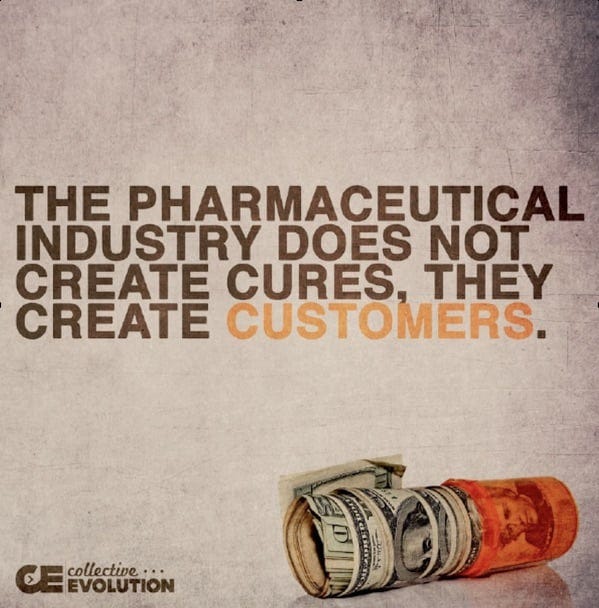
The medical education curriculum being taught in universities has been hijacked by big pharma. This is not a new phenomenon, the coup d’état which replaced natural medicine (that sought to address root causes of illness) with synthetic petroleum based medicine (that seeks to use petroleum derived patentable synthetic drugs to cover symptoms and create ‘return customers’) began over a century ago.
Here is a brief history that provides a summarized overview of how the hostile take over happened.
Founded in 1847, the American Medical Association is the largest association of physicians and medical students in the United States. Its stated mission includes “…lobbying for legislation favorable to physicians and patients, and to raise money for medical education.”
The AMA spends big money on lobbying. One of the AMA’s top lobbying firms, the McManus Group, also lobbies for PhRMA, Eli Lilly & Co, Merck and Pfizer. According to OpenSecrets.org, the American Medical Association comes in second in overall money spent on lobbying in the last 10 years with over $264 million. The health industry as a whole trumps all other industries including energy and finance in lobbying expenditure.
The AMA looks to legitimize its agenda through its Journal of the American Medical Association, JAMA, which is the most widely circulated medical journal in the world. JAMA receives major funding through its advertisers, many of which are pharmaceuticals. In addition, the American Medical Association has been accepting money from the Rockefeller (America’s first billionaire that made his fortune in Oil) and Carnegie Foundations from as early as 1910. In World Without Cancer, G. Edward Griffin makes the argument that the Rockefeller and Carnegie Foundations began to support the AMA in an effort to control the medical schooling establishment and to gain power over this “large and vital sphere of American life.”
The editor of JAMA is very influential, and has historically played a significant role in suppressing alternative health treatments. Morris Fishbein, editor of JAMA from 1924–1950, was directly engaged in suppressing Royal Rife’s cancer cure. In 1849, homeopathy was nearly as popular as allopathic medical practices. The AMA was able to use its position to squash what it referred to as “quackery” — stating that the public did not know what was good for it and that the medical establishment must have total control. At that point it called for control over all medical regulations and licenses. These regulations eventually lead to closing down of schools and almost complete suppression of the practice. Even today in parts of Canada and America some homeopathic practices are “underground.”
It was around the turn of the century that the AMA, the Rockefeller Foundation, and the Carnegie Foundation forged their partnership. They put their money into drug-based research (oil derived pharmaceuticals) and made that the main focus of “healthcare”—a move that turned “healthcare” into “sickness management.” The Rockefellers and other prominent banking elite (and the shareholders of their subsidiary pharmaceutical corporations) have been able to control and profit enormously from the drug industry.
Now, all medical doctors in the USA are trained in medical schools that are run and/or accredited/sanctioned by the AMA. Of 129 medical schools in America, only 22 require even what amounts to basic rudimentary courses in nutrition. Medical students are not trained to see the connections between many degenerative diseases and malnutrition. Instead they are taught only how to treat with surgical or pharmaceutical methods but do not cure or alleviate the root problem or ailment. Similar numbers are reflected in medical education here in Canada. In this way, they are assured of life-long customers. Surveys conclude that over 66% of all Americans regularly take prescription drugs (with only slightly lower numbers being reflected here in Canada as well).
Massive transnational pharmaceutical corporations (like Bayer) were not satisfied in only dominating what we are taught about medicine and what forms of ‘medicine’ we will have access to, they soon moved to take over the food production systems as well.
Just 50 years ago, some 1,000 small and family-owned seed companies were producing and distributing seeds in the United States; by 2009, there were fewer than 100.
Thanks to a series of mergers and acquisitions over the last few years, four multinational agrochemical/pharmaceutical firms — Corteva, ChemChina, Bayer and BASF — now control over 60 percent of global seed sales.
The slow march of seed consolidation suddenly turned into a sprint. Chemical and pharmaceutical companies with no historical interest in seed bought small regional and family-owned seed companies. Targeting cash crops like corn and soy, these companies saw seeds as part of a profitable package: They made herbicides and pesticides, and then engineered the seeds to produce crops that could survive that drench of chemicals. They make the petroleum based pharmaceutical drugs that your doctor will prescribe you when the toxic ‘food’ you eat results in degenerative diseases. At every turn, they make a profit (at the expense of the integrity of the biosphere and human health). The same seed companies that now control more than 60 percent of seed sales also sell more than 60 percent of the pesticides.
GMO byproducts degrade and deplete soils of vital minerals and beneficial bacteria, both of which protect crops from pests, viruses, and other threatening elements. Glyphosate which is used in conjunction with GMO seeds does not biodegrade, which means it is continually accumulating in the environment without restraint, perpetually altering soil composition and contaminating natural resources.
A handful of companies have spread these toxins across our planet diverting US$ 400 Billion of public money to subsidize their high cost chemical commodities to make them artificially “cheap”. The costs of this cheap “food” are astronomical in terms of the health of people, the ecological damage it causes and it’s exploitation of farmers. If the true costs of chemical food were taken into account it would be unaffordable.
If what we put into the soil is toxic, what we get out is toxic. Mission successful. Incidents of degenerative disease and cancer have skyrocketed since the above described ‘food’ and ‘medicine’ products became the norm. Life long return customers for the pharmaceutical industry are now plentiful.
The article continues with more compelling evidence and ends with good intentions and creations—Gavin’s ferments and info about his book: Recipes for Reciprocity
Good writing, great points! A repost by Jeffrey Tucker
“Degrowth is the economic model of flagellantism, reducing consumption, embracing privation, acquiescing to austerity. We no longer declare recessions to be on their way because recession is the new way we live, the realization of the plan. The word recession implies a future of recovery, and that is not in the cards.
Decolonization is another watchword. It means feeling so guilty about the space you inhabit that your only moral action is to stay put and reflect on the sufferings of those you have displaced. You can of course say a prayer of supplication to them, so long as you never appropriate any aspect of their culture, since doing so would seem to affirm your rights as a human being.
You want joy, beauty, color, drama, adventure, and love? It’s not gone entirely. Park yourself on a yoga mat on your gray floor and open your computer. Stream something on one of many streaming services you have been provided. Or become a gamer. There you will find what you seek.”
Geoengineering, weather modification, climate remediation, climate change, global warming—or whatever the science and corporate spinners are calling it this week.
Here I’ll be posting links and pics, quoting/reviewing books and articles, and including commentary about this crucial and controversial topic, while trying to cut through some of the propaganda of my favorite “conspiracy theory” subject: The Weather.
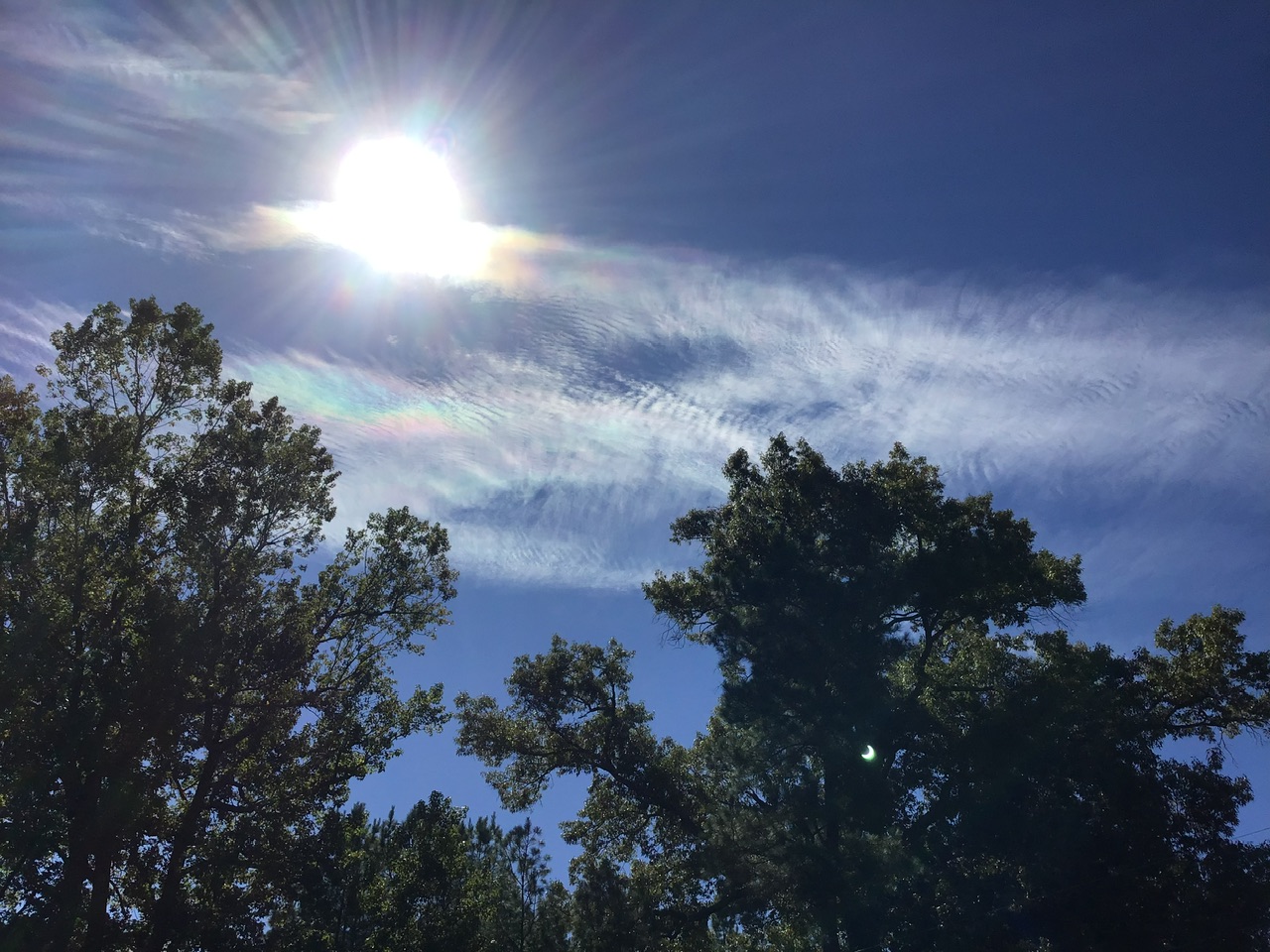
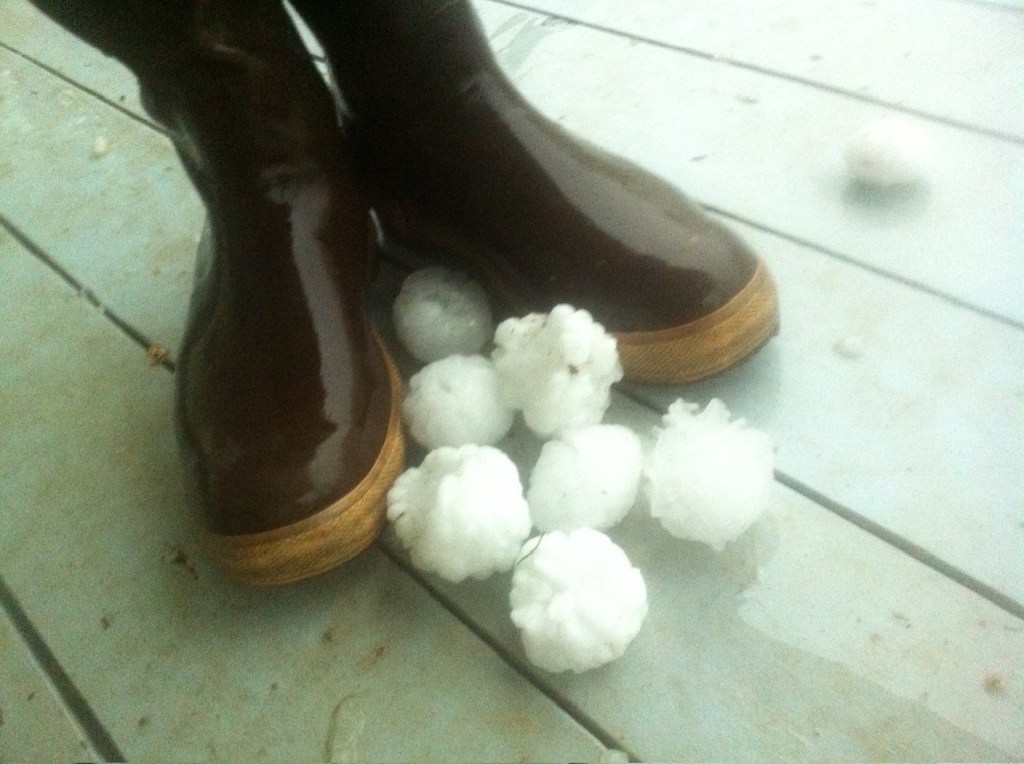
Our own skies provide a regular crop of evidence for the on-going atmospheric manipulations. The Texas Weather Modification Association provides zero assistance to the public though we are personally experiencing all the signature signs of geoengineering, which they pretend is not happening: drought-deluge within micro-regions of the county, tornadoes, weather whiplashf, monster hail, high prolonged heat, and even snow storms.
I’ve been documenting these instances for many years on this blog as the establishment continues their normalization attempts.
We start with a couple of primers from the amazing sites and research of Jim Lee.
Disclaimer: I’ve cherry-picked quotes I like from this excellent and well-researched article (though rather dated) and I would recommend a complete reading. However, politically, the final paragraphs I find off-putting, short-sighted and propaganda-driven. I did not find this to deter from the substance of the main thesis, so I include it here.
“One purpose of this essay is therefore perhaps unavoidably therapeutic: I wish to help promote an integration of two scientific communities, or more precisely, to persuade the cheery Dr. Jekyll to recognize his alter ego, the dark and mysterious Mr. Hyde, and to do so within plain sight of the entire global climate-change science and activist community. Why? Because until this self-reckoning happens no good will come of Dr. Jekyll’s supposedly benign schemes to deal with Earth’s climate. The clever and above all determined Mr. Hyde, an inveterate national security warrior, will use such schemes for his own anachronistic national security ends. He always has. And history demonstrates these ends do not servethe benefit of all humanity.
The dawn of the Age of Geoengineering: The Sorcerer’s apprentices at play
During WW II “a revolution took place, one that was initiated and sustained not so much by the military as by science,” according to historian Kathleen Williams. Immediately after the war, “Military stimulation of science and technology became institutionalized” and the “Cold War ensured the military funding of science would continue…changing both academic science and the military.”[12]Sixty years ago the writer Robert Jungk noted: “In the universities, once homes of free speech throughout the world, the spirit of secrecy took possession.”[13]The Department of Defense (DoD) alone has accounted for “nearly 70 percent of all government funds directed towards research and development” of basic scientific knowledge.[14]The 350-year tradition of independent, individual investigation of nature and matter gave way to the era of ‘Big Science’, meaning scientific research with big, government-funded budgets. Big Science unequivocally included weather and climate modification, as well as other forms of geoengineering, all of which have been invariably cloaked in secrecy. And “secrecy always lowers the standard of environmental accountability”[15]— not to mention democratic accountability.
Earth’s atmosphere consists of several layers, each significantly related to the other, from the lowest layer, the troposphere, where the air we breathe and the weather we experience occurs, to the stratosphere, which also holds the ozone layer, to the mesosphere, the thermosphere, and finally the exosphere, which shades into outer space. The ionosphere stretches from the mesosphere through the thermosphere and into the lower reaches of the exosphere, from 31 to 621 miles above Earth. It was this region that drew the military’s fiery curiosity: how could it be influenced, what were its secrets, and powers?
After Argus, Starfish, and West Ford, research on the ionosphere proceeded apace with construction of a worldwide network of radio frequency transmitters, and later ionospheric heaters, in the US, Canada, Norway, Greenland, Australia, Puerto Rico, and Peru, in partnership with what the National Academy of Sciences calls the “ionospheric modification (IM) community”[35]of major research universities and institutes working in cooperation with the Pentagon. Research also continued in the Soviet Union. “Atmospheric modification experiments,” Dr. Bertell informs us, “can be categorized as either chemical [aerosols] or wave [electromagnetic] related.”[36]The ionosphere is an “active electrical shield protecting the planet from the constant bombardment of high-energy particles from space” and probing it with radio waves has led to the understanding that a “strong electrical coupling exists between the ionosphere and the lower atmosphere.”[37]IM community research has led to many discoveries useful to the military for global over-the-horizon communications, earth-penetrating tomography (also useful to fossil-fuel and other mining companies), surveillance, and weather or climate modification, among other purposes.[38]
Ever since the early days of Project Cirrus weather modification has been both weaponized and commercialized. Since the early 1970s over sixty countries[43]and most US western states have used weather modification technology to manipulate their weather, programs that almost certainly have had and continue to have an as yet unspecified effect on the planet’s overall climate. One region’s or one country’s drought becomes another’s flood, and one’s rain, a neighbor’s drought. The artificial weather seamlessly becomes the artificial climate. Thousands of regional weather modifications made over the past 65 years, such as the UK’s Project Cumulus (1949–1955)[44]and the US’s Project Skywater (1961–1988),[45]have collectively impacted the world’s meteorological and hydrological cycles in ways that remain largely unclarifiedand ignored by the UN Framework Convention on Climate Change (UNFCCC), the 1997 Kyoto Protocol, and IPCC climate modelers.
In the 1950s and early 1960s climate change geoengineering proposals in both the US and Soviet Union were oriented toward causing global warming for the benefit of human activity, with the melting of the Arctic then the glittering jewel on the geoengineer’s horizon, and a prospect devoutly hoped for by Soviet geoengineers and planners.[60](One fifth of Russia’s territory lies north of the Arctic Circle and includes an Arctic-frontier coastline thousands of miles long.) This original or early orientation of geoscientists has been quietly maintained for decades despite the ever-growing consensus about global warming, and has been funded by the big energy companies who have been wedged inside the great climate change debate since its inception.[61]In a March 25, 2012 letter to The EconomistMatt Andersson, an aerospace executive and intelligence industry consultant, bluntly stated: “The public and press are largely uninformed (and misled) as to the actual Geo-engineering operations being conducted by military and certain cooperating commercial interests to effectively ‘melt’ the arctic for naval navigation and resource extraction.”[62]
The pioneering journalists who covered the early chemtrails story from 1999 to 2005 also reported that individual citizens collected post-spray rainwater samples and had them tested by independent laboratories in several countries throughout the Western world. These tests showed elevated levels of aluminum and barium most frequently, but also many other toxic elements such as strontium, thorium, copper, titanium, arsenic, lithium, boron, iron, sodium, calcium, lead, selenium, magnesium, chromium, and cadmium, among others as well as strange gels, polymers, and a variety of microorganisms. Post-spray rainwater tests have been conducted throughout the world, most commonly in North America, Europe, Australia, and New Zealand.[97]
In the decades since the Vietnam War the state’s and corporate media’s appropriation of the term “conspiracy theorist” has cast a pall over the search for truth about the exercise of power, and especially the state’s covert exercise of its military, intelligence, and technological prowess. This has profoundly colored the search for answers about the military’s ongoing geoengineering activities because secret operations are classified, hence unprovable by standard criteria, and thus remain invisible to the public. Accusations that cannot be verified because of classified information can be safely dismissed withplausibledenial. The doctrine of plausible deniability was specifically adopted by the US government at the outset of the Cold War in 1948: “‘covert operations’ are understood to be all activities…so planned and executed that any US Government responsibility for them is not evident to unauthorized persons and that if uncovered the US Government can plausibly disclaim any responsibility for them.”[112]
The Russian physicist and Nobel laureate Peter Kapitsa wrote of the change that came over science on the eve of WW II: “[T]he happy days of free scientific work…disappeared forever” and science “lost her freedom. She has become a productive force. She has become rich, but she has become enslaved” to governments, war, and commerce, and she is “veiled in secrecy.”[229]After the war diverse writers could claim that science had become, in the words of historian James Fleming, “a prominent and permanent part of all modern militaries,” and that the links between them “in perspectives, personnel, values, budgets, [and] scale…have grown inexorably over the years” with a consequent “militarization of the natural world.”[230]
Science’s “loss” of a “deeply rooted set of ethical beliefs”[231]was compensated by a vast increase in scientists’ social status and political power: “[T]here broods over them a mythological identity” that serves to ensure them a “supremacy within our culture,” and “envisages them as the new Prometheus pitted against the hostile forces of nature,”[232]uniquely serving humanity. Roszak asks if science is “to be pardoned on the grounds it has that it has systematically taught our society to regard knowledge as a thing apart from wisdom.” Such “alienated knowing is, sooner or later, ecologically disastrous knowing.”[233]
And now, back to our East Texas property: Giant hail and freak snowstorms
There are those, including the above, who discredit the work of Dane Wigington of GeoengineeringWatch.org
I don’t have the answers and I don’t know which information is correct or who to trust. However, Dane is the most prolific of those speaking out against geo-engineering/weather modification, so I regularly follow his work. His documentary ‘The Dimming’ is very informative and I hope everyone will watch it.
Chemtrails Exposed by Peter A Kirby
“Dr. Joseph Kaplan (1902-1991), chairman of the International Geophysical Year, said, “Control of earth’s weather and temperature is within the realm of practicability now.” ~ ~ ~ High-profile weather modifier Archie Kahan pointed towards future large-scale weather control by stating, “Changes in the atmospheric circulation produced by modifying the radiation balance of the atmosphere and control of major storms are possibilities held”
— Chemtrails Exposed: A New Manhattan Project: second edition by Peter Kirby “phenomenon central to the New Manhattan Project and explained in the next chapter. He writes, “There is reason to believe that we can find triggering mechanisms which could make or dissipate atmospheric disturbances.””
— Chemtrails Exposed: A New Manhattan Project: second edition by Peter Kirby https://a.co/axJPWWP “Charles E. Jones III is a retired US Air Force brigadier general who served continuously in the Air Force and Air Force Reserve from 1954 to 1986. He has written a short piece acknowledging the reality of chemtrails. Jones writes: “When people look up into the blue and see white trails paralleling and criss-crossing high in the sky little do they know that they are not seeing aircraft engine contrails, but instead they are witnessing a man made climate engineering crisis”
— Chemtrails Exposed: A New Manhattan Project: second edition by Peter Kirby https://a.co/deNHbci “facing all air breathing humans and animals on planet Earth. These white aircraft spray trails consist of scientifically verifiable spraying of aluminum particles and other toxic heavy metals, polymers, and chemical components. Toxic atmospheric aerosols used to alter weather patterns, creating droughts in some regions, deluges and floods in other locations and even extreme cold under other conditions.””
— Chemtrails Exposed: A New Manhattan Project: second edition by Peter Kirby https://a.co/deNHbci “LORAN/ SS Loran Today, electromagnetic energy generated from ground-based antennas called ‘ionospheric heaters’ as well as their offspring is used to manipulate the atmosphere and thereby modify the weather. As noted in the first chapter, this use of electromagnetic energy is what distinguishes the New Manhattan Project from the conventional cloud-seeding industry. The biggest early developments of technologies which have since resulted in today’s ionospheric heaters took place at the MIT Rad Lab. Ionospheric heaters have evolved from something developed at the Rad Lab called the Long Range Navigation (LORAN) system. During the Rad Lab years with LORAN, Big Science got serious about bouncing radio waves off of the ionosphere. Before LORAN, the most significant contributions in this area were made by Nikola Tesla (1856-1943) and Guglielmo Marconi (1874-1937), and then later by scientists Gregory Breit (1899-1981) and Merle Tuve (1901-1982). Merle Tuve was the director of the terrestrial magnetism division of the Carnegie Institution.”
— Chemtrails Exposed: A New Manhattan Project: second edition by Peter Kirby
“Teller wrote and spoke about weather modification countless times. In his memoirs, Teller writes of, “putting 1 billion small floating spheres into the atmosphere.” We have noted how he wrote about spraying us with aluminum. In his book “The Legacy of Hiroshima he suggests the solar radiation management (SRM) geoengineering thesis. In other words, he suggested spraying us with chemtrails many times. Teller served on the Panel on Weather and Climate Modification of the National Academy of Sciences where our good friend Gordon J.F. MacDonald was chairman. Teller once testified before the Senate Military Preparedness Committee that if Russia was first to control the weather on a global scale, then the United States could be beaten without war. Teller also told the committee that he wouldn’t be surprised if the Russians achieved global weather control in the relatively near future. Throughout his career, Teller used the Russian threat as a justification for more spending on weapons programs. In the example reproduced next, we see how Teller notes atmospheric ‘triggers.’ He’s writing about the notion that certain, relatively small atmospheric phenomena at certain points in space and time can create atmospheric chain reactions which eventually lead to large atmospheric phenomena such as storms. It is analogous to the so-called ‘butterfly effect.’ The butterfly effect is the notion that the flapping of a butterfly’s wings in China can eventually cause a giant storm on Cape Cod. The thesis of atmospheric triggers is mentioned over and over again throughout”
“the weather modification literature in the same way Teller mentions it here. In order to control the weather, Teller and his peers suggested that these triggers be artificially created and/ or manipulated. The atmospheric trigger thesis is central to today’s NMP operations. In fact, it was during the course of his work in computer-simulated weather models when American mathematician Edward Lorenz coined the phrase and wrote about it in his paper “Predictability: Does the Flap of a Butterfly’s Wings in Brazil Set Off a Tornado in Texas?” Today’s NMP supercomputer atmospheric modeling systems are designed to be able to identify these triggers and predict their outcomes. Knowing the probable outcomes is how the people running the NMP know when and where to perform atmospheric manipulations. The National laboratory Teller co-founded and directed (Lawrence Livermore National Labs) has been at the forefront of supercomputer atmospheric modeling since early on and continues there today. Teller writes: “Before anything can be controlled, it first must be understood. We are just beginning to approach an understanding of weather. We know that very small causes can grow into very big effects. A slight disturbance of the air masses on the front separating the calm air of the poles from the steady westerly winds encircling the globe in temperate latitudes can trigger a whirlpool a thousand miles wide and can affect the weather over the United States for an entire week. We can and we should increase the number and range of our weather observations. We will use satellites and other means to keep track of clouds and winds. Then, using improved electronic computers, we shall be able to predict weather and trace the origin of each development back to its original trigger. “When this high degree of meteorological understanding has been attained, we might be able to create triggers of our own and realize the age-old dream of actually doing something about the weather. We might spread a cloud of dust over a strategic location [author’s emphasis] or find some other way to upset the temperature balance between air masses. We might break droughts. We might regulate the precise location and time where a hurricane arises, thus predetermining the place where the destructive winds would dissipate. “Such new command over nature will give us responsibilities beyond our present ability to imagine. When rain will be the servant of man, man must be the master of himself. Control of clouds will bring either conflict or co-operation between nations. The prospect may seem terrifying, but in the long run this situation or one similar to it will surely arise. Science brings progress; progress creates power;”
See the Playlist at ‘NeverLoseTruth’ channel!
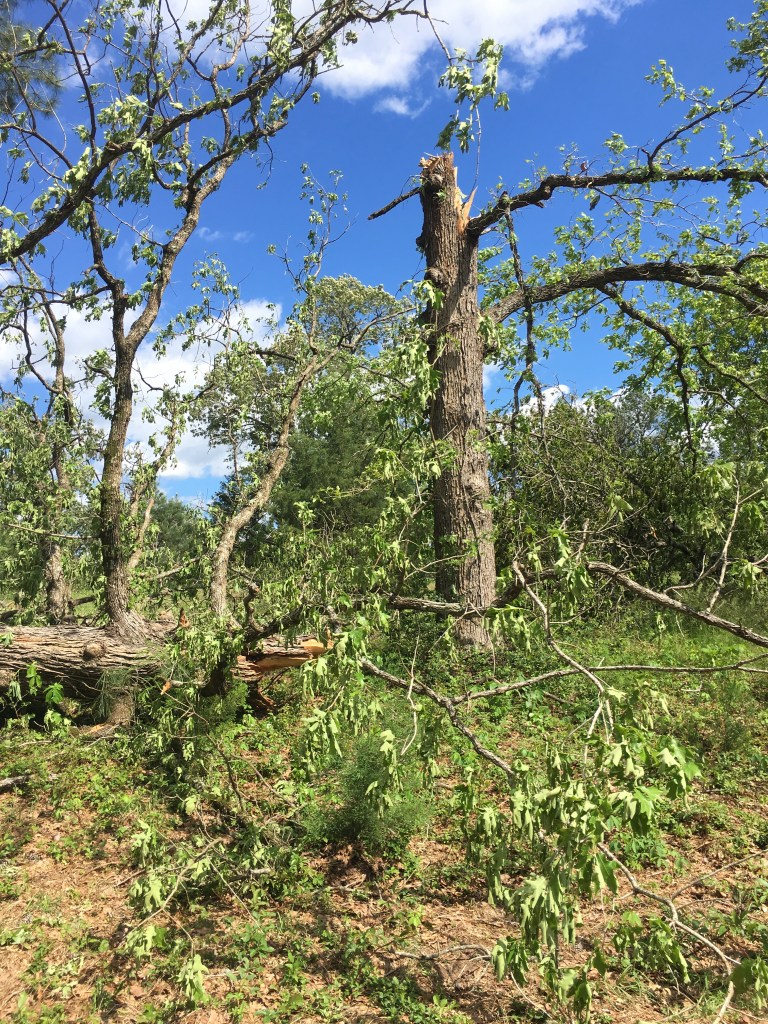
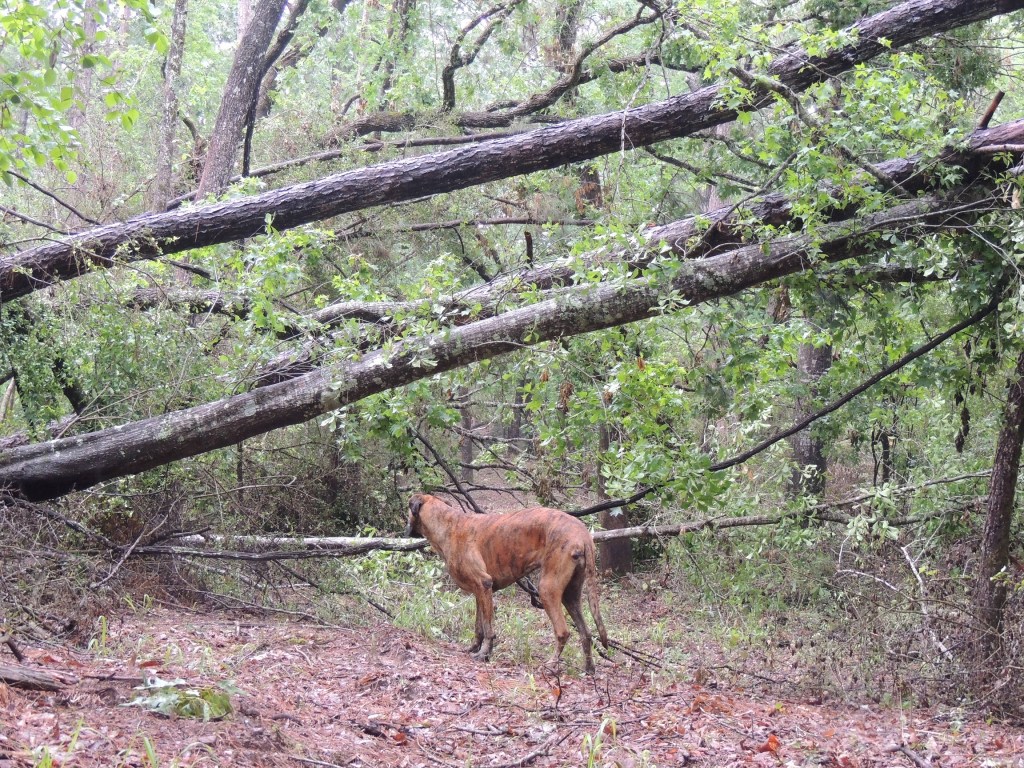
Some photos after a tornado on our property that came without warning in the middle of the night and was not recorded by any source I could find. It was terrifying and killed dozens of mature trees, nearly took the roof off the house and spread limbs, branches and debris right up to every window and across all our acreage.
Tornadoes were never a regular occurrence in East Texas, now we have multiple events every year somewhere nearby.
Through fence lines and trails, the clean up took months and the damage is still visible over three years later.
And once again, back to our East Texas property.
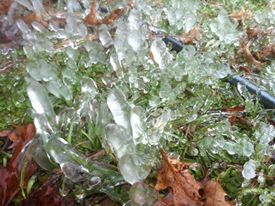
These ‘upside down icicles’ formed in the still green grass overnight when the temperature dropped 50 degrees.
A spontaneous site redesign is in the works! It’s come to my attention that this site is unorganized, unnavigable and losing its relevance—if it ever had any. 😆
We really need a makeover.
I’ve decided to tackle those issues posthaste. But, please be patient, as my skill set will be very challenged during this restructuring.
In the meantime, scroll away for previous meme drops, updates on the wee homestead, amateur poetry and varied shares. Or, check out the so-far few Herbal Explorations pages, or the Geoengineering Resources, or the Farm-to-Table Resources, which will be updated as well.
And, feel free to share any suggestions and opinions: what would you like to see more of on this blog? What kind of blogs do you think we need more of in the cyber world? Are there any blogs you particularly like that you think I could learn from as far as content/design/features?
Please, share to your heart’s content! I hope you’ll miss us while we’re gone! 🤗
I know it must be autumn somewhere! Here that reality is still mostly in my dreams. We’re still in the 90s and still mostly dry. There are a few tiny signs of change though, that I’m magnifying in my mind, because I can hardly wait! It’s been a terrible summer.
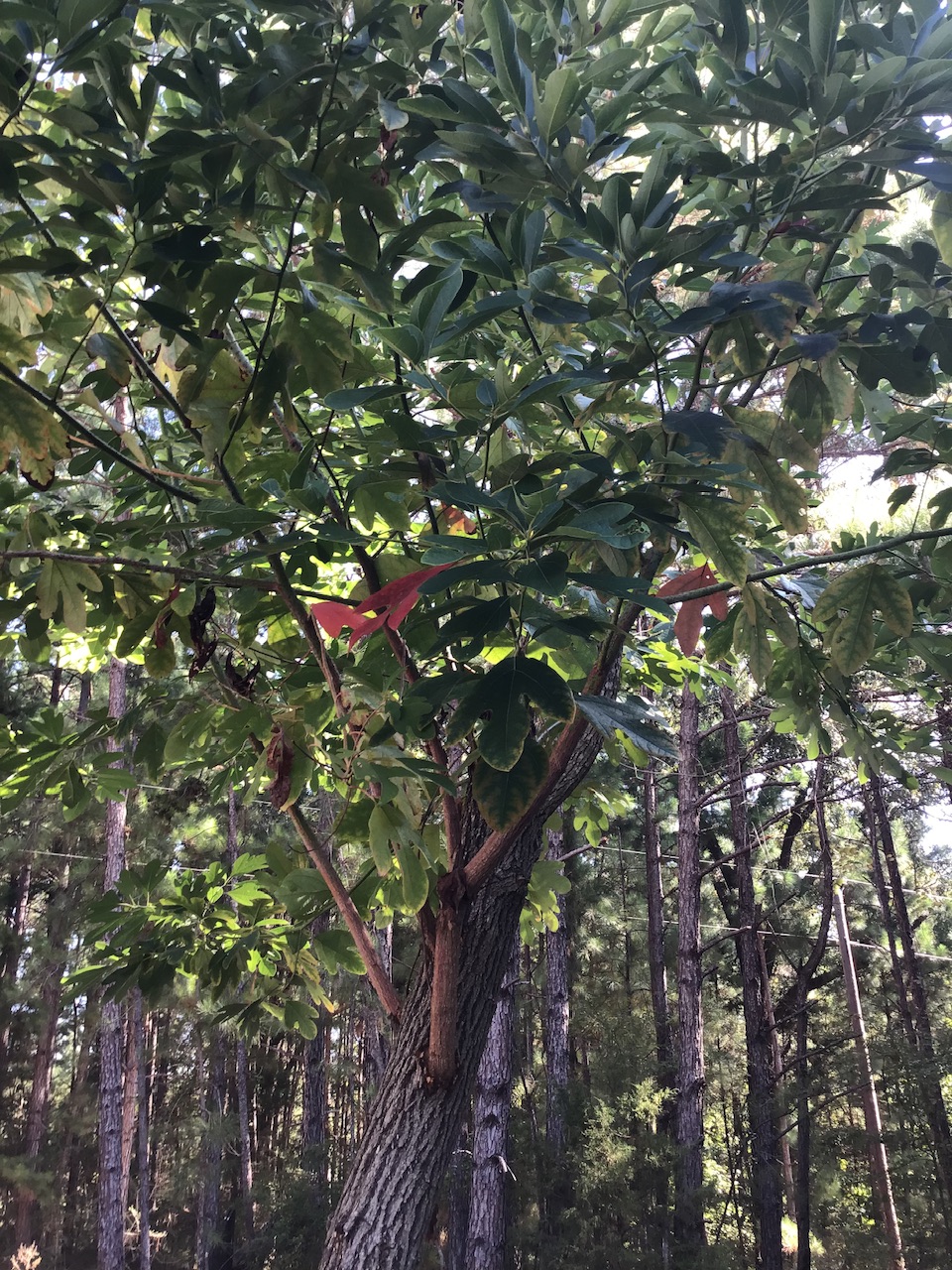
See, right there, 3 red leaves on my favorite Sassafras tree! (Very soon to be featured in an ‘Herbal Explorations’ post)
But, I’m not going to complain about that now. Instead we’ve got lots of happy snaps, and even a few scary ones.
We’re gearing up for the fall/winter garden, getting the beds ready for the transplants that have been growing under lights for a month and are very ready for their new outdoor home, just as soon as the temperature drops a bit.
Hang in there brassicas, it’s almost time!
We just started harvesting sweet potatoes from the boxes waiting for replanting.
Those vines helped keep the goats happy and healthy during the extra long heat wave.
Summer keeping a sharp eye on Shadow even though there’s a fence between them. None of the goats have warmed up to him, despite all his best efforts!
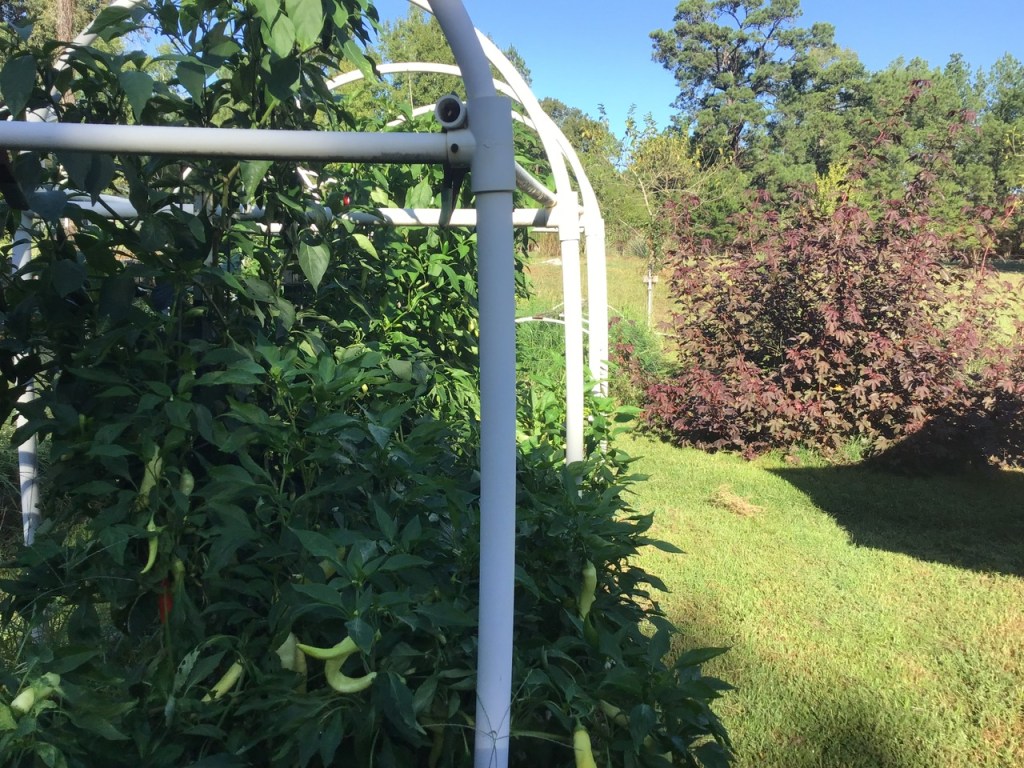
The peppers have come back with gusto after another dose of compost dressing and removing their shade cloth.
Jalapeños and banana peppers and the now monstrous cranberry hibiscus on right that is finally just starting to bloom.
Cucumbers again, yippie! Plus hurricane lilies, turmeric, zinnia and basil keeping the bees happy. And lots of bindweed (morning glory)—scourge to the industrial farmer—a hardy, lovely and welcome cover for the rest of us.
I’m getting about 1/2 gallon of milk a day from 2 goats and making cheese often—mozzarella and soft chèvre every week and a hard cheese whenever I can accumulate at least 3 gallons (preferably 6) in the freezer. The larger the hard cheese the easier it is to age properly and goat milk works just fine for cheese after freezing.
The easiest cheese to make and so delish!
But I’m really looking forward to making Camembert and Munster again. Just like all things natural, cheeses also have seasons. I was very disappointed by a so-called Brie I just splurged on from the grocery store. They should call it a processed Brie-like imitation and market it in the aisle with Velveeta. Quel scandale!
A few more friendly faces . . .
As I mentioned last update, we had a sausage-fest this summer, that is, a super-high percentage of males born, of all species—cats, pigs, sheep, chickens, goats. So odd.
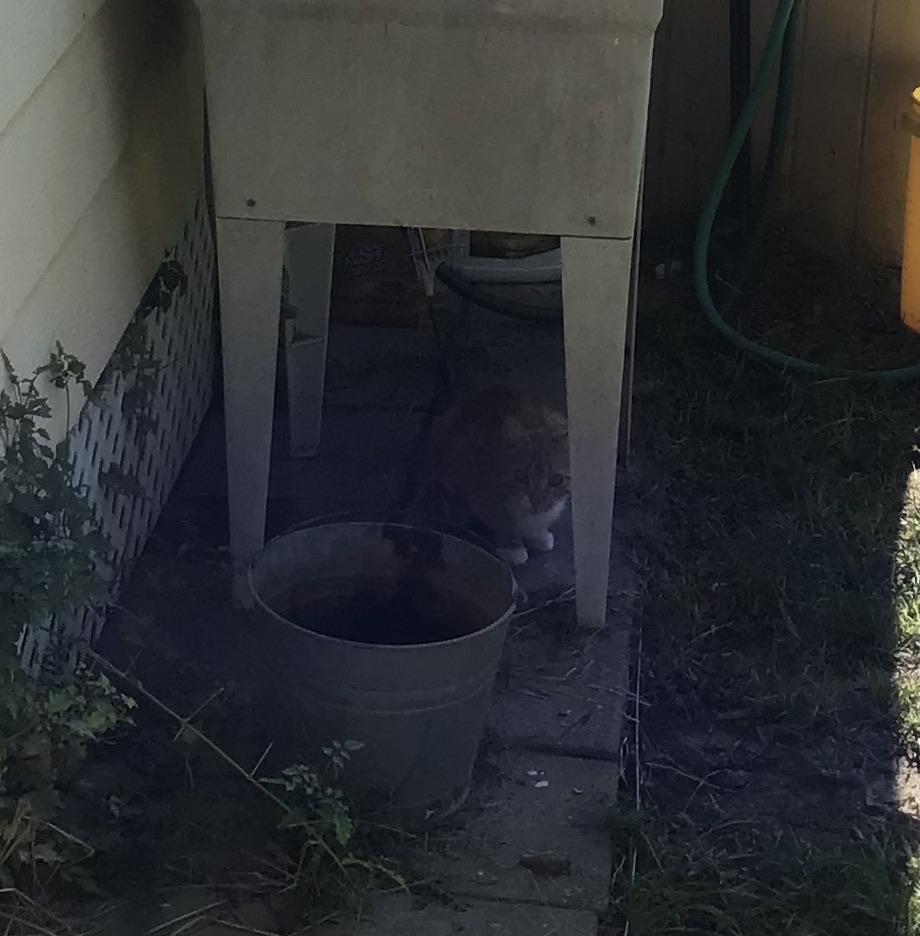
Now we have 3 young male cats, a new thing for us. But one of them is a real scaredy cat, we’re never able to get close to him and he’s rarely around except for meal time.
Always crouching in the shadows and darting off even from the camera.
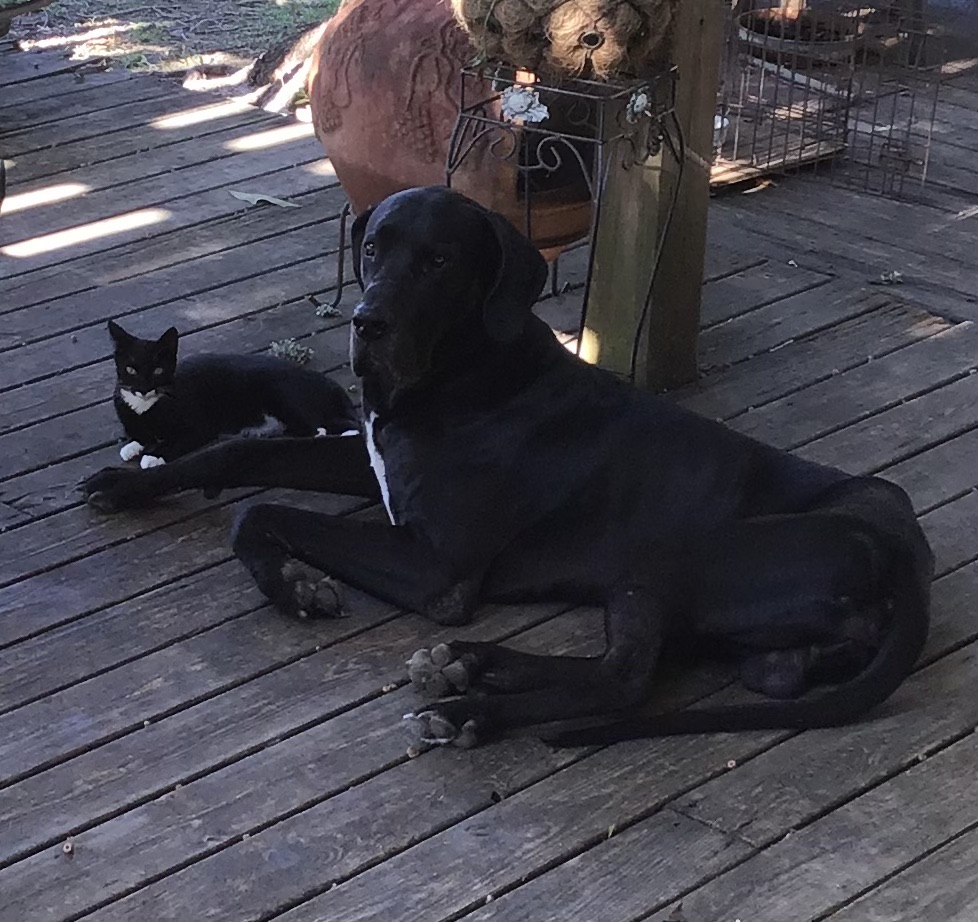
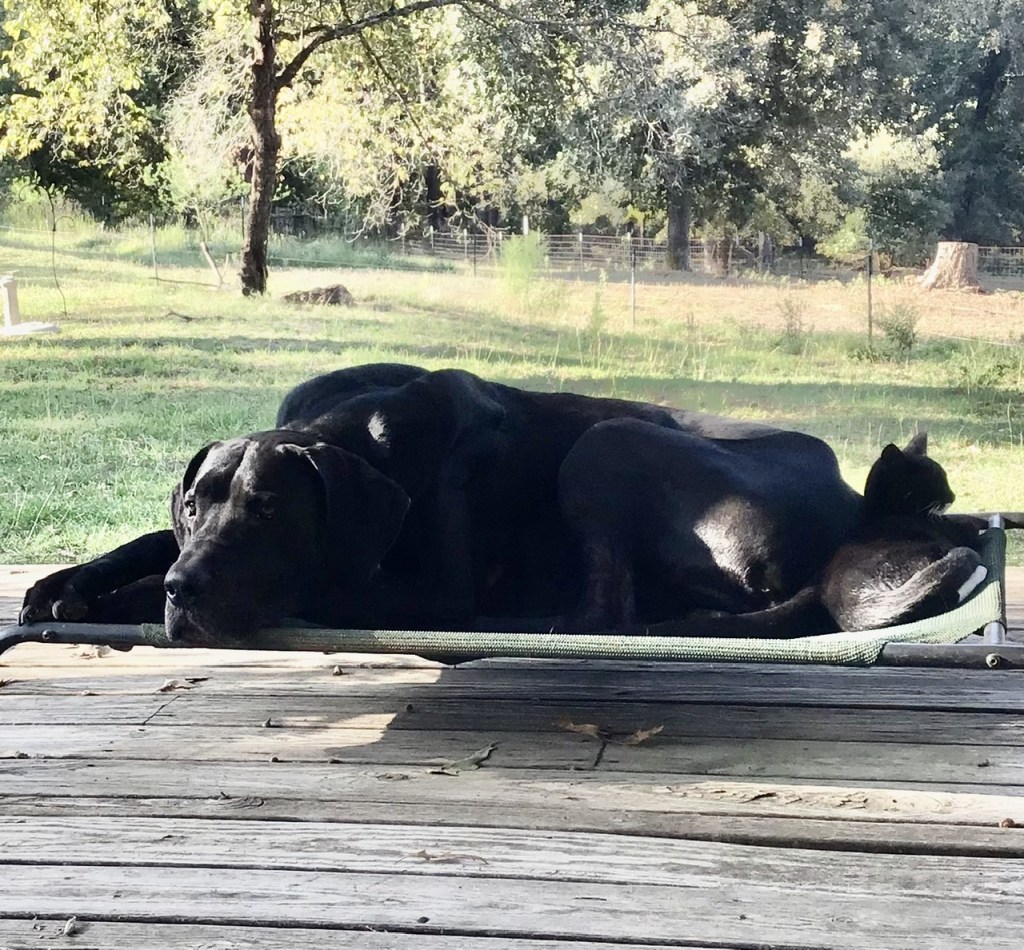
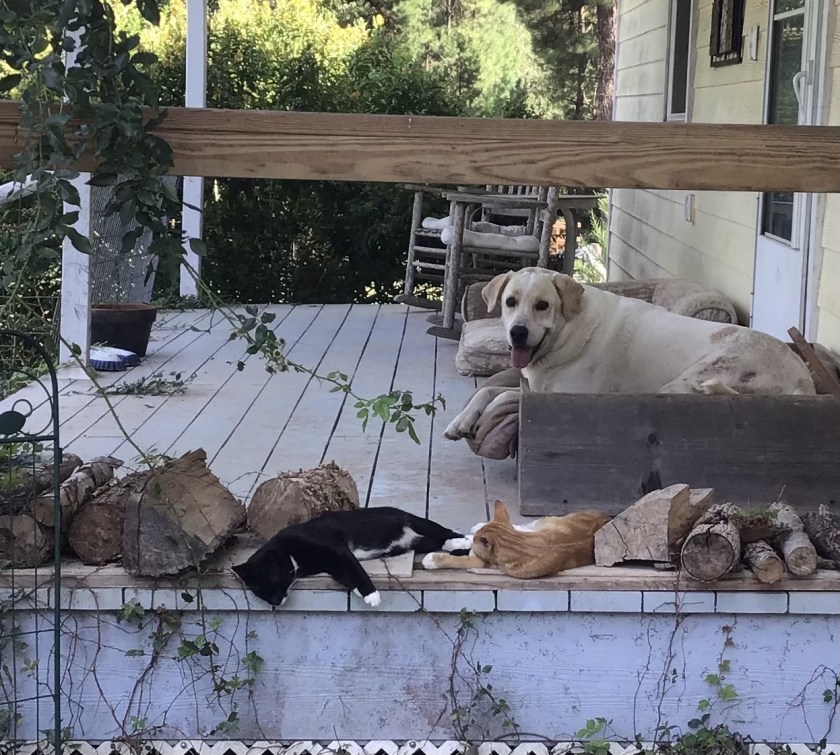
Also odd but true—our black cat, Mittens, hangs out with our black Shadow and our blond Tony hangs out with our blond Bubba and Buttercup—go figure!
“Hey in there! Where’s our breakfast?!”
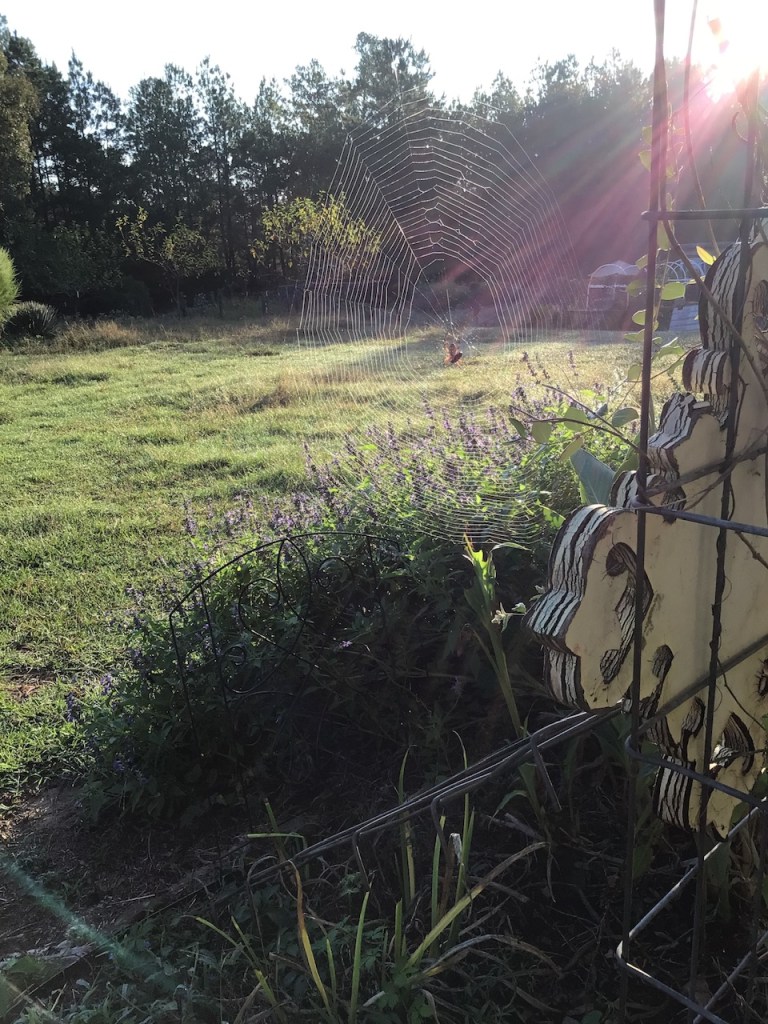
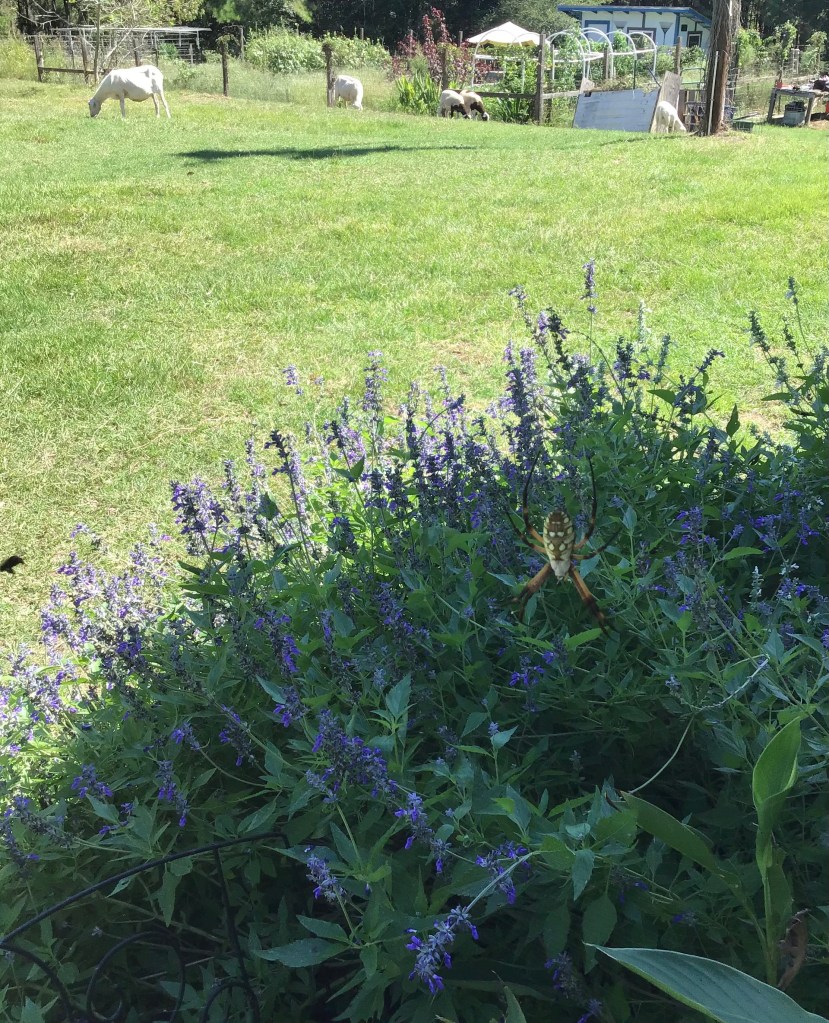
I love spiders, especially these beauties, but some folks find them scary, apparently.
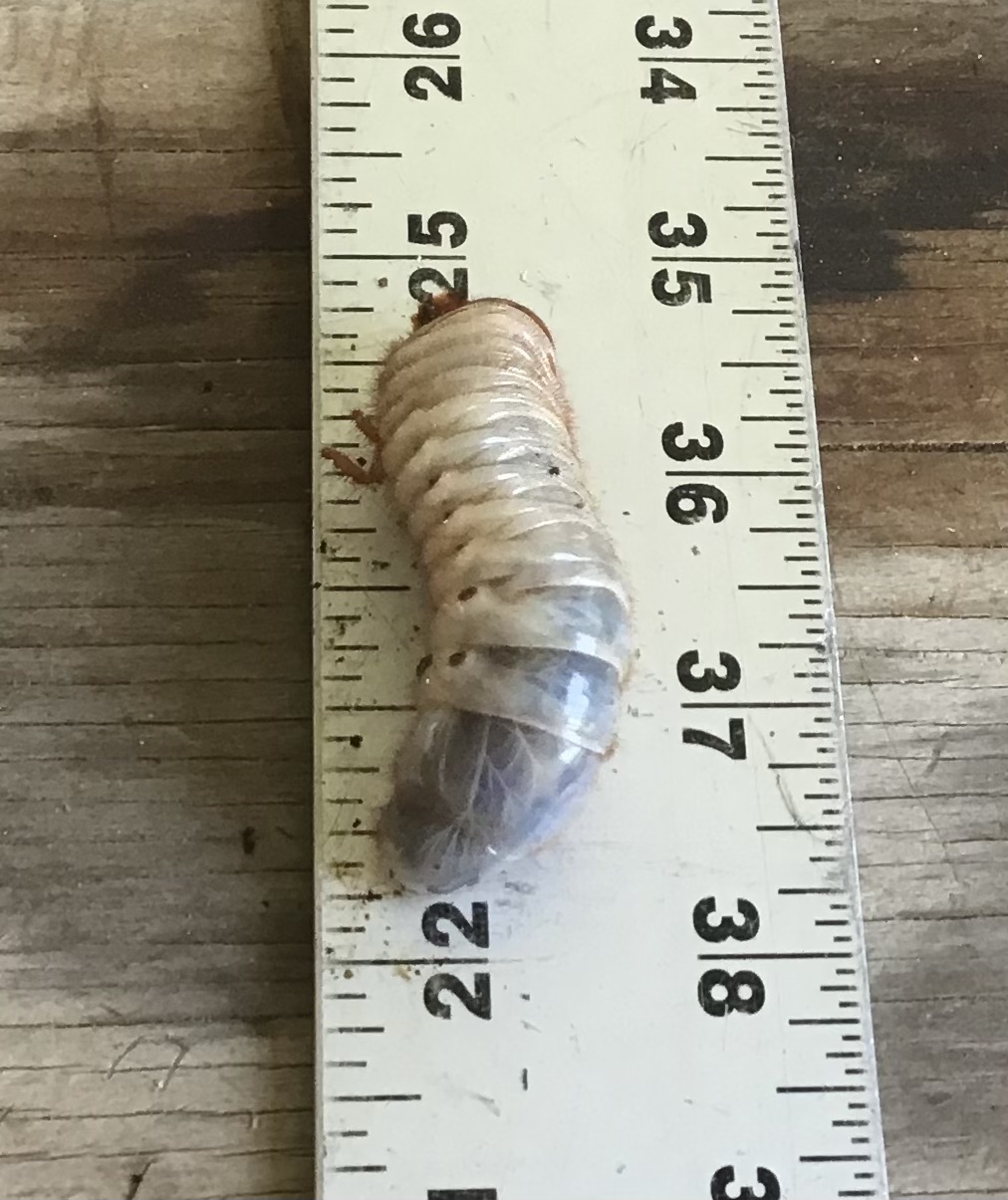
Now here’s a real foe . . . .
Gross! Looks like right out of a horror movie. And he has a lot of friends haunting our compost heap. 🤢
But who loves ‘em but our very scary Halloween rooster . . .
Poor guy, we’ve no idea what happened to him, but he is one scary-looking dude!
Soon we will be making the tough but necessary fall homestead decision—who will get bred and who will shuffle off to freezer camp?
But not a care in the world for these contented creatures!
Hope you’re having a fine Sunday and thanks for stopping by!
I venture once more into this unsavory file. I have to force myself, because there are about three thousand things I’d rather be thinking and writing about. Here’s the first one in my on-going efforts.
But, it’s the kind of questions that keep circling round and round in my mind day and night. Why are technology and sustainability being pushed on the public as essentially and inextricably connected? With the follow-up question being, and why do folks keep accepting it?
I read and listen to quite a bit trying to wrap my tiny mind around it all. I still can’t. But, do know I’m not giving up, and feel free to click around at some articles and quotes of interest.
All I can come up with is, it’s a classic Bait & Switch.
“Three years ago, Olam International, a global agribusiness company with nearly $27 billion in annual revenue, took a big step toward helping the agriculture field meet its ambitious goals to lower greenhouse gas emissions, reduce waste, and improve the livelihoods of farmers by launching AtSource with Olam, a groundbreaking digital sustainability platform. AtSource makes it possible for customers to trace their products’ origin, measures the environmental and social impact of those supply chains, and offers insights on how to influence them for the better. Customers can view the journey from source to factory for more than 20 ingredients across more than 60 supply chains, and in many cases they can trace crops to specific groups of farmers, calculating the environmental footprint of a specific crop by volume, origin and destination.”
Obviously, this is customers and regulators teamed together to squeeze producers around the world into compliance. It is not that much different than administrators and students taking over academia, squeezing the critical voices out of even tenured professors, which I experienced first-hand.
Businesses will have to employ this technology in order to ‘live up to’ their sustainability pledges according to the Davos Agenda 2022.
I wonder if the rancher up the road has made a sustainability pledge to the Davos kingpins? I dare say he hasn’t the slightest clue what the global public-private partnerships have in store for him, his cattle and his land.
“Sustainability is no longer just a buzzword, but an environmental, economic and social driver that’s changing our day-to-day lives in almost every way imaginable.”
How is the digitization of all life going to create global sustainability?
“For example, a 5G-enabled IoT network allows smart cities to automatically monitor and manage utility systems, helping conserve water, combat pollution and reduce energy consumption. Smart cities will also enable dynamic traffic management systems that continuously collect and process data from thousands of vehicles to reduce traffic congestion and pollution. Additionally, smart agriculture will allow the industry to minimize their use of water, fertilizers and pesticides through a more precise application. This is a significant opportunity, as agriculture irrigation currently accounts for 70% of water use worldwide. Finally, 5G-enabled smart buildings and homes will be equipped with sensors that react to environmental conditions and occupancy to reduce energy consumption caused by lighting, heating and cooling.”
Sure, there are problems with industrial agriculture, this is not news. But why are the only solutions offered requiring so much tech and so many sacrifices for the average person?
Why don’t they talk about why there are such water constraints? What’s causing so many droughts, for example? (Geoengineering and Weather Modification!) Why do we allow industry and corporations and global mass consumerism to exploit our resources? How will digitizing everything change that?
“In recent years, agricultural regions around the globe have been subject to extensive and increasing water constraints. Major droughts in Chile and the United States have affected agricultural production while diminishing surface and groundwater reserves. These and other extreme weather events, like floods or tropical storms, are also expected to be more frequent. Climate change is projected to increase the fluctuations in precipitation and surface water supplies, reducing snow packs and glaciers and affecting crop’s water requirements. Coupled with these changes, farmers in many regions will face increasing competition from non-agricultural users due to rising urban population density and water demands from the energy and industry sectors. In addition, water quality is likely to deteriorate in many regions, due to the growth of polluting activities, salination caused by rising sea levels and the abovementioned water supply changes.”
A quick reprieve from ruminating about technology for some recent happy snaps. I’ll try to not do too much complaining about the weather. But I know how hard that’s going to be so, here’s a deal, for every complaint I will offer one bonus. 😁
Dortmund climbing rose makes a surprise appearance
The extreme heat, and drought, is not normal, so I really wish folks would stop saying it is.
Bonus! It’s reassuring how remarkably resilient some plants and animals are.
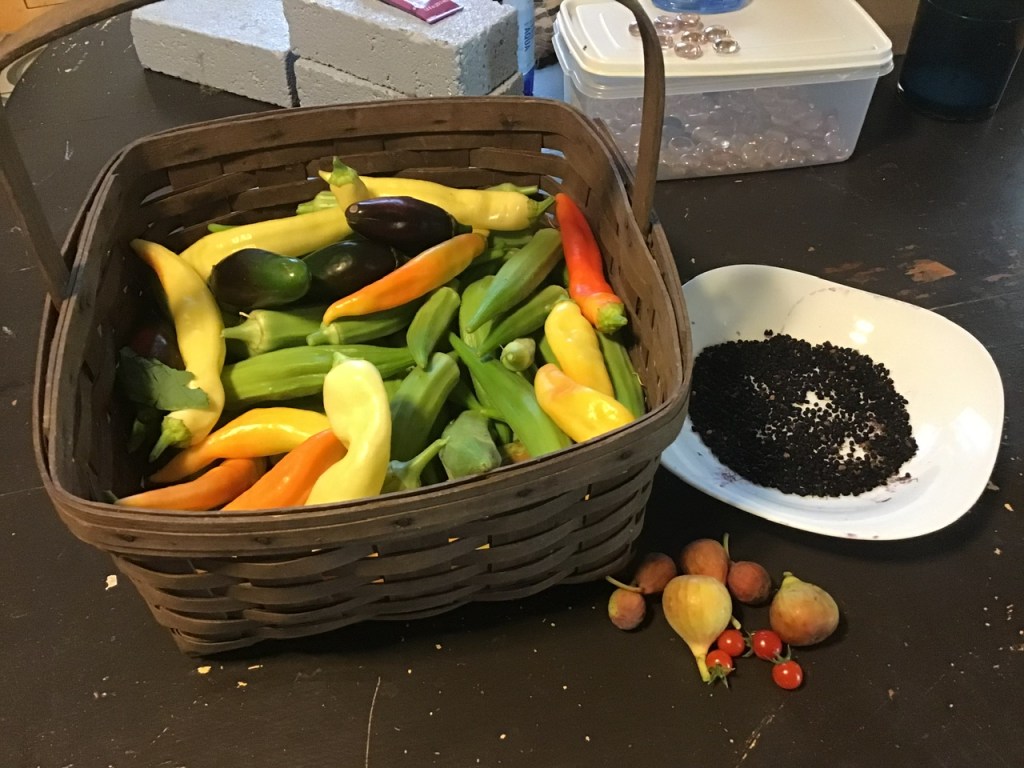
Hibiscus for tea, to be blooming soon With plenty of irrigation and shade cloth the re-seeded cucumbers are coming in, lots of okra, eggplant, peppers. And sweet potato vines, which the goats especially love.
One green melon from one surviving plant, I think I’ll name those saved seeds the Miracle Melon.
Not much harvesting happening, but at least something. A few figs and grapes, some herbs and elderberries for flavoring kombucha.
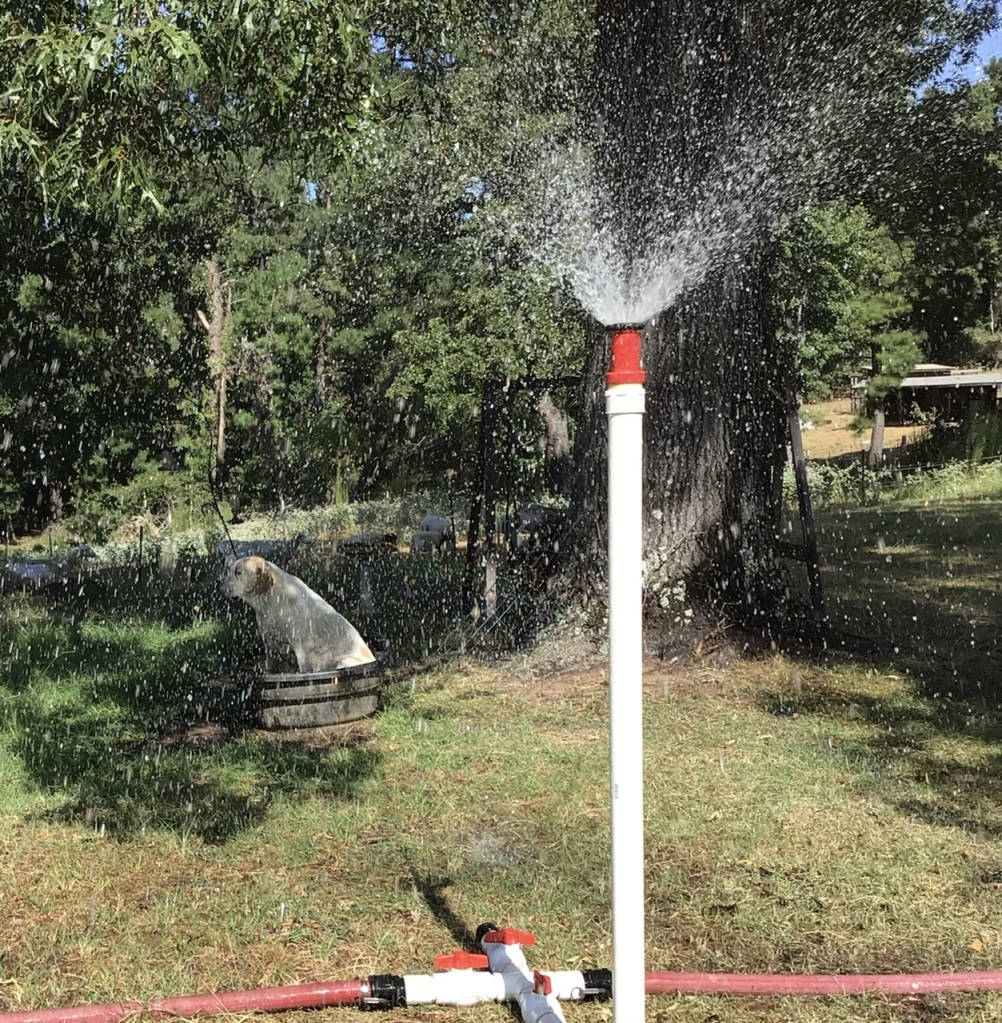
Bonus! We can fully appreciate how precious water is to all of us.
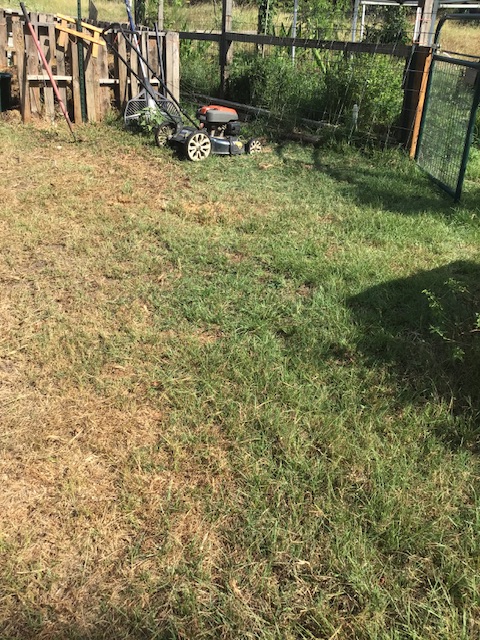
Pretty obvious where the sprinkler spray stops
Man changing the climate? Perhaps.
Man changing the weather? Definitely. Do they care how toxic and dangerous that is? Seems like no.
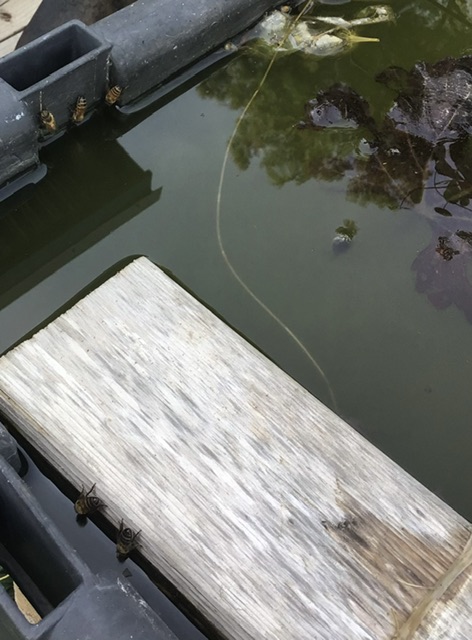
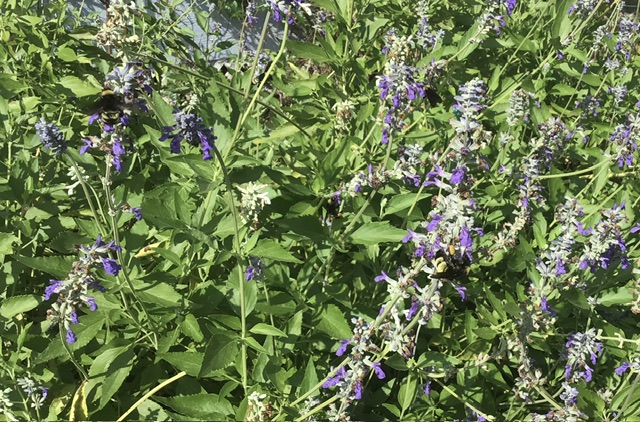
Bonus! We can observe different species peaceful tolerance of the other under times of stress, as well as which critters are more heat tolerant. The honeybees only appearance in the garden at the moment is at this water trough where I feed some tadpoles. But, bumblebees are going crazy on the salvia, wonderful!
It’s so hellishly hot by 10 am we can’t stand to be outside anymore.
Bonus! We can feel like heroes as we try to keep the critters as comfortable as possible.
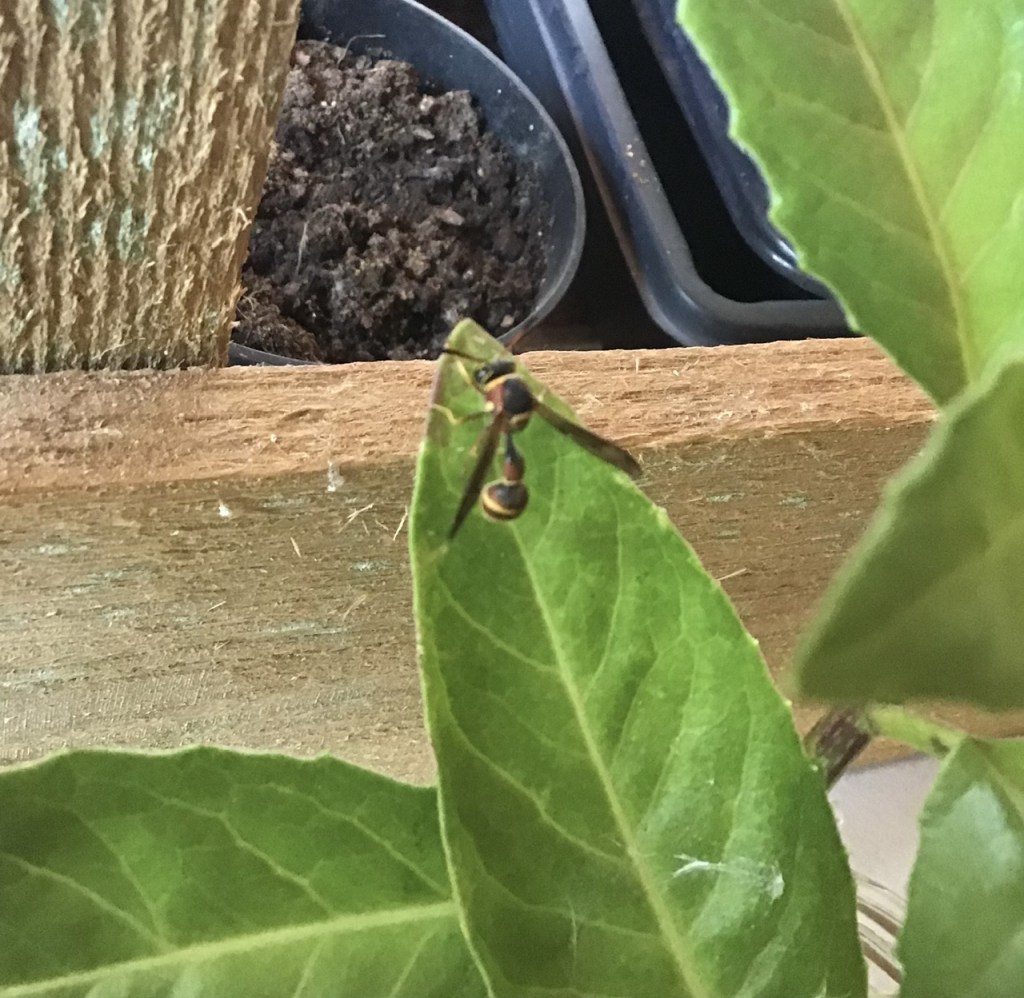
This cool-looking wasp followed me inside, maybe hoping to keep cool? It’s been living happily on this ‘longevity spinach’ (gynura procumbens) for nearly a week. I didn’t realize they could live so long alone, indoors and with no nectar. The wasps must eat something on the leaves, there’s loads of wasps on the okra leaves too.
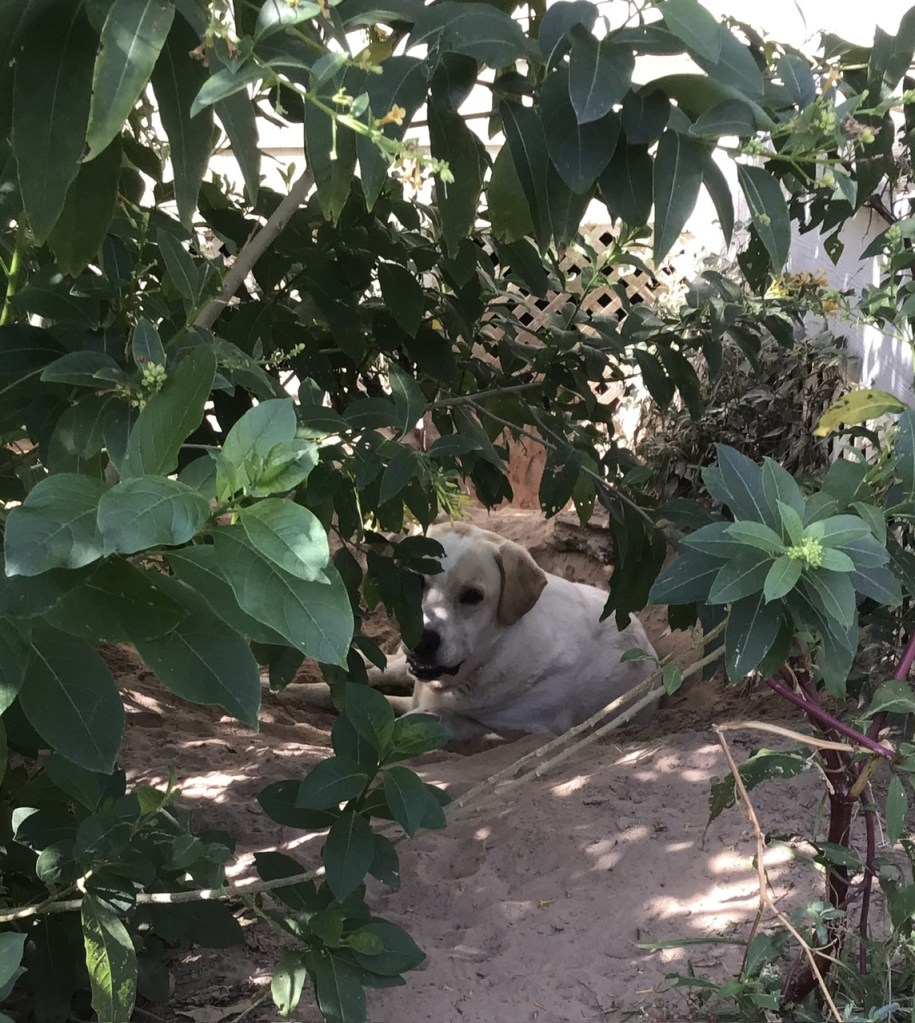
Here we come to save the day! Bubba in his tub and Buttercup in her sand hole.
The final bonus of bonuses! I can tackle all kinds of indoor projects I’ve been neglecting, like organizing the closets, washing the windows and floors, attending to the neglected pile of sewing . . .
The only true bonus of that list is that I find it so objectionable I’ll instead be reaching for another novel I’ve been meaning to read. 😆
I’m critical of high-tech solutions and when I hear them in tandem with big claims of sustainability, especially at a global level, I automatically bristle.
Still, the first time someone called me a Luddite, I balked.
I know there are plenty of us—vocal advocates and quiet dissenters alike—bemoaning so much of the tech being shoved down our throats, most certainly when it comes to food. I’ve been vocally ‘anti-GMO’ and ‘anti-geoengineering’ and ‘anti-vaxx’ and ‘anti-surveillance’ which in their linguistic game really just amounts to PRO-nature.
Yet it is becoming more common, even among the homesteading ‘community’ and ‘off-griders’ to consider these two powerful forces as intrinsically intertwined. As if sustainability cannot be achieved without modern tech, forgetting we somehow made it all the way up to the industrial era with relatively little of it.
We often hear of technology being a Trojan Horse. But, that’s an understated analogy, considering in that story it was a “gift”—insinuating it was one that could’ve been rejected. There is no rejecting a good portion of this tech flooding into our lives today. You will not escape the digital prison, at least not completely. Those 5G towers are screaming their frequencies over your head day and night whether you like it or not. The weather modification is a thing, whether I like it or not. (NOT!)
We also hear of technology being as any other tool—to be used for good or ill. Yet, is that a fair assessment when these tools are largely invisible? And when they are overwhelmingly in the hands of very few, and when fewer still would be able to replicate them in any capacity?
What am I missing? Where is the healthy balance? To explore these questions over the next few posts, I’m bringing in considerable help.
A young ‘homestead influencer’ I’ve heard about for years is about to release a new book and her attitude about the tech sounds pretty healthy. In the book she explores the question, “What are we leaving behind in our race toward progress?”
Like most of us, she has zero intention of recreating a ‘Little House on the Prairie’ lifestyle. She has managed to incorporate the tech into her life on her terms. So far, it seems.
Many of us certainly feel as the diaspora—dispersed between cultures—natural and digital.
I can’t help but wonder, is losing our soil connected to losing our soul?
I have a cousin in Colorado with a farm I’d call pretty high-tech. He’s a permaculture/biodynamics guy and has been very successful and has the perfect background to enlighten me, I’m sure.
He worked all over the world before his current venture, which has recently gone on the market after 20 years of development and WOW, talk about a success story! To increase the value of a property by such an extraordinary measure is truly remarkable. And that’s only part of his success story.
He too seems to have managed the tech, rather than the tech managing him.
I was quite moved by his 2015 speech:
“I remember! These qualities of life giving wholeness that our ancestors knew deep in their bones have been drawn off, separated, reduced, modified, pasteurized, homogenized, radiated – their vitality degraded, their life giving forces mutilated beyond what our cells might recognize. We now consume what are at best facsimiles of food, laboratory concoctions, genetically mastered ingredients – simulacra that do not build our cellular health but create work for our bodies, that weaken our fortitude and break our spirits. These laboratory wonders parade in full color down our grocery store isles. -all screaming for our purchasing dollars. More money is spent on the campaigns intended to seduce us than on the so-called food inside. These products are combinations of ingredients that we can not pronounce, masquerading as food and covered up with contemporary Eco-socially correct overly-designed, brightly bannered sales pitches in suspect containers claiming to bring us momentary bliss – all hawking only slight variations of amber waves of commodities meant for one thing and one thing only – to efficiently generate profit for a few, and from the most devastating chain of ecological rape and pillage the world has ever experienced – all leaving an accumulated insurmountable debt to future generations.”
Excerpt from a speech given by Brook LeVan at the 12th Annual Sustainable Settings Harvest Festival on September 20th, 2015:
“In the modern world, progress and innovation are often celebrated as unambiguously positive. New technologies, ideas, and ways of living are readily embraced with the assumption that they must be better than what came before. While it is true that certain advancements have brought undeniable benefits, such as improved hygiene, faster means of travel, effective medical treatments, and enhanced communication, it is crucial to critically examine the broader implications of modern progress. Often, the rapid pace of change leaves little room for reflection on whether newer solutions are truly superior to time-tested practices. As society becomes more complex and interconnected, the allure of novel and convenient solutions can overshadow the wisdom of the ancestors. Practices that have served humanity for generations may be disregarded in favour of modern alternatives that promise quick results and ease. For example, the trend toward processed foods and sedentary lifestyles has led to health problems that were less prevalent in societies that followed more traditional dietary and physical activity patterns. Likewise, the reliance on fiat money and speculative investment has created economic instability compared to more sound financial practices.”
Sound financial practices? What will the future kids know of that when even homesteaders are encouraging others to go deep into debt to finance their ‘off-grid’ dream property as if that’s magically sustainable? We used to call that debt-slavery.
Curtis Stone is a popular YT homesteader, and I’m not really meaning to diss him here, because it’s quite possible if I were a young man in my prime I wouldn’t be having such reservations as I do.
Risky behavior is common in youth, yet do we not expect a mature individual, as a mature culture, to become less risk-tolerant with time?
Debt has alway been encouraged for farmers when all the fancy new equipment becomes de rigueur—and a great many lost their farms that way during the Great Depression.
I’m not the gambling type myself, yet I see the technological sphere permeated with these types. From my vantage point, they appear to be addicts.
As if The Tech is not sketchy enough to me, there’s also the obvious fact of The Money, because you can’t have one without the other. That’s where the rabbit hole starts to go very deep.
(17:53) Gambling on people’s lives. That’s where the tech is headed. Not a ‘Black Mirror’ episode. Reality. Our debt-creation machine riding squarely on the backs of every cyber-unit, that is, every man, woman, and child, every living thing, all resources all around the world. Internet of Things, Internet of Bodies.
Alison McDowell of WrenchintheGears has been doing deep dives on this topic for many years, her work is hefty and dense, expertly sourced, and crucial in this discussion.
All this data. All the electricity required to run all this tech. All the power to be had, when all that power is in the hands of so very few.
So, I suppose I am a bit of a Luddite. I’ll be exploring this reality in the next few posts, I hope you’ll join me by adding your thoughts about the topic in the comments.