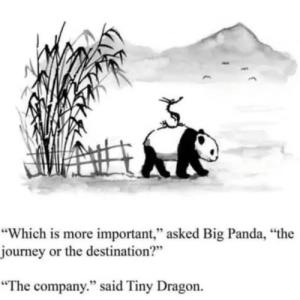
What do you think? Have you had a personal experience of transformation through art?
I wrote my Master’s thesis on social engineering in 90s, before I had any idea what social engineering was. I didn’t know at the time that’s what I was writing about. The thesis was about women writers of francophone West Africa using their novels as a means to catalyze social change. Liberation through literature, I called it, where practices like polygamy, female genital mutilation, and lack of educational opportunities were voiced in fictional form by the otherwise voiceless.
Certainly it is not at all uncommon for writers to use their works toward such ends. And yet, something about the timing of my thesis, or perhaps the content, resonated less with others than I expected.
I found that instead ‘Art for art’s sake’ had become the more popular mode of the times and works that were considered to be ‘too pedantic’ (which seemed to mean any fictional work with a purpose other than sheer entertainment) were heavily criticized.
I tried for years to pitch similar ideas for publishing to various entities and could find no interest and quite a lot of criticism. Folks wanted to be entertained, not taught. If they had to learn something, they wanted it tightly obscured in a bubble of excitement, like a Dan Brown novel.
But times seem to have changed again and authors and artists with a serious message, with deep societal concerns, seem to be able to find, or are perhaps themselves creating, a growing audience hungry for their transformational content.
It reminds me of some of the criticisms I heard in the 90s—art is not meant to transform or educate, but rather has the sole purpose to simply express the subjective worldview of the creator. Any feelings of universality in a work of art is essentially meaningless coincidence. Art should not be held in the clutches of meaning-making. Beauty is in the eye of the beholder. Art cannot be personally or socially transformative, except to the artist himself, that is an establishment myth of conformity.
I even had an artist friend, with an art degree, who assisted at a gallery, try to insist to me that the glass flask full of the artist’s excrement (I’m not joking) was to be considered art just as much as any old famous painting.
So I’m very pleased to see this more recent ‘re-formation’ to art with purpose. But, I wonder, can it actually be transformative? Or were all those critical voices in the 90s correct?
What do y’all think?
Here’s a couple of amazing pieces which might have such power. Do you know of others to share? If so, please do link below!
In Shadow: A Modern Odyssey
Kingdom
These works are both by: Lubomir Arsov and you can find an excellent interview with him here:
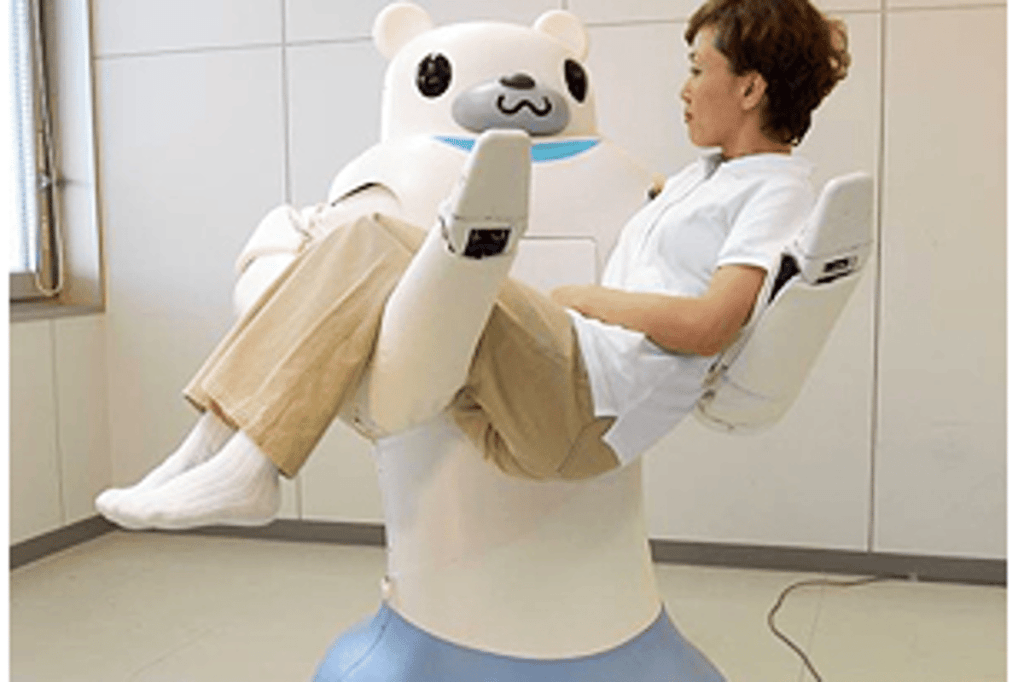
Some are shocked and appalled by this, as they should be, according to me. Others think it will be a fantastic improvement to human life, or a great way to make more fiat, or a solution to the burden on the caring professionals, or they love tech for tech’s sake, or whatever.
Those of us who love history and dwell constantly on the question ‘how has it come to this’ were well aware of this potential because we study the trajectory of modern life. I could begin with the first critics centuries ago, but for brevity sake, I’ll start instead with my own life, the only history available to me to know thoroughly enough.
Working mother, divorced parents, step parents, then step siblings, professional daycares, neighborhood babysitters, after school programs, junk food, convenience food, lots of TV. Family history of: diabetes, heart disease, obesity, cancer, vision problems, depression, eczema, alcoholism, Parkinson’s, and, you get the picture.
And I would not say my family life was bad. It was the typical American suburban life of a great many growing up in the 70s and 80s. Neither particularly good, nor bad, just normal. Normal, as in well-normalized.
Like most families my parents would joke about voting for the ‘lesser of two evils’. They probably learned that from their parents. My mom went to community college and got her degree once we were gone, in sociology. She worked full-time all her adult life and didn’t regret it. My dad remained ‘upwardly mobile’ as his Protestant father taught him to be.
In fact, we have retired before him, and he has just had his first heart attack.
They are both still with us, but they do not read this blog, so I could say whatever I wanted. 😏. But, that’s not the point of this particular post.
Let’s leave it at this—in hindsight, my unique perception of growing up this way is, in a nutshell—there was not a lot of parenting happening. The results of this having widespread and devastating effects.
It is from these original seeds of pseudocare that have been not only consistently irrigated in our own territories, but have been dispersed throughout the world these last five-plus decades which has ensured the trajectory to the ridiculous place where we now find ourselves: Drowning in pseudocare so deeply we can scarcely recognize what real care looks like anymore.
Another quick peak at the fruits those seeds have produced.
Yet even facing all of this, I’m still optimistic, as I have been all my life. Even at the worst of times, even during a few prolonged worst of times, I must’ve still learned something vital from my half-assed upbringing and collapsing culture.
So, here it is, in another nutshell:
Believe in yourself, believe it can change, but don’t practice in sidestepping the hard stuff. And the hardest of the hard stuff is care, real care—for yourself, for others, for the future—that is why we are here. How you go about that is your personal journey and your only real duty to discover and live. That is all there is to do in a life well-lived.
Which is why I want to once again quote an obvious example of someone doing exactly that, Gavin Mounsey, who is rocking the real care like a hurricane these days! Wait . . . What?? Ok, terrible simile aside . . .
I believe he knows what needs to happen next and is becoming the living manifestation of that in his own life first, and passing it around. Leading by example, it’s the only way. It’s the same cardinal rule as storytelling—Show, don’t tell.
“I want to give my energy to improving and increasing the resilience of my local community, not your hyper centralized one size fits all infrastructure.
“Freedom is not a consolatory prize that can be given to us to reward our obedience and capitulation to a system of violent coercion. It is not something that can be granted or provided to you by some government that wrote some thing on a piece of paper. Freedom is your birthright, and you either live it and embody it, or you allow yourself to be put in a mental cage by statists and other abusive institutions or individuals. My ancestors bloodlines are traced back to a people described in today’s terms as The Gaels. “Saoirse” is Irish Gaelic word for “Freedom”. Saoirse is an ancient concept that comes from the original Brehon laws of the Druidic (and eventually Celtic) world before the time of Christ. In the times when that word was created, my ancient ancestors lived without a centralized state, without prisons and without police.
“Saoirse means many things to different people. For some it means freedom to think, express and freedom to learn, for others it’s the freedom of imagination and the freedom of the spirit. And for some it also means freedom to set up parallel societies.
“This is one of the reasons that I included glimpses into two historical cultural cross sections of ancient cultures that existed without a centralized state and police/prison system in my essay as I feel that we can glean wisdom from stateless societies that existed for centuries to millennia in how to design more ethical, equitable, honest, Regenerative and practical ways to organize community, encourage amicable/respectful behaviour in humans and collaborate to leave this world a little bit more free and beautiful than it was when we got here after we are gone.
“With all that being said, I want to emphasize that I think that placing any culture, group of people or individual on some pedestal as pure is unhealthy. I feel we should be vigilant to make sure we are not romanticizing their past nor romanticizing the potential of their worldviews to provide solutions to the present challenges we face.
“The path to become connected to place with a reciprocal relationship, reverence and humility is the path to embrace indigeneity ourselves.
“It is a great starting point to create pockets of decentralized resistance to oligarchic / statist tyranny as growing your own medicine and veggies may appear harmless, but in a parasitic global plutocracy it represents a decisive action that severs the tentacles of tyranny in a critically important aspect of our lives (how we access food and medicine). Thus, it is a radical and revolutionary act that appears benign to the hubristic philanthropaths and demociders, serving as a sort of covert sedition in a world governed by parasites that want us dependent, gardening to grow or own food and medicine is like a hammer wrapped in velvet that knee caps big pharma’s plans to poison us slowly through dependence on their system for health care and also strikes the spine of the digital gulag system, breaking its back so it can no longer have any strength to influence our lives through controlling our access to food/medicine.
A better essay about the importance of self-reliance and health as the ideal antidote to modern societal tyranny I could not have written! And he has a YT channel. 😁
He was also kind enough to try to address our biggest garden nuisance within the scope of his permaculture lens. He offered many potential solutions, and bless his heart for the effort.
But I’ll just repeat my personal favorite: hot and spicy gopher wings. 🤪
What an example of authentic care—growing in the real and cyber worlds simultaneously—where even sassy meat-eaters and smart-asses and AI are welcome to stuff up their comments sections. Now that’s grace under fire!
Thanks to guys like these, in the coming decades I predict courageousfellowship will become the new sexy.
Some say It’s on Its last legs. The ‘coming collapse’ crowd is growing, that’s for sure. I’m pretty sure we can confirm we’re no longer fringe.
“There are mighty forces arrayed against us. They threaten our liberty, our livelihoods, our families, and even, possibly, our sanity. We may find ourselves, if we are awake at all, resentful or even angry at the situation we find ourselves in. We may want to ‘resist them’. But how? Our governments, except possibly at a local level, seem to largely be against us. The corporations, as they always have been, are against us. The media…ditto. The institutions of civil society? Largely captured. Our faith communities? Well, maybe some hope there, but all too often, the same deal. So, what are we to do?”
I don’t believe that, exactly. Our beloved Institutions have always been in service to Empire and I believe Empire is now in the process of refining itself, shedding its skin in order to reinvent itself. Empire is like the Ouroborus, eternal and regenerative.
These opinions may look opposing at first glance, but in fact they are complimentary.
I believe Empire is the rolling stone on which the Individual’s sword is sharpened. We will never be without It, we have never been without It.
That does not mean resistance to Empire is futile. But it is painful. From happy slave to disgruntled dissident is a long and lonely journey. It has to be.
Empire’s tactics evolve, forcing the Individuals’ along with It. Not in a David vs Goliath manner, but more like in a perpetuating Gordian Knot. We need each other too much, we are not who we are, one without the other.
For as long as Empire has existed, the Individual has fought to escape it.
He has fought so hard against It, that he has become It. The fight, or dance, however you choose to feel it, has become excruciatingly intimate over time.
At some moments in the cycle, perhaps all it takes are whips and chains to keep the system of Empire churning. In current times It is far more sophisticated. It wants willing and happy slaves, that’s what helps the Master slaves sleep better at night. Mental slavery, debt slavery, touchless torture.
We each must choose. The Individual must have free will.
It’s not that one is alone on the path away from Empire. There are a great many unhappy slaves. You will find them everywhere along your course, which has existed for as long as Empire.
“The classic example of ideological motivation is the ‘work ethic’; the idea, which has driven the workers of the West for the past few centuries, that we are morally obliged to work for the system for our entire lives so that, perhaps, one day, we will no longer have to work. A subtler modern example of ideological discipline might be ‘team spirit’ — the means by which loss of purpose, dignity, joy and freedom at work is compensated with group-bonding. “I didn’t agree with the purpose of the war; I was just looking out for my buddies—applies equally to the army platoon, the office department and the school class.” 33 Myths of the System by Darren Allen
We learn in the Empire’s schooling that the opposite of pleasure is pain. Furthermore, they teach us, that as a species we inherently seek to experience pleasure and to avoid pain.
And yet, sado-masochism is visible everywhere in our cultures. There are those who actively seek pain, and a great many who experience pain, and still go back to do it again, and again, willingly. Mothers and soldiers come to mind. Giving birth is rarely described as pleasurable. Soldiers rarely relish in their battle fatigue. Are we to believe they are all masochistic?
What’s missing here? Perhaps the opposite of pleasure is not pain exactly, but a specific kind of pain, the kind inherent in seeking virtue. Why do we not avoid this kind of pain as well, as a general rule?
The Individual’s path is painful because virtue is the opposite of pleasure, as Empire is opposite of the Individual.
That may sound like a notion of the Stoics, yet I’m definitely Dionysian by nature. It is not for the backache or the sweat or the frustration that I garden. It is for the fruits of my labor. It is for the care I’m able to show to the soul and soil and the hope that my efforts grow beyond my finite existence and wisdom. It is the pain of true ‘virtue seeking’.
I want them all, all my fruits, not out of selfishness, but to distribute at my preference and at my leisure and not according to the dictates or conveniences of Empire.
And yet, Empire is not my enemy. We may fight, or dance, but I do not wish Its collapse. Specifically, I wish It to continue to increase the virtue of the Individual. Even though I know that requires significant pain.
I have been amazed by the incredible virtue of some of those I’ve found along my Individual course.
The following comes from the latest post of one of these Virtuosos, Gavin Mounsey. I like Gavin not only for his beautiful photos and keen mind and wholesome work, there are many others who fit that bill. What I find most unique about him is, he doesn’t bypass the dirty work. That is rare in my experience. He stays focused on the good, on the light, on the solutions, but not at the expense of the hard truth. It’s a tough balance I know.
“Taking steps to embrace food sovereignty and a path that consciously nurtures symbiotic relationships are ways of living that are synonymous with a more happy, passionate and creative life. As our basic survival needs become fulfilled through our own “hands-on work” and skills, it frees up a lot more time to pursue the things we are truly passionate about in life. Embracing that self-sufficient lifestyle is so much more fulfilling than working ‘for the man” getting a pay check of digital fiat currency, trading it with 5 different middle men to get our food, water, energy and fulfill our transportation needs. It really does improve not only the quality of life, but the perception of what is meaningful in one’s life. It effects our very psychological foundations as we rediscover the simple joys in life. It helps us move away from the hyper-distracted, over-stimulated, digital chemical culture that has built up around us and allows us to let go of greed and materialism by truly coming to know the beauty of planting a seed in the soil, nurturing it to grow, and reaping what we sow.”
“Now is the time to reaffirm our alliances with the living Earth, to nurture new symbiotic relationships with the soil, people, plants and fungi in our local communities. Human empires rise and fall, and history teaches us that when they fall, it is those that know how to grow/forage for their own food, medicine and preserve it, that survived.”
“We can create oasises of health, resilience, and abundance in each of our communities… we can become the solution, break from dependence on centralized systems and help others to do the same. It begins with the soil and the seeds and it evolves into nurturing symbiotic connections with those whom we share our communities with. Each of us can embody the medicine that the land and our communities need too survive and thrive though the tough times ahead.
“Thus, each and everyone one of us should now be focusing our efforts on honing our skills related to food/medicine cultivation, preservation and developing a reciprocal relationship with the land where we live.”
“Saving up money for a ‘rainy day’ is not a solid way to prepare for emergencies because money has no innate value. Seeds, good soil, gardening skills, increased health/immunity, preserving experience and the symbiotic relationships and friendships we forge with neighbors and the broader community we are a part of (through sharing our abundant harvests and seeds and helping others to grow regenerative gardens) are however things that have innate value.”
There’s so much inspiration in his excellent article, many great reasons to start a garden, but also much information about all the rewards gardening reaps.
As the entitled, privileged, white western woman I identify as, I now have Hubby all to myself.
Now his best, his most creative, his most talented and productive self gets expressed here, at home, instead of off in some far away place for some unknown people.
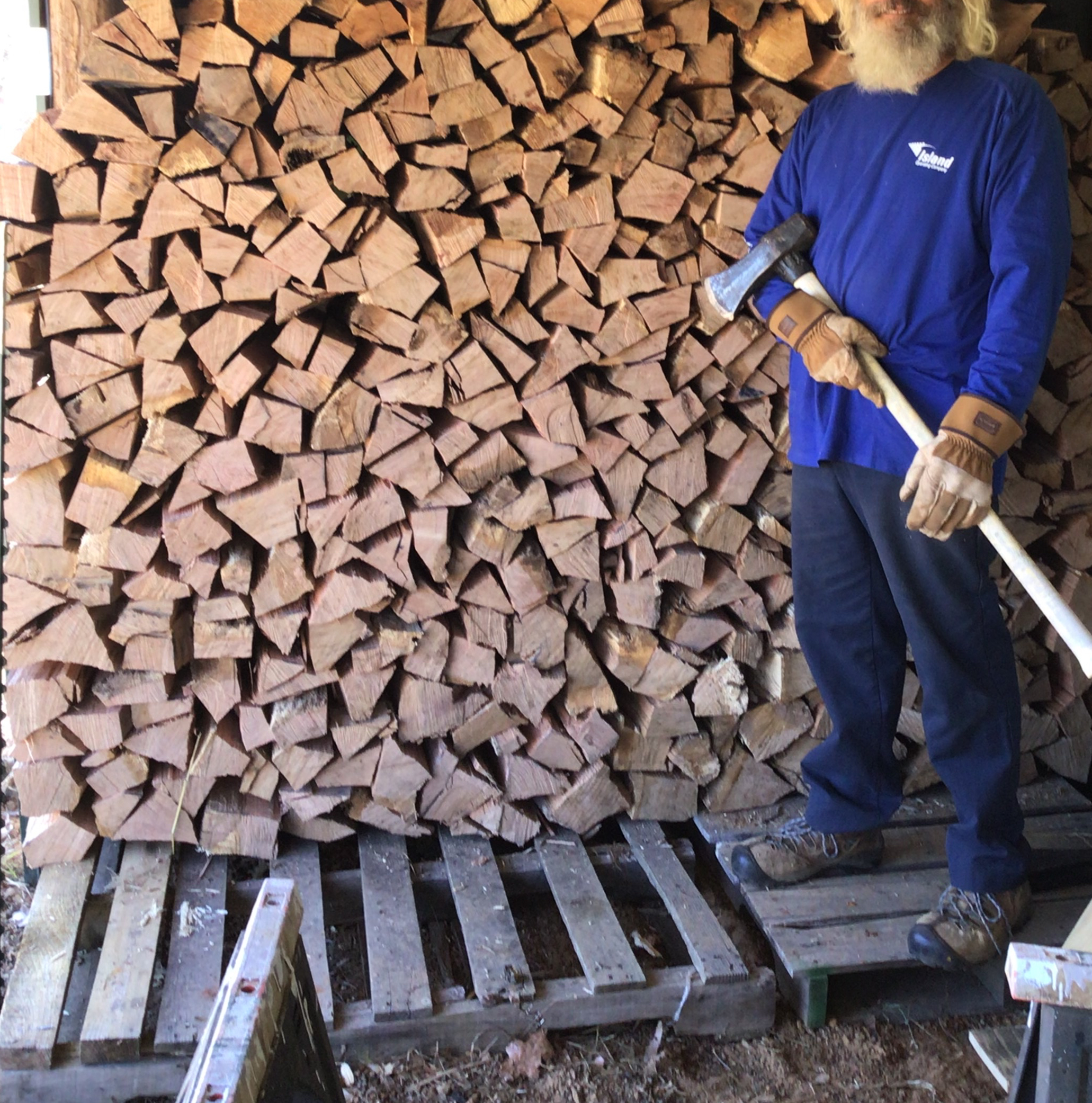
“Every man looks at his wood pile with a kind of affection.” ~Henry David Thoreau
The benefit for me has been huge, off the charts. Most recently in the form of a beautiful Christmas gift. We’ve spent most Christmases of our 20 year marriage apart, usually with Hubby working offshore. This never felt like such a big deal to me considering we don’t have kids and we are neither religious nor consumer-oriented.
It was a pretty good deal actually, because he got bonus pay and we got to feel generous at the same time—offering the holidays to the Dads among his co-workers.
No matter how good of a sharer one is entrained to be, especially I guess as a selfish, entitled, privileged, white, western woman, giving the best years of life to ‘the system’ is not nearly as fulfilling as it might sound to some.
Like most modern Westerners we worked hard for many decades—we devoted years of education and training in order to fulfill our function in the economy and we played by the social rules and did some right investment things and we feel we’ve earned our relative liberty.
We’ve bought our freedom, so to speak. For as long as that lasts anyway.
We have earned our right to withdraw our energy, time and talent from an insane system earlier than scheduled. A ‘gift’ hard-earned and well-deserved, I’d say.
Many years ago I was told that “Americans live to work, while the French work to live” in an attempt to describe the comparable ‘work ethic’ of these two cultures. In general, I’d agree, at least back then. Certainly in past centuries Americans have prided themselves on their reputation of being hard workers, with high productivity, and all those industrious accolades that go along with that—like ingenuity and resourcefulness and determination. Now we desire to benefit from those hard-earned character traits.
Retirement is Redefining Fun
I preferred the French style of cultivating more joie de vivre and laissez-faire attitudes, but not just for the more obvious reasons of the pleasure and sensual rewards of the good life. I also saw how unhealthy it is to encompass so much of one’s raison d’etre —self-esteem and community connections and social structure and really most aspects of life —in with one’s professional occupation. But this is what the majority of us have been trained to do.
“Because work is an activity in which all initiative and energy is extorted from the individual in order to generate profit for someone else, and because it is unbearably unpleasant, futile and barren, ‘free’ time looms before labour as a garden paradise. Fake sickies are then engineered and labour-saving devices purchased to extend the Pastime Arcadia by a minute or two. But because access to wild nature and genuine culture is curtailed, weekenders are forced to buy their pleasure as they buy everything else, from huge corporations which, to turn a profit, appeal to the lowest common denominator of its demographic, thereby producing, in lieu of satisfying art, addictive titillation and anxiety. In other words, once we have freed ourselves from work, we then have to submit to a world made of work.” 33 Myths of the System: A Radical Guide to the World by Darren Allen (2021)
Leaving all the variables aside—like retirement wasn’t exactly intentional and was certainly untimely, yet irresistible, and as yet permanently untenable—the rewards still far outweigh the risks.
Retirement is Reprioritizing.
The old adage ‘time is money’ casts an evil word spell. In actuality, time is precious, as money is profane.
“The second new technology of control invented by the Greeks , was MONEY — an impersonal, indestructible abstraction which rendered people, objects and, eventually, the entire universe as a collection of homogeneous quantities, things which could be bought and sold. It was thanks to the attitude that money engendered that Greek philosophers began to view the entire universe as a composite of discrete, rationally-apprehended granules, or particles (a.k.a. ‘Atoms’), and ideas (or ‘platonic forms’), chief among them, the tragic atom—cut-off, isolated, alone — we call ‘man’.” (D. Allen)
When man is no longer ‘trading hours for a handful of dimes’ to borrow a Doors’ passage, fantastic things can occur. I’m not saying they will occur, only that the potential is created that they might. That is, a space where no space existed before, where money’s place in time is squarely upstaged by something infinitely more appealing.
Some folks plan multiple decades for retirement only to be overwhelmed by time’s infinity once they reach it. They succeeded in their dream. Right?
Whether they scrimped and saved or invested and won, still they cling to the ‘time is money’ fallacy and once retired spend much energy agonizing over their dwindling resources and increased hours to fill with distractions—some new fanaticism —be it sports or politics or shopping or so, so many other means for their entertainment, that is, their entrainment. Your money and your mind.
They’ve been so acclimated to the Earn-Spend Ferris wheel of existence that time shifts almost instantly from precious to perilous. The ‘never enough’ crowd, born and bred to earn and burn, to forever cast the pearls of their finite energy into the infinite abyss of acquisition.
Where to burn, once that ride threatens to end? Could a new retirement hobby ever be enough?
Or will it take a new lifestyle? A new way of being and perceiving in the world? Maybe even re-integrating the simple satisfaction of chopping wood and carrying water? After all, why pay a gym membership?
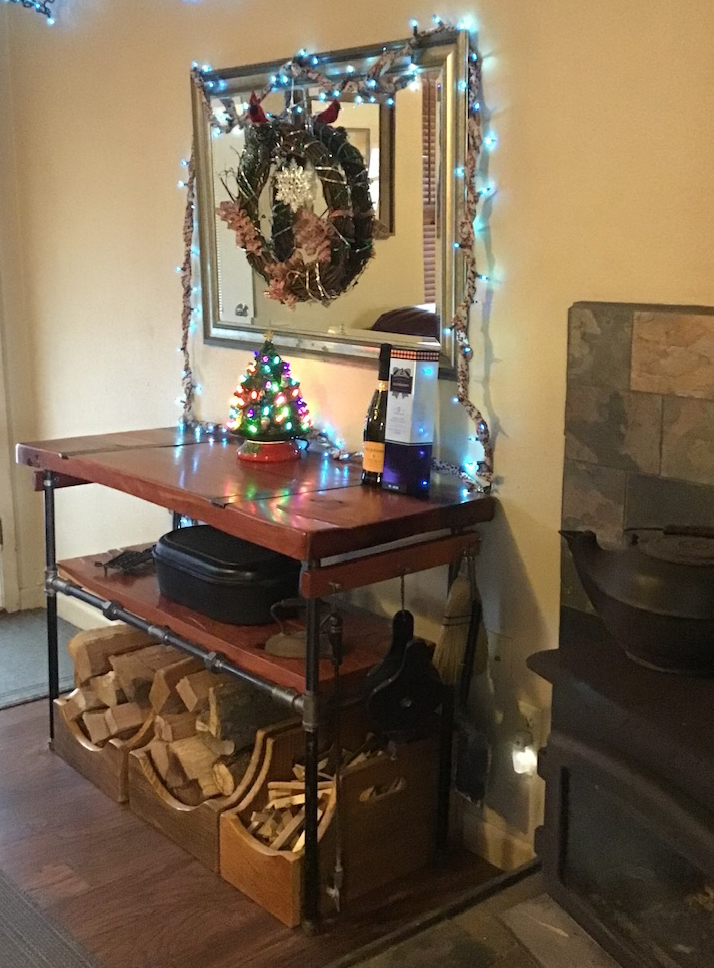
Or, as my beautiful Christmas gift suggests, maybe making furniture?
As best we could, with limited knowledge, skill, money, we set ourselves up to succeed at this moment, and against the odds. Will that be enough? There are no guarantees.
But, the meaning of ‘succeed’ has shifted with the territory. It’s our own meaning now. No masters above, no slaves below. It’s working at our leisure, at our pleasure, on projects and activities that reflect who we are, what we want out of life, how we envision a better future. It’s personal and imperfect and it’s the way we are trying to practice more than we preach.
Retirement is spontaneity. After having planned ahead.
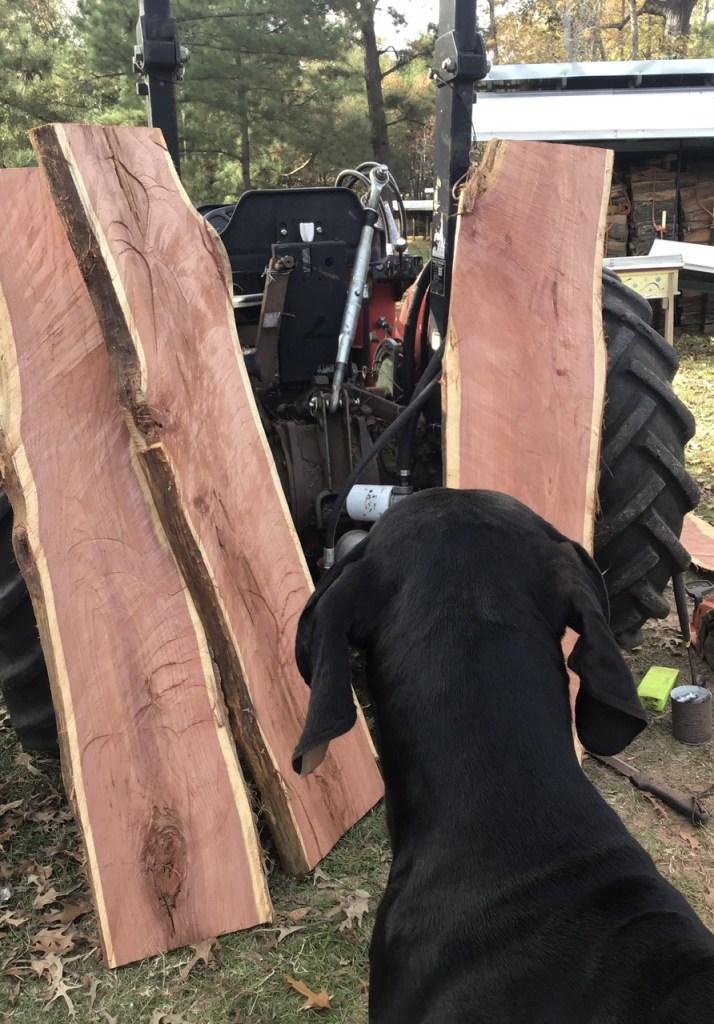
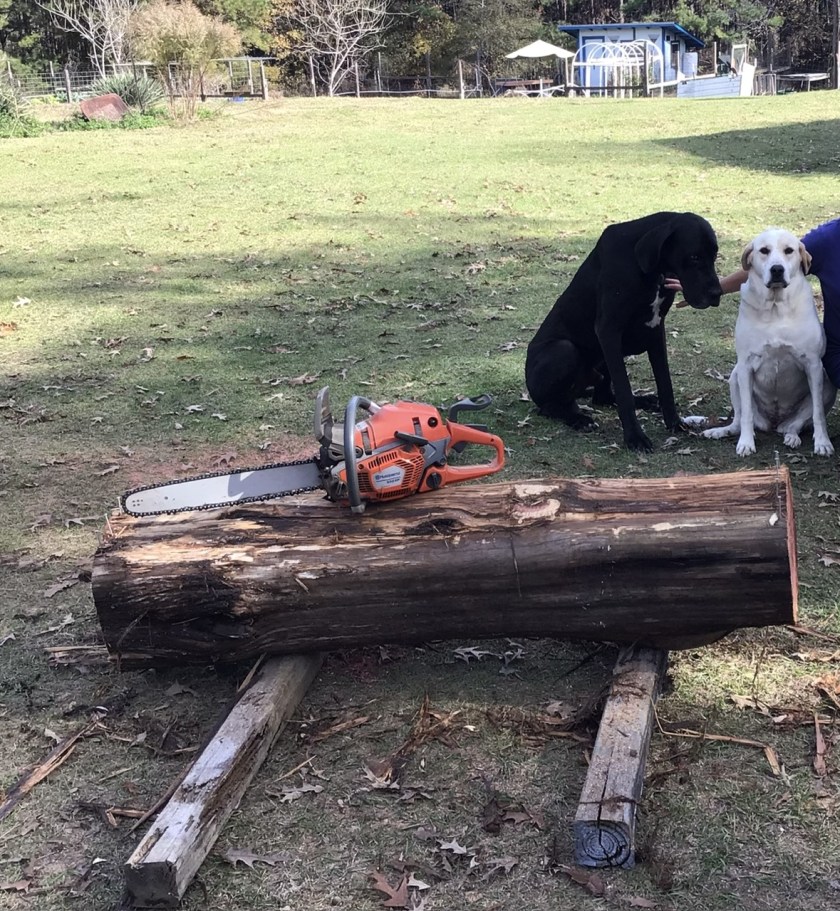
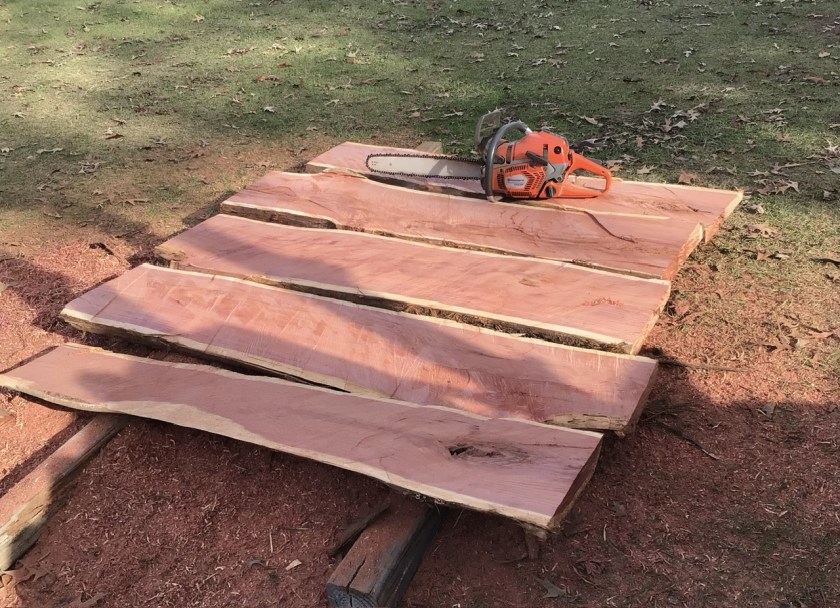
Yes, it was a tornado that took down that cedar, and many other trees as well. Yes, our tools are still inadequate. No, we don’t have the money to ‘upgrade’. But the financial restraints require creativity and frugality, which we’ve cultured over the decades. And the self-reliance fosters self-confidence, which we’ve been diligently cultivating for decades as well.
If the best things in life are free, what to do with our freedom? Do we spend our precious time perfecting the dance of life, or perfecting our costumes? Do we spend our greatest efforts making it easier for ourselves to play, or for others to watch?
Perfection is the enemy of the good. In the world of corporate work, perfection is the goal. Perfection is the construct upon which all human effort is poised. Your regenerative human resource creates their sustained capital. Perfection in the eyes of the corporate beholder is maintained through mechanization, that is, mechanization of the resource, be he human or time, quotidian or universal.
Retirement is unstructured.
Our only intention now is to never go back. It is a soul-sucking system, not just a time-sucking one. I’d say that’s why so many don’t get out sooner, or whenever they have the chance—their souls have been too drained already.
Mechanization of the body or soul is equal under the laws of the system. But, unstructured time allows plenty of opportunity to de-mechanize.
What is one man capable of without the lifetime expectation of the system? Without the chaotic pressures of the market? With just a bit of time and skill and opportunity?
That’s what retirement should be, according to me. The freedom to be unpredictable and unperfectable. The freedom not to be adjusted or tampered with anymore in order to support a slippery system we unwittingly inherited.
“Most people do not know what to do with free time and when it appears they feel only an anxious need to consume corporate fun or, at best, cultural familiarity.” (D. Allen)
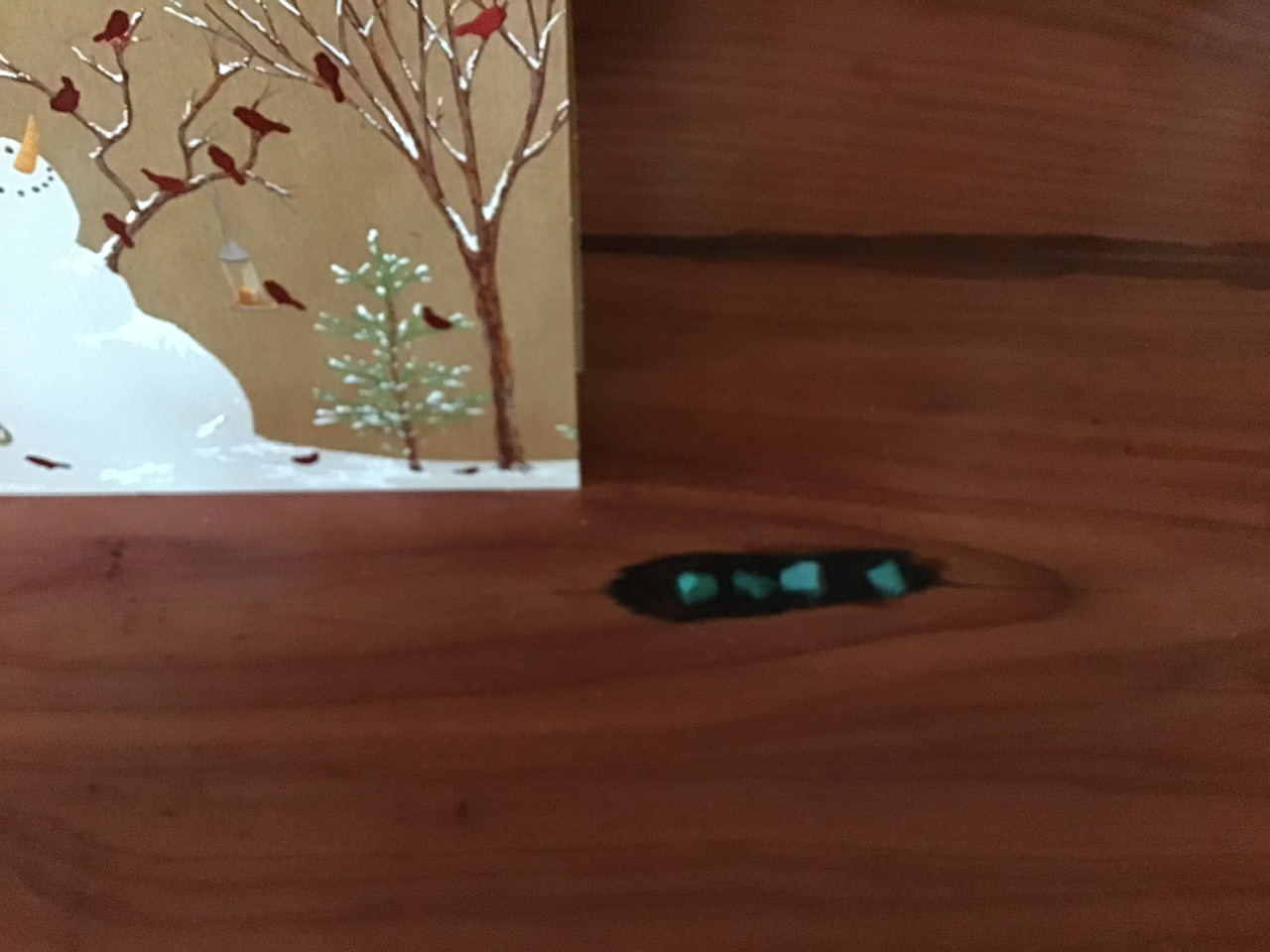
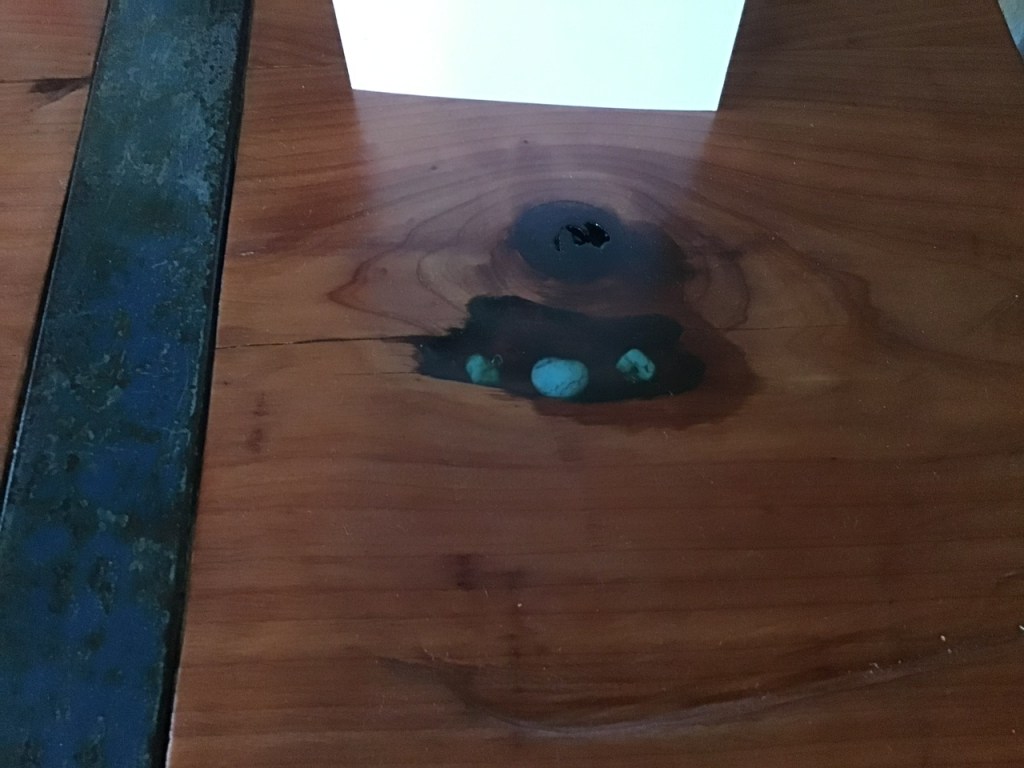
A great number of disjointed fragments came together to make this whole—including a tornado, a scamdemic, a hand-me-down gift of turquoise stones, a random forum post about ‘steampunk style’ and a lot of time, and desire, and a good bit of skill—none of which had anything to do with me directly.
I only breathed just a hint of enthusiasm at just the right time and voila—he has crafted a unique treasure that will forever recall the transformation of a painful memory recast into magnificently unique beauty, form and function.
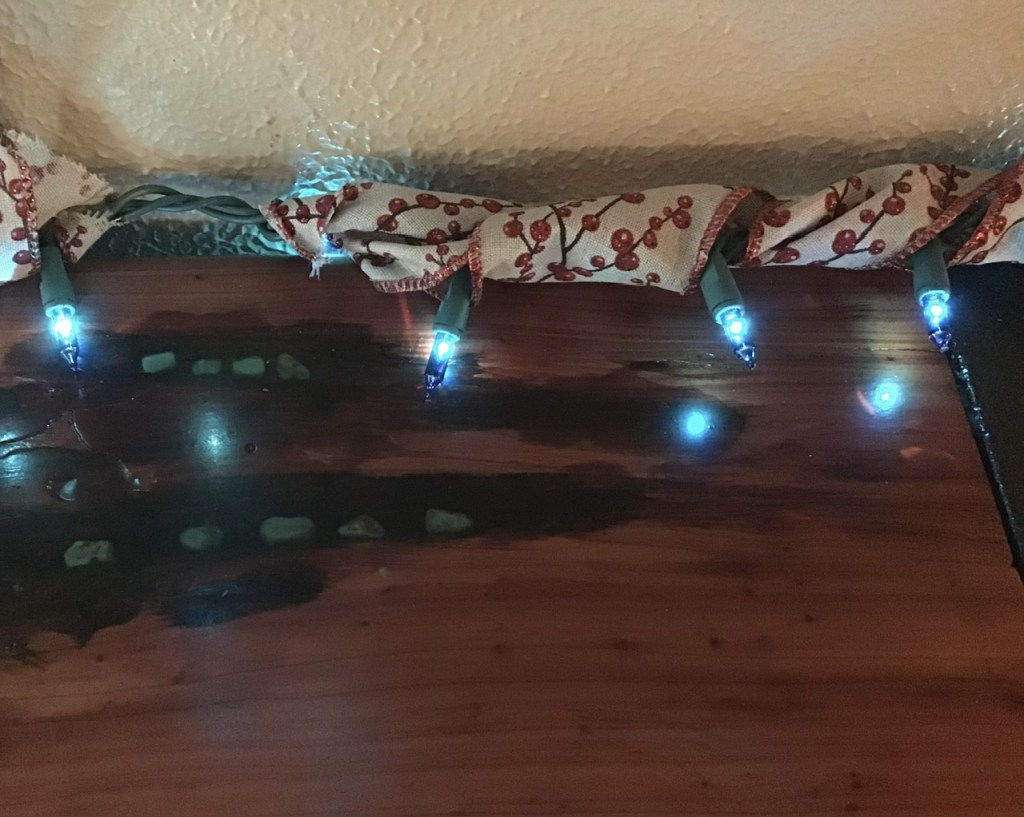
The deeper fissures in the wood filled with lovely turquoise stones.
If it’s the only piece he ever creates, I am over-joyed! If it leads to a hobby that fills his desires, I am thrilled! If it leads even further, to actual work, like, for others, well, maybe, I’ll be forced to pull that Retirement is Selfish card again.
Do mere words, forever shifting on the barnyard wall, mold our collective behavior?
If a lie lands in the narrative, and no one knows it’s a lie, does it pass for the truth?
Enter, the Scapegoat:
“No, everything seems conditional now, contingent on proof of cognitive compliance. Their cancellation of me has been cemented into their own identities. The people who were once closest to me now exist in direct opposition to the person they imagine I’ve become. There is no way to dissuade them, to show them that I really am me, the same me I’ve always been. I realize the framing they’ve embraced since the lockdowns cannot shift without destabilizing the shaky narrative they’ve chosen to inhabit. I am the problem. I have to be the problem in order for their reality to remain steady.” Alison McDowell
Oh how I know this role so very well! I was born into it—by chance, divine intervention, twist of fate—I have no idea.
Alison, having experienced life primarily as the golden child, here feeling it now so poignantly, perhaps for the first time, navigating as an outsider, has put words on my reality as I never could. Such poignant, touching, true words.
There is something about venturing into new territory and trying to map the landscape for yourself that highlights what is most special and unique about a particular place from a particular perspective. It’s a kind of magic I think. What has become invisible to the native through habituation has new meaning through new eyes and in turn brings new insights to the observers’ previous perspectives simultaneously.
It’s why I wanted to be a travel writer, why I thought I could be good at it, because if I could recognize that level of magic, surely I could learn to apply it myself.
But now I deal in inner worlds, instead of outer ones. So many of us find ourselves here in these times that we can hardly consider ourselves outsiders anymore. Can we?
“The Herculean effort to struggle to come to an understanding of something alone, without mature guidance and the fellowship of other stumbling souls is more than most can bear. This is what angers me about the glib soundbites in praise of the ‘freedom’ for individuals to simply learn alone via internet study.” Christine Jones
But, in ways that don’t seem to matter to me much these days.
That we are each middle aged women who have been cast off—by our own or divine, or others’ design—how delightful, still, to find sister castaways.
What I’ve come to learn lately navigating the inner worlds at the expense of the outer ones is that words matter much less. Labels hardly at all. That works out pretty well since language has forgone nuance words have become superfluous. (Spellcheck just tried to correct me from ‘become’ to ‘Beyoncé’, how apropos)
The inner world narrative is not man’s narrative. Words hardly fit. Words hardly fathom. The words sound ever-more more political the further in you journey. Falsity reigns and duplicity rains and you find that words only rein in reality. They don’t invent it, they don’t even represent it, not really. The map is not the territory.
In fact, it becomes more difficult to navigate the inner worlds the more you rely on the words.
What are thoughts but words yet expressed? What am I to rely on once words begin to lose their meaning to me? Me, who spent four decades devoted to the study of words. Who considered language to be the cornerstone of civilization and all that made it function.
What a shift, now to think in fact it is not words that craft the spells that create our cultures, but rather enclose them, like walled gardens or mazes, constructs that sometimes illuminate and sometimes obstruct. Sometimes nurture and sometimes confound.
Once upon a time “devious” and “clever” were not synonymous. To understand how they’ve become so confounded one must explore the inner world, beyond the words and into the being. There the answer lies.
Lies?
Perhaps the lies inherent in the words, inherited with the words, are driving us collectively mad? Everywhere I hear about the ‘clever’ machinations of the great powers. Clever?
Perhaps if we shake hard enough, like a soaked dog after his bath, the words will be cast off like water droplets, leaving the cleansed being behind.
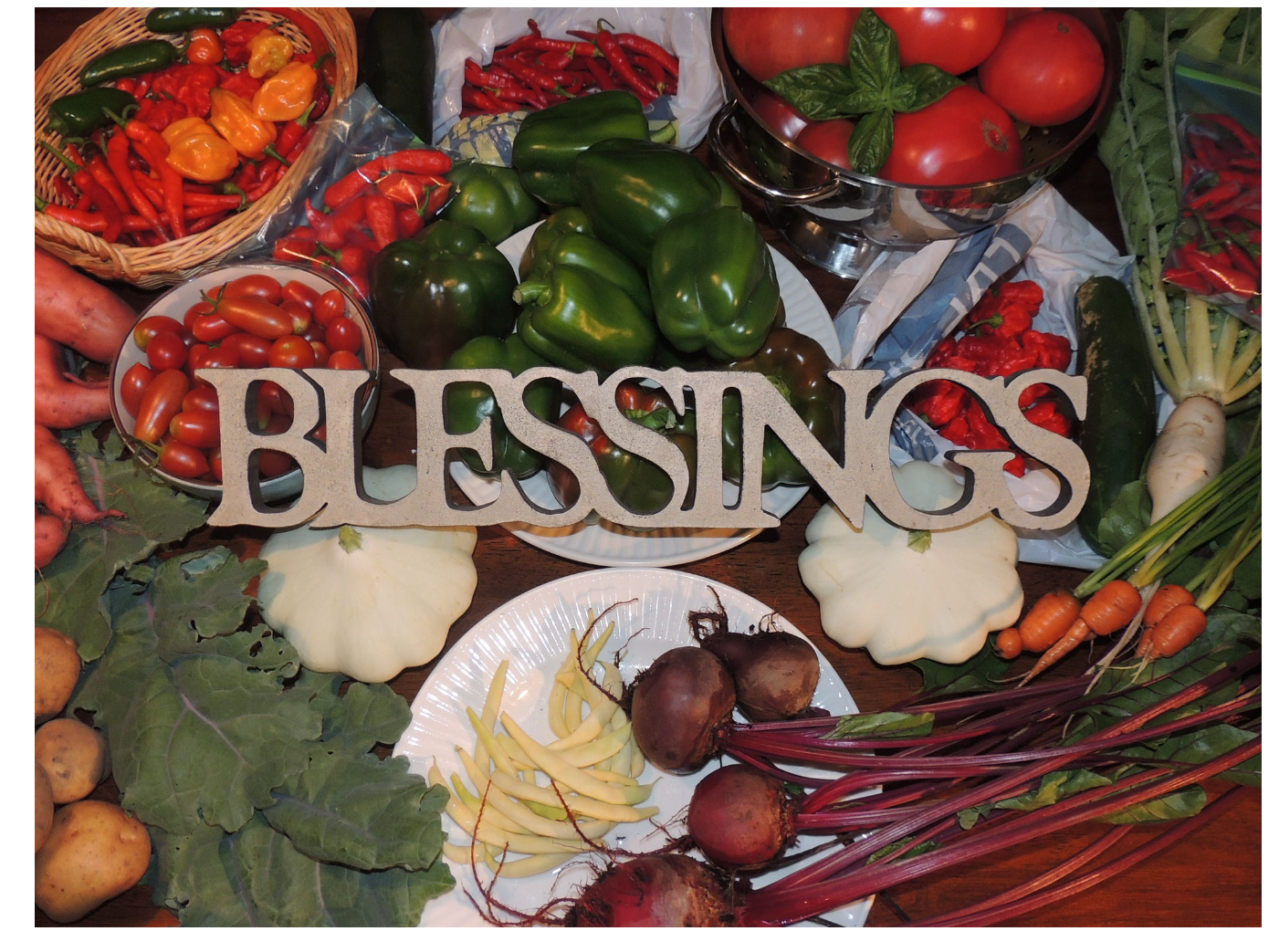
We are just days away from no tomatoes. Just as I was really getting sick of them.
There’s an attitude to surplus, just as there is to scarcity. Maybe we could even call it opposing frequencies.
I’ve known wealthy folk, in my younger days, who refused to eat leftovers, ever, no matter what it was, even lobster or filet mignon. One could almost be convinced of a certain ‘trickle down’ economic theory when in their presence.
While I was really lucky to be friends with them, because I got a lot of free upscale leftovers, I did find that attitude to be wasteful, and was not shy about expressing it.
It behooved me to see all that good food go into the garbage, not even composted. I couldn’t eat all the leftovers created from a weekend lake house party, and there certainly weren’t any livestock to benefit, not even doggie bags.
I think my 2nd favorite thing about having pigs, after the sausage and bacon and ham, is that I feel zero guilt about throwing away our surplus. It’s not throwing it away at all, I’ve come to realize, it’s really more like pre-seasoning our sausage.
So it was interesting to read an article the other day from an author who presented a graph from the “Bureau of Labor Statistics (BLS) data demonstrating a substantial decrease in household food expenditure as a percentage of income—from 44 percent in 1901 to a mere 9 percent in 2021.”
It was considered a ‘good thing’ according to this graph and this author that food prices had become so negligible in the modern economy.
I’d be willing to bet the farm that the general public agrees with this premise. To have the essentials of life—that is, food and water—as cheap as possible, indeed feels like a good thing. If those are brought to them poisoned is mostly not a thought at all.
Once the essentials are met, as in our modern Maslow’s hierarchy of needs, we can move on to entertainment.
Oh, except for that other pesky thing, energy. Because WiFi and game boys and television aside, we do still NEED our fridges and freezers and air conditioners.
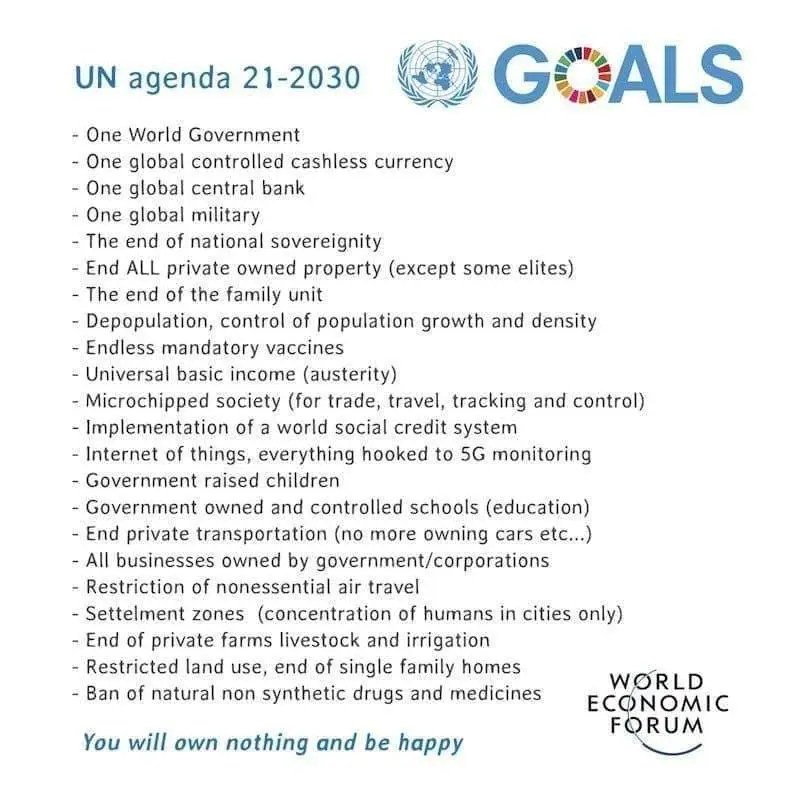
And if you think that’s exaggerated, watch the mass exodus from the South to the North if the World Economic Forum has their way and all those civilizing conveniences disappear before too long. All while we are sweltering down here under the umbrella of ionospheric heaters up there.
But, aside. Let’s get back to the basics. Food and water, even before energy. You already know the feast or famine feeling. I know you do.
Do you give a care when you shower that 5 more minutes will break the bank? Have you ever lived in a situation where you carried all the water you needed for the day?
Do you consider when you buy your groceries that 5 more dollars will break the bank? Have you ever lived in a situation where a few dollars meant dinner or no dinner?
Every technology is a Trojan Horse. From shoes, to language, to music, to roads, to windmills, to combines, to bombs, to telephones, to cybernetics. Every one. Man existed before all of them. Somehow. Not even the ionospheric heaters causing us drought and weather chaos will bring about the extinction of man.
Man, in whatever form, of whatever species we care to classify, is a feature, or a bug, of this ‘solar system’.
Or, maybe I’m wrong, and we will perish like the supposed dinosaurs.
But my sense says, its otherwise. It says we survive in surplus, in scarcity, in love and in hate. We remain under masters, in servitude, and occasionally at some magnificent moments, I imagine, its otherwise.
We survive wars and diseases and lies. We survive pop music and step mothers and manufactured weather.
They say we must thrive, to thrive is to succeed. To succeed is to know progress. To progress IS.
To succeed is to feast. Yet to feast indefinitely, is impossible. It will eventually lead to famine.
Because failure IS the inevitable consequence of success.
Trip to town, so sad. Two machines tried to rip me off and no working humans looked capable of anything.
Don’t load, don’t count, don’t smile. What do ya do?
Hostessing was once a thing, like customer service. I was a really good hostess once, let me assure y’all!
It’s more than charm and service, it’s an art and a craft.
So, it’s no mystery to me why the cats eat with the dogs on our back porch: Good food + Good vibes= Good company.
Being a good hostess is similar to being a good teacher—observation, agility, ingenuity—are higher qualifications than even empathy, discernment and a sense of propriety—all already a challenge for most.
A teacher cannot play the same role as a bouncer, though that is mostly what is required these days.
My greatest failures in the classroom mirror my greatest failures in life. I’d sum them up to a kind of mis-navigation of the cherished Comfort Zone. As an example I offer a brief recap of my worst classroom lesson ever.
It was taken from a book of suggested lessons for EFL/ESL (English as a Foreign/Second) students and it was called: ‘Dog or Wolf?’
These are lessons designed to generate conversation in the target language, so students learn new vocabulary, practice old expressions, participate with one another, and ultimately create a student-centered learning environment. Sometimes it works, sometimes it doesn’t, occassionally it’s a classroom catastrophe.
This is where the observational and flexibility skills of the teacher can really shine. Or, really, not.
I thought I knew these students well enough to pull it off. NOT!
Was it my mood? My confidence? My lack of fluidity that particular day? I really can’t say, even now, but oh how that failure, just that one day out of how many other lesser failures, who knows, but that particular one has stuck in my craw still 2+decades later.
They were mostly Japanese students, from various cities, all college-aged. The caliber of student willing and able to travel to the desert US to immerse themselves in American life, indoctrination, and university culture. We had a good rapport, they were good students. Their English was at a level I knew they could perform well with the material.
I presented it, gave the requisite handouts, grouped them in fours as per the instructions and posed the preliminary question:
If you could choose, would you choose to be a dog or a wolf?
There were follow-up questions about culture and civilization, surplus vs scarcity, independence and hierarchy. In my mind it generated a brilliant potential conversation and I was looking forward to it.
The question was meant to lead to an exchange between group members who would discuss the merits of their choice, as opposed to the deficiencies of the other option. It was based on the assumption there would be some who would choose dog and others who would choose wolf, for various reasons, creating an atmosphere for debate.
Except all the students agreed on dog at the preliminary question, leaving me standing there with my mouth agape and no further game plan.
I nudged, painfully, at my more philosophical follow-up questions and got crickets. Obviously, everyone would be a dog—comfort, ease, predictability, discipline, training—DUH!
The ‘best’ student, a relatively large young man from Okinawa, who was more bold and out-going than the rest, immediately intuited my dilemma. He raised his hand and said he wanted to change his answer.
But, I was stuck in my own personal baffledom. I tried to go with it, push through, take the ball he’d so generously tossed me and run with it, but I remained, I don’t know, just sort of, stranded there, for way too long a moment.
And then I couldn’t get it back.
Anyone who has never stood in front of a classroom most likely underestimates the skill it takes to be good at it. And when I say good, I don’t just mean popular. And I don’t just mean effective. I mean the kind of good where one can walk the line between popular and effective, because it is impossibly narrow. Those who pull off that level of impossible should be studied and duly rewarded and I’m sure there are more than a few. So, it’s not actually impossibly narrow. Just too narrow for me that day, that lesson.
They should also study bombs like mine that day.
After missing the generous handoff, I was so tongue-tied and disgusted, with it all—them, myself, the lesson—that I dismissed the class early.
The Okinawan student stayed there, obviously to discuss it with me. He wanted to make me feel better about the clear and dismal failure, I think. It was a really sweet gesture and very appreciated, even in the moment, but it didn’t really help me make sense of it all.
Like, why was I so confident that lesson would work? So confident, in fact, that I didn’t even have a Plan B. Bad teacher! So confident, in fact, that I became rigid. And frankly, still feel judgmental of those students (so passive, so acquiescent, so like, totally lame!).
Not really like me. So stuck in my own thinking that it’s not conceivable to me every student would choose dog over wolf that I could not, in fact still feel challenged to, mentally adjust from my misperceptions. Yes, even now.
A room of 30 students and only one wolf, and that one only under pressure, and with a savior complex no less.
What happens in world become so ‘civilized’ we’ve all become obedient dogs? And, obedient to what, and to whom?
Don’t think, don’t fight, don’t roam, what do we do? What happens when man becomes too civilized? Too domesticated? Too content?
I still don’t know what to do with such a muddle. Would you?
I understand it’s different for everyone. Not only that, but it’s different for any one individual in different times and at different stages in life.
What’s considered a high quality of life at age 19, differs greatly from one of 49. Or at least, we can hold out hope.
As one example, in the past I said I wouldn’t ever want livestock beyond chickens, for a couple reasons that seemed very significant to me at the time—I was scared of the responsibility of life and death for these precious creatures, and I didn’t want to feel ‘a prisoner’ here.
Now I am fully on board with the responsibility, and I can rarely whip up a desire to leave our wee compound. My notion of who is the actual prisoner has shifted significantly.
When I hear criticisms—and there are plenty—aimed at the growing number of homesteaders, survivalists, preppers, back-to-the-landers, I’m not bothered. They can slur us with their derogatory terms like Luddites, subsistence farmers, backwards, selfish, hoarder, bitter clinger, extremist, even, violent extremist.
They don’t know. How could they? I can forgive them their ignorance. For as long as I believe it to be genuine ignorance. Those who are genuinely ignorant are thankful when presented with an opportunity to learn.
“There is a cult of ignorance in the United States [that] has been a constant thread winding its way through our political and cultural life, nurtured by the false notion that democracy means that “my ignorance is just as good as your knowledge.” – ~Isaac Asimov
My definition of a high quality of life changed significantly over time, and I can hold out hope for them as well.
That is, until their powerless slurs become serious impediments. My choice of a quality lifestyle does not harm them in any way. However, their definition of one severely hampers mine which, over time, makes mine quite impossible.
And that really pisses me off.
Their quenchless thirst for cheap thrills and consumable crap and loot, plunder and pillage of all that’s precious to me is intolerable. More specifically, the tolerance of the majority for abuse of themselves, their environment, the future generations, is outrageous and inexcusable.
“The fecundity and flourishing diversity of the North American continent led the earliest European explorers to speak of this terrain as a primeval and unsettled wilderness—yet this continent had been continuously inhabited by human cultures for at least ten thousand years. That indigenous peoples can have gathered, hunted, fished, and settled these lands for such a tremendous span of time without severely degrading the continent’s wild integrity readily confounds the notion that humans are innately bound to ravage their earthly surroundings. In a few centuries of European settlement, however, much of the native abundance of this continet has been lost—its broad animal population decimated, its many-voiced forests over cut and its prairies overgrazed, its rich soils depleted, its tumbling clear waters now undrinkable.” (The Spell of the Sensuous by David Abram, p. 94)
Unforgettably Unforgivable
While our personal definitions concerning quality of life is unique to the individual and may shift, even quite considerably, over a lifetime, there remain constants.
For example, I doubt there’s a significant number of folks whose idea of a high quality of life includes having their health, wealth or well-being routinely stolen from them.
Yet, we are living in a society where that is exactly what happens and few will lift even a pinkie finger to change it. Few can be bothered even to wag their tongue for one-half minute at the proper authorities for leading them to exactly that wretched level of life: A life fully resigned to blindly accepting the experts and authorities who routinely betray them.
Invariably at some point these folks become so numerous and so delusional and so negatively impactful, that one simply must turn their back on them, for one’s own sanity and the well-being of an entire culture.
I hear far too often how ‘good’ people are just trying to get by and they are powerless against the system and they mean well and on and on and on. Here’s what I sincerely think when I hear these constant excuses: “You don’t know what ‘good’ means!”
If the majority of folks were good, we would not be in this mess!
To not be evil, to not be actively committing evil acts, does not make someone good. It makes one not evil, that is all. There’s a big, long, wide gap between not evil, and good.
Contrary to popular opinion, harmless does not equal good!
This becomes even more apparent in a society where a tiny class of untouchable elites consider themselves to be beyond good and evil.
To be good in such a system requires something of you. It’s not your automatic birthright.
You cannot be serving such a system— one that maintains itself by destroying the health, wealth, well-being and environment of the vast majority in order to serve your own self-interest or that of your corrupted masters—- and still call yourself good.
As the interpretation of reality by the power structure, ideology is always subordinated ultimately to the interests of the structure. Therefore, it has a natural tendency to disengage itself from reality, to create a world of appearances, to become ritual.
Vaclav Havel — The Power of the Powerless
And you can’t call your friends, family, government, society ‘good’ if serving the corrupt system is still what they are doing.
Every gift is a curse. But, is every curse also a gift?
I’m going to take the long way around a pretty basic question, but one that I am honestly curious about and would love to hear any thoughts on the matter.
When I was a teenager, I had a number of “love interests” that were short-lived, but intense enough that I remember them vividly. I went from Tom-boy to boy-crazy fairly quickly, in just one summer actually. For someone so young I found myself navigating very choppy waters without a smidgeon of skill.
Two of them, around the age of 16 and 17, are fit examples for this story. One was a short-term boyfriend, another was a near miss.
The near miss was a one-legged salesman. I was a shoe sales clerk at the shopping mall in Chesterfield, Missouri. It was actually a really good job and I was glad to have it. Suburban life before car age is brutally boring for someone like me. I finally felt free and so adult-like as I strutted through the mall on breaks in my heavily discounted Overland Trading Company shoes.
I don’t remember which shop it was now, but I would expressly wander in that direction just to see if he was there. He would smile at me, I felt he was even waiting for me to pass by, and I would smile back, maybe give a cute little wave for added effect.
That he had only one leg was not what made me want to gawk at him. But rather that he was gorgeous. I mean, seriously Gorgeous. Handsome, amazing build, confident, well-dressed, and just the right amount of older for a 16 year old to get herself swooning in his direction.
We talked at some point. Went to the food court together. Became, not exactly friends, but something like ‘mall buddies’. Then somehow it happened that we decided to have a real date, where he came over to my house to pick me up in his car.
And I will never forget that moment. It was a sudden disaster. That he had one leg did not phase me in the public sphere, not at all. It felt like a non-issue. Sure, I was curious what had happened, and I’m sure I asked at one point and he answered, but I don’t recall his story. I liked him. I especially liked looking at him. I liked that he liked me. I remember, I really liked that.
I remember he was kind, and a gentleman. And I hated myself. I hated myself that suddenly, seeing him in my house, something switched for me that I could not comprehend. I sensed overwhelmingly, all of a sudden, that I could not be who he needed me to be. It was a shameful, and quite devastating feeling for me at that ripe young age.
On one other occasion not long afterward I again became intoxicated by another young man’s beauty. He was my age and the son of a family friend from church. Everybody loved him. It also ended badly, despite my genuine feelings for him, that certainly went beyond just his great looks. And that also came down to the same issue, in 20/20 hindsight: I can’t be who you need me to be. The realization coming too late to avoid the associated pain. Their beauty, I really believe, clouded what I should’ve seen before leading them on.
And my point in sharing these very old recollections is, could the opposite also be true? I guess I feel it would be nice if it were. I saw a man the other day who was clearly very compromised—and my heart went out to him, in a very pitying way. I knew, from his appearance, he suffered many hardships in life. I’d like to believe that in his apparent curse, he has found a deeper gift. Sort of like the opposite of the gift of beauty that invariably bestows pain due to all of us who are so entranced by it.
Or, I’m just looking for an avenue out of my automatic pity for him? Thoughts?
Digging through my files for content. Make of them what you will. Or won’t. Comments most welcome!
False hierarchies, that is all hierarchies not based in nature, are crippling our civilization. And maybe, that’s just natural.
They are invariably:
~Based on fluffing not rivaling, so that the leader is replaced by a Yes-man rather than an honorable man.
~Confusing true power with temporary status
~Leading a horse to water, noticing he does not drink, and blaming him for being stupid. Rather than questioning if the horse is intuiting more about the contents of the water than you are.
~I’m in charge, you’re responsible. That is not meant to mean you are to act as my scapegoat. It is meant to represent the bond between the care-givers.
~Helping people adjust to their servitude is not actually helping. It’s akin to helping addicts find their next fix, you are opting to make yourself feel better in the moment by helping someone else feel better in the moment, at the expense of long-term solutions. The proverbial thumb in the dike.
~Hardest lesson for an empath (or a yes-man) to learn—stop cleaning up other people’s messes—you are only making it worse for the next generation.
~America has roughly 35 million acres of lawn and 36 million acres housing and feeding recreational horses.
“It was decided to make [the soldiers] help pay for the war, too. So, we gave them the large salary of $30 a month. All they had to do for this munificent sum was to leave their dear ones behind, give up their jobs, lie in swampy trenches, eat canned willy (when they could get it) and kill and kill and kill …and be killed. But wait!
Half of that wage (just a little more than a riveter in a shipyard or a laborer in a munitions factory safe at home made in a day) was promptly taken from him to support his dependents, so that they would not become a charge upon his community. Then we made him pay what amounted to accident insurance—something the employer pays for in an enlightened state—and that cost him $6 a month. He had less than $9 a month left.
Then, the most crowning insolence of all—he was virtually blackjacked into paying for his own ammunition, clothing, and food by being made to buy Liberty Bonds. Most soldiers got no money at all on pay days. We made them buy Liberty Bonds at $100 and then we bought them back—when they came back from the war and couldn’t find work—at $84 and $86. And the soldiers bought about $2,000,000,000 worth of these bonds!”
~As Carroll Quigley writes, its success was partly due to “its ability to present itself to the world as the defender of the freedoms and rights of small nations and of diverse social and religious groups”. (2)