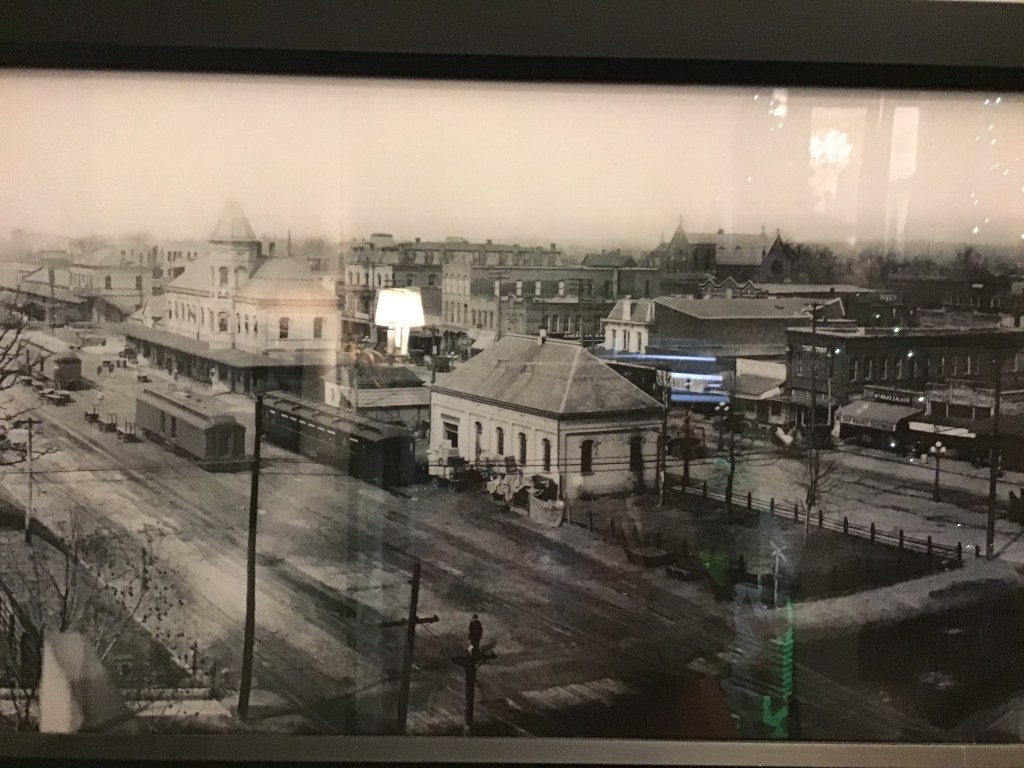
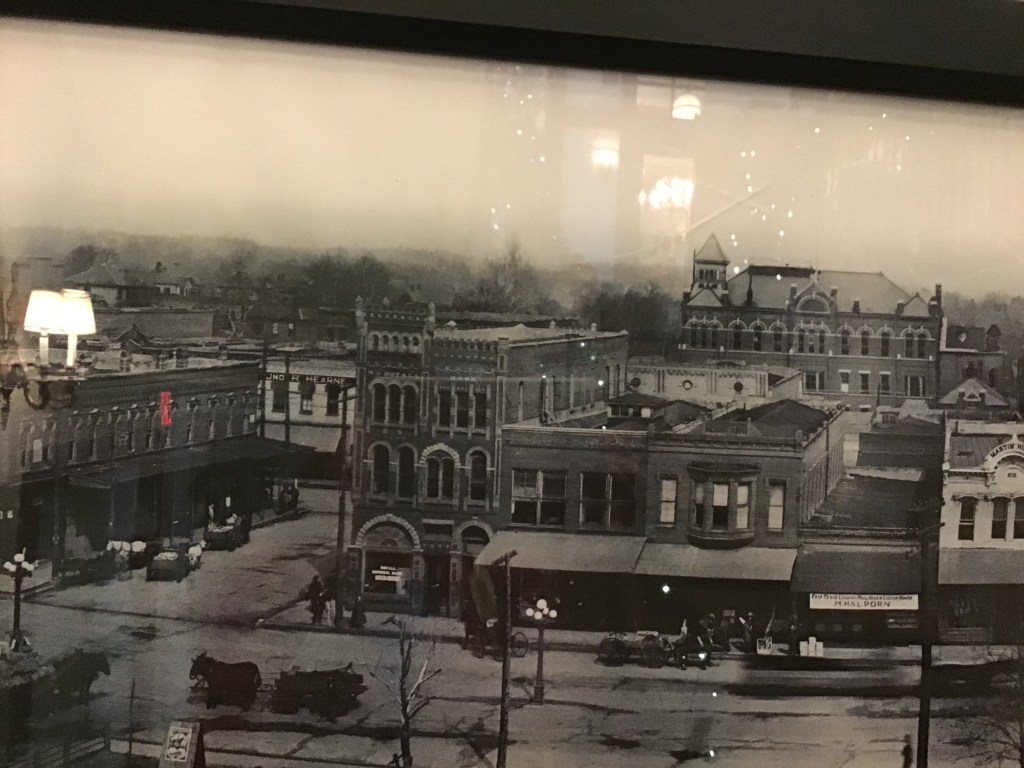
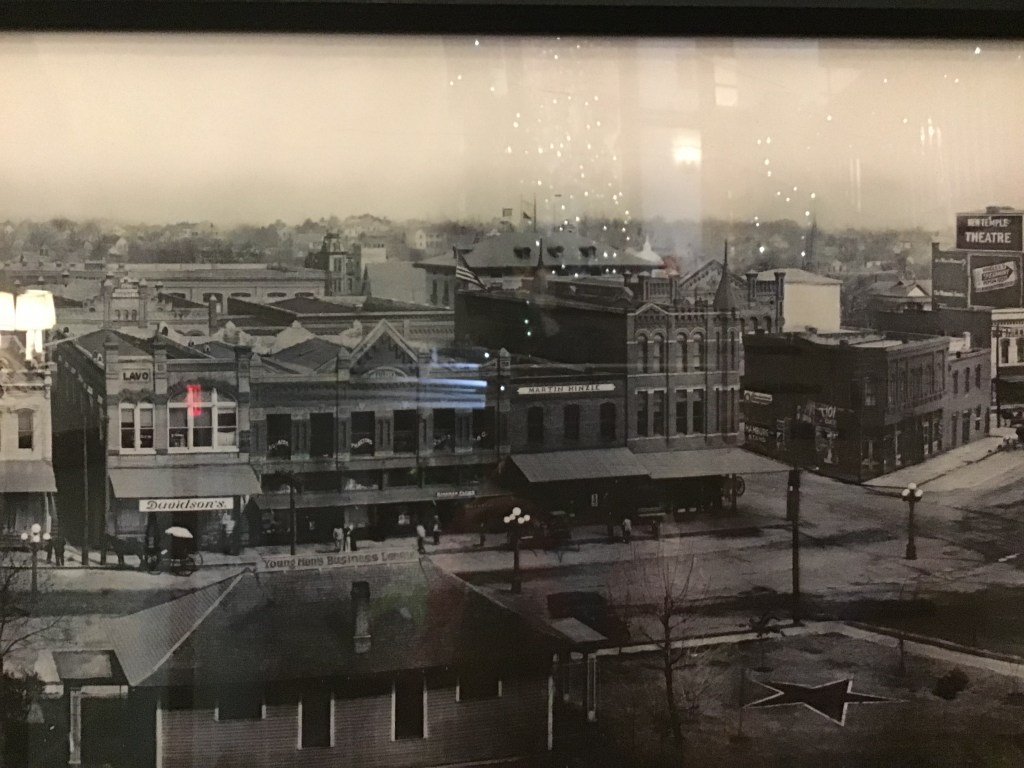
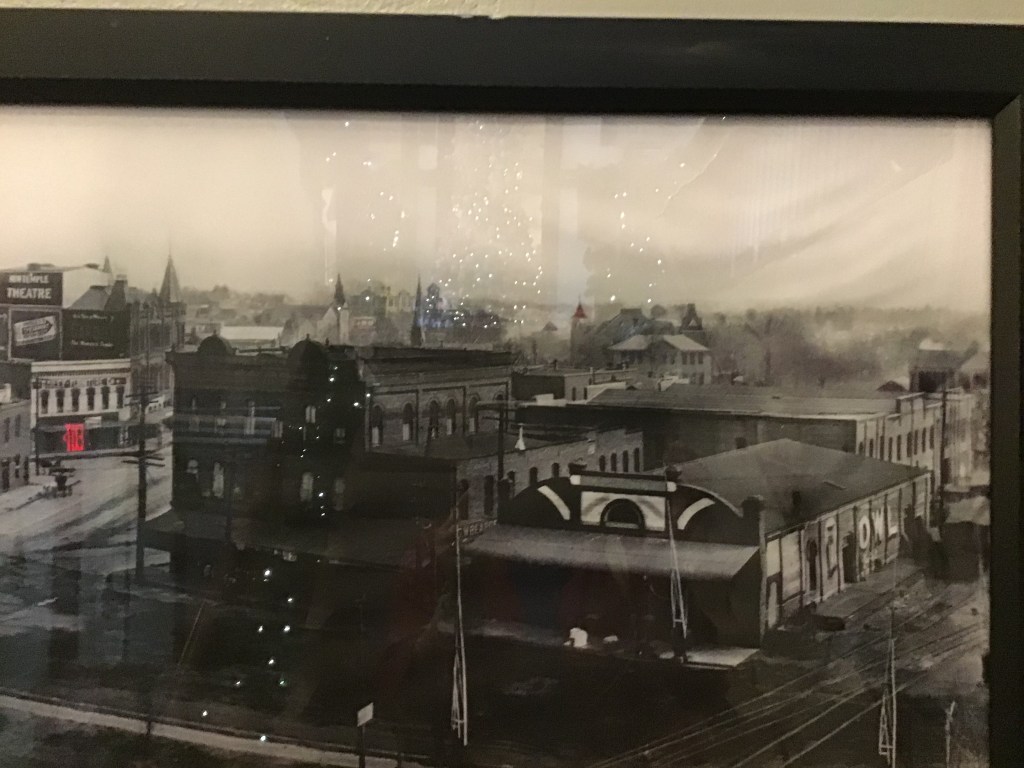
When I first started watching alternative history Youtube channels I was skeptical, and I still am. I want the truth, not more redirection. Not more fantasy. Not more illusion. Not more heavily curated or mediocre nonsense.
So far, I don’t sense I’ve found it, but I’ve become ok with never finding it. I’ve resigned myself to what’s as close to the truth as I’ll be able to manage to get to in this lifetime, which is: I’ll never know the truth, but I may be able to manage truth-adjacent with enough study and discernment. I can confidently opt-out of the lie, permanently. That’s a big improvement to the path of blind acceptance I was, and most are, still on.
The first step toward truth was achieved pretty easily, it began with calling bluffs. As long as I don’t allow it to frustrate me, which isn’t exactly easy, this alone feels pretty empowering. For me, as usual, I had to experience it directly, no Youtube influencers, no professors, no self-styled experts can convince me, not without applying my own eyes and ears and reason.
I looked to the architecture because that’s what’s visible, and only then to the official history, because that’s what’s accepted as truth. I started in my own neighborhood, that is, the small city closest to us, called Palestine. It’s actually easier I think to consider the small city, rather than the large ones, because there’s been less tampering more likely, more holes in the narratives that can be more easily noticed by the novice.
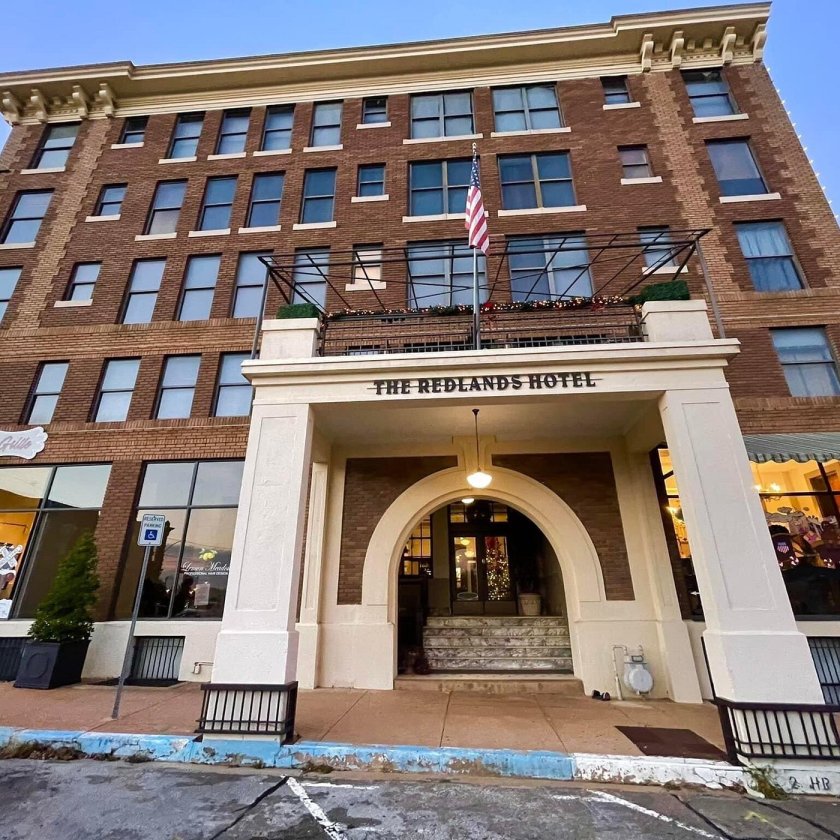
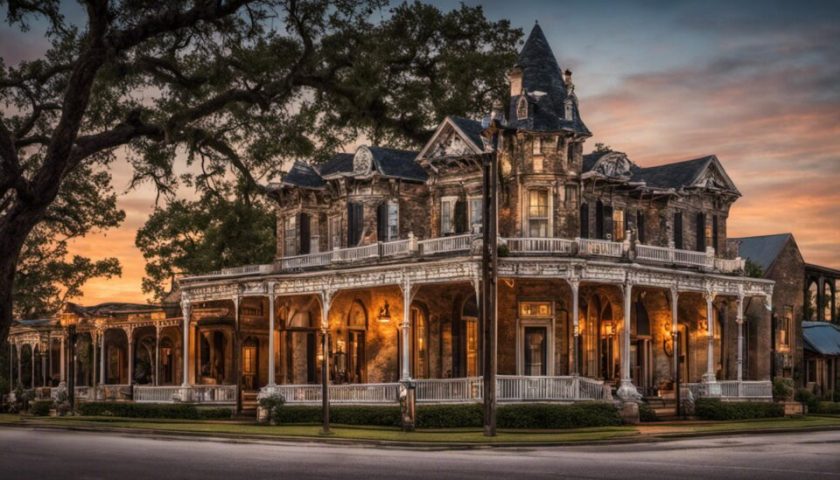
The well-maintained Redlands Hotel today.
Like, the story of the popular Redlands Hotel, where I sometimes go for lunch on my rare trips to town. It’s a lovely old building that they’ve done a relatively decent job of keeping up, especially considering the condition of the vast majority of the downtown area.
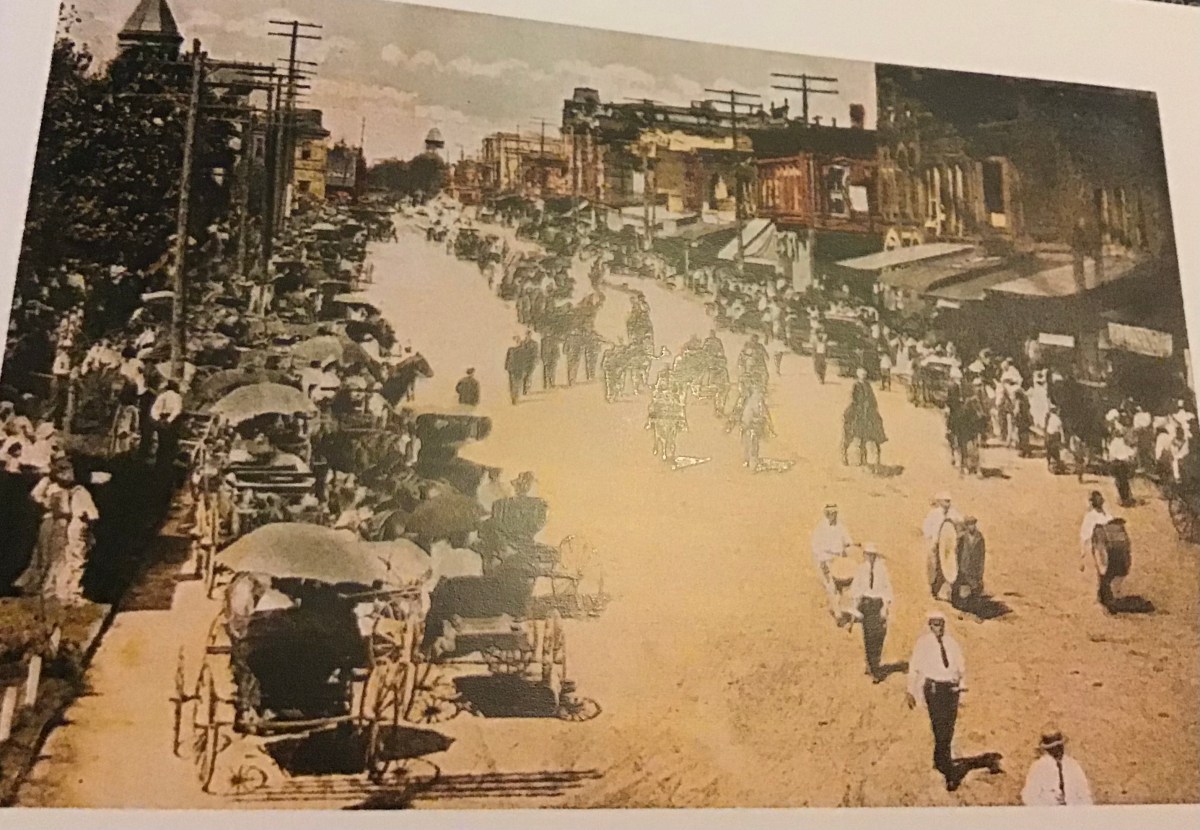
Interestingly, they have a panaramic photo of the early years of the city on display. As you follow the railroad tracks from left to right in the photo, you end up at graffitti painted on the side of a building. That is, the word OWL.
That’s my cue to start calling bluffs.
The owners of this hotel are deep into the official history, which is superficially helpful. As it goes, in 1914 when stockholders rushed to build the brown brick building, it was oxen that delivered the sand for the concrete. That is, sand from the Trinity River, 30 miles away. Are you kidding me?! That’s a pretty big bluff.
And even with that serious transport challenge, on supposed dirt roads, they managed to complete the five story building in a year. Apparently dirt roads weren’t effected back then by rain or snow, neither were the human builders, or the oxen. Amazing.
Even more amazing was that another striking building was going up on the other side of town, that is, the County Court House. The two structures apparently shared Italian artisans who installed hexagon tile to both buildings.
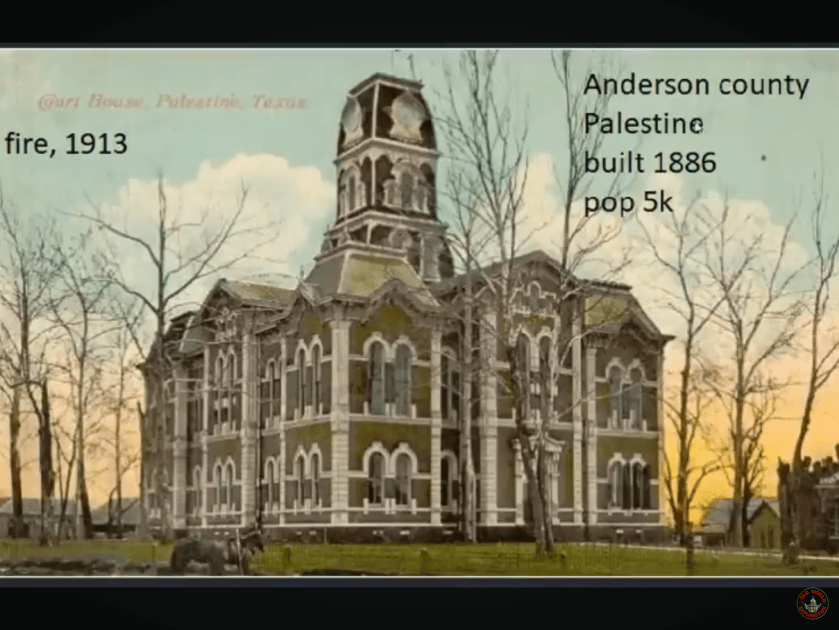
The original burned court house, depending on which source cited. Another source states the original courthouse was a small building made of wood.
“Considered one of the most modern constructions of its era, and built to withstand the challenges of time, its walls are made of concrete, masonry blocks, sheetrock, and metal studs—evident in the structure today.”
My those were some busy boys and oxen!
In fact, with just a bit of digging, we learn there was in fact another town at the Trinity River junction where the cherished sand came from, now missing from both the land and the history books. But, there remains one hand-drawn map available in the archives, Magnolia was the town’s name, and it was apparently so bustling with commerce and activity according to one source that they called it the ‘St. Louis of the South”.
One of the many demolished structures of the non-existent town once called Magnolia, according to the official history.
“Magnolia was established in the early 1840s as a Trinity River cotton port and was named for a large magnolia tree in the center of the townsite. Magnolia had a post office from 1851 to 1871. William A. Haygood was one of the principal property owners in the community and operated cotton gins, a hotel, a livery stable, a general store, a blacksmith shop, and a local ferry. Among other businesses in the community were a drugstore and John McClannahan and son’s warehouse. Magnolia was reported to have a population of 800 at its peak around 1863, when the town had thirty-three blocks of residences and businesses. Most shipments from the port went to Galveston, but on May 5, 1868, a steamboat traveled up the Trinity to Dallas. After it was bypassed by the International and Great Northern Railroad in the 1870s, Magnolia declined rapidly. By the 1930s it was no longer shown on the county highway map, though its name was preserved in that of the two schools that stood on the site of the former town. In 1932 the Magnolia school for whites had an enrollment of forty-three and the Magnolia school for blacks, thirty-four. A 1982 map showed only the Magnolia Cemetery at the townsite.” Magnolia, Texas
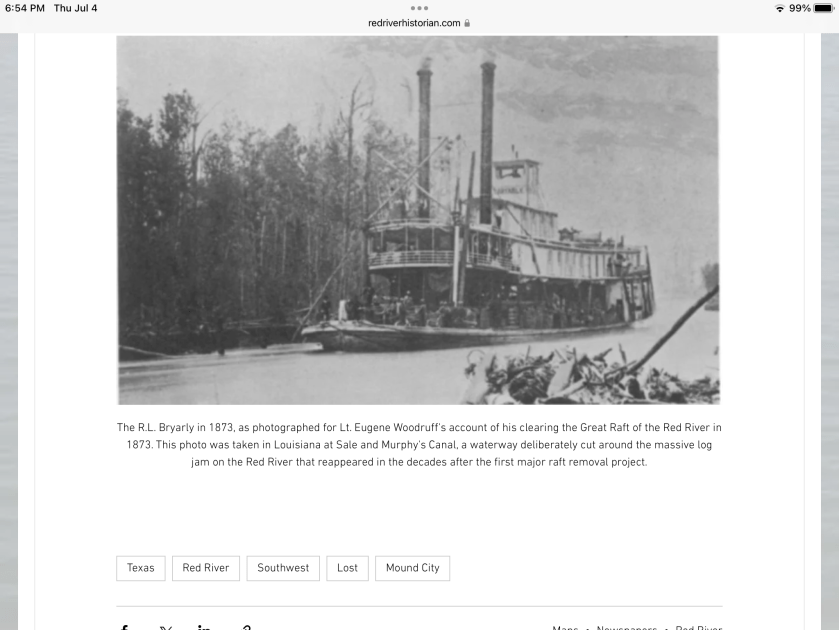
This is the sort of vessel which would have been traveling the Trinity River through Magnolia.
Nothing remains of this supposed river hub besides the hand-drawn map of the area where it was supposed to have been, where is now located some simple family houses, an intersection and the cemetery. I couldn’t even locate the river, or the supposed subsequent railroad.
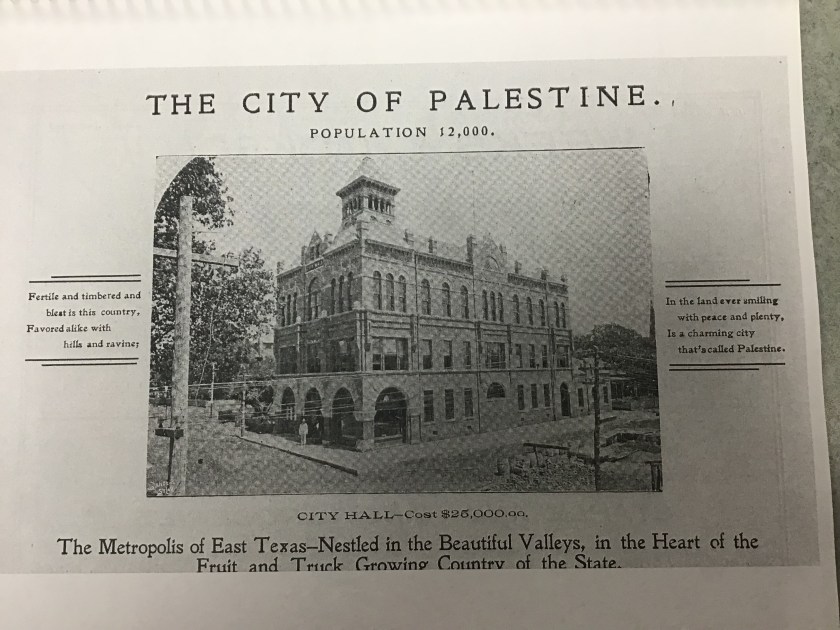
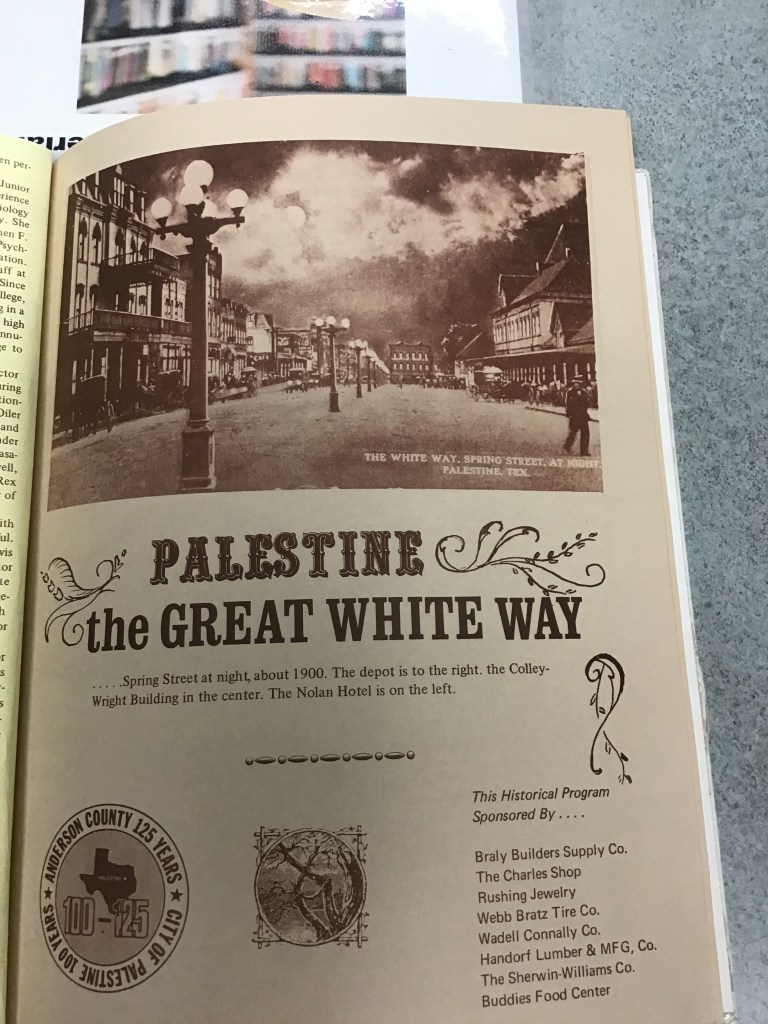
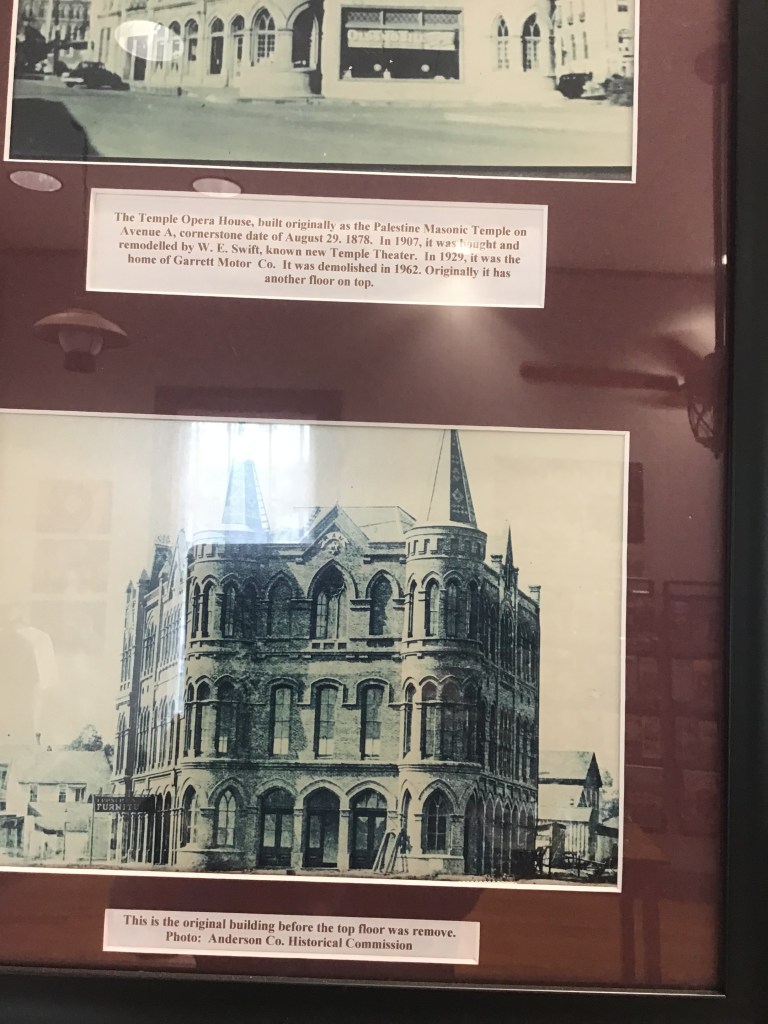
Several other beautiful structures were also said to have been destroyed in this small city of Palestine not long after they were constructed.
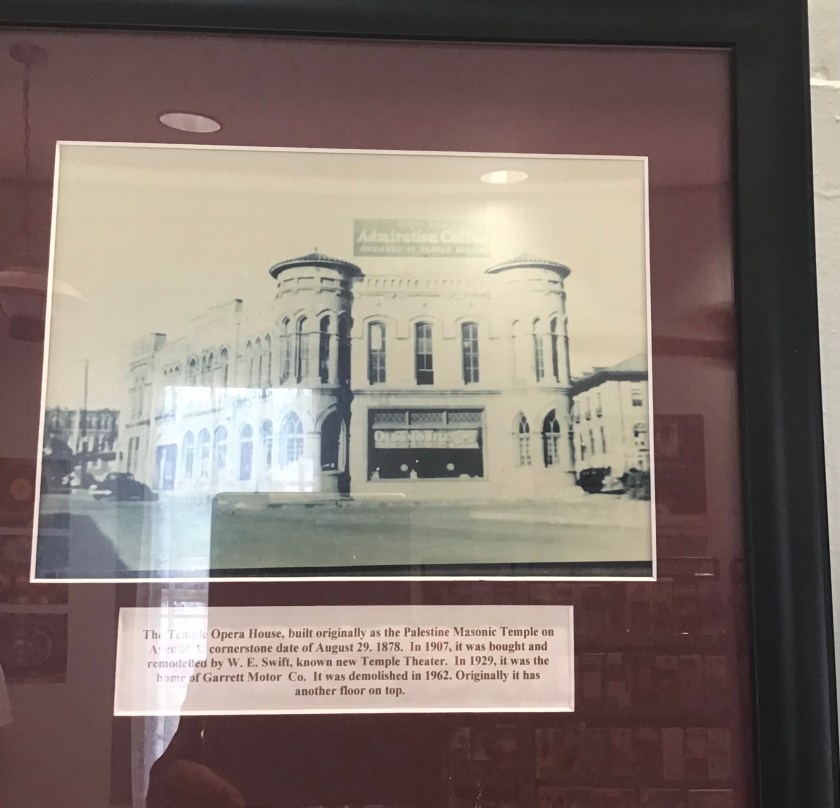
The Temple Opera House was built originally as the Palestine Masonic Temple with the cornerstone date of August 29, 1878. In 1907, it was bought and remodeled by W.E. Swift and known as the New Temple Theater. In 1929, it was the home of Garrett Motor Company, Palestine’s first Ford Motor Car Agency. It was demolished in 1962. It originally had another floor on top, but this was removed at some point.
At some point? Not even the official historians can tell us more specifically.
Exquisite building of multi-functions which didn’t have enough value to the small city to remain for a full century. The small box building housing a liquor store in that location now is so much better, I’m sure.
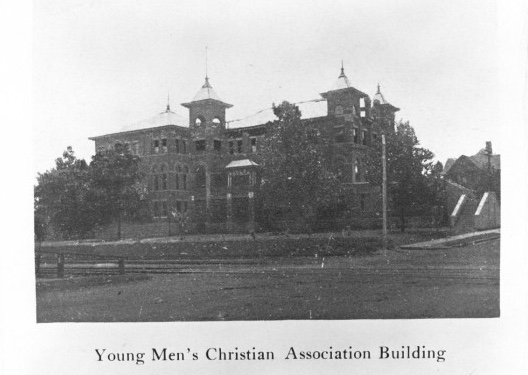
The “Railroad YMCA Building” was another one.
The Railroad YMCA opened in April of 1903 and continued as the YMCA until the building burned in the mid 1950’s. Interestingly, there seems to be no recorded photos available of this horrid fire event of a huge BRICK building. Nothing to see here! (In fact, I believe this to be another building altogether, more on that in a future post.)
As I searched the stacks of the local history at the library I was surprised to find several ‘fake books’ — that is supposed local history written by a source who cannot be located and is listed in the local phone book with phone numbers that don’t work and at addresses which never existed. Three different phone books, three different addresses, I actually went to all of them personally. Nothing. The books appear to be written by AI! I brought this to the attention of the library board, and no one cared. At all. I never heard back, though I went personally to the board meeting with evidence in hand. They didn’t even care to know which books it was with these obvious falsities, possibly written by an unaccountable AI, and sitting in their stacks posing as actual local history written by a fake person.
And now I feel frustration setting in, so enough for now, to be continued . . .
Narcissism has become a popular modern buzzword, but the dilution of its meaning from its mythological context and its misuse in clinical definitions has contributed to a lack of appreciation for the dire social and personal consequences of tolerating narcissistic abuse.
In modern times, when we think of narcissism we tend to point to “selfie culture” and a saturation of self-centeredness among those who enjoy it. Just yesterday I had the perfect opportunity to witness this while at a restaurant for lunch. A middle-aged woman with dyed black hair and matching bright red lips and nails had just entered her car, which was directly opposite the window where I was seated.
I watched, laughing to myself, as she spent the next five minutes taking pictures of herself in different poses: pouting, smiling, flipping her hair around, like she was a sexy actress on stage instead of a no-longer-attractive woman in a huge black SUV, just pretending. I imagine she has all the latest filters on her camera’s lens and wherever she’s headed next will be dark enough that the illusion is not prematurely disolved.
And while this is really cringy, its not particularly dangerous for anyone else but the poor sap she gets her hooks in next. Sorry dude, better luck next time!
Clinically, and even historically, this is not really the brand of narcissism that is causing so much mayhem in our world.
However, clinically the definitions are at once well-defined, and nebulous, and over-lapping, and found under the heading of the ‘dark triad’ personality disorders. While these are certainly interesting to study and are attempting to become more scientific with more data over time, they aren’t necessary to understanding why these personality disorders become so socially destructive.
The problem is not the cringy aging woman who wants to maintain the illusion of youth and beauty indefinitely in order to gain sexual approval in the marketplace. The problem is when the fantasy is allowed to trump the reality.
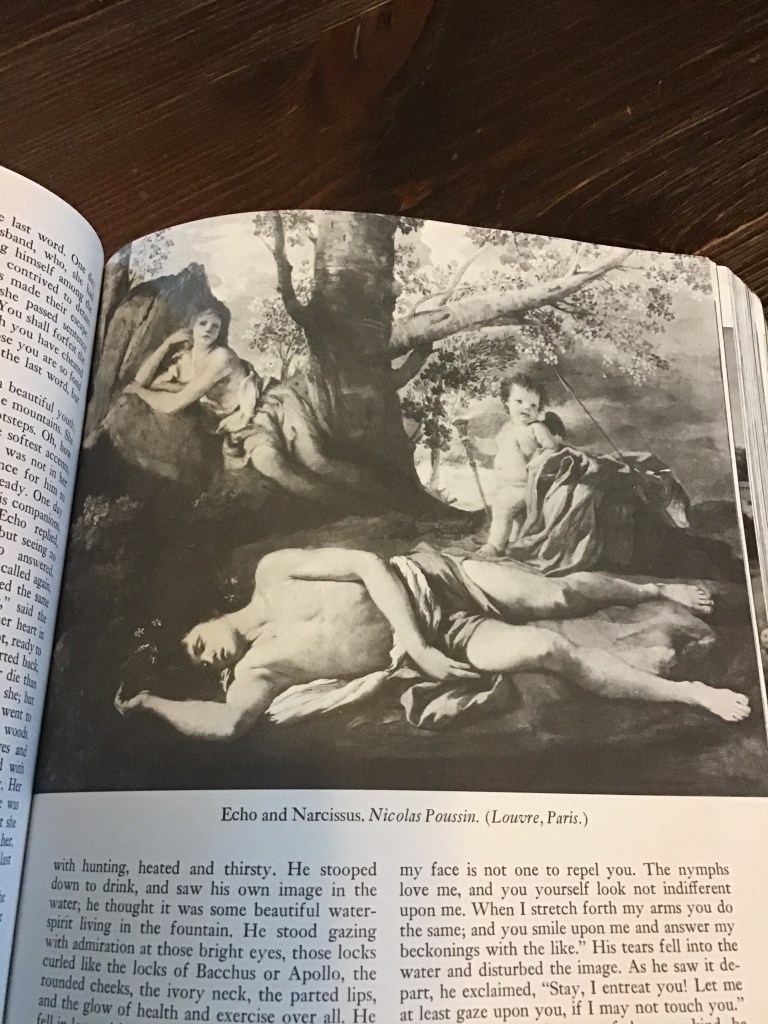
Society does still associate selfie-culture with the myth of narcississus, but only superficially. We correctly identify the beautiful youth who falls in love with his image in the water as narcississtic. But, we fail to look deeper into the lesson the ancient myth is attempting to teach us.
While there is no one official narcissus myth, one popular version includes his female companion, Echo. Whereas Narcissus is the disembodied face, Echo is the voice which mimics his, repeating, without agency, but symbolizing the intention of love and care through her adoration of him.
The real lesson is not just about the superficiality of beauty that fades, or the personal destructiveness of being overly-fascinated by one’s own appearance or superficial desires, but about the inherent dangers of illusion, especially when those illusions echo through the culture, without agency, repeating the words of the narcissist.
Reach out to touch the beautiful illusion in the water and it dissappears, and with it so does its echo, that’s the essence of the myth. There is no substance there, it’s a mirage. The face has no body, no core, no real form.
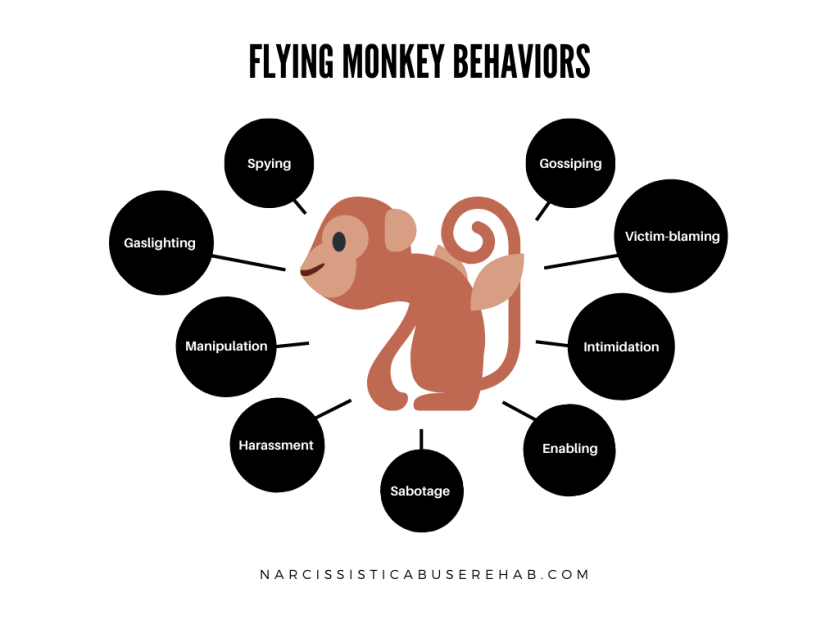
In popular culture today, Echo’s role represents the ‘flying monkeys,’ which are those figures doing the bidding of the narcissists, spreading his delusions. Narcissists are experts at manipulating others into doing their dirty work, whether that be their dishes or their crimes.
In psychoanalytical terms, this means the narcissistic personality has not done the difficult work of developing an authentic self. There is nothing behind the mask. S/he is a shape-shifter, a cameleon, the disembodied creature in a shared fantasy.
When these attributes become socially acceptable, indeed institutionalized, the culture itself becomes permeated with such types. Toxicity becomes the norm. Fantasy, being the preferred state of the masses, replaces reality. Narcississtic abuse becomes systemic.
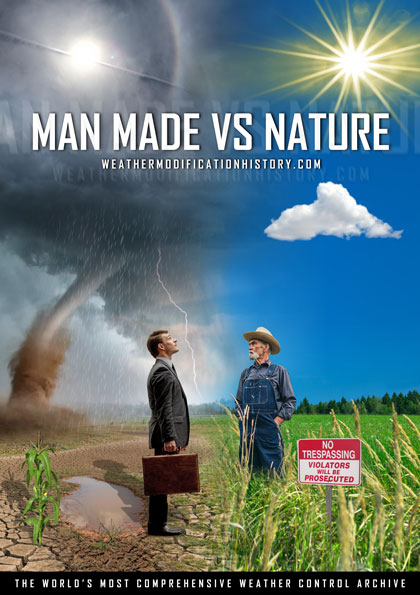
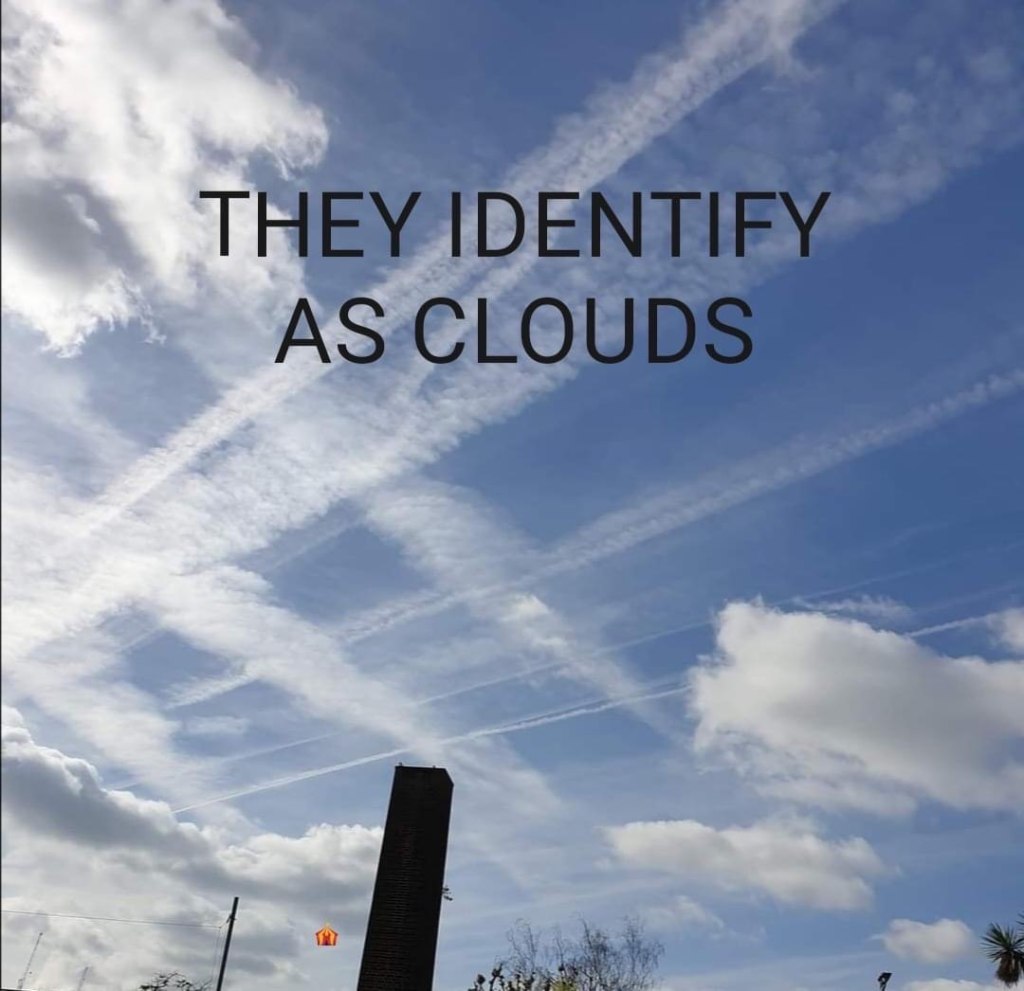
At the societal level, Geoengineering presents a typical example of how this looks in action. And, there are a great many direct parallels between narcississtic abuse as it plays out in personal relationships and in the aggregate, that is, the public domain.
Empty promises like ‘safe and effective’ become accepted as truth. Meaningless words and slogans replace honest dialogue and debate. Hollow gestures replace accountability.
In the personal relationship this looks like the philandering spouse who swears they’ve cheated for the last time, over and over. Or the sister or friend who apologizes for wrongdoing, but then hides behind ignorance or innocence, or tries to blame shift and gaslight to get out of being held accountable for her poor actions or insensitive behavior.
In the public sphere this normalized behavior becomes the governments and institutions who are granted immunity, the banks that are too big to fail, and the laws that are twisted to absolve the guilty and victimize the innocent.
What have we been told for the last decades about Geoengineering? At first we were told not to believe our lying eyes, nothing is happening, ‘chemtrails’ aren’t real, and you are all gullible conspiracy-believing nutjobs.
Next, we are told that it’s actually benevolent, they are trying to fix the broken climate. Totally safe and effective. We just need the states to put a few crucial laws in place, then everyone will be happy. Fantasies and illusions replace accountability.
More empty promises, more hollow gestures — like the states stalling with laws that will never stop the assault, but will get a new market brewing for all the attorneys and advocacy groups and health care professionals, who will make a lot of money from the fallout. Entrepreneurship, that will solve it. More tech, better tech, that will solve it.
The argument gets twisted around intentionality, did they mean to harm, or not? Let me go out on a huge limb here and suggest that every single person involved will say they didn’t intend to harm. That’s rocket science.
That question itself serves the abusers. The real question, the one the victim would ask is, “Should abusers be able to hide behind innocence, ignorance or incompetence?”
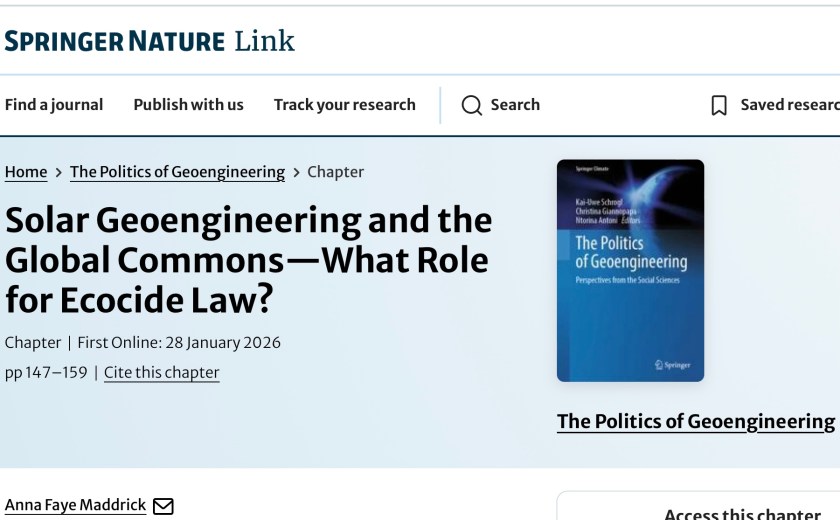
Solar Geoengineering and the Global Commons—What Role for Ecocide Law? | Springer Nature Link “As a result, initially peaceful, yet ultimately harmful geoengineering projects could exemplify unintentional hostile use of weather modification technologies. However, ENMOD does not take this form of use into account, so cannot provide a viable tool.”
Meaningless words–words that magically transform, or lose and gain significance depending on whims and propaganda shifts–global warming, global cooling, climate change, abrupt climate shift, climate remediation.
These parallel the meaningless words and hollow gestures of the narcissitic abuser — I’m sorry, I didn’t meant to, it’s really not that bad, it’s just your impression. The dog ate my homework.
It’s not my fault. No agency. No accoutability.
You’re not perceiving what you think you are perceiving! You’re not feeling what you think you’re feeling! it’s just your impression! Your subjective experience! If it were true, everyone would be experiencing it exactly the same like you!
Plausible deniability is the safe space for abusers of all kinds.
They will even go as far as admit the wrongdoing, but still not be held accountable for it. Like Narcissus, all image with no substance, all face with no body.
Other common tricks of the trade: manipulation of perception, moving the goal post, feigning, finessing, presenting harmful acts as benevolent–it’s for your own good, for the good of the community, because they are so concerned about you, about the environment.
What do you mean we can’t flood your home? But the farmers need rain, you’re being selfish. Isn’t that why you bought insurance? Why aren’t you more resilient? Why should you be so upskittled by a tornado or two, they happen all the time. We were just doing our job!
I will NOT end this post, or this life, drowning in their sea of dysfunctions, because that’s exactly what works best, FOR THEM.
I truly believe that if the individual will stop accepting such abuses in their personal lives, what’s acceptable on the societal level will assuredly, eventually, shift as well, and very dramatically.
Stop approving of the toxic behavior, stop believing the lies, stop being their Echo, because narcissistic abusers are pathological attention-seekers. Call them out, demand accountability, do not accept empty promises and meaningless words, and watch as the little rats start to scurry.
Learn about narcississtic abuse and root it out of your life, personally and professionally. Achieve greater levels of discernment through diligence and determination. Real resilience comes from principled positions rigorously and consistently applied. Insist others practice what they preach, as you yourself do the same.
This is not idealism, this is the tough work of forcing reality to win over illusion. It is the tough work of embodiment, of authentic Self creation.
“We’re often told that narcissism doesn’t exist or that we’ve attracted these people into our lives because of our own issues. This harmful victim-shaming keeps people trapped in abusive dynamics.
In this episode, Dr Peter Salerno explains that narcissism is real and identifiable. Narcissists are invested in their image at the expense of their true self, and they intentionally seek out environments where they can exploit others.
This conversation will help you identify if you’re dealing with a narcissist, trust your body’s reaction to mistreatment, and begin to think about whether it’s a relationship you want to remain in.”
We may still be victims of their floods and tornadoes and varied toxic tampering, but we don’t have to accept their delusional fantasies and their illusions of control. And that WILL make a difference.
(A re-post of one from 2016, happy 10 year anniversary to Kensho! Funny-not funny, my viewpoint has not changed a bit!)
I wish I could say I was not guilty of it. I watched on two different days last week as a coyote trotted off contentedly first with a duck, then a chicken. The latter time I was outside, with our very large Dane-Mastiff guarding, reading on the deck as the coyote pranced by 200 feet from us, without any chicken ever making a sound to alert our attention.
I did shoot at it, far too late, but I was so slow and stunned I hardly had a chance. I asked on social media whether, had they been faster than me, if they would have choosen to shoot the thieving coyote with their cameras or their guns. Most chose cameras, which demonstrates a double-bind, I believe.
We have lost sight of the predator/prey relationship. In fact, when we look closely into New Age groups and the major push in education currently, the prey has been deluded into believing they can transform the predator into something ‘better’ or “safer” or at least less scary.
The prey goes into school and later even therapy so as to come out better adapted at the game and to his role as prey. The predators understand perfectly this relationship can be best described by the old parable of ‘the frog and the scorpion.’ Since at least Biblical times, it has always been the same game. The predator/prey relationship is easily paralleled to our more civilized equivalent of Master/slave, which can be extended further to our current neo-serf system of Parent/child and State/citizen.
I fancy myself aware, self-reliant, pro-active, resourceful. Yet, in my ‘truth quest,’ which a great many of us have been on for many years now, I’ve demonstrated my talent at pointing fingers, shifting responsibility, projecting, and most grievous and destructive of all, further nurturing an identification complex. https://en.wikipedia.org/wiki/Identification_%28psychology%29
An identification complex is plaguing seemingly all of society right now so I have plenty of company. We are all pointing our fingers at the 1%, or in the case of “truthers” or “conspiracy theorists” the .001%, as the core problem with the world. We criticize from one side of our mouths and go along with the other. We go along in hundreds of different ways every day. We fall for their fashion and entertainment, we sit in their schools and on their boards and in their governments. On the surface there seems to be little other choice. When someone opens their eyes wide enough to see this is the same master/slave relationship indoctrinated and institutionalized at ever level of the system that has existed since the beginning of history, we are then met with the next inconvenient truth: We are only looking at the gameboard, we are not understanding the game.
We the slaves both despise and envy the master, and the master knows this and uses it against us. Obedience is the price and the master sets the terms. Our role is to remain passive and uncomplaining against the unspoken contract. When the noose tightens, some slaves become restless and resentful, while others adapt by learning to breathe more shallowly. Livestock breeders use identical methods. This is how the system perpetuates and exacerbates to such an imbalance that an excess of predators disrupt the natural order until collapse is inevitable.
Of course the game is rigged! And if you had your way, it would be rigged in your favor. Your preference might be: I want it to be fair and safe for everyone, for there to be no predators or prey, nomasters or slaves, and many might support you, to the point they’d be willing to become the predators in order to preserve your collective safe-space.
What we see politically we are also allowing in our personal and professional lives. We feel the boot, there are fewer in denial everyday. We know we are being surveilled and minimized and made obsolete. We know we are victims and we react in one of the many ways they know we will, as prey always will: Fight, Flight, Fawn, or Freeze. If one can find another courageous enough to rebel, he is also lost eventually, because to rebel is to remain still inside the game. They have plenty of room for rebellion, they count on it, they thrive on it.
“I can hire one half of the working class to kill the other half.” Jay Gould
Obedience is the prey’s cost in the master/slave, State/citizen relationship, making the passive society become increasingly easy prey; little more than a flock of smiling depressives. These easiest of prey develop a quintessential need for their one-season world, for un-natural order, until passivity replaces fear and we all become the woman watching the coyote trot by with one of her ducks, too slow and maladapted and untrained to stop him.
When one is lucky enough to find another who has the courage to change the game, or at least give it a go, one has met the Fool soon to replace the Father. The game changes when we ourselves change, it’s an inside-out process, not an outside-in. We choose en masse, to not be prey or predator. We choose to have no rulers. We choose Autonomy, Sovereignty and Self-government.
The ones who understand you must stop the predator or soon all your poultry will perish are the ones rebelling, which the masters then flaunt in front of the more passive prey to get them focused toward each other. The fawns point fingers at the fights, the freezes blame the flights, and around and around we go.
Where will we stop? Does somebody know?
When the most passive meets the predator enface they realize their only hope is one they’ve been trying to avoid all along. Because the most unpleasant truth of the human condition from the mindset of the frog is that not every frog has to become aware of the nature of the scorpion, they just have to become aware faster than the last frog.
Here’s some research links I know could really benefit some of my fellow frogs.
For your personal life and relationships: Ollie Mathews, an ingenious entrepreneur helping victims of narcissistic abuse by reading their often painful letters on Youtube. Understanding this co-dependent dysfunctional relationship is crucial to understanding how it’s playing out in the Big Game:
We’ve all heard the expressions: “History is a set of lies agreed upon” and “History is written by the victors” and most have come to accept these tropes.
But what they may not have considered is when the history is that flexible, all those academic fields which are history adjacent–like anthropology, sociology, philosophy, literature, all cultural studies, even linguistics– become subject to those authoritarian whims and fashionable irregularities.
Generalization, subjectivity, distant observation, even making obvious comparisons across vast and complex measurable units–ie. pattern recognition–is not just discouraged, it’s potential grounds for dismissal. It’s considered sloppy, unprofessional, unacademic. Pseudo-subjects and conspiracy theory.
Academics are especially vulnerable to such manipulations as their fields are controlled in a strict hierarchical system and their studies, even as tenured professors, tend to stay very narrow in scope. They do not need to strive for a cohesive worldview in their academic work as they are mostly employed to measure the minutia, to dig deep into one tiny corner of the field, as has been the case with the historical and architectural world of the Mound Builders.
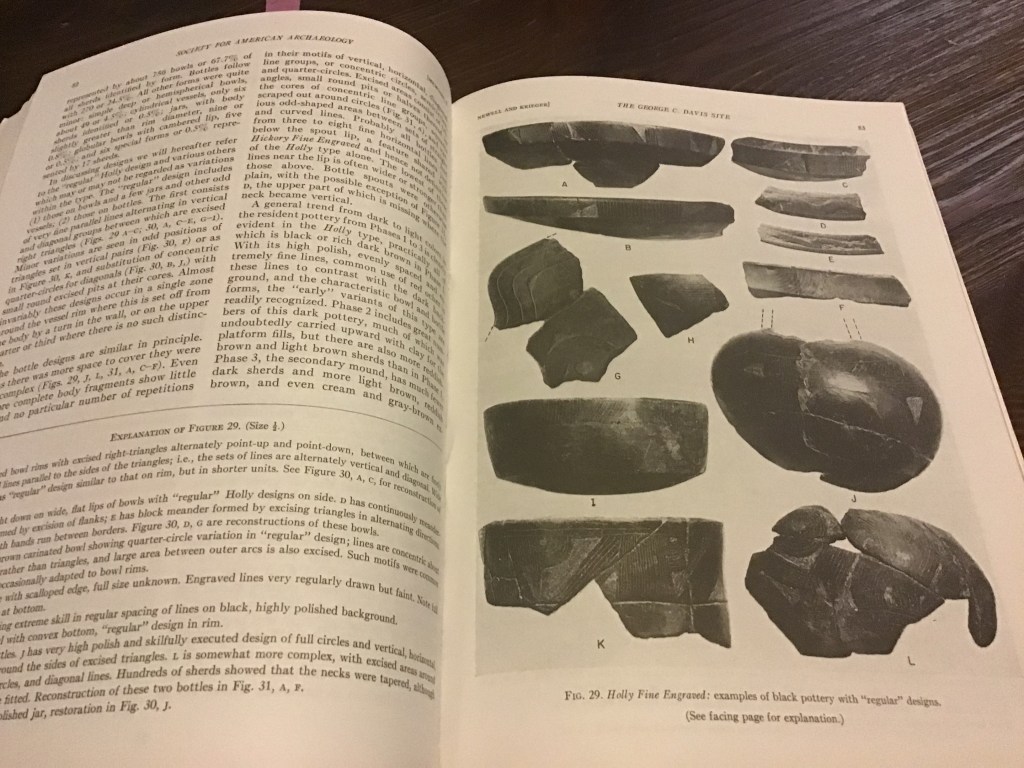
What the volumes of academic work on these cultures tend to do is narrow in so microscopically as to make all similarities irrelevant and cross-cultural observations inadmissable. They debate ad nasauem around shards of pottery found just beneath the surface of their archeological sites and the thousands of ways these tiny artefacts differ from one locale to the next.
There are literally thousands of pages published on comparisons and categorizations of tiny fossils and shards of the various Mound Builder tribes of the Americas. Specific measurements are taken of the space between the decorative lines and their width, length and coloration. All is catelogued in such microscopic detail as to bore to tears all but the most myopic of minds.
Truly, it is a form of academic gaslighting. Keep searching right here, right in this tiny framework where we’ve given the appropriate boundaries and designations. Don’t broaden, don’t do your own investigations, don’t venture out of your assigned territory, all alien parameters will be squashed with contempt and mockery and quite likely, career death.
Observe, very closely, and question every narrative.
That singular, rigid, hierachical model has been demolished with the Internet and for me, who formally studied and taught for four decades the very subjects now being shamelessly dismantled, I couldn’t be more pleased about it.
Actually, I could be. If there was a guarantee the ends would somehow justify all these means–as in the decades of lies and indoctrination and then subsequent ripping away of those foundations and the now erupting attempts to filter the masses into new molds for better slave management and more prosperous slaveholders–then I would certainly be more pleased.
But I’m not so naive as to think there’s ever any such guarantees. (As an entertaining aside, James Corbett here at his comedic best with more on our system of modern slavery.) https://youtu.be/ZjwO9_3g4xQ?si=8u5_OumKlk-LOMub
But my topic today is a continuation of the last What’s Been Lost new Kensho series. And say what you want about formal education, I’ve experienced the pros and the great many cons, but for all those naysayers and critics, my serious education these days comes from Youtube, mostly. I know, right?!
Don’t knock it ’till you try it, there are some really amazing teachers there (they call them creators now, which is nice) and I’m not watching them to buy into any of their conclusions, but just to appreciate their work, collect their evidence, and consider, that’s all.
There are relatively few in my life who care about this stuff at all, so I’m grateful for the company and impressed with their body of work. Yes, I do understand some of them are part of a big club, and I’m not in it. I don’t mind. And I’ve got no where else to go, and I’ve got a bit of time and loads of interest.
So for those others who might be interested in exploring and considering with me, we continue in search of what’s been lost.
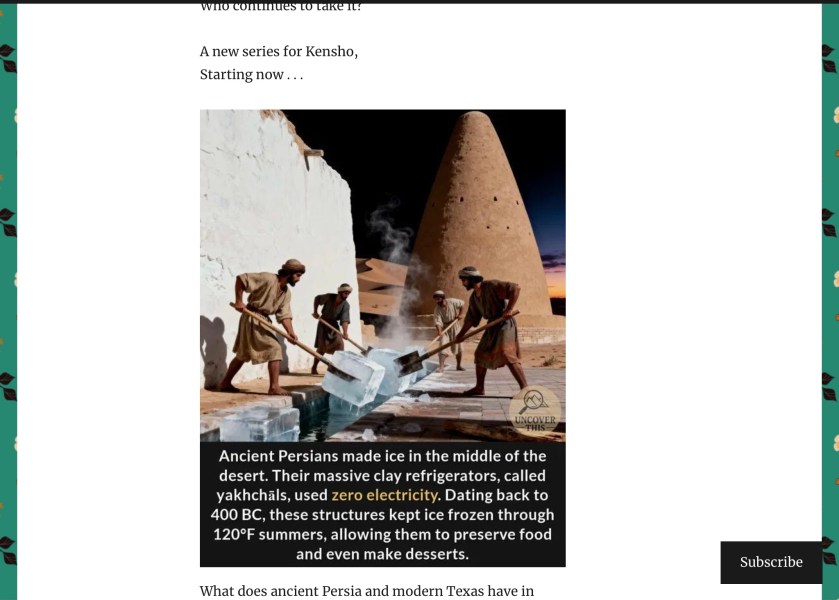
Last time I shared about the Yakhchal, a common radiative cooling system used from ancient times, still in operation in parts of the Middle East, and perhaps close by as well, as close as Dallas.
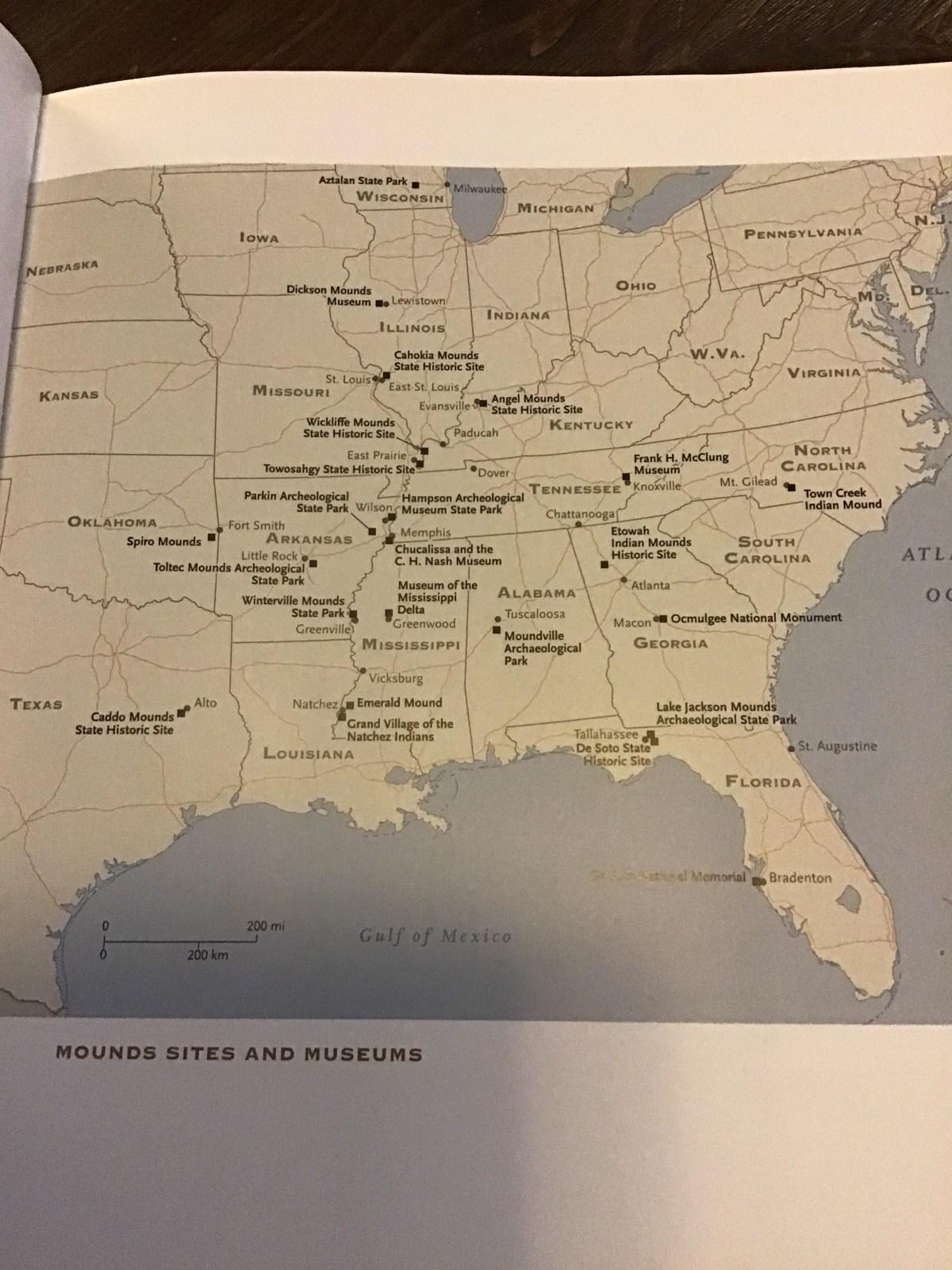
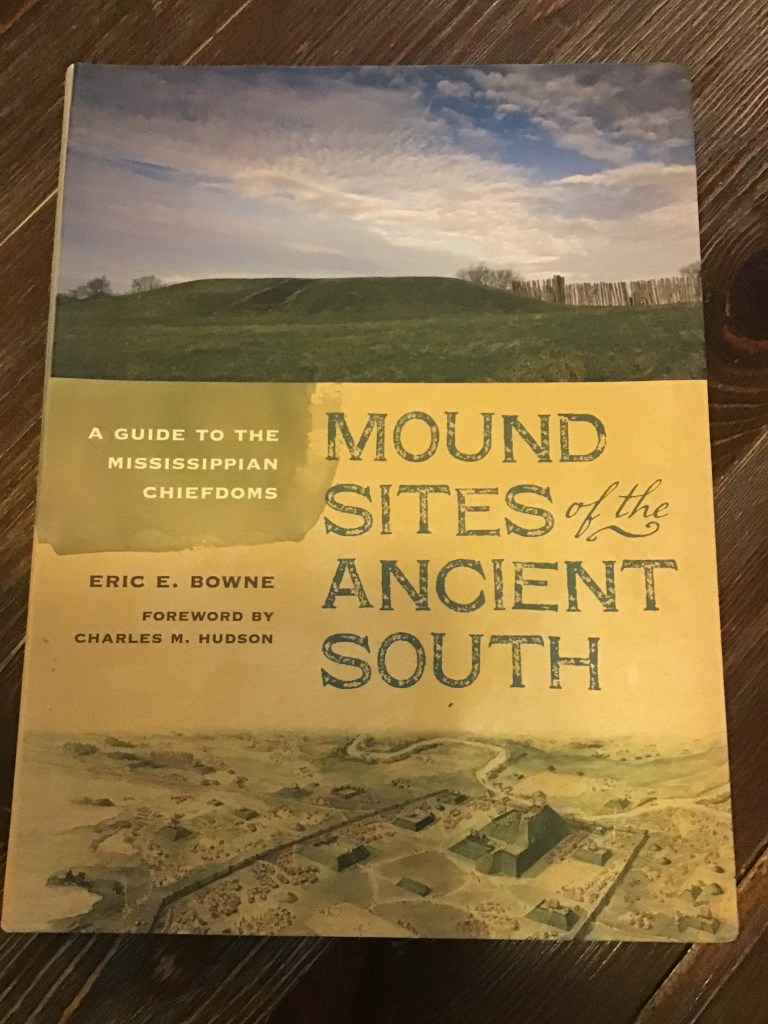
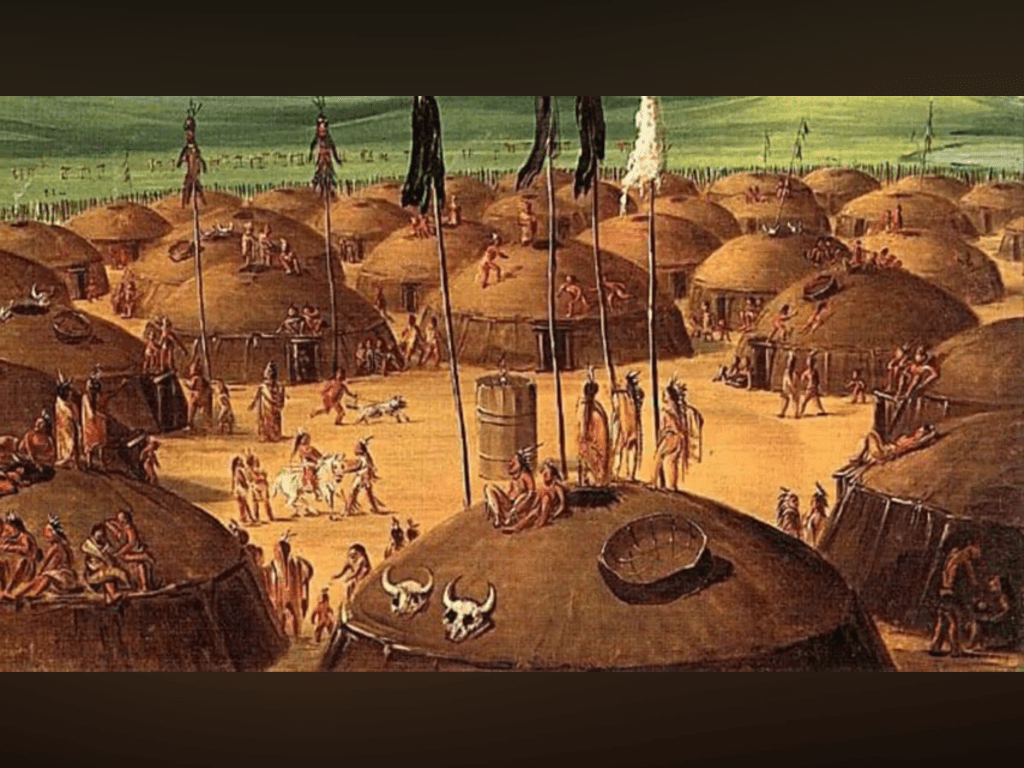
Now I will introduce another thread to this story, the so-called Mound Builder ‘indigenous’ tribes of the South, officially referred to as having been ‘occupying’ these lands before the arrival of the Europeans.
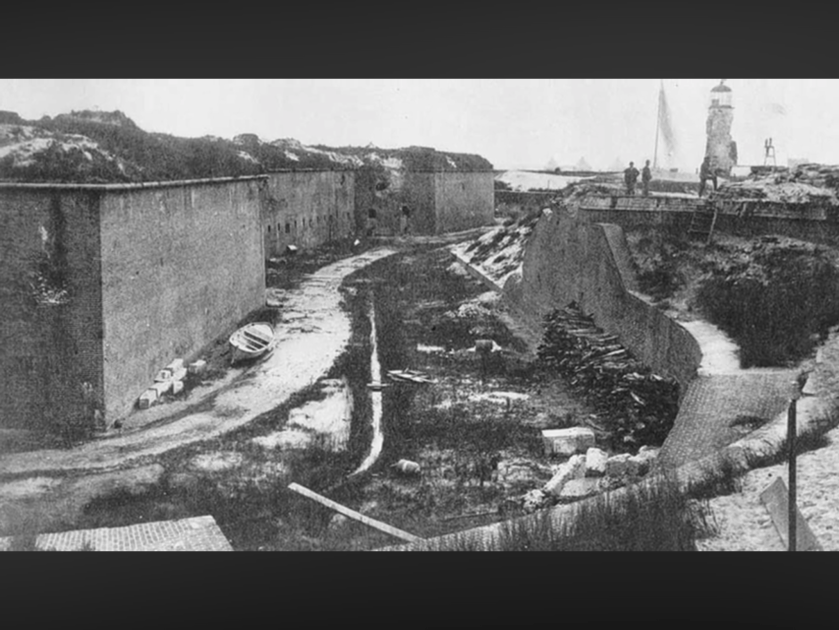
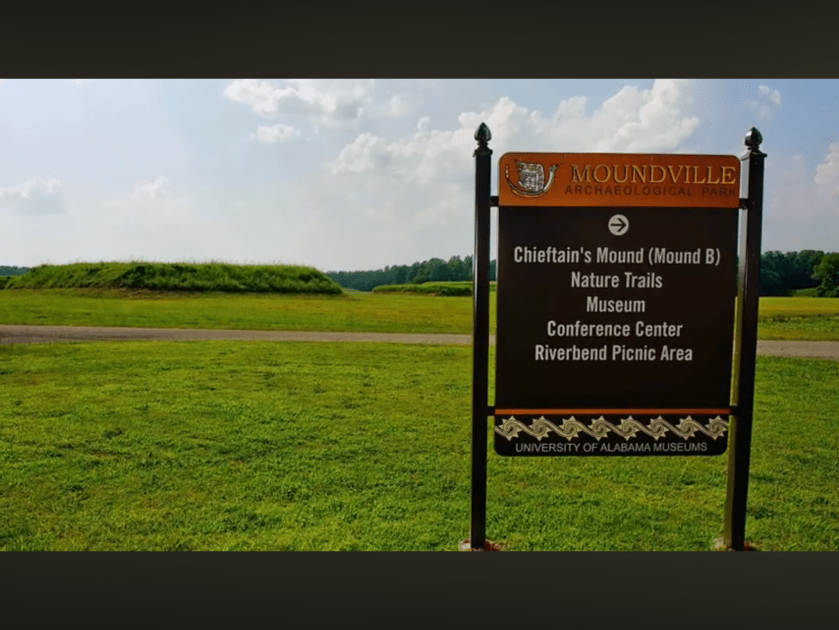
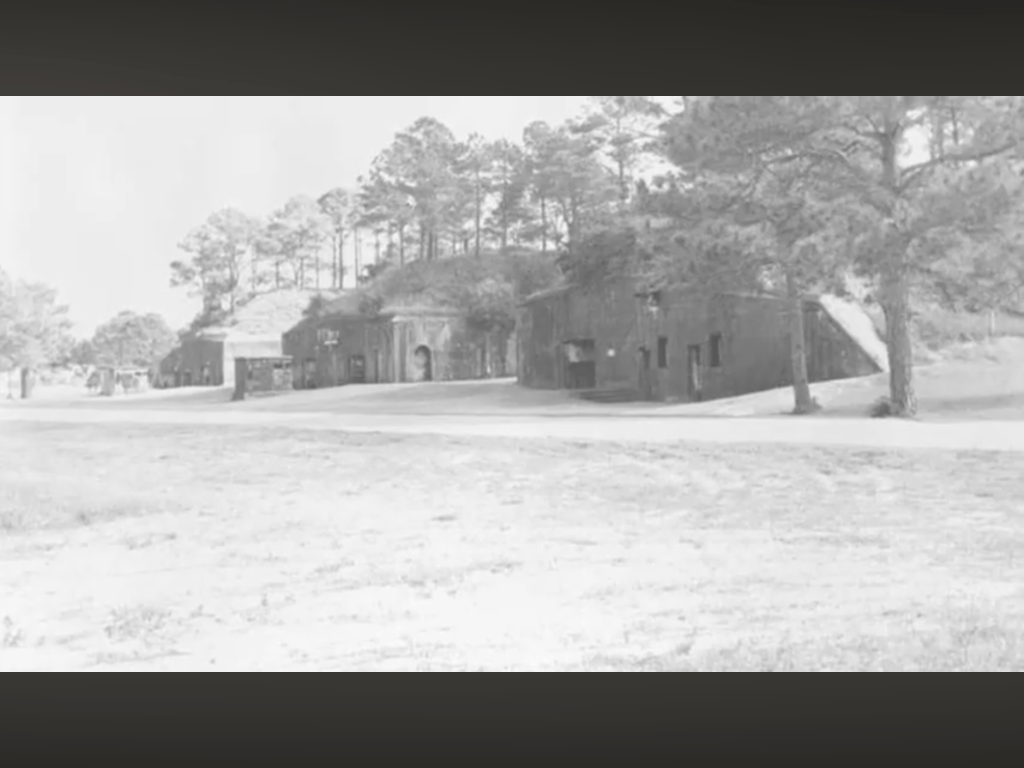
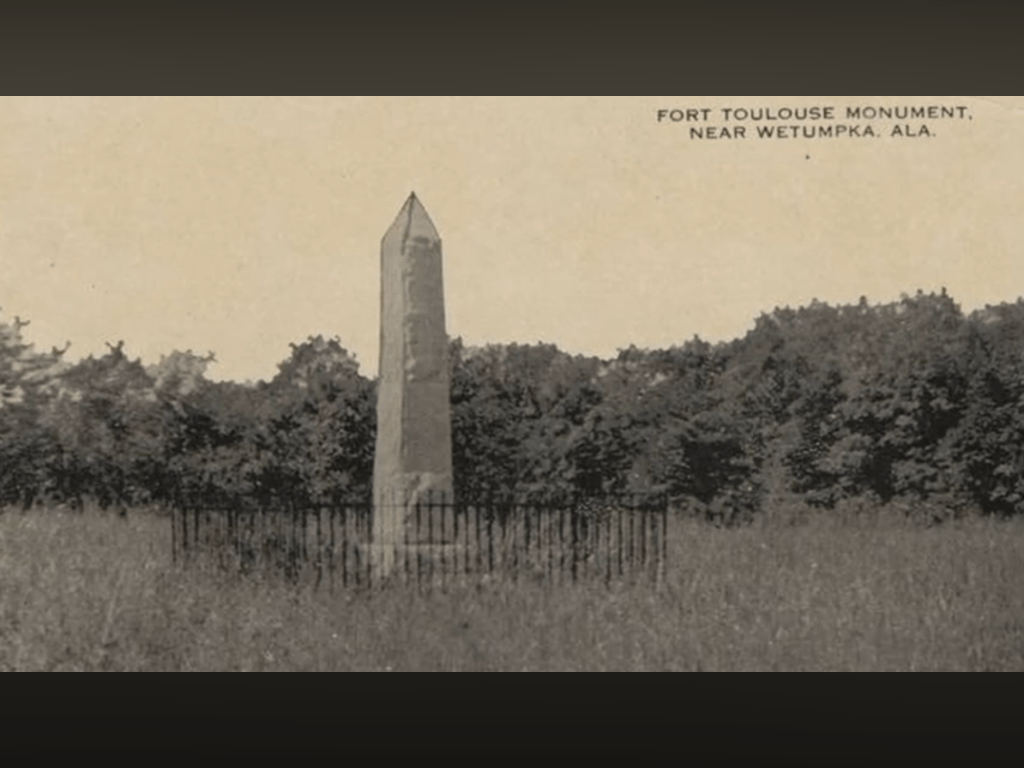
A recent video by Jarid Boosters was perfectly timed and is well worth a complete viewing. In it he considers one such Mound Builder culture in present-day Moundville, Alabama, once called the Kingdom of Pafalaya, which includes Fort Morgan. Most of these sites are former military installations and are owned by universities and used as tourist traps now. Some of them are privately owned, all have vast areas not open to the public.
We have one very close to us as well, known as Caddo Mounds, which I’ve written about briefly before, after a sudden (manufactured) tornado hit during their cultural ceremony, destroying much property, killing one and injuring many. The site has since been upgraded and reopened, though there is little to see besides some very basic ‘replica’ huts and of course, a large gift shop.
What I propose has happened with these sites is a deliberate militarized program of generational amnesia.
“Generational amnesia refers to the phenomenon where each generation forgets important knowledge and experiences from previous generations, leading to a distorted understanding of the past and the environment. This can result in a lack of awareness about changes in society and nature, as new generations accept their current conditions as the norm without recognizing what has been lost.”
They tell us ‘Generative AI’ will solve this mounting modern social problem. Promises, promises. Let’s not wait on those any longer.
For a bit of background, Mound Builders refers to ‘prehistorical’ cultures of the ‘ancient’ South. For our purposes, ‘prehistorical’ refers to the most recent rewriting of history, or ‘reset’ as many interested in these topics are calling it; and ‘ancient’ refers to the ‘Roman’ era and all those pre-dating it. In this version of history we examine especially the period of the so-called “Civil” War, or the war between the states, or the war of Northern agression, or whatever other term seems appropriate for that period of time when much of the southern US was destroyed and their history re-written by the victors.
At this time the official narratives went under the command and control of the military, if they weren’t there already. In my estimation we have always been a military industrial complex, this wasn’t a new phenomenon predicted by another puppet president.
There are other ‘fringe’ channels that deal more specifically with military history, that is not my main interest, one I could recommend for this angle would be that of a former history academic: https://youtu.be/LqiZPX0Ordc?si=IOKaZQ7FT2Bjr7Wg
In fact, there are so-called Mound sites all over the South, and I’d suggest many of them are as yet ‘undiscovered’ because they sit on private property where even the land owners have no idea what’s beneath them.
In nearby Nacogdoches there is another ‘curated’ Mound site:
“Excavations at the Washington Mound site have uncovered the archeological remains of a large Middle Caddoan period (ca. A.D. 1250-1350) mound complex in south-central East Texas. The investigations of this heretofore unknown complex indicate that there was a significant post-Alto phase culture in the region that may have had a significant impact on subsequent regional Caddoan manifestations.”
While there are teams of academics studying the tiny differences in the fossils on the surface and money rolling in from the tourist trade, and grants galore for those academics willing to tow the official line, the accepted narrative framework gets further cemented into the public consciousness.
The new Southern history started in 1888 or thereabouts, with 1933 appearing oddly often. The commonalities of these sites, like the ‘charcoal-filled pits’ and ‘post holes’ are left as side curiousities or mysteries or given barely-plausible labels like ‘ceremonial spaces’ or ‘burial grounds’.
According to Wiki we see some typical features, like the involvement of the Smithsonian Institution, and a minimum of curious names and the all-important dates to keep our minds distracted from the bigger picture:
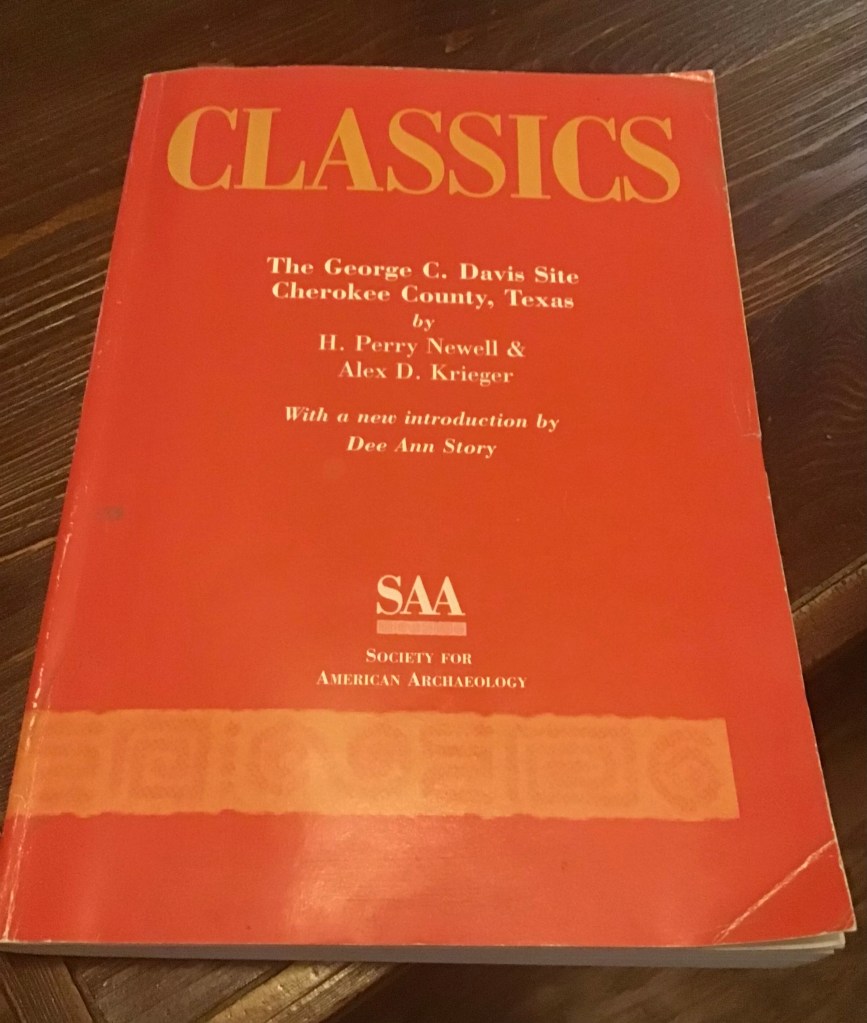
The earliest recorded written mention of the mounds was in 1779 by Athanase de Mézières, who traveled from Louisiana to San Antonio in the employ of the Spanish government. In 1919 American James Edwin Pearce was the first professional archeologist to record the site for the Bureau of Ethnology (Smithsonian Institution). In 1933 archeologist E. B. Sayles concluded that the site was a Caddo mound center, after conducting surface collection of artifacts at the location. The first scientific excavations were conducted from 1939 to 1941 by H. Perry Newell, a University of Texas archeologist with the federal Work Projects Administration in the government of President Franklin D. Roosevelt. When Newell died, archeologist Alex D. Krieger took over investigations at the site and concluded that it had been a major Caddo site. Further excavations in the 1960s and early 1970s by Dee Ann Story pinpointed the timeline of the site to 780 and 1260.
Following military service, Tunnell returned to Texas and began working with archeologist Ed Jelks on the Texas Rivers Basin Survey project funded by the Smithsonian Institution. Their first investigations took place along the McGee Bend of the Angelina River in East Texas, later impounded as part of Sam Rayburn Reservoir. He also worked in the Lake Amistad area along the Rio Grande.
As State Archeologist, Tunnell participated in scientific investigations at the Alamo and other important Spanish Colonial mission and presidio sites in Texas, directed archeological excavations at the ancient Folsom-age Adair-Steadman site, and braved the waters of the Rio Grande in order to record the archeological resources present in the canyons of the Big Bend region. He battled commercial salvagers to retain the 1554 Spanish shipwreck artifacts for the State of Texas and was instrumental in the development of the Antiquities Code of Texas, the legal tool to protect historic resources on public (state) land, including submerged shipwrecks. His films and audiotapes documenting the work of numerous folk artisans and craftsmen in the Texas-Mexico border region may well represent the only records of the practitioners of many vanishing crafts and arts. In 1981, Tunnell became THC executive director, a position he held until his retirement in January 1999. Through his decades of state service, Tunnell traveled to all 254 Texas counties and developed lasting friendships in all regions of the state. Tunnell passed away suddenly at his home on April 13, 2001.
His name was Tunnell, former military, and her name was Story. Isn’t that special. He liked to talk about Arts & Crafts. But not so much about Antiquitech.
Screenshot
What I wonder is, do the actual tunnels tell another story?
We’ve got mounds and post holes and charcoal-filled pits; we’ve got vast stone walls covered over by lakes and resevoirs and now deemed ‘legend’; we’ve got historical timelines that have clearly been ‘revised’, many times; we’ve got buildings and other structures that make no sense, but get little attention.
The burying of the past continues, the generational amensia widens, and aside from a few Youtubers and their marginalized audiences, I wonder if anyone else really cares.
Just in case you are one of the few who do, thank you, and you’re welcome.
More on the vast and ubiquitous caves and caverns of Texas and the mid-West on a future journey.
You don’t know, because it was taken long before you were born. Your father, your grandfather, ditto. Your child will know less, her child lesser still, what’s been lost.
Someday she might try to dig it up, maybe because life no longer makes sense to her.
So hideously ugly, there’s got to be a better way!
In confusion and rejection of the dystopian present she senses roots calling from the past, something deeper was once here, something grander, was it an alignment, a race, an epoch, antiquitech, infrastructure, what?
What’s been lost? Where has it gone? Who took it? Who continues to take it?
A new series for Kensho, Starting now . . .
What does ancient Persia and modern Texas have in common? The Ice House.
If I said that to a Texan they’d think I meant the popular outdoor beer gardens, and their version of history would go back to the early 1900s and they’d think that was old. Perhaps they’d offer some local trivia or home-spun yarns, like the original Texas Ice House was the first ice manufacturing company, which is now claimed to be have been merely an ice storage facility, which later became the modern day 7-11 francise. There is, like most home-spun yarns, some truth in that story. And much redirection and fabrication as well. Perhaps to keep your eyes of our own ancient history.
More from Wiki: In some parts of Texas, especially from San Antonio and the Texas Hill Country down to the Mexican border, ice houses functioned as open-air bars, with the word “icehouse” becoming a colloquialism for an establishment that derives the majority of its income from the sale of cold beer.[24] The distinction between South Texas ice houses and ice houses of other parts of the state and the South has been connected to the Catholicism of the region, a deeper-rooted Mexican culture, and the influence of German immigrants.
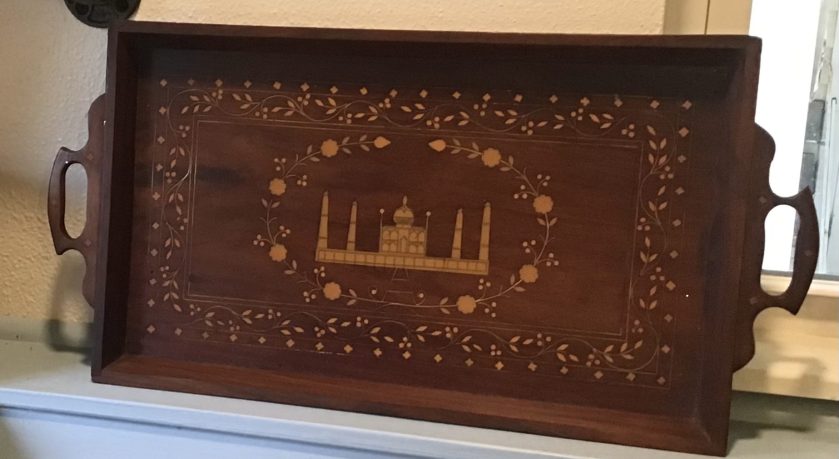
A nice find from a local antique shop. I believe some of the old buildings in the nearby small city of Palestine once used this radiative cooling system.
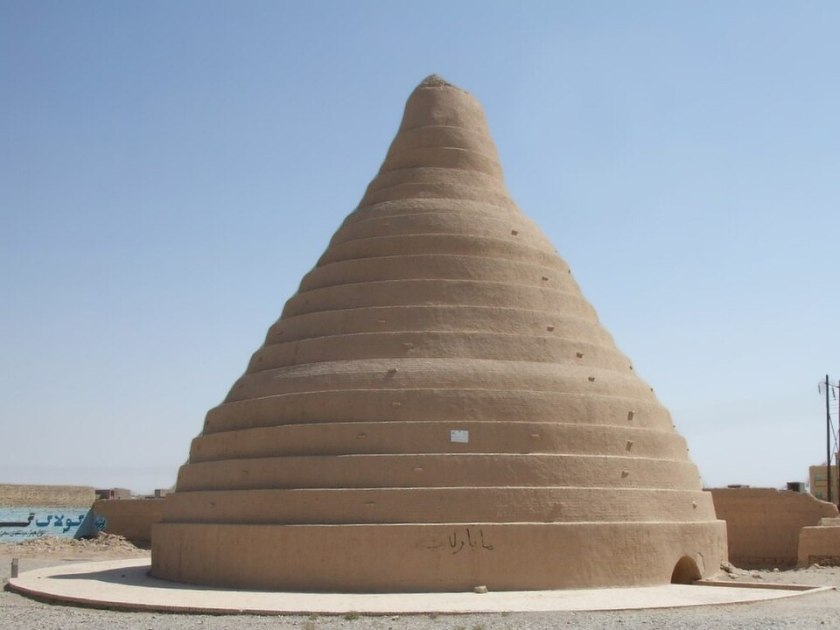
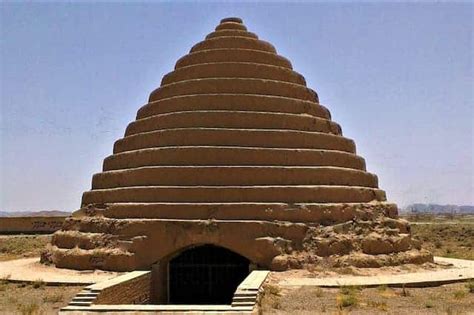
I believe it begins in Persia, still home to many ice houses, called Yakhchal. Alternative energy in the modern Western sense is really ugly, cumbersome, expensive, destructive, in comparison. Yet, there is evidence that the Yakhchal was once more widespread than just in the ancient, or modern, middle east.
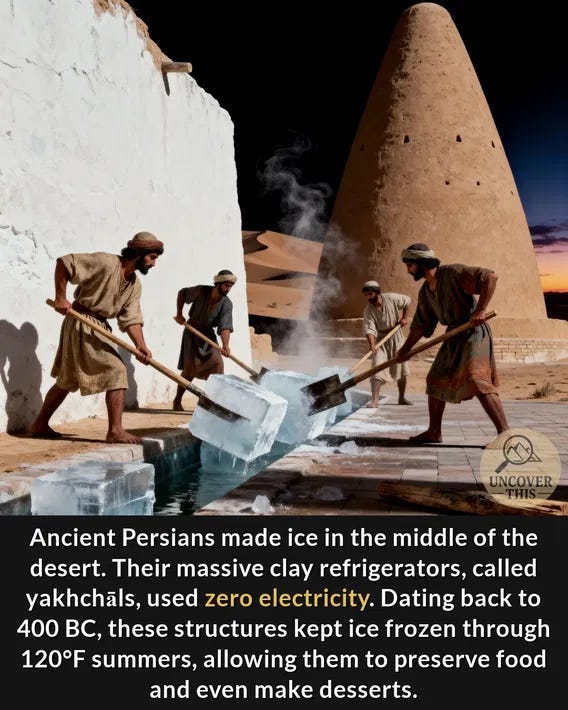
The yakhchal is used for preserving and storing food, cooling structures, even making icy sweets. It works through radiative cooling, which existed in ancient times, still is in existence in remote areas today, and yet, it’s not the norm here, in the modern and advanced industrial West. Why?
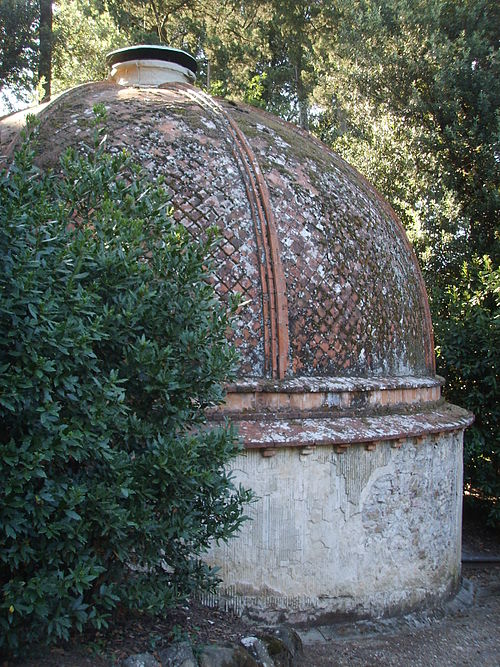
The dome of an ice house in Italy.
That they propose it now to cool the entire planet with this line of tech means they think they can scale it that far up, yet they can’t manage to scale it back down, again. How can that be?
What is the difference between the common springhouse and an icehouse, which is the Yakhchal? My neighbors once had a springhouse, but I’d only know that because he told me himself, before he died, at over 90 years old.
Where else would such useful information be kept, I wonder? How will the next owners know there was once a springhouse there, one that might even be restored to a functioning status, when I see on their real estate listing that not even the grandchildren seem to know or care about this old feature? Who cares now, right, because we have the water co-op and the electric company we can pay each month.
I believe a case could be made that the very common structures once known as springhouses were the vernacular equivalent of the ice house.
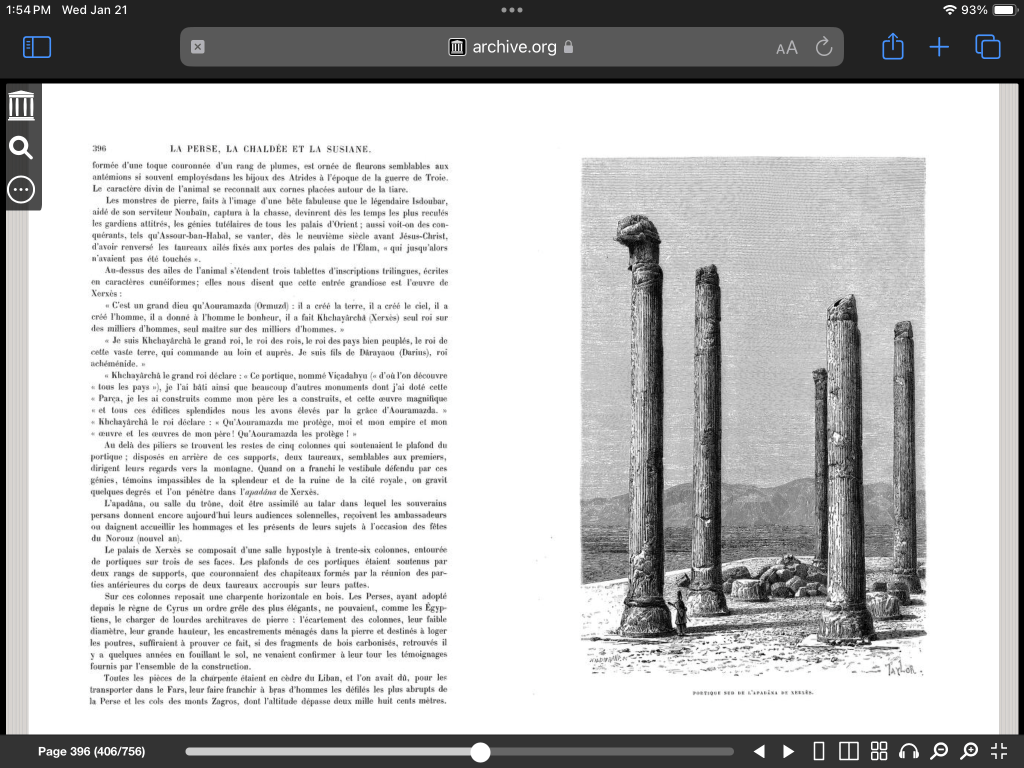
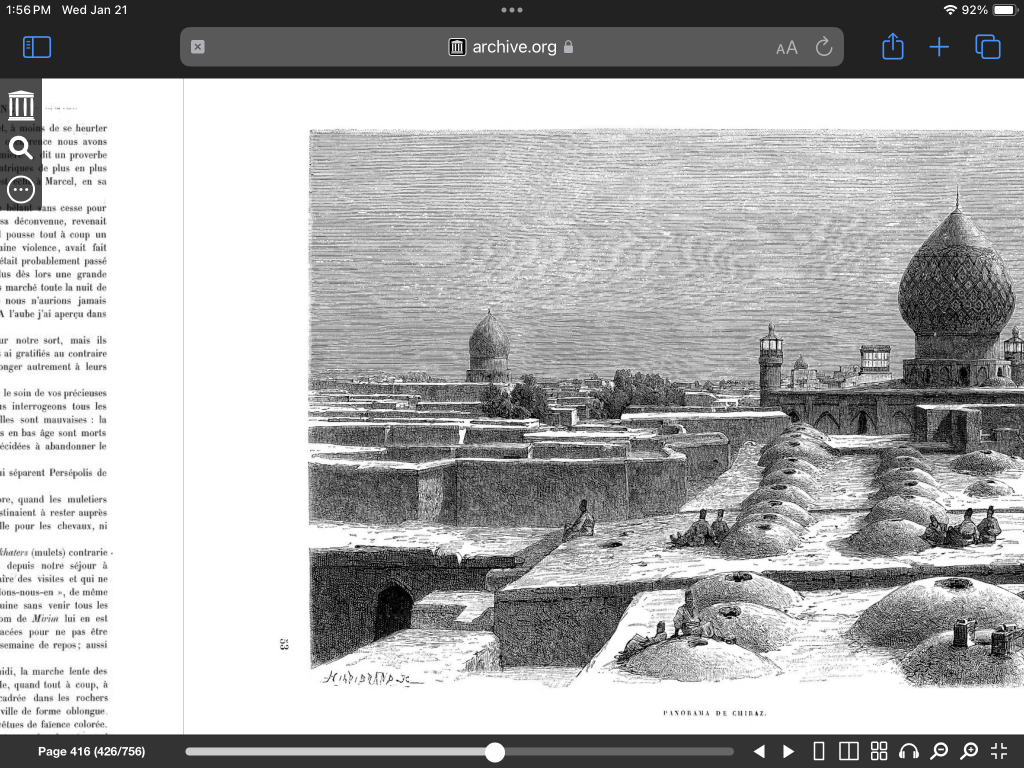
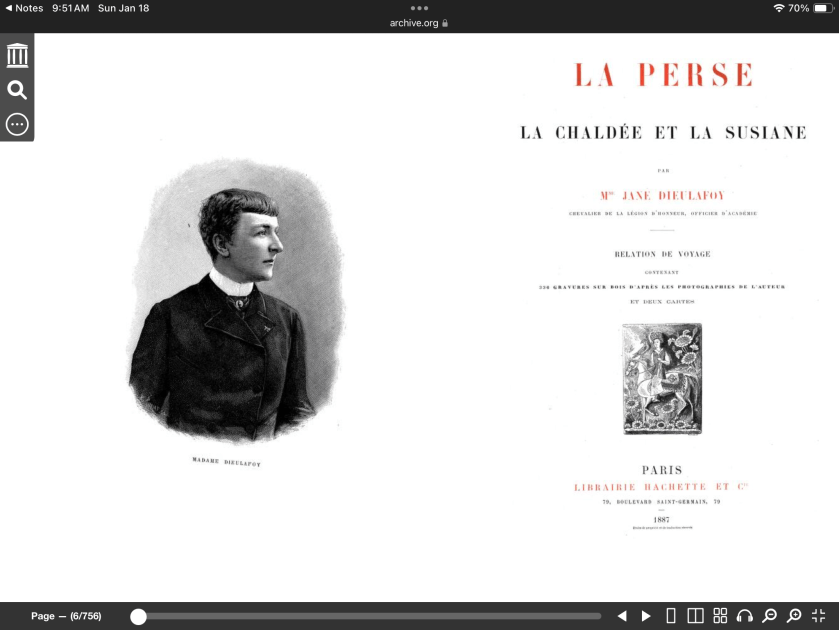
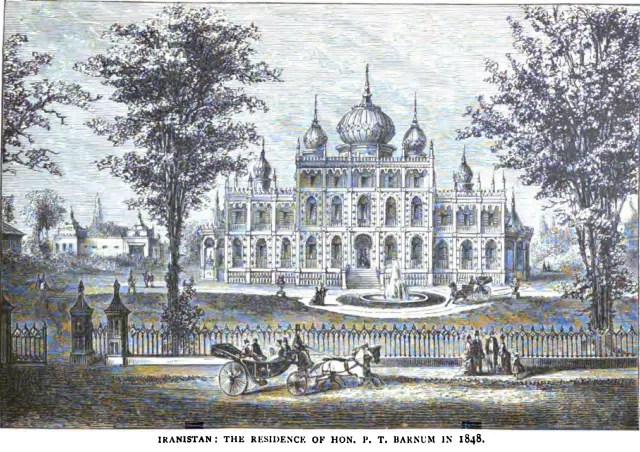
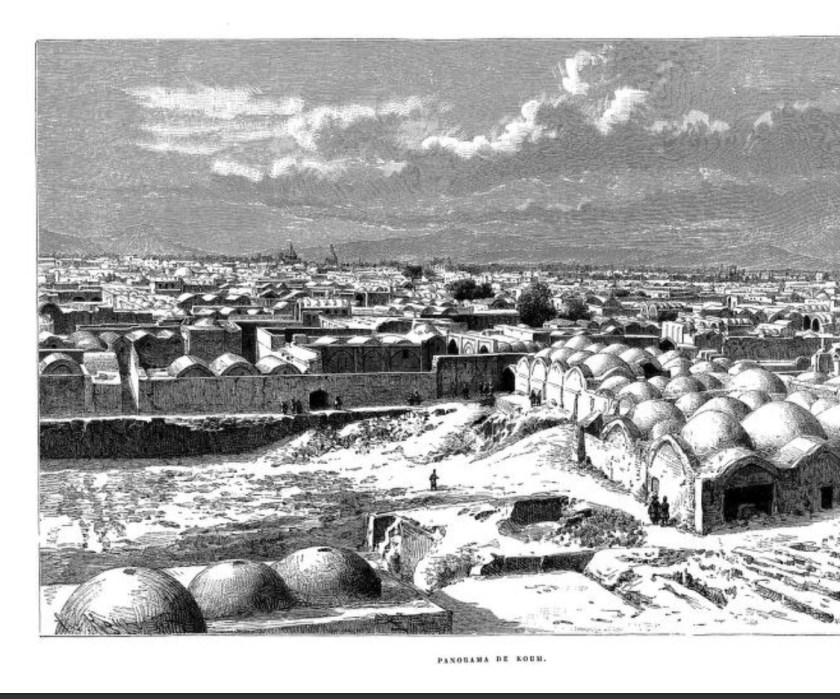
Much is written about ancient Persian architecture in this work from 1887 by “Madame” . I can’t help but wonder, similar to how the meaning of Ice House changed in Texas, did the meaning of Madame also change? ‘Cause Dude does NOT look like a lady!
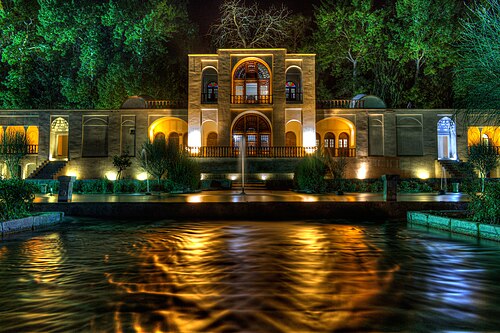
Three main types of Yakhchals exist: vaulted, underground, and roofless, each adapted to different climatic conditions.
Passive cooling so common and effortless that even poor people could afford ice: (PDF) Yakhchal; Climate Responsive Persian Traditional Architecture
Mehdipour, Armin. Yakhchal; Climate Responsive Persian Traditional Architecture.
Yakhchāl – Wikipedia The Mughal emperors also recorded to adopt the technology of Yakchal. Humayun (r. 1530–1540, 1555–1556) expanded ice imports from Kashmir to Delhi and Agra, insulating blocks with straw and saltpetre to slow melting, a Persian technique. Early Baraf Khana (underground pits) stored ice, adapted from ‘yakhchāl’ for preservation.[4] Akbar (r. 1556–1605) organized ice transport from Kashmir to Delhi, Agra, and Lahore via a 14-stage relay system, delivering ice in two days using saltpetre. The ab-dar khana at Fatehpur Sikri used sandstone cisterns and qanats, resembling yakhchāl, to cool water and make sherbets and early desserts.[5] During the era of Jahangir (r. 1605–1627), Tuzuk-i-Jahangiri describes baraf khana as insulated cellars storing ice for palace cooling, food preservation, and kulfi, a frozen milk dessert with pistachios and saffron. Ice was harvested in Lahore from shallow ice pans and stored in straw-lined pits.Shah Jahan (r. 1628–1658).[6] Shah Jahan built a baraf khana in Sirmaur to supply Agra and Delhi’s Red Fort. These underground structures with thick walls stored ice for drinks, food, and kulfi, symbolizing imperial luxury.[7] Although many have deteriorated over the years due to widespread commercial refrigeration technology, some interest in them has been revived as a source of inspiration in low-energy housing design and sustainable architecture.[8] And some, like a yakhchāl in Kerman (over a mile above sea level), have been well-preserved. These still have their cone-shaped, eighteen meter high building, massive insulation, and continuous cooling waters that spiral down its side and keep the ice frozen throughout the summer.
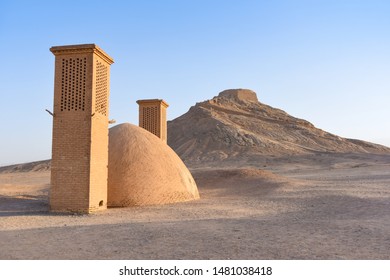
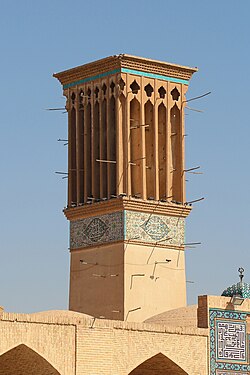
A ‘wind catcher’ tower
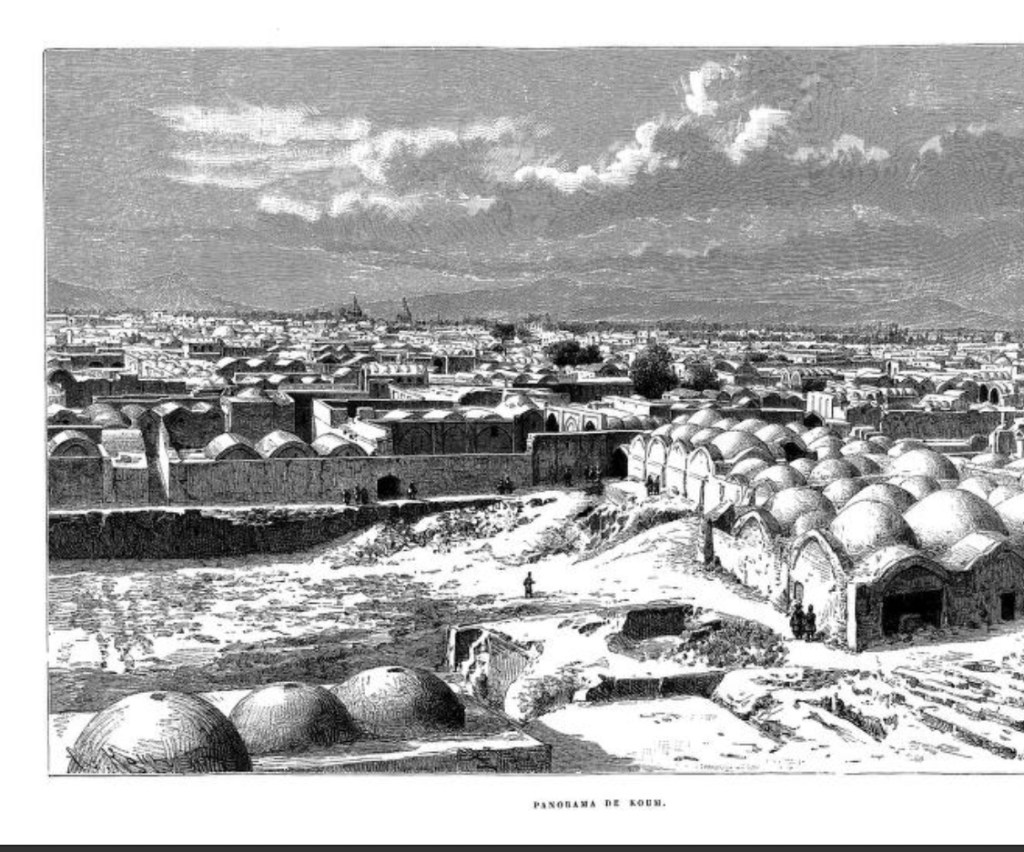
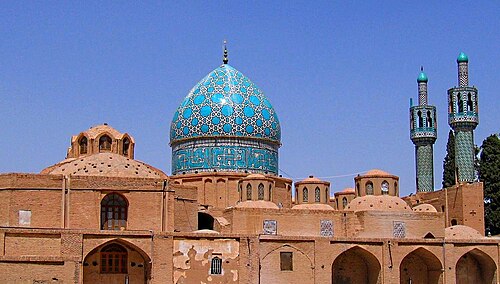
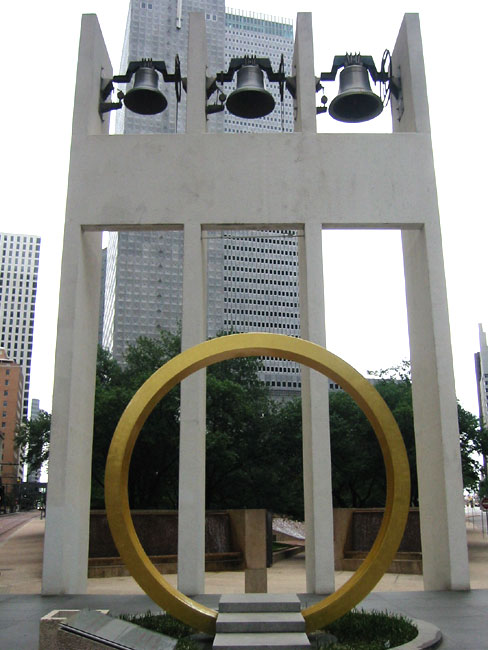
What we see as far as typical architectural features of the Yakhchal are domes, sometimes occuring with minerets, or spires, and sometimes with bells associated as well. Underground gardens are also a feature in the more elaborate designs.
Interestingly, Dallas has such an architectural gem, though I’ve not found any mention of the yakhchal or ice house technology mentioned in the literature.
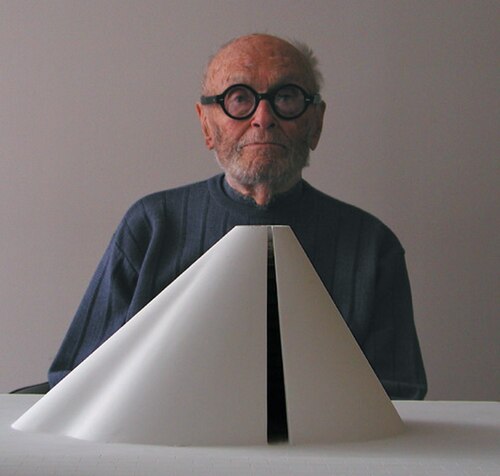
The celebrated architect of the famous underground Dallas square.
From Wiki: Thanks-Giving Square – Wikipedia
The Square is set fifteen feet below ground level with a four-foot wall blocking the sight of automobiles to create a serene, green island. Water plays a prominent role in the landscape, with active fountains masking city noise.
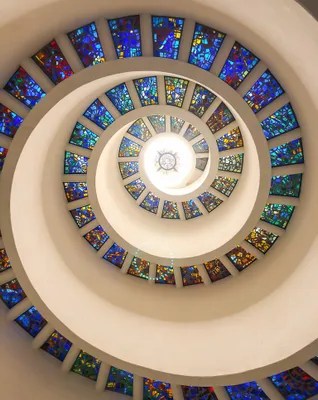
Sitting amid the steel and glass skyscrapers of the Dallas business district, Thanks-Giving Chapel’s white spiral building is a beautiful—and unusual—sight. A curvilinear chapel resembling the 9th century Al-Malwia (snail shell) freestanding minaret of the Great Mosque of Samarra, Iraq, built by the Abbasid caliph Al-Mutawakkil, is not a building a visitor to Dallas expects to see. Another pleasant surprise is the Qur’anic verse “Grateful praise is due to God alone, the Lord and Nourisher of the worlds” engraved on a granite column at the entrance to Thanks-Giving Square. A portion of Psalms 100 appears on the Wall of Praise, also at the square’s entrance.
In 1971, the Dallas-based nonsectarian Thanks-Giving Foundation hired renowned American architect Philip Johnson to design a chapel that would celebrate the value and spirit of the institution of thanksgiving. Completed in 1976, Johnson’s white marble aggregate building dominates the three-acre triangular site that is dedicated to spiritual reflection. A sloping bridge built over a cascading waterfall connects the courtyard to the chapel. From his study of art history, Johnson was inspired by the spiral form of the Samarra minaret—which is similarly connected to the Great Mosque by a bridge.
“The spiral design perfectly conveys the foundation’s dual mission of offering a place for all people to give thanks to our creator and celebrating the value and spirit of thanksgiving for both sacred and secular cultures throughout the world,” Tatiana Androsov, Thanks-Giving Square’s president and executive director, told the Washington Report on Middle East Affairs.
Inside the chapel, a visitor’s attention is immediately drawn to the Glory Window (above), a multi-colored stained glass ceiling created by Gabriel Loire. This striking creation was memorialized in a United Nations stamp in 2000, the International Year of Thanksgiving. In one area of the room is a large white Carrara marble cube mounted on a sandstone circle made of local Austin stone. The cube is symbolic of the unification of mankind; the circle symbolizes eternity.
During the week, the chapel is a convenient and tranquil location in an otherwise busy city for Muslims working in the downtown business district to pray. “Although there are 22 mosques in the Dallas area, many Muslims working in this part of town like to come here, especially for Friday prayers,” Androsov explained. Visitors from Europe, the Middle East, Asia and Africa come to the chapel as part of the U.S. State Department’s International Visitor Leadership Program, she added. The Thanks-Giving Foundation is a Department of Public Information NGO with the United Nations. For more information, visit www.thanksgiving.org.
Thanks for joining me on this little journey through time and space!
domes and spires everywhere back then!
One last deep speculation–could this ancient architectural tech also relate to the so-called Mound Builder indigenous tribes all over the Americas?
Just some happy snaps with minimal commentary this post, because it’s been too long. With more coming very shortly, as soon as my new keyboard arrives, because I loathe the hunt and peck method of the digital keyboard.
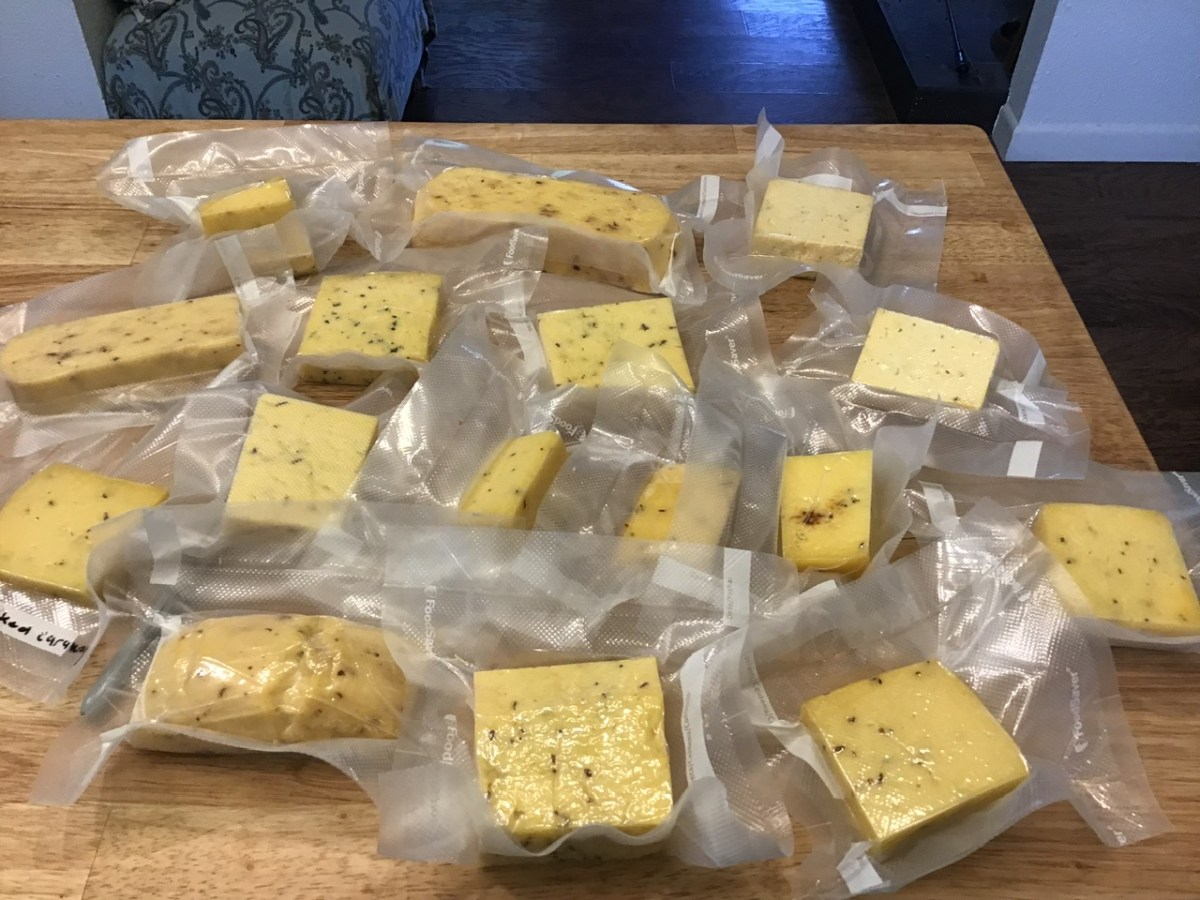
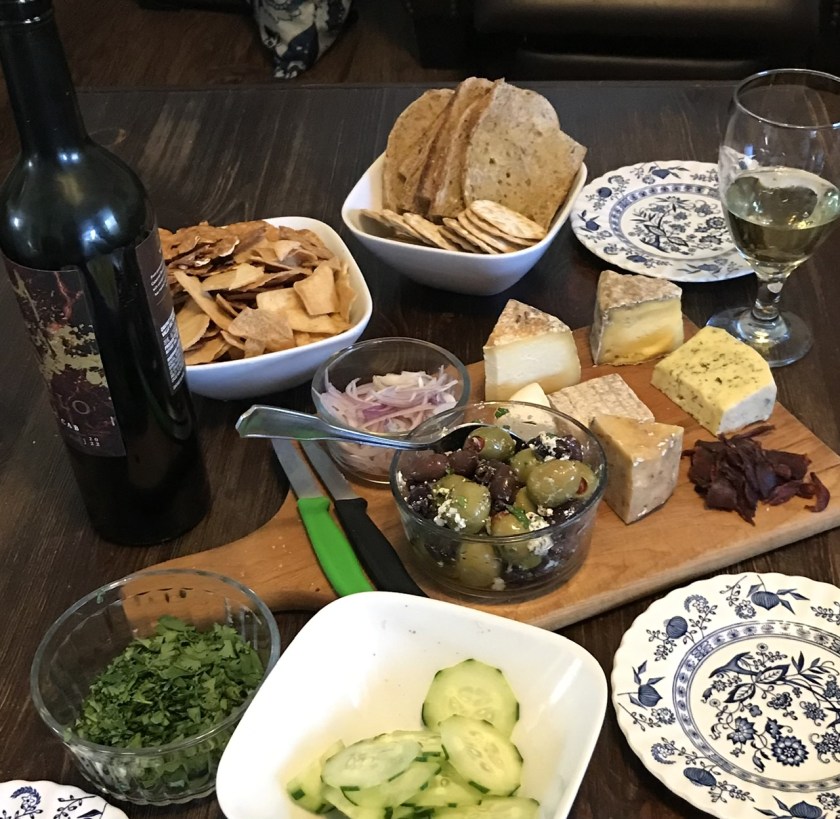
Some aged cheeses and winter herbs: smoked cheese on lees, kenshobert, pepper havarti, dill havarti and cheddar, with some fresh sage, cilantro and rosemary.
My biggest cheese this season from 9 gallons, caraway cheddar aged in a poke-tinted tallow coating. Unfortunately, it’s not my favorite. Fortunately, others like it fine so I happily gave the whole thing away.
My personal favorite, my signature Kenshobert, a local take on Camembert.
A large dill havarti and variety of experiments, most quite good!
Sharing a charcuterie board of cheeses and cured lamb.
A winter harvest of romaine, onions, herbs, radishes and even an orange from our little shrub and some cherry tomatoes because it’s been so unseasonably (and unnaturally) warm. Plus a pot of today’s milk becoming clabber for tomorrow’s cheese.
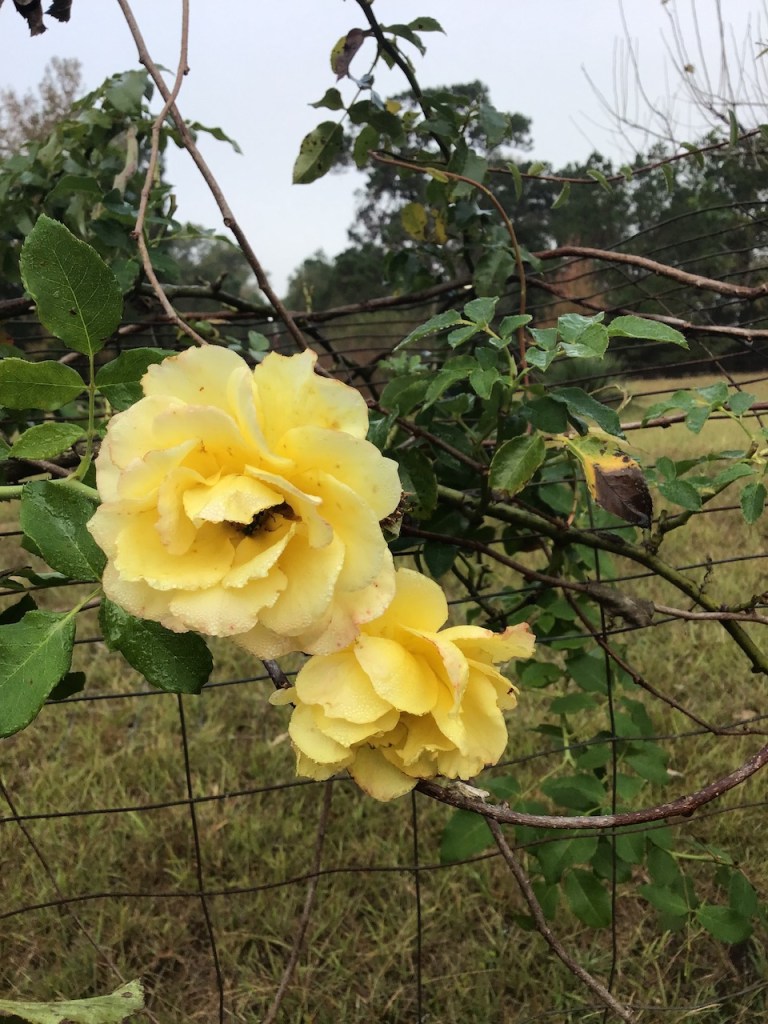
A Christmas bumblebee!
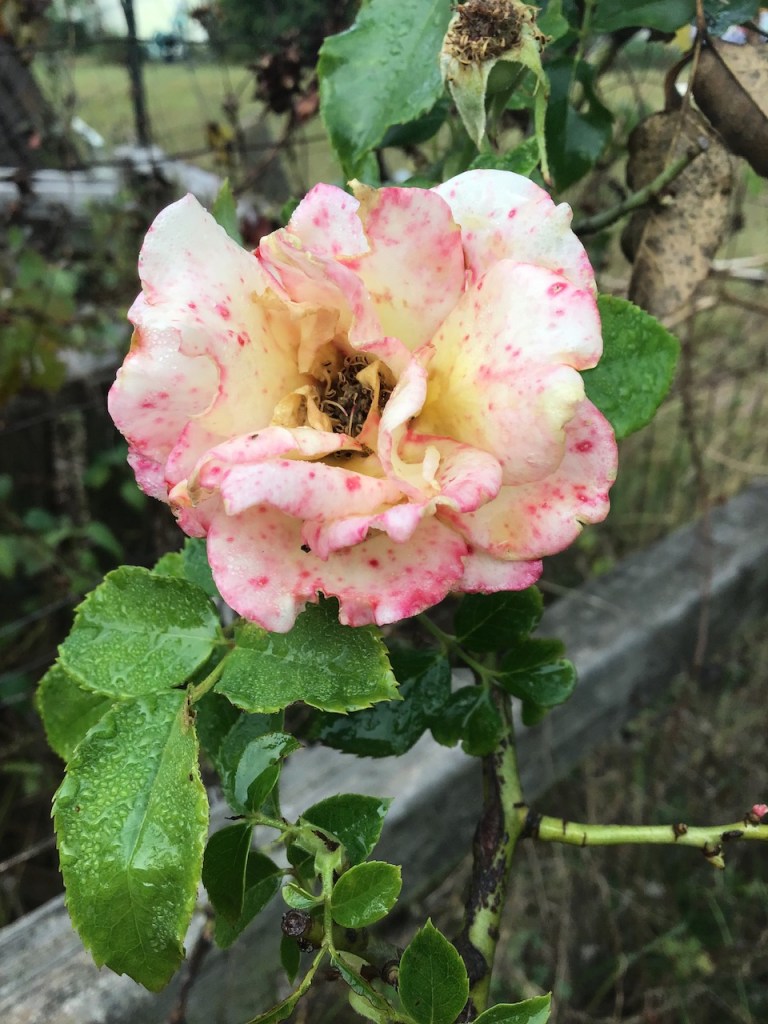
Unusual winter roses turning strange colors.
A few more happy snaps . . .
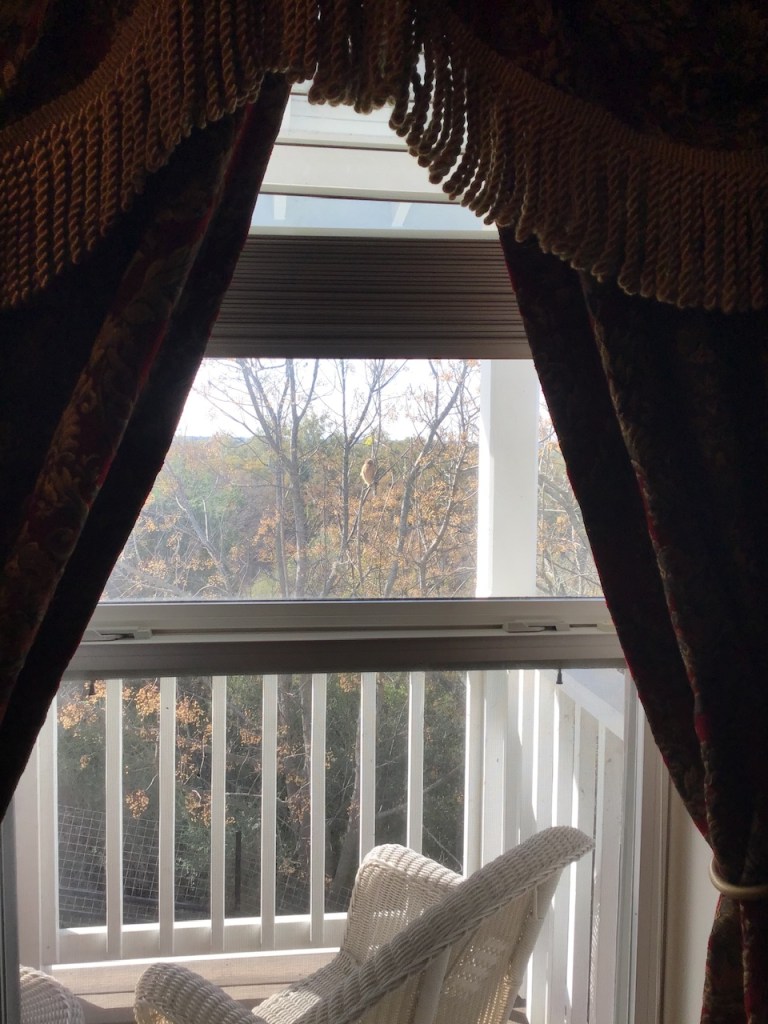
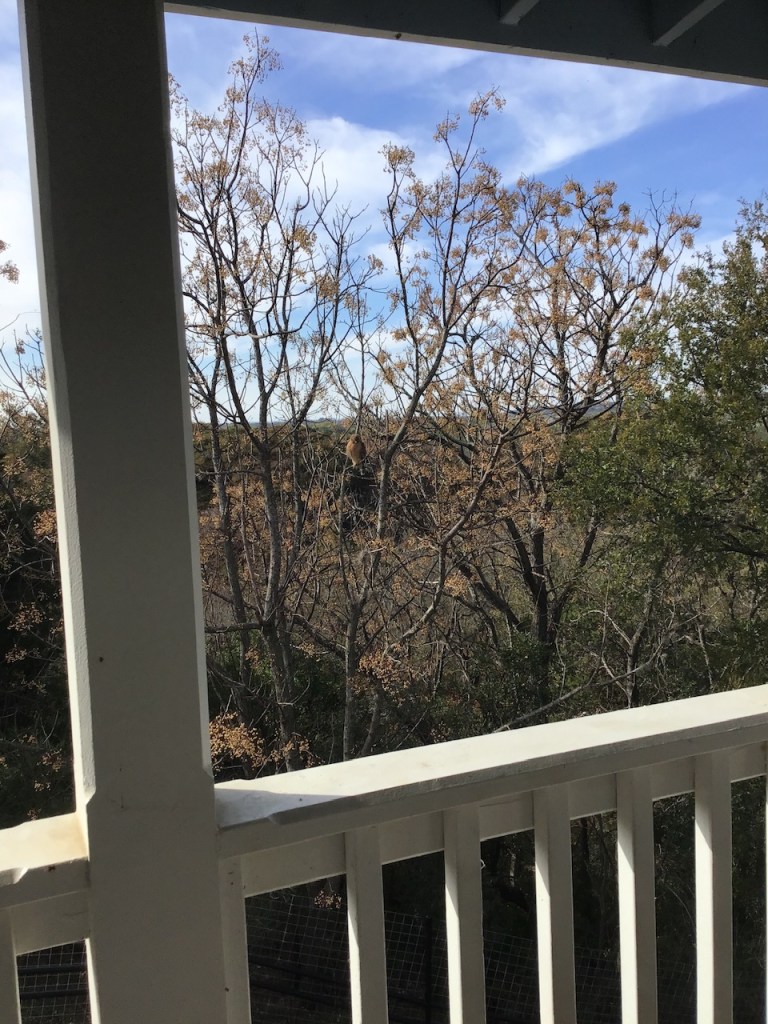
A darling bird of prey I watched right off our balcony from our recent quick roadtrip to Gruene in the Hill Country.
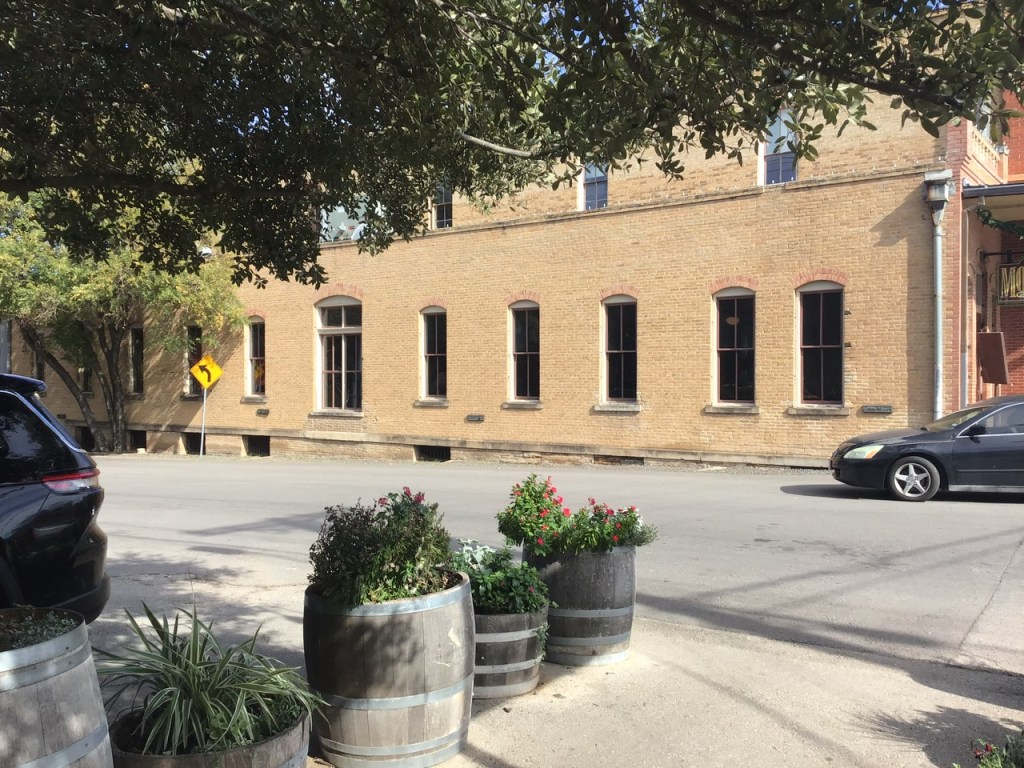
Also in Gruene, a so-called ‘mud-flooded’ building, more coming soon on that conspiracy theory in the new year.
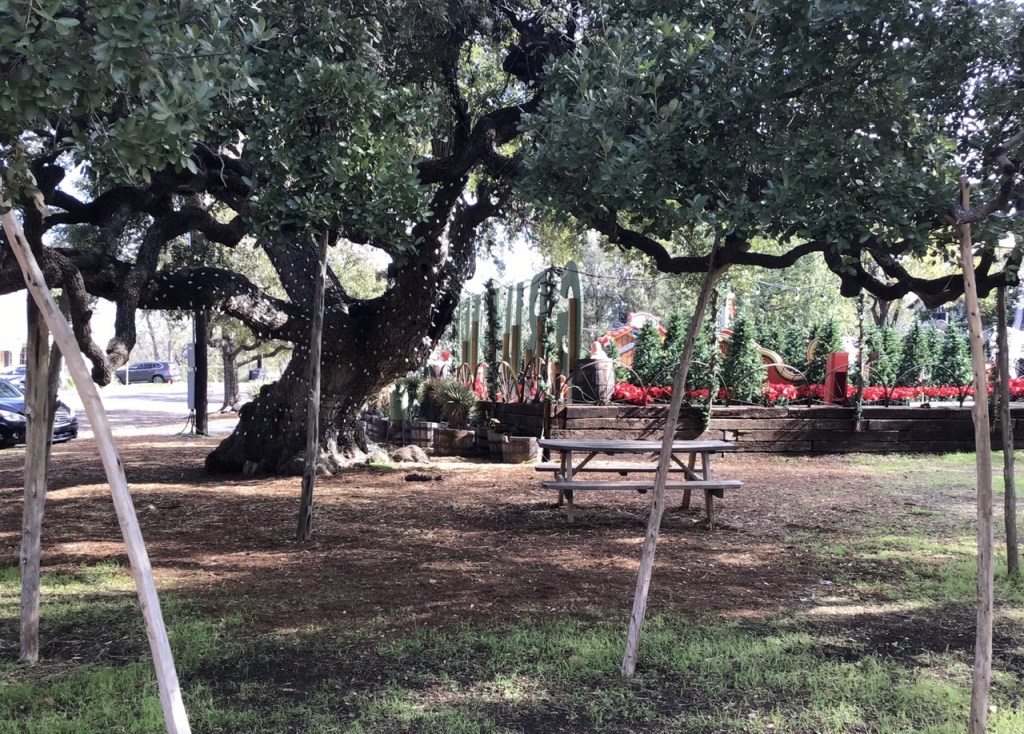
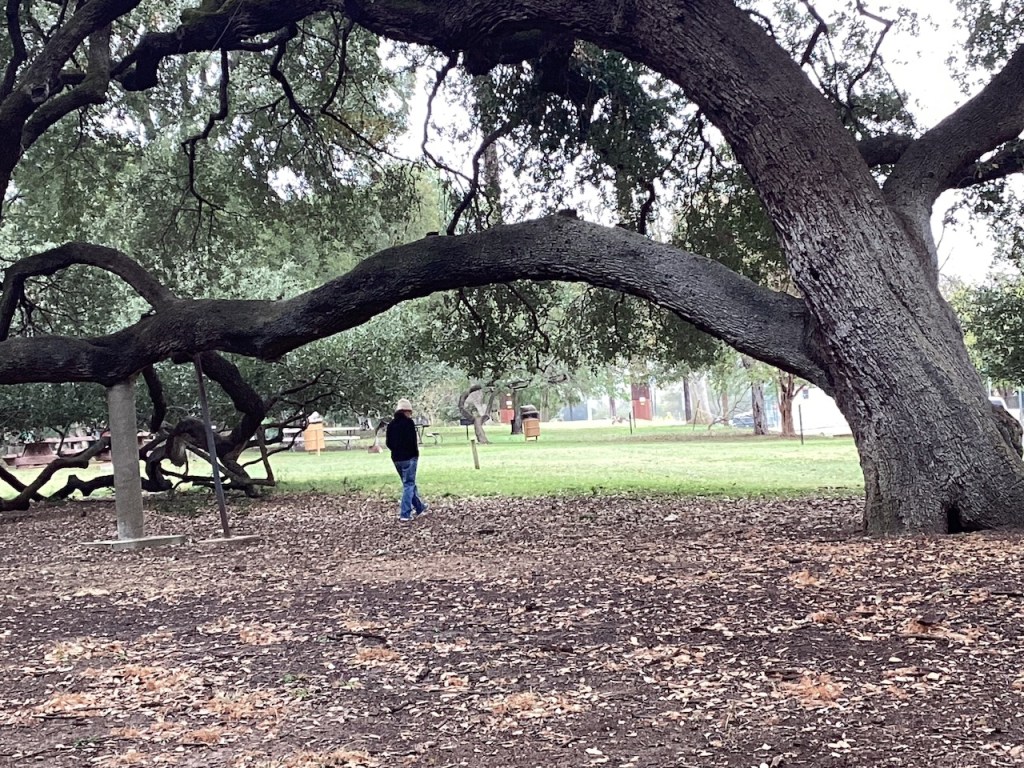
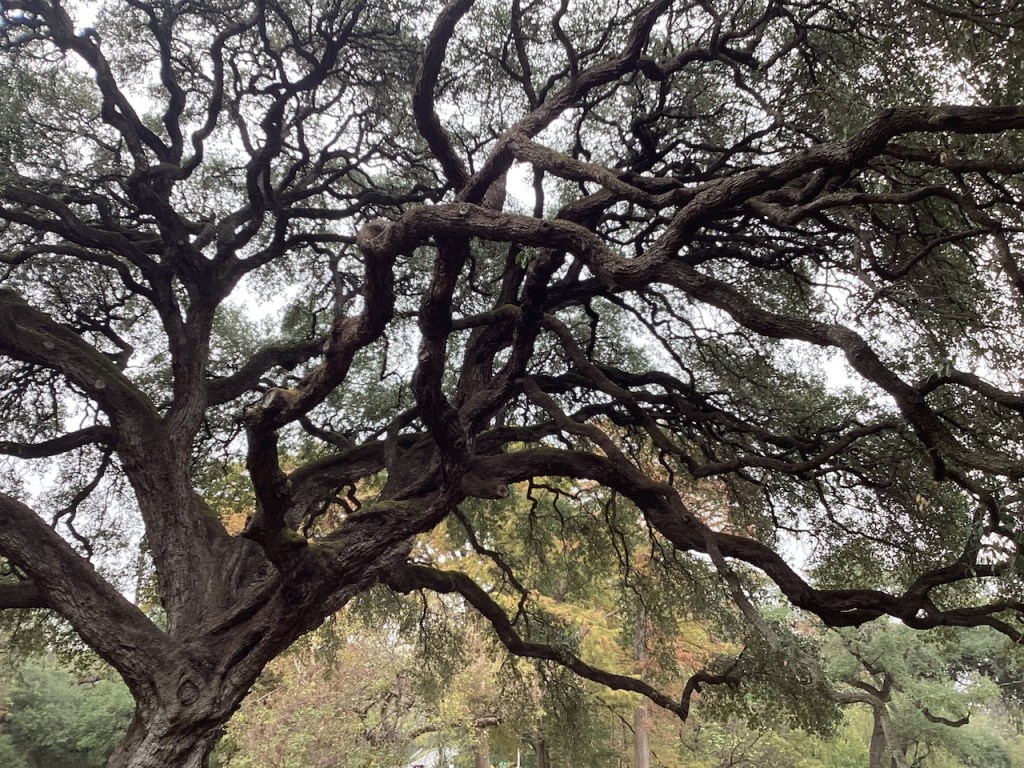
They have preserved some gorgeous trees there from the ever-encroaching urban sprawl, and more power to ’em!