
Creating the Global Citizen

“Alvin Toffler predicted ‘demassification’: a process ‘in which a relatively homogeneous social collectivity (or one conceptualized as such) is broken down into (or reconceptualized in terms of) smaller, more diverse elements’. This is the prize for big social networks: compartmentalize people into echo chambers and bombard them with confusing distractions and dead ends.”

Confuse the words, creating a smokescreen of misunderstanding: Like: community=network=market
Obviously these words used to mean very different things in the actual world, before the virtual environment muddied the waters. The market wants all kinds of personal details about you and so they pretend they are in a community with you. Your network of friends and acquaintances and business relations may indeed form a community at some basic level, but to expand this concept out in an attempt to create from this a sense of ‘global community’ is preposterous. It is a Benetton ad, not a community.

Yet it has infiltrated and infected the actual world as we’ve all experienced. The great Convid is example enough. But, there’s more. 

Even small local shops in rural Texas feel entitled to ask shoppers for their phone number, to use video surveillance indiscriminately, to appeal to shoppers for ‘community’ donations and to shove their mailing list and ‘loyalty card’ at you. I seriously doubt they will draw the line at the next big thing the big box markets teach them.

“Please take a sensor bracelet at the entrance, this will ensure you a positive shopping experience.”

That is no community for me!

Deb Filman does a fine job of ranting about this, and an even better job breaking it down for folks, especially parents, because it really is the kids they are after. They always start with the easiest targets.

Are We Educating Children or Training Bots? That is the question!

More concept confabulation: Training=programming=learning
Deb has some choice words to share about this, so I’ll be brief. These words and concepts are being deliberately confused in order to create cognitive dissonance in order to get us to comply. Social engineering has become an acceptable system for indoctrination of populations and is being normalized and implemented by the United Nations and cooperating global partners through our institutions, and directly into our LOCAL communities, all of them.

The U.N.: Creating child social activists all over the country on our dollar.

More muddying of words and concepts happens all the time. This is to be expected. This is not a new tactic at all. If they still teach Animal Farm in school, let’s hope the correct message is still being taken from it. The rules written on the barnyard wall keep shifting. (Therefore, it must be my job to keep shifting with the rules, right?)

More word meshing:
Individuals=collectives
Regulate=Control=Master=Suppress

“It is the responsibility of civil society to experiment with models of effective global citizenship.”

To experiment with models! It is our responsibility, as global citizens, to experiment with our populations through education, to create good global citizens.

That is, for one, to train children in ‘Emotional Regulation’ in order to make good ‘Global Citizens’. Soldiers are trained in emotional regulation. As much as you might get annoyed at the Hobby Lobby with the number of emotionally unregulated children, this is not something that we want as institutional directives aimed at children. Why? Because as the establishment experts know very well, it leads to neuroticism. One kind of behavior required at school, another one at home, another one in public, another one at church, another one here and there and everywhere, and what the kids end up with is not an education, but the essential life skill required of a psychotic society: Mask Juggling.

In other words, become better adjusted at nebulous, shifting, always uncertain unreality. Who does that serve?

From Wiki, the ‘experts’, right?!

“Psychodynamic therapy uses the idea of a Faustian bargain to explain defence mechanisms, usually rooted in childhood, that sacrifice elements of the self in favor of some form of psychological survival. For the neurotic, abandoning one’s genuine feeling self in favour of a false self more amenable to caretakers may offer a viable form of life, but at the expense of one’s true emotions and affects. For the psychotic, a Faustian bargain with an omnipotent self can offer the imaginary refuge of a psychic retreat at the price of living in unreality.”

I can’t help but wonder, as illogical as all this obviously is, could it actually be the setup for the next great fall?

“We had created a global civilization, and for what? So the whole thing could come crashing down into the ocean, bringing unimaginable misery upon the earth? What purpose could such suffering possibly serve? The answer—in truth, the loss, death, despair, desolation, sickness, ill-treatment, indignity and, as Nietzsche wrote, ‘profound self-contempt, the torture of self-mistrust and the wretchedness of the vanquished’ rarely change ordinary men and women. Extraordinary people change through the good thing, and through the self-mastery that yokes them to it; the joyous source of the world. But such types are few and far between. For the masses, there is no hope because all they have is hope, and habit, and expectation, and desire, and possession, and progress, and business, and money, and all the other illusions of the egoic system.
That man had to be disillusioned was not, quite obviously, a message which could find very much popular support in a world of illusions, but then no message worth hearing ever does. The individual knows that the evil and pain and suffering she has gone through has not been for naught. Being sensitive and kind—those rarest of qualities in the civilized system—the individual finds no pleasure in the idea that everyone has to go through hell to reach heaven.”
 33 Myths of the System by Darren Allen

Leap of Faith

Empire is blind. It is deaf. It is dumb.

Some say It’s on Its last legs. The ‘coming collapse’ crowd is growing, that’s for sure. I’m pretty sure we can confirm we’re no longer fringe.

“There are mighty forces arrayed against us. They threaten our liberty, our livelihoods, our families, and even, possibly, our sanity. We may find ourselves, if we are awake at all, resentful or even angry at the situation we find ourselves in. We may want to ‘resist them’. But how? Our governments, except possibly at a local level, seem to largely be against us. The corporations, as they always have been, are against us. The media…ditto. The institutions of civil society? Largely captured. Our faith communities? Well, maybe some hope there, but all too often, the same deal. So, what are we to do?”

Deep Resistance: Philosophical Practices of Sanity (Part 1) | winter oak

I don’t believe that, exactly. Our beloved Institutions have always been in service to Empire and I believe Empire is now in the process of refining itself, shedding its skin in order to reinvent itself. Empire is like the Ouroborus, eternal and regenerative.

These opinions may look opposing at first glance, but in fact they are complimentary.

I believe Empire is the rolling stone on which the Individual’s sword is sharpened. We will never be without It, we have never been without It.

That does not mean resistance to Empire is futile. But it is painful. From happy slave to disgruntled dissident is a long and lonely journey. It has to be.

Empire’s tactics evolve, forcing the Individuals’ along with It. Not in a David vs Goliath manner, but more like in a perpetuating Gordian Knot. We need each other too much, we are not who we are, one without the other.

For as long as Empire has existed, the Individual has fought to escape it.

He has fought so hard against It, that he has become It. The fight, or dance, however you choose to feel it, has become excruciatingly intimate over time.

At some moments in the cycle, perhaps all it takes are whips and chains to keep the system of Empire churning. In current times It is far more sophisticated. It wants willing and happy slaves, that’s what helps the Master slaves sleep better at night. Mental slavery, debt slavery, touchless torture.

We each must choose. The Individual must have free will.

It’s not that one is alone on the path away from Empire. There are a great many unhappy slaves. You will find them everywhere along your course, which has existed for as long as Empire.

“The classic example of ideological motivation is the ‘work ethic’; the idea, which has driven the workers of the West for the past few centuries, that we are morally obliged to work for the system for our entire lives so that, perhaps, one day, we will no longer have to work. A subtler modern example of ideological discipline might be ‘team spirit’ — the means by which loss of purpose, dignity, joy and freedom at work is compensated with group-bonding. “I didn’t agree with the purpose of the war; I was just looking out for my buddies—applies equally to the army platoon, the office department and the school class.” 33 Myths of the System by Darren Allen

We learn in the Empire’s schooling that the opposite of pleasure is pain. Furthermore, they teach us, that as a species we inherently seek to experience pleasure and to avoid pain.

And yet, sado-masochism is visible everywhere in our cultures. There are those who actively seek pain, and a great many who experience pain, and still go back to do it again, and again, willingly. Mothers and soldiers come to mind. Giving birth is rarely described as pleasurable. Soldiers rarely relish in their battle fatigue. Are we to believe they are all masochistic?

What’s missing here? Perhaps the opposite of pleasure is not pain exactly, but a specific kind of pain, the kind inherent in seeking virtue. Why do we not avoid this kind of pain as well, as a general rule?

The Individual’s path is painful because virtue is the opposite of pleasure, as Empire is opposite of the Individual.

That may sound like a notion of the Stoics, yet I’m definitely Dionysian by nature. It is not for the backache or the sweat or the frustration that I garden. It is for the fruits of my labor. It is for the care I’m able to show to the soul and soil and the hope that my efforts grow beyond my finite existence and wisdom. It is the pain of true ‘virtue seeking’.

I want them all, all my fruits, not out of selfishness, but to distribute at my preference and at my leisure and not according to the dictates or conveniences of Empire.

And yet, Empire is not my enemy. We may fight, or dance, but I do not wish Its collapse. Specifically, I wish It to continue to increase the virtue of the Individual. Even though I know that requires significant pain.

I have been amazed by the incredible virtue of some of those I’ve found along my Individual course.

The following comes from the latest post of one of these Virtuosos, Gavin Mounsey. I like Gavin not only for his beautiful photos and keen mind and wholesome work, there are many others who fit that bill. What I find most unique about him is, he doesn’t bypass the dirty work. That is rare in my experience. He stays focused on the good, on the light, on the solutions, but not at the expense of the hard truth. It’s a tough balance I know.

24 Reasons You Should Start a Garden in 2024

The magic of the bumblebee, amazing!

“Taking steps to embrace food sovereignty and a path that consciously nurtures symbiotic relationships are ways of living that are synonymous with a more happy, passionate and creative life. As our basic survival needs become fulfilled through our own “hands-on work” and skills, it frees up a lot more time to pursue the things we are truly passionate about in life. Embracing that self-sufficient lifestyle is so much more fulfilling than working ‘for the man” getting a pay check of digital fiat currency, trading it with 5 different middle men to get our food, water, energy and fulfill our transportation needs. It really does improve not only the quality of life, but the perception of what is meaningful in one’s life. It effects our very psychological foundations as we rediscover the simple joys in life. It helps us move away from the hyper-distracted, over-stimulated, digital chemical culture that has built up around us and allows us to let go of greed and materialism by truly coming to know the beauty of planting a seed in the soil, nurturing it to grow, and reaping what we sow.”

“Now is the time to reaffirm our alliances with the living Earth, to nurture new symbiotic relationships with the soil, people, plants and fungi in our local communities. Human empires rise and fall, and history teaches us that when they fall, it is those that know how to grow/forage for their own food, medicine and preserve it, that survived.”

“We can create oasises of health, resilience, and abundance in each of our communities… we can become the solution, break from dependence on centralized systems and help others to do the same. It begins with the soil and the seeds and it evolves into nurturing symbiotic connections with those whom we share our communities with. Each of us can embody the medicine that the land and our communities need too survive and thrive though the tough times ahead.

“Thus, each and everyone one of us should now be focusing our efforts on honing our skills related to food/medicine cultivation, preservation and developing a reciprocal relationship with the land where we live.”

“Saving up money for a ‘rainy day’ is not a solid way to prepare for emergencies because money has no innate value. Seeds, good soil, gardening skills, increased health/immunity, preserving experience and the symbiotic relationships and friendships we forge with neighbors and the broader community we are a part of (through sharing our abundant harvests and seeds and helping others to grow regenerative gardens) are however things that have innate value.”

There’s so much inspiration in his excellent article, many great reasons to start a garden, but also much information about all the rewards gardening reaps.

Cheers to a year full of leaps of faith!

Sisyphus Today

Hubby, in a moment typical of his wry wit, said to me the other day:

“Your persistence could be confused with masochism.”

“HA! Wouldn’t that make a good meme” I replied.

But the more I got to thinking about it, the more I remembered the story of Sisyphus.

For those unfamiliar with this character in Greek myth, here’s a few select quotes from Wikipedia:

“As a punishment for his crimes Hades made Sisyphus roll a huge boulder endlessly up a steep hill in Tartarus.[8][18][19] The maddening nature of the punishment was reserved for Sisyphus due to his hubristic belief that his cleverness surpassed that of Zeus himself. Hades accordingly displayed his own cleverness by enchanting the boulder into rolling away from Sisyphus before he reached the top which ended up consigning Sisyphus to an eternity of useless efforts and unending frustration. Thus, it came to pass that pointless or interminable activities are sometimes described as “Sisyphean”. Sisyphus was a common subject for ancient writers and was depicted by the painter Polygnotus on the walls of the Lesche at Delphi.[20]”

“In experiments that test how workers respond when the meaning of their task is diminished, the test condition is referred to as the Sisyphusian condition. The two main conclusions of the experiment are that people work harder when their work seems more meaningful, and that people underestimate the relationship between meaning and motivation.[25]”

My introduction to the myth came through Albert Camus, one of my favorite authors while at university. Again, from Wiki:

“Influenced by philosophers such as Søren Kierkegaard, Arthur Schopenhauer, and Friedrich Nietzsche, Camus introduces his philosophy of the absurd. The absurd lies in the juxtaposition between the fundamental human need to attribute meaning to life and the “unreasonable silence” of the universe in response.[1] Camus claims that the realization of the absurd does not justify suicide, and instead requires “revolt.” He then outlines several approaches to the absurd life. In the final chapter, Camus compares the absurdity of man’s life with the situation of Sisyphus, a figure of Greek mythologywho was condemned to repeat forever the same meaningless task of pushing a boulder up a mountain, only to see it roll down again.

The essay concludes, “The struggle itself … is enough to fill a man’s heart. One must imagine Sisyphus happy”.

What absurdity we have witnessed these last few years! How many of us have become Sisyphus in so many ways—whether trying to open the eyes of our friends and loved ones and wider community, or trying to navigate the New Normal, or make sense of the media and political shit show?

Some advice from Camus? Maybe, maybe not. He wasn’t too big on Hopium.

“There is no fate that cannot be surmounted by scorn.”

And how about this clever little cartoon as a modern-day Sisyphus myth?

Still This Love Crap

Have you ever experienced unrequited love? Ever love someone who was so out of your league they didn’t know you existed? Ever been horribly, unfairly, unceremoniously jilted by a lover? Ever love someone for years who treated you like shit most of the time? Ever love someone who turned out to be completely different than the one you thought you fell in love with?

Ever tried to muster up feelings of love for someone or something you did not, could not, love?

And yet still, despite its ephemeral nature—from its meaning, to its translation, to how it is individually experienced—some of our greatest thinkers, philosophers, social critics, poets, not to mention a good chunk of pop culture, still repeats “Love is the answer.”

We should love everyone and especially nature. That’s what’s wrong with the world, they insist, not enough love. And every time I hear this, I roll my eyes, even when it comes from someone I love.

https://www.bbc.co.uk/sounds/play/b08njtjg

Most recently I heard it in an interview coming from Wendell Berry (link). How someone so inspiring, who has led such a charmed and wholesome and respectable life, who now at an advanced age seems so wise, could repeat such nonsense confirms for me only one thing: “We don’t see things for what they are, we see them for what we are.”

Love is the answer to the West’s problems, they say, because you take care of what you love. And the younger thinker and social critic Paul Kingsnorth agrees with him.

How lovely.

Now here’s a homework assignment I’d love to give to these fools. Kingsnorth likes to study tribal cultures, which I think is really cool. He likes them because they have a solid home in nature, unlike Westerners. And I agree. So, I think he should ask all those tribal folks their opinions about this ‘love’ solution so many Western thinkers keep harping on about.

My bet is, it doesn’t translate. At all. I bet he’d have to write an entire essay for them about what he means by love in the first place, let alone how he expects that will solve anything.

How do you make someone love you? Or care about you? I have a difficult time imagining a more monumental task. And yet, somehow those who care about nature are tasked with getting those very great many, like the Technocrats and their vast entourages, to not only love it, but to respect it, to care for it, to nurture it even. Seriously?

What a debilitating delusion they are spewing. And not just once or twice out of an understandable desperation. But constantly, for decades now.

Yet to call it out for the obvious shallow fantasy that it is, I become the bitch.

Well then, so be it. Let me play that role for a minute or two right now.

Imagine Mother Nature is your very own mother. Maybe you love your mother, let’s give it the benefit of the doubt. You love her, but your sisters love her more. And your mother and your sisters are screaming at you—“You don’t love me!” “You don’t care about me!” “You are exploiting me and you must stop!”

How will you respond to their shrieks and demands of love and care? Deny your lack of love, perhaps? Maybe yell back that they are all wrong about you? Maybe ask what they mean by that?

You might be so sure of your love that you ask what you can do to prove it?

Maybe Mom replies she wants you to write her a poem professing your loving feelings. So you do. You go even further, and you write 10 poems and throw in a tediously long essay to boot. And you’re very proud of your efforts and you feel you’ve really captured the intense love you have for her.

And she says she likes them, even the tediously long essay. In fact, everyone who loves her also agrees how perfectly you’ve captured those feelings of love through your words. Astonishing.

But, after all, those are just words, and you said to love her is to care for her, so she wants to see some action.

So with the same zeal you wrote the ten poems and tediously long essay you tackle the part where your loving words become caring actions.

You chop wood and carry water for her. You refrain from any negativity in her presence, because she doesn’t like it. You insist that everyone in her company, through shame or coercion or even force, abide by her rules and preferences.

At long last, she is satisfied with your efforts. You can feel the power of her appreciation filling your heart and coursing through your veins.

She tells you, “Child, you are a true master of loving care!”

“Except, you see, there’s so many children over there who don’t love me. And their lack of love for me is upstaging your love. Their lack of love is demonstrably more powerful than your true love. What can you do about this?”

And you reply, “Great Mother, don’t you worry, I can make them love you like I do!”

Really? Can you? What makes you so sure about that?

You read them your poems, and they smirk. Then they read your tediously long essay and shrug. You show them your admirable work in fetching wood and carrying water for your Great Mother, and they respond by clear cutting your forest and damming your river.

Then they tell you their favorite joke, laughing all along.

The joke goes like this: There were these three dudes on a yacht. One was an American, another was Russian, and the third one was Mexican. They were all drinking and getting boastful as drunken men like to do.

The Russian said, “In my country, we have so much vodka we can afford to throw it away!” And he takes a full bottle of vodka and throws it into the ocean.

They all laugh harder. So, the Mexican says, “In my country, we have so much tequila we can afford to throw it away!” And he takes a full bottle of tequila and throws it overboard.

And they all laugh harder still. Then the American says, “Well, in my country we have so many . . .

And he picks up the Mexican and throws him overboard.

The Russian and American look at each and howl with laughter. And the American blurts out between guffaws, “Tough love!”

To The Holy Spirit

O Thou, far off and here, whole and broken,
Who in necessity and in bounty wait,
Whose truth is light and dark, mute though spoken,
By Thy wide grace show me Thy narrow gate.

Wendell Berry

Eye-Opening Quotes: R. Hutchins

“The countries of the West are committed to universal, free, compulsory education. The United States first made this commitment and has extended it further than any other. In this country 92.5% of the children who are fourteen years old and 71.3% of those between fourteen and seventeen are in school. It will not be suggested that they are receiving the education that the democratic ideal requires. The West has not accepted the proposition that the democratic ideal demands liberal education for all. In the United States, at least, the prevailing opinion seems to be that the demands of that ideal are met by universal schooling, rather than by universal liberal education. What goes on in school is regarded as of relatively minor importance. The object appears to be to keep the child off the labor market and to detain him in comparatively sanitary surroundings until we are ready to have him go to work.

“The results of universal, free, compulsory education in America can be acceptable only on the theory that the object of the schools is something other than education, that it is, for example, to keep the young from cluttering up homes and factories during a difficult period of their lives, or that it is to bring them together for social or recreational purposes.”

“Education is supposed to have something to do with intelligence. It was because of this connection that it was always assumed that if the people were to have political power they would have to have education. They would have to have it if they were to use their power intelligently. This was the basis of the Western commitment to universal, free, compulsory education. I have suggested that the kind of education that will develop the requisite intelligence for democratic citizenship is liberal education, education through great books and the liberal arts, a kind of education that has all but disappeared from the schools, colleges, and universities of the United States.”

~The Great Conversation: The Substance of a Liberal Education
by Robert M. Hutchins, 1952

More by Hutchins . . .

“Because of experimental science we know a very large number of things about the natural world of which our predecessors were ignorant. In the great books we can observe the birth of science, applaud the development of the experimental technique, and celebrate the triumphs it has won. But we can also note the limitations of the method and mourn the errors that its misapplication has caused. We can distinguish the outlines of those great persistent problems that the method … may never solve and find the clues to their solutions offered by other methods and other disciplines.”

“Liberal education was aristocratic in the sense that it was the education of those who enjoyed leisure and political power. If it was the right education for those who had leisure and political power, then it is the right education for everybody today.”

Zuckerkandl! a comic book Hutchins published in 1968, later made into a cartoon short, narrated himself. It’s about disentanglement and living guilt-free and is said to be a parody of Freud.

Fostering Dependency

I remember well the first time I heard the expression ‘learned helplessness’. My mom used the term and I didn’t understand it. I asked her to explain, which went something like, “As if a man is actually incapable of doing the laundry.”

Some time later I heard it used again, only this time in reference to a woman who wouldn’t dream of changing a tire because she might break a freshly manicured nail.

These are benign examples of a much more serious issue. A little co-dependency amongst family and friends can be a very good thing. It reminds us we need each other, and it’s nice to be needed, as long as it’s not too needy. 🙂

But there is a much more nefarious kind of learned helplessness that is proliferating in our society and because it’s being sold by some very slick salesmen it goes on, continually championed by those who should know better. US.

This is the kind of dependency that fosters anxiety and dis-ease, because it promotes frustration, alienation, victimhood, powerlessness. Under the guise of convenience, comfort, safety, and even fun, we have allowed ourselves to become dependent on criminals, sociopaths, martyrs, tyrants dressed up as experts and beneficent leaders and stars.

Food, water, shelter, health, energy, entertainment, protection. These are all crucial aspects of human life we’ve willingly outsourced to others. Gone are the days for the vast majority who cooked from their own gardens, played and sang tunes around the fire pit, cared for their own ill, built their own homes. How many generations must we go back to know a time before politicians were household names and stock markets dealt only in livestock?

How many folks believe we have it so much better in our ultra-civilized modern world because they’ve bought the propaganda of their oppressors, those who actively promote and celebrate our dependency as progress?

There is a wellspring of peace of mind knowing that if you ever dare say “Take this job and shove it” you won’t end up homeless and hungry.

If you could do one thing in the new year to release the yoke of dependency just a bit, or a bit more, what would you do?

Happy New Year from the wee homestead, y’all,
thanks for reading!

The Folly of Forgiveness

The single most destructive virtue of Christianity is forgiveness.

In fact, it’s not a virtue at all, it’s a vice. It’s a ready-made excuse for laziness, cowardice, avoidance and self-aggrandizement.

Which is more challenging? Which is more beneficial to society?
A. Forgive those who trespass upon you.
B. Hold them accountable for their actions, or their lack of them.

The New Age movement, the modern outgrowth of our Christian heritage melded with aspects of Eastern religion/philosophy, shares this fundamental folly. You quite literally cannot read a spiritual or New Age text that does not claim something like this:

“Ultimately, make it your goal to move on to forgiveness of yourself and those involved in causing you pain in the past. Forgiveness doesn’t mean that what happened to you was acceptable. It simply means that you are no longer willing to allow a past injury to keep you from living fully and healthfully in the present.” Dr. Christiane Northrup, The Wisdom of Menopause: Creating Physical & Emotional Health During the Change

Nonsense. Forgiveness most certainly DOES mean that you’ve found the offense acceptable—you’ve given them “a pardoning” — look it up!

Forgiveness: “To pardon; to remit, as an offense or debt, to overlook an offense, and treat the offender as not guilty.” Webster’s Dictionary 1905

When a school of philosophy/religion/spirituality (Or individuals!) must change the meaning of words in order to fulfill their mission of manipulation it becomes propaganda and begs the question, “Who benefits?”

It’s not simply forgiving past injury that’s keeping anyone from living healthfully in the present, true peace of mind comes when justice is served. We witness the lack of justice and accountability all around us today, and we have centuries of brainwashing in this particular vice-cum-virtue to thank for that.

Burying the hatchet is rarely a guarantee it stays buried. Life is not a sitcom and taking the easy way out is testament to a lack of virtue, not a grounding in it. “Kiss and make up” solves little. “Turn the other cheek” is a blanket invitation to abusers.

To forgive someone who has not asked for it, nor shows remorse, nor penance, nor changed his ways is not healthy—not for the individual, not for the culture—in the long run.

It might keep you from getting cancer next year, or so the New Age self-helpers keep insisting, but you’ve only kicked the can down the road and made it worse for the perpetrators’ next victims. Good for the guru’s pocketbook and status, not so good for future generations.

The Christian myth that claims those who live in proverbial glass houses should not throw stones is a recipe for granting pardon to serial criminals while demonizing petty theft and other personal, minor infractions.

Everyone might very well be a sinner, but not all sins are created equal.

Holding others’ accountable for their actions is far more difficult than giving them a pardon. It’s exhausting to have standards of behavior and stick to them. It’s miserable to feel the loneliness that comes with not accepting abuse in one’s relationships and surroundings. It sucks to stand up for yourself against the group and especially against loved ones. But battered partners who don’t leave, Stockholm syndrome, normalized corruption, addiction, insanity and suicide are the direct result of a culture obsessed with forgiveness.

Unearned forgiveness is:

*A green light to bad behavior
*Victim-blaming for those who don’t want to, or choose not to, forgive
*Spiritual bypassing
*Ensuring history repeats
*Lowering the morality bar
*Killing the messenger
*Requiring scapegoats (represented by our most celebrated scapegoat, Jesus)
*Requiring lies, whitewashing, spinning of narratives to maintain illusions
*Forcing individuals to fit the will of the power structure rather than forcing the power structure to fit the will of the people

The personal and political spheres overlap—what we tolerate in our own house, we tolerate in the White House. What results is repeat offenders who are eternally tolerated.

The New Age movement has managed to create the worst of two worlds: The magical child thinking and materialism of the West combined with the spiritual hierarchies, self-hypnosis and toxic mysticism of the East.

Photo by Savanna Goldring on Pexels.com

Next post: What I think the New Agers have gotten right.
Whaaa . . . .?!

Nature=Master Deceiver

“There’s no lie in nature.”

I’ve heard this repeated so many times now, from so many different and I believe well-meaning voices, that I decided it’s high time to add my own voice to this nonsense.

Nature doesn’t deceive. Nature doesn’t try to fool you.

Today this is repeated by quite a few philosophers, conspiracy theorists and ‘truthers’ as a way to elevate nature above man’s conning and cunning ways and to condemn our current fantasy-based reality. I agree our so-called civilization deserves plenty of condemning. But, I do not intend to trade one set of illusions for another.

Apparently this attitude goes way back, to the likes of Walter Russell and an entire camp of German Idealists. I love nature as much, maybe even more, than these guys, that’s for sure. Yet my experience is there are no greater deceptions to be found anywhere else, the worst of man’s worm tongue included, than there are to be found in nature.

You wouldn’t dare!

There are mushrooms so similar that not only a spore print, but a microscope is needed to tell them apart. Poisonous Amanita spissa or delicious Amanita rubescens? Chlorophyllum molybdites, lepiota Americana or macrolepiota procera? Do you want a nice dinner or an evening hugging the toilet? Don’t be fooled, choose wisely!

“Destroying Angel”
the deadly Amanita virosa

Man got his idea for camouflage directly from nature, obviously. In some cases the camouflage is so stealth you could be staring directly at a living creature and not even know until it moves.

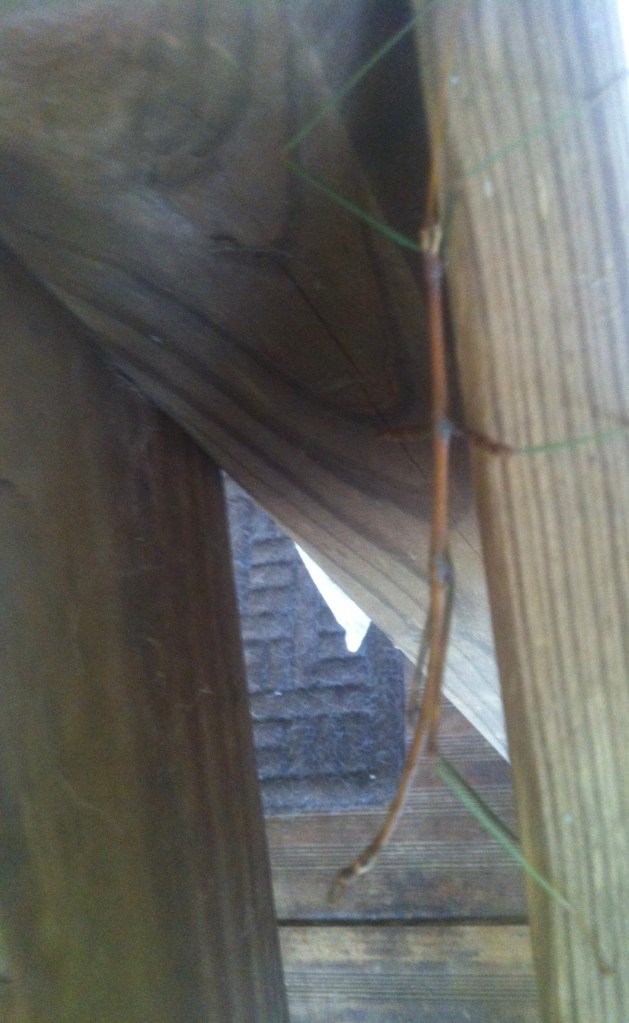
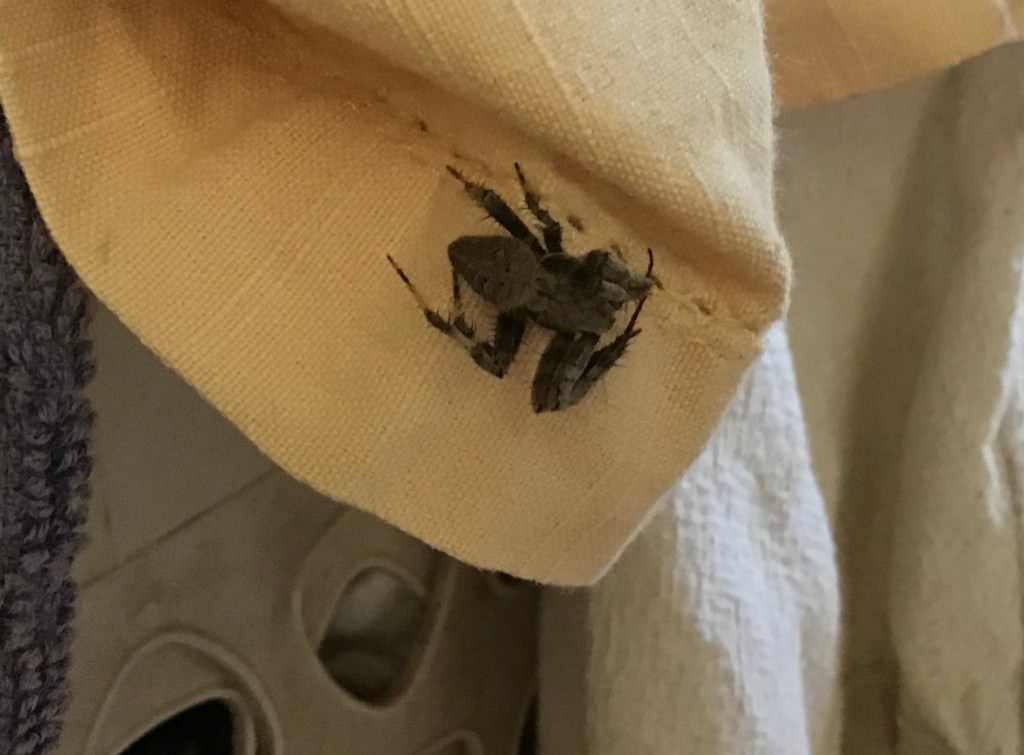
Take a walk in the woods and you’ll see sticks that look like snakes and insects that look like sticks. There are spiders that look a lot like bats and bugs that look more like birds.

There are plants like poison ivy, my greatest garden nemesis, that look completely benign, leave no feeling or trace at all in the moment, but 12-24 hours later, long after you’ve forgotten all about it, can elicit a rash so severe you’ll be begging for relief even if it takes the form of a cocktail of toxic pharmaceutical drugs.

That horror story is my arm, on too many occasions to count.

The possum plays dead so effectively he’ll fool nearly any predator.
The most beautiful flowers can kill you.

Datura inoxia

The most disgusting and unappetizing swamp insect can be delectable.

In fact, to say nature is THE Master Deceiver is even an understatement if you ask me. Nature is a raving, lying bitch at least half the time.

Living so close to nature, growing food, co-creating with the land has offered me the greatest single lesson of my life: Cute and nice are the camouflage of prey and pets.

Nature does not play nice. Nice is for ninnies.

It’s considerably more deceptive when man’s hands meddle in nature’s mix as well, quite impossible sometimes to tell where one ends and the other begins.

At the Dentist

It’s amazing to like my dentist during this COVID Plandemic-Scamdemic even more than I had before. Having despised every dentist I’ve ever had until I found her about a decade ago, this has been a most pleasant re-affirmation of my perpetual superior judgement.

She has obliged her staff and clients to the temperature gun on the 3rd eye upon arrival, but apparently that is her limit on personal infringements, bless her heart. She did take all the magazines out of the waiting room, which is disappointing, but tolerable. I did enjoy shuffling through current issues of Texas Highways on my regular visits.

But, she did not require a face-diaper for the privilege of entering her offices or sitting in her waiting room. Again, bless her heart. And you know, she has a garden. Yes indeed, she does, with vegetables even! Heavens only knows how she finds the time.

Of course, there’s the nitrous oxide that’s thoughtfully pumped into my airways when I visit her, and that’s all the more reason to sing her praises. Does it bother me that it cost $50 extra in order to be totally high while my gums are prodded and my teeth drilled? Nope, not really! But, I accept we won’t be able to afford such extravagant expenses for much longer.

They love me even more when I’m on the gas anyway, and frankly, the feeling is mutual. Anyone would prefer me on the gas, myself included.  You know, my hygienist has the same name as me and also totally loves purple—come on now—how is that not a match made in heaven?!

Anyway, I think there was once a point to this post. Seems I’ve lost the thread.

I think what it was is that, I really felt for them, this office full of ladies wearing masks, but not beholden upon others to do the same, not in the least. Nothing highlights righteousness more than leading by example, without coercion, threat, or the myriad other brands of shaming and manipulation.

I tenderly inquired to my hygienist, “Is it hard to wear that mask all day?” She said it was difficult indeed and so she chooses not to wear it in public at all.  I said it gives me a headache instantly, she nodded in agreement.

I thought, in my well-gassed stupor, isn’t that sweet? I furthermore mused that it certainly must be that the whole public mask-wearing nonsense is really about trying to get us all to empathize with those poor long-suffering working folk who are forced to wear masks all day, like my dear purple-wearing hygienist with the same name as me, bless all our dear hearts.

That’s really what it’s all about, right? The abusers and Satanists and worshippers of whateverandwhoeverthefuck—well, they’ve just chosen the left-hand path to wholesomeness and that’s really their way of caring so damn much about us all, right?  Of course, everyone should suffer as the mask-wearers suffer.

Right?