Homestead Happenings

It’s been so long since an update I don’t know where to start. Or where to end, or what to include. But I figure there have got to be a few readers out there hankering for some other news besides the shitstorm coming at us from the global mafia and the media cartels.

Mostly done, finally!

In my last update we’d started remodeling the kitchen. That was a very big DIY job, it took a very long time, and we’re still not totally finished. But we are very pleased with the results that were easy on the budget and tested our creativity, skill and resourcefulness.

I thought I’d include our first time redoing the kitchen, in 2009 when we first moved in, with the previous owners’ belongings to haul away before we could begin. It had been empty for many years and the mice and roaches had taken over. It was a disgusting experience, the worst of which we got to avoid this time, so that was a bonus.

This time we also repainted the ceiling and walls and all the cabinets as well as the breakfast nook bench and storage unit Hubby had built previously. He also replaced the countertops and handcrafted new lighting and shelves, expanding on the same ‘steam-punk’ style as he used on the entryway table he built last year.

Work in progress:

After way too many lost hours, I was not always a happy DIYer! But I am pleased with the result.

I spent a lot of time stripping and re-staining the kitchen table. I still want to dress-up the windows treatments and paint the doors and bases of the table and stool. But then we got too busy and had to devote our time to the garden and orchard.

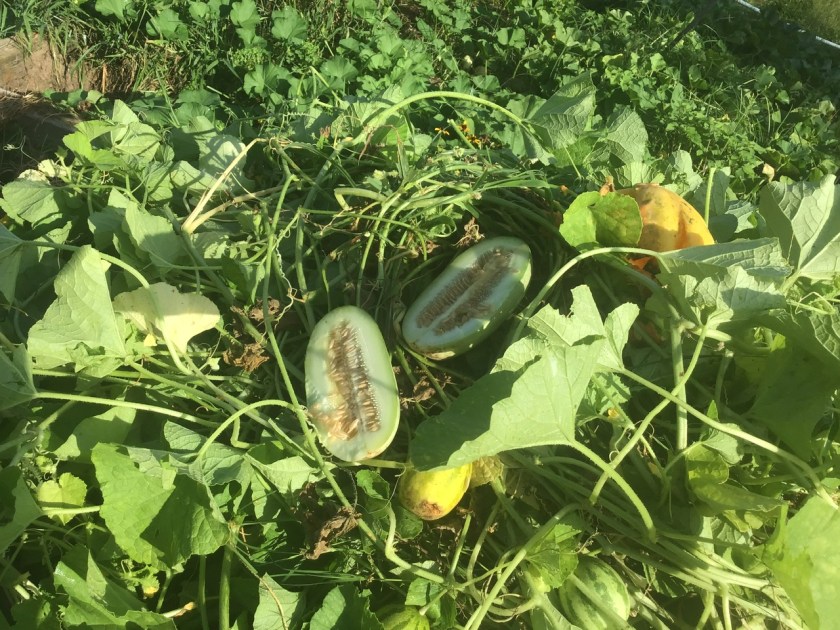
The cucumbers and zuccini that were badly damaged by hail in late spring did make a bit of a comeback, but now are succumbing to the heat.

Unfortunately and as usual, a lot of the time devoted to the garden gets wasted because of crazy weather. This year has been no different and we had a lot of rain at the wrong time for some crops at some stages. The older peppers did fine with it, but the younger ones look terrible and are not recovering. Same with the tomatoes. The heirloom Scarlet Runner bean is struggling and not producing, but is still quite pretty as an ornamental.

I’ll be writing about those seeds, as well as the ones that grew this great big beautiful Black Hopi sunflower (the tallest I’ve ever seen!), in an upcoming post about Gavin Mounsey’s book Recipes for Reciprocity, because the seeds came from him.

These cucumbers were just the right age for survival and are going strong now.

I’ve gotten good at succession planting over the years for the reason of crazy weather. In very early spring I try to get tomatoes, flowers and herbs started, but am often disappointed by late frosts. Days of heavy rain and high humidity with overcast skies can easily cause damage to younger more vulnerable plants in early summer. By this time of mid-summer I’m sowing more cucumbers, herbs, and sometimes beans, but it’s often already too hot for them to get established. At this point, we get what we get until fall brings more hope.

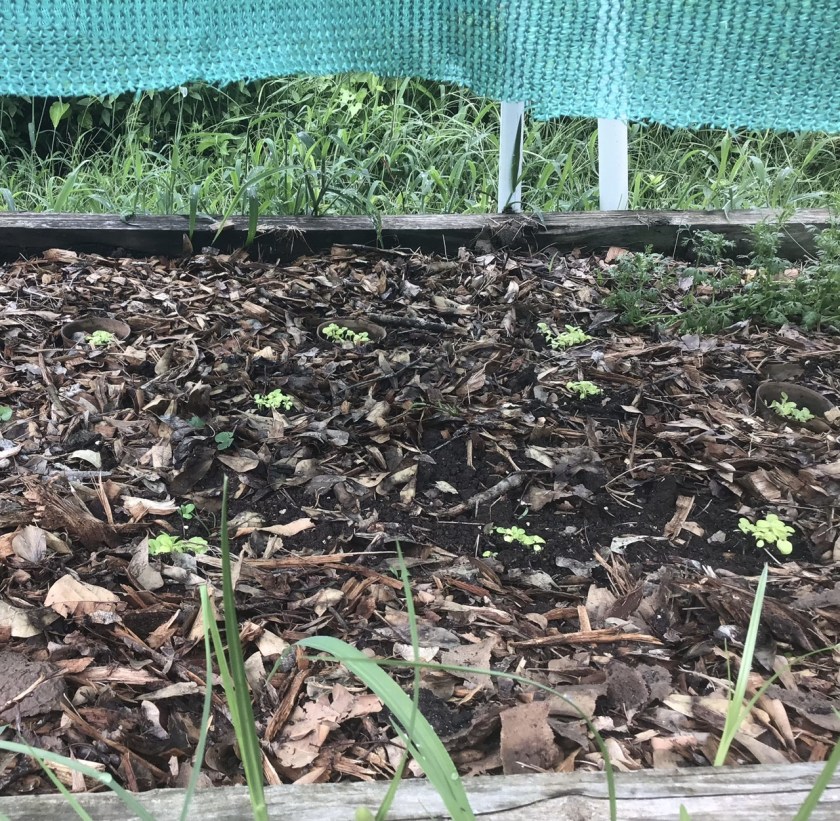
But of course I can’t be satisfied with that and am always experimenting. Often it’s fall tomatoes or melons, which rarely work out. This year it’s the challenge of romaine lettuce through summer. I seriously doubt it’s possible, but I’ve got a tray that has just germinated under lights inside to give it a try. I’ll put them in a shaded box, with plenty of hardwood mulch in an attempt to keep the roots cooler. It’s been in the 90s everyday lately, humid and not cooling off much at night, but there’s still some growing that wasn’t smashed by the heavy rain and hail a couple of weeks ago.

Left photo is view from garden, normally the creek is not visible at all. Right photo is walking along the power easement to the very flooded creek banks.

We also had another big oak tree die suddenly in the prime of life. The last one was just taken (partly) down by the electricity company’s crew because it risked falling into their cables. The latest one Hubby will have to fell himself, before it comes down on the fencing. That will probably be after he fixes his bridge to nowhere that he just built last year in response to flooding and was nearly taken out by this year’s repeat performance.

Sudden Oak Death Syndrome?

In the last two years, with no tornados or hurricanes to blame, we’ve had three large trees right around us flash out dead in a matter of days. Rather disconcerting to me, to say the least.

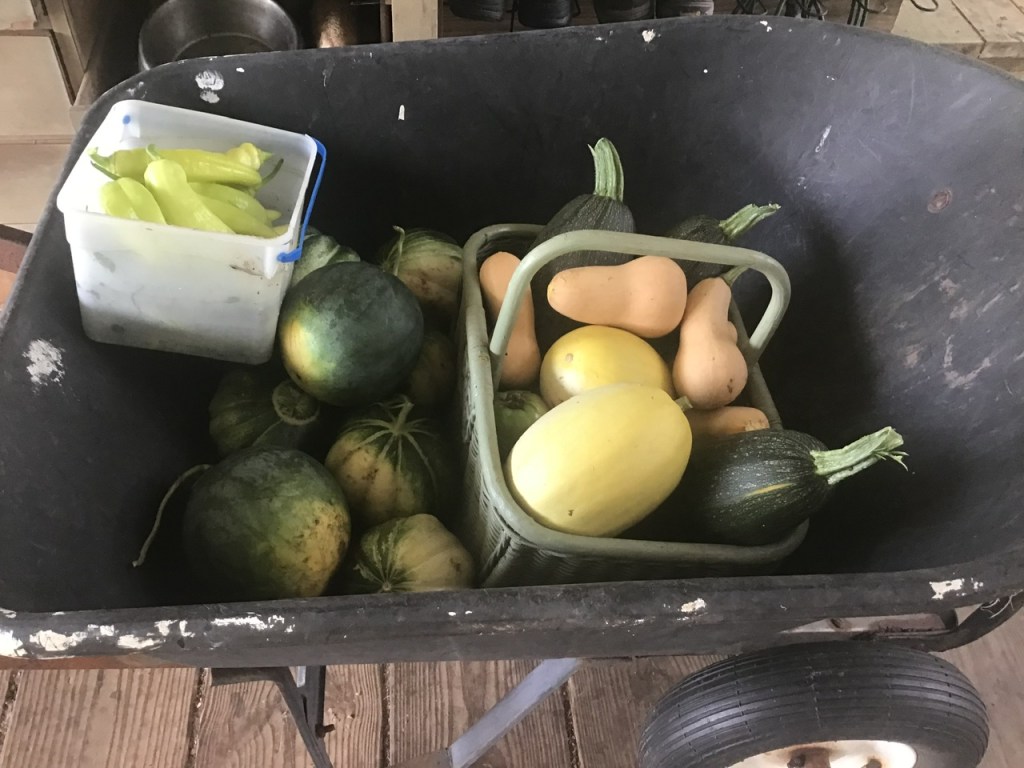
No such bounty this year I fear.

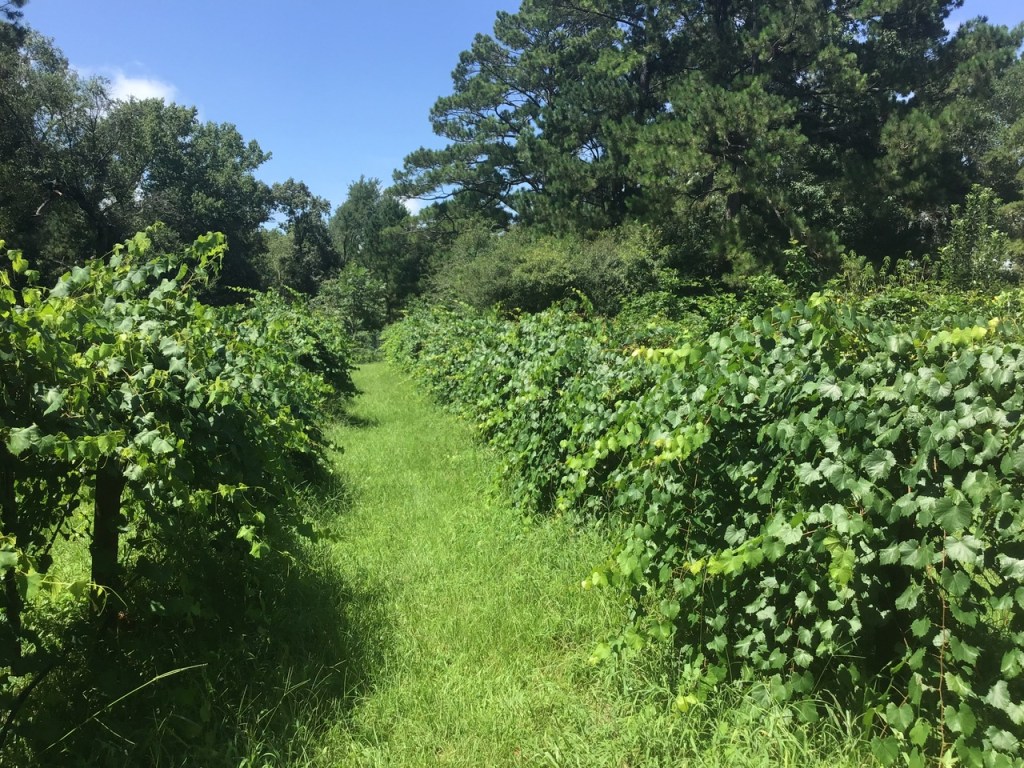
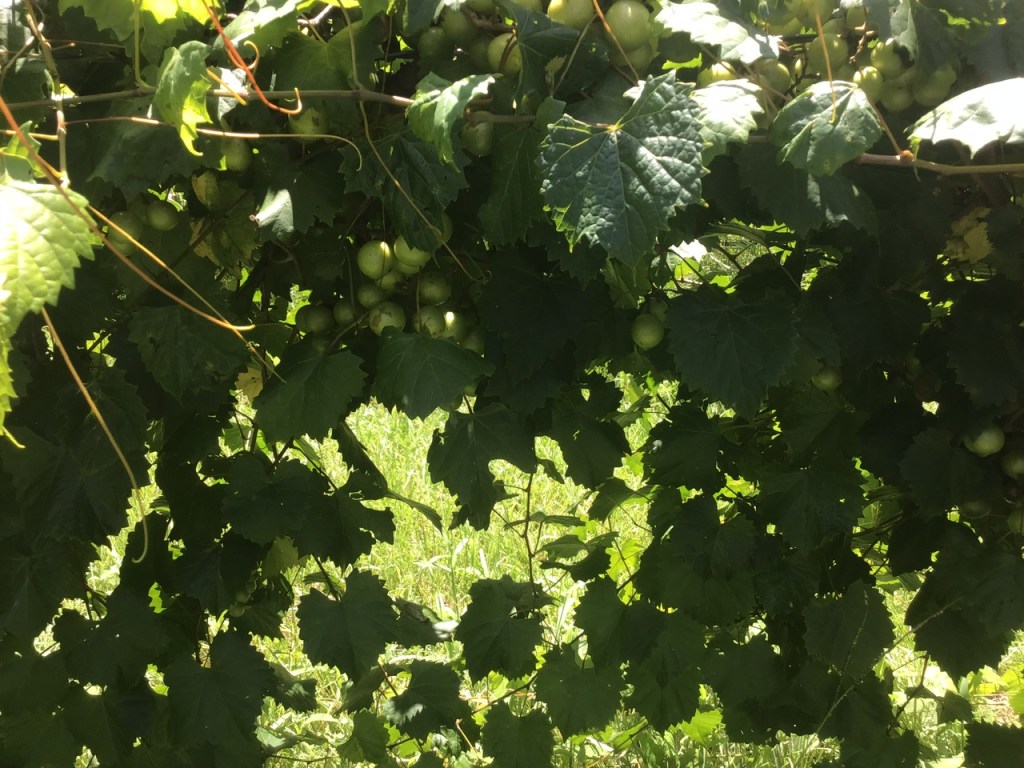
Still, let’s end on a positive note. Some years are better than others. We had an inexplicably bad blackberry year, but this year was excellent. Hubby made blackberry wine with much it, which was much better tasting as a young wine than the one I tried to make and age last year. Some years we have amazing tomatoes. Other years it’s great melons. Maybe this year it will be spectacular grapes?
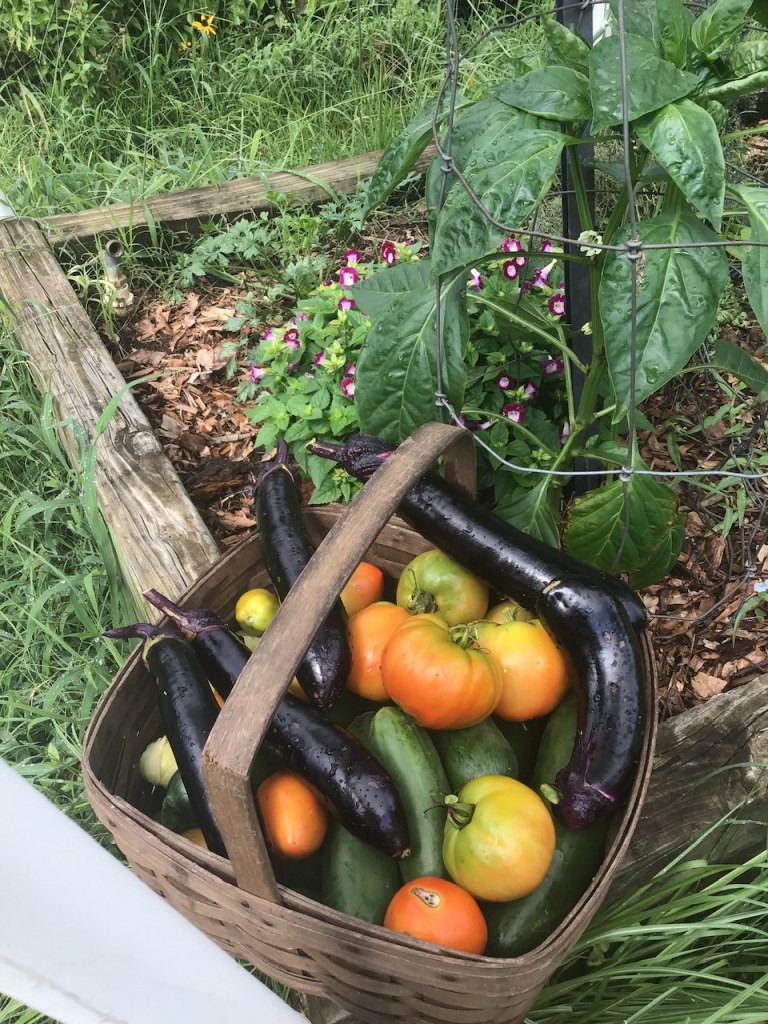
It doesn’t take much for fabulous meals when food is fresh. Fermented herbs and veggies add flavor and nutrition with just a little garden surplus or foraging time. The chanterelles always do better with lots of rain. Hubby’s delicious young blackberry wine makes such a refreshing spritzer when mixed with kombucha.

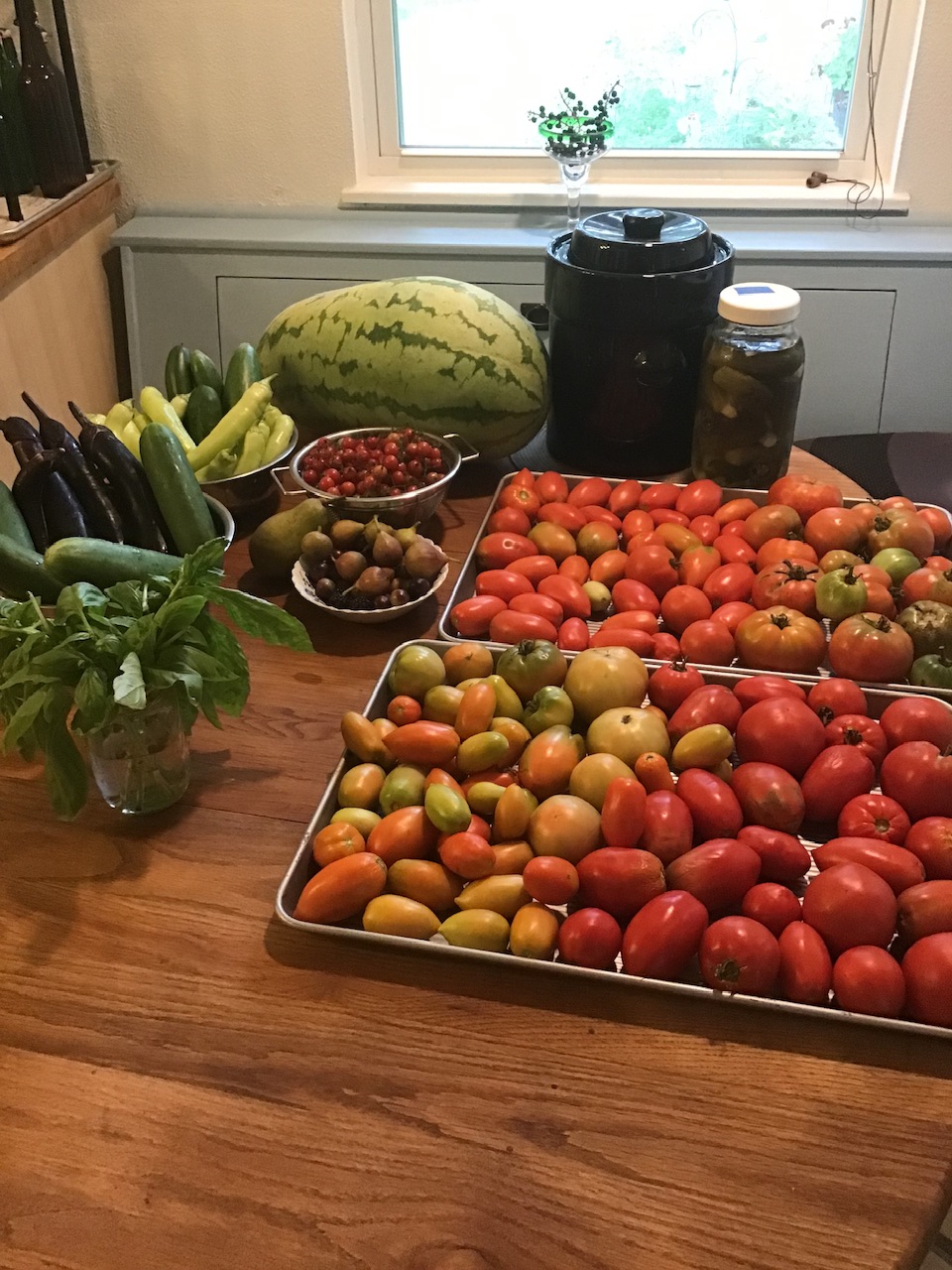
Eating seasonally from our land is so rewarding even when we don’t have a bumper crop.

I have a long list of content coming up during the swelter season, so all the more excuse to stay indoors. Thank Man for air condition! 😆
And thanks for stopping by!

Stress Test USA: Failed!

I can relate, I fail them all the time. But that’s not this post.

Here we have two excellent essays that make me think, if this is the new level of social programming, I finally might abide!

Can they teach this in the schools? I might even go back to teaching! (Ok, let’s not exaggerate. We prefer our wee homestead life, even through the weather disasters, great many failures and physical pain.)

I’ve selected my favorite bits, there’s much more to appreciate on each of these Substacks, just follow the links.

The Coward’s Bargain: How We Taught a Generation To Live In Fear by Josh Stylman

“This wasn’t an accident or an overreaction. This was a stress test of how quickly a free society could be transformed into something unrecognizable, and we failed spectacularly. Anyone who actually followed the science understood the only pandemic was one of cowardice. Worse, most people didn’t even notice we were being tested. They thought they were just “following the science”—never mind that the data kept changing to match the politics, or that questioning anything had somehow become heretical.
The beautiful thing about this system is that it’s self-sustaining. Once you’ve participated in the mob mentality, once you’ve policed your neighbors and canceled your friends and stayed silent when you should have spoken up, you become invested in maintaining the fiction that you were right all along. Admitting you were wrong isn’t just embarrassing—it’s an admission that you participated in something monstrous. So instead, you double down. You disappear when confronted with inconvenient facts.

Raising Prisoners
And this brings us back to the children. They’re watching all of this. But more than that—they’re growing up inside this surveillance infrastructure from birth. The Stasi’s victims at least had some years of normal psychological development before the surveillance state kicked in. These kids never get that. They’re born into a world where every thought might be public, every mistake permanent, every unpopular opinion potentially life-destroying.
The psychological impact is devastating. Research shows that children who grow up under constant surveillance—even well-meaning parental surveillance—show higher rates of anxiety, depression, and what psychologists call “learned helplessness.” They never develop internal locus of control because they never get to make real choices with real consequences. But this goes far deeper than helicopter parenting.
The ability to hold unpopular opinions, to think through problems independently, to risk being wrong—these aren’t just nice-to-haves. They’re core to psychological maturity. When you eliminate those possibilities, you don’t just get more compliant people; you get people who literally can’t think for themselves anymore. They outsource their judgment to the crowd because they never developed their own.”

The COVID Conformity Test
This is how totalitarian thinking takes root—not through jackbooted thugs, but through a million small acts of self-censorship. When a venture capitalist whispers his concerns about immigration policy like he’s confessing to a thought crime. When successful professionals agree with dissenting views privately but would never defend them publicly. When speaking obvious truths becomes an act of courage rather than basic citizenship.
Orwell understood this perfectly. In 1984, the Party’s greatest achievement wasn’t forcing people to say things they didn’t believe—it was making them afraid to believe things they weren’t supposed to say. “The Party seeks power entirely for its own sake,” O’Brien explains to Winston. “We are not interested in the good of others; we are interested solely in power.” But the real genius was making citizens complicit in their own oppression, turning everyone into both prisoner and guard.”

Neutralization: How Bureaucracies Silence Dissent Through Legal Fuses and Narrative Control by Luc Lelievre

Institutional power rarely reveals its full mechanics in one stroke. Instead, it unfolds in sequences—calculated, procedural, and often cloaked in the language of neutrality. Neutralization, the fourth installment in Luc Lelièvre’s Unbekoming series, dissects this final movement in the choreography of bureaucratic suppression. Building on prior analyses—Heresy, which outlined how dissent is ideologically framed as deviant; Suppression, which explored institutional mechanisms of exclusion; and Omission, which detailed the structural design behind silencing—this essay turns its attention to the silent sophistication of neutralization: the use of legal fuses, narrative gatekeepers, and administrative dead-ends to reroute dissent and erase its public trace.

7. Administrative Gaslighting and the “Fuse Effect”: When Bureaucracy Becomes Theatre

Modern bureaucracies rarely operate through overt acts of repression. Instead, their preferred mode of silencing is procedural — a form of administrative gaslighting that cloaks itself in language of due process while subtly eroding the dissident’s credibility. This technique is not accidental; it is designed.

One illustrative method is what could be termed the “fuse effect”: low-visibility actors within the institutional machinery are positioned to execute decisions that carry legal or symbolic consequences, thus absorbing the potential fallout. These operatives — often legal clerks, junior lawyers, or regional representatives — function as buffers. When the dissident challenges a structural injustice, it is these intermediaries who respond, allowing higher-level decision-makers to remain untouched by controversy. The system insulates itself from reputational risk while continuing its work of marginalization.

But when these “fuses” begin to fail — either through overreach or exposure — institutions escalate. They deploy higher-profile agents, such as communications directors or legal executives, who are tasked with closing the file definitively. In my own case, the surprising intervention of a top-level official from a legal commission — someone with no adjudicative mandate — reveals just how far the institution was willing to go to protect the official narrative. Rather than engage the constitutional merits of my claim, it chose to obscure them through authority signaling and symbolic closure.

This bureaucratic theatre plays out under the guise of objectivity. But for those of us who have documented each step, the pattern is unmistakable: delegitimize the voice, dilute the argument, displace responsibility. These are not failures of oversight; they are evidence of design.

The question, then, is no longer whether the dissident is “right” or “wrong” by institutional standards. It is whether he can endure — and expose — the machinery that seeks to erase him. In that sense, the public record becomes not only a site of resistance, but a form of protection.

8. Conclusion: Toward a Reckoning

Old World San Antonio

Remember the Alamo? Like the Moon Landing, created in a Hollywood studio?

The Alamo, just 1 in 36 ‘Missions’

Burned, moved, now surrounded by Sea World and dozens of other theme parks in New World San Antonio. They call it modernization and it’s apparently a great improvement.

What has been lost? What has been dis-covered and then re-covered, perhaps again and again? Perhaps deliberately covered in myths so deep we’ll never find the truth again.

“. . . simplicity derived from the earth itself . . .” 😆

According to official history from 1974, we have a what I would call a tall tale; a fish story some might call it, told to a captive audience without a clue about fishing, they’re just there for the tale.

“Easterners, with largely Anglo-Saxon traditions behind them, beheld in mission ruins the remnants of a culture far removed from their own: Iberian, Holy Roman Catholic, Mexican, American Indian. And in the massive architecture they saw an elemental simplicity derived from the earth itself, with here and there splashes of color and design Moorish in origin. To the unlearned, those familiar with prim white New England and Deep South churches with thin spires and neatly kept churchyards, the solid bulk of the missions with their tremendous courtyards and surrounding walls was at once alien and awe-inspiring. These were not churches as Easterners knew them, but fortresses and places of learning and of toil under the sun. The Spanish missions were all these, and more; they represented a great religious and political ideal launched by a great nation now on the wane. They were visible evidence of Iberian penetration of the North American continent.

From the last of the seventeenth century through the end of the eighteenth, thirty-six missions were built in Texas alone, and there were a great many more scatter throughtout Arizona and New Mexico. The cost in sweat and blood was high; eighty-one Franciscan and Jesuit missionaries were killed during the period by those very men whose souls the friars had come to lead into salvation. The friars, barefooted, armed only with the cross and an unshakable faith, marched across burning deserts and through snowy mountain passes to bring Christianity to aboriginal tribes whose beliefs were as deeply ingrained as the missionaries’ own. Ultimate success eluded the strongest efforts of these enduring men wearing robes of gray wool, yet they achieved more than they had dared hope when they embarked upon uncertain voyages from distant Spain, or from remote areas in the wilds of Mexico. They had many rivers to cross, many burdens to bear. How these men of God, keen of intellect and tough of body, endured under conditions few men today could tolerate, is one of the great sagas of the past few centuries.”

Sagas indeed . . .
However, when logic is applied to such sagas, they appear as porous as this Enchanted Rock.

Amazing!

Those with interest in such fringe topics probably already know there’s a vibrant ‘community’ online questioning such official narratives. They are in my top 3 favorite things about Youtube. I especially appreciate when they aren’t trying to sell another story, but rather just presenting evidence to offer food for thought for the curious.

And of course, fodder for those who think they can craft a better story . . .

Shitty of San Antonio

Now in my top 3 Shittiest of Shitties Official List, the once unique and charming San Antonio is now the official Theme Park capital of the U.S. I didn’t just make that up either, and apparently, they consider this a good thing.

My top-listed shitty is Bangkok followed by Warsaw, for orientation sake.

San Antonio, like the other two, had such potential at one time. Historically fascinating with magnificent old world architecture buried in a tragic mess of the modern world.

The Riverwalk was desert hot in May and nearly impassable through the crowds. Just five years before, when Hubby and I visited for Christmas holiday lights, it still had some appeal.

Now the city boasts 17 theme parks, one per 27 square miles. This does not include the many other paid attractions, like State Parks, caves and caverns in the surrounding area.

San Antonio‘s theme parks invest in new attractions for 2025

“San Antonio is known as the “Theme Park Capital of Texas” for good reason, with its 663 combined acres of attractions and entertainment parks. And nearly every park is undergoing multimillion-dollar expansions for 2025.”

Surprise, surprise, the shitty is constantly flooding now.

It begs the question: Is a shitty still a shitty without a shitty theme park?

Disneyland, Disney World, Six Flags, Dollywood, Wisconsin Dells, Schlitterbahn, Universal Studios, Sea World, Busch Gardens, Cedar Point, HersheyPark, and on and on it goes.

In the decade since Hillary Clinton made this declaration, already hilariously ironic when she said it, the theme park industry in America has grown 43%.
A Look at a Thrilling Industry: Amusement and Theme Parks : Spotlight on Statistics : U.S. Bureau of Labor Statistics
The average annual pay is $36,000
Prices for food and beverages up 62%

Yet again and again I hear from the ‘pro-development’ right and left alike that in the U.S. we’ve only had development of 5% of our land and resources. I don’t know where this statistic comes from, because those who quote it never provide their source material. I can say I think it’s more shitty nonsense.

But, if it is true, I’ll yell an enthusiastic ‘Thank the heavens!’ Because what we do in the name of development in this country is a travesty to reason and a tragedy to nature.

At least 8 dead in San Antonio after months of rain fell in hours
Months worth of rain on Wednesday night led to multiple water rescues in San Antonio, where at least eight people were killed by floodwaters.
By Jesse Ferrell, AccuWeather meteorologist and senior weather editor
Published Jun 12, 2025 9:09 AM PDT | Updated Jun 13, 2025 12:39 PM PDT
https://www.accuweather.com/en/weather-news/at-least-8-dead-in-san-antonio-after-months-of-rain-fell-in-hours/1783936

My Favorite Enchanting Photo

I’ve gazed at it for what seems like hours, though its magic is hardly captured there. It is just reminiscent of the awe I felt.

That I took it, that’s fine enough for now. I’ll be back, no doubt about that. I’ve no idea still what I’ve seen, only that I don’t see what they say I should see.

This is the One! Amazing!

That we traveled so many miles, and after plenty of discouragement, to get so very fortunate in the end must’ve added to the enchantment. I will cling to it, for a long time to come, I’m sure.

Intrepid traveler, Kath

To be in good company, that helps, always. But I expect next time I’ll go alone, and I’ll stay a good long while, hoping that maybe a few more of its mysteries might come to present themselves to me. That’s how it seems to work.

If I’m patient enough, keen enough, present enough . . .
Perhaps.
Maybe. Or maybe not.
Already there are many obstacles.

If only they would be, these many obstacles, as permeable as these rocks are to these roots.

If only I could hear their stories and know they were real.

If only I knew. What would I do?

Creep among the rocks, disguised, like these little guys?

You can’t see me . . .

Or mock its odd monochromatic effect with bold color displays in every shallow pool or crevice?

What makes a sight worthy of seeing? Is worth only weighed in the eye of the beholder? How many eyes does it take to spoil a place?

Enchanted Rock is a pink granite mountain located in the Llano Uplift about 17 miles (27 km) north of Fredericksburg, Texas and 24 miles (39 km) south of Llano, Texas, United States. Enchanted Rock State Natural Area.

I don’t know much about rocks, but granite is one we’ve all heard of, thanks to its continued popularity in building, from the popular household granite countertops to Mount Rushmore and the Red Pyramid in Egypt.

This is said to be a testament to its durability, longevity, and resistance to weather.

According to Wiki, it’s quite hard:

“Granite is nearly always massive (lacking any internal structures), hard (falling between 6 and 7 on the Mohs hardness scale),[1] and tough. These properties have made granite a widespread construction stone throughout human history.”

Which makes me all the more curious about the intimate relationship between those roots and rocks. According to the official history, we’re only seeing the proverbial tip of the iceberg.

“Enchanted Rock is a small speck compared to the huge underground rock that spans over 100 square miles. That’s almost four times as big as Manhattan!”

It’s quite hard, and yet it ‘sheds’ kind of like a glacier ‘calves’?
“Eventually, weather and erosion shaped these rocks into the odd shapes you see today.”

How odd!

So, what kind of weather and erosion causes a lozenge shape? Inquiring minds want to know!

A partial official explanation can perhaps be found within worldwide examples of batholiths:

“Batholiths exposed at the surface are subjected to huge pressure differences between their former location deep in the earth and their new location at or near the surface. As a result, their crystal structure expands slightly over time. This manifests itself by a form of mass wasting called exfoliation. This form of weathering causes convex and relatively thin sheets of rock to slough off the exposed surfaces of batholiths (a process accelerated by frost wedging). The result is fairly clean and rounded rock faces. A well-known result of this process is Half Dome in Yosemite Valley.”

That explains the ‘thin sheets’ perhaps, and the rounded rock face, but not so much the lozenges. And the root-rock infusions!

Continuing with Wiki:

Lanite, a rare type of brown rhyolite porphyry with sky-blue quartz crystals and rusty-pink microcline feldspar, is found nowhere else in the world except in Llano County. Llanite can be found along a highway cut 9 mi (14 km) north of Llano on Texas 16. The largest piece of polished llanite in the world can be seen at the Badu House.

The Llano Uplift, a roughly circular geologic dome of Precambrian rock, primarily granite, covers about 50 miles along Texas Highway 29 and was 1.5 billion years in the making. Call it Rock Heaven: Geologists identify 241 rocks and minerals in Llano County, including llanite, a blue-specked dark granite found nowhere else in the world.”
Travel: Rock Heaven in Llano|April 2018| TPW magazine
Lovin’ Llano | October 2008 | TPW magazine

But apparently it was not the discovery of granite, but rather that of iron ore that transformed Llano into a boom town.

“Newspapers spread the word about Llano, recklessly playing up the magnitude of the region’s mineral resources. “Llano iron ore is the finest on the continent,” one story claimed. “Iron Mountain will produce 2,000,000 to 4,000,00 tons annually after the first year.”

“Little visible evidence remains of the Llano iron boom. A 1906 tornado destroyed some of the boomtown buildings north of the river. Other structures suffered a more mysterious fate.
“A number of buildings on the north side burned,” JoAnn McDougall explains. “The owners did it to collect insurance money. They needed cash and didn’t see any other way to get it. So many buildings burned, the insurance companies stopped insuring buildings in Llano, at least for a while.”
The Badu Building

The Badu Buildinghttps://rockandvinemag.com/2024/02/the-badu-building/

According to Wiki:
The geology of northeast Africa is very similar to that of Texas, and many of the two regions’ minerals and fossils are only found in these two locations.[2] A dike of llanite crops out on Texas State Highway 16 about nine miles north of the town of Llano.[3]
Llanite, which is similar to granite, is very strong, with a crushing strength of 37,800 lb/in2 or 26,577,180 kg/m2.[4] The mineral is also very similar in appearance to pietersite

Enchanted Rock was the absolute highlight for me on this road trip, and we almost didn’t make it. For one thing, I almost might not have been able to muster any enjoyment from it at all, being that I was wickedly hung over.

A hangover that dissippated in an instant, in a sudden and unexpected weather shift. The day before I’d been suffering in intense heat walking in a shadeless midday scrubby desert and I was attempting to muster the strength for the same again. For the first 45 minutes of the drive it was not looking promising. What fortune came then, in the last 10 minutes before the entrance, was the most welcome of weather whiplash …

Except that meant the main path of the Enchanted Rock might have to close any minute. Any amount of rain makes the rocks very slick, and they want no accidents. Best get climbing quick!

To be continued . . .

For more Enchanted Rock fact and fiction, begin at the 1:06 mark.


https://youtu.be/OO61UcJMHGw?si=4x33GYsB9oI3lbuF

Between Shitty & Country

Having become far more accustomed to the surreal ‘nature’ of ‘reality’ in the last decade or so, I was less baffled by the still ever-increasing Suburban Sprawl on my recent roadtrip through the Hill Country of Texas.

Because of course, by now we are all hearing constantly the war drums of the Globalists and their plan to put all ShittyZens into Smart 15-minute Cities™ under Palantir Surveillance Systems™ paid for with our tax dollars and paving the way for digital money cheered on by ‘Freedom Fighters’ where everyone will be eating food manufactured by Pig Pharma, who begrudgingly keeps the ShittyZenry alive through forced drugging deemed voluntary.

Homesteading gets sold as a solution, which it is not, and never was, and even I knew that as a novice 15 years ago, before it was cool. Homesteaders rarely last 5 years, I’m told, like most small businesses. Makes perfect sense to me, because it’s the only work I’ve ever done that gets harder with time instead of easier.

It’s a lot like all the lies being sold to us about everything, everywhere, all the time.

Perhaps the 15-minute city agenda works in some places, but I see nothing of the sort here. The Shitty Sprawl continues, unabated and unabashed, developing the vast parcels of land without the people, in an unstoppable concrete jungle that clearly doesn’t listen to the same news as we are subjected to from the 24-hour Cybernews Today Club.

Residential and commercial alike, vast development continues, and sits empty for tens of miles outside every major city in Texas: Dallas, Austin, San Antonio, Houston. The foreign populations increase, but not nearly at the rate the buildings to house and employ them get constructed.

And out, and out, and out they go, encroaching far worse than infesting cockroaches. Blocking the views, crushing the landscape, sculpting and paving and polluting any and every open space where someone can maybe hope to make another dollar.

11 new Commercial Mega-projects for the Austin market!https://aquilacommercial.com/learning-center/megaprojects-planned-for-austin/

“The project is set to deliver 1,200,000 square feet of office space, 140,000 square feet of retail space, 1,700 multifamily units, and 200 hotel rooms. The development will also create 14 acres of green space. ”

Mind you, there are already huge empty building ALL over the shitty.

Plus,

(A whopping 14 acres of green space! 😂)

I like when I hear rural (and other wise) folks refer to the cities as ‘shitties’ because I think it fits. Let’s call a spade a spade. What I saw on my roadtrip was horrendous and makes me thankful for the wee refuge we have created here, for now. But the Shitties aren’t the real problem here, in fact. We are being swallowed up, everywhere, by the relentless Shitty Sprawl.

Amazon and Walmart will be offering drone delivery service, so perhaps that will alleviate some of the choking traffic that stagnates around every Shitty, all day long. Those drones must be very adept at navigating through the expanse of electrical towers and fat mess of wires that crisscross every skyline and create a hideous hellscape of prison-like bars. So much for the vast open horizons of our fabled cowboy days.

In Houston, veterans and cripples beg at every underpass and intersection, weaving themselves like Frogger players through 5-lanes of traffic. San Antonio has been ruined by tourism and is now, in just the last 5 years since I was last there, a crowded, filthy slum pretending to be full of family fun. Austin is just more of the same which started well over a decade ago, and continues its relentless expansive march into the drought-stricken Hill Country, paying no heed whatsoever to the limits of water or other pesky human needs. Technology!

Yes, technology is both the Great Driver and the Great Savior. As well as the Great Disrupter and the Great Connector.

While the water gets diverted into Data Centers, swimming pools and water sports for the foreign tech teams, tourist traps sprout up like, well like tourists traps always do.

Mystery Tours and Great Escapes (TM) and Wild West Simulations based on previous historical simulations. Hotels that require Smart phones to check-in and coffee shops that sell fancy foamy cocktails, but don’t take cash.

Such is the American Dream I’ll be expanding upon in the next posts, based on my recent, rare roadtrip. There will be highlights among these many Shitty Horrors, I hope they will be enough to create some kind of basic balance, as temporary as I expect that will be in the grand scheme of things.

The Pie in the Sky Tech dreams are in fact nightmares for a great many of us. The kind of projects ‘our betters’ have planned for the world are little more than anti-human miseries sold as ‘fun’ and ‘sustainable’ while they are in fact conning the populations of the world to build playgrounds for the uber-wealthy on the backs of the common man: THE story as old as time.

Will Austin become the next Neom?

city of neom saudi, future home of the 2029 Asian Olympic Winter Games
https://en.wikipedia.org/wiki/Neom
Yes, there is the usual rumblings of faux climate concerns.
“Amidst increasing global-warming concerns, the project raised multiple issues ranging from the expected high temperatures in the desert land, the energy impact and detour of local water resources to the construction of artificial ski slopes from scratch.”

Our Texas mega-Shitties equally demonstrate ZERO authentic concern over their continued expansion.

“The new construction home market in Austin, Texas, remains vibrant, with homebuilders offering attractive incentives like rate buy-downs and closing cost contributions. Demand is steady, as Austin continues to attract buyers drawn to its growing tech scene, great schools, and high quality of life . . .”

In Shitty-speak, a ‘high quality of life’ is apparently defined by constant drought, non-stop shitty-wide traffic and enough beggars to make one feel rich even while living in a mini-studio apartment above a freeway.

Pay no mind whatsoever to Austin’s infamous traffic. It’s main corridor, dubed ‘A Freeway Without a Future’.

I-35 in Austin is one of nine freeways where the infrastructure is “nearing the end of its functional life.” Photo courtesy of Getty Images
Apparently this was a problem inherent in the 1928 Master Plan of Austin’s infrastructure that is now visible to ALL: The Master Plan was in fact, rascist. So that explains everything.

The Master Plan https://austin.culturemap.com/news/city-life/austin-i35-freeways-without-futures/was rascist, of course!

Perhaps the future plan will mirror a devotedly Non-Racist plan, like that of Neom, Saudi Arabia, where everyone has equal opportunity to be a ShittyZen, provided they don’t mind being surveilled like a prisoner.

From Wiki:
“At one company meeting, Nasr said on record, “I drive everybody like a slave, when they drop down dead, I celebrate. That’s how I do my projects.”[108] He also threatened to replace employees stuck in other countries during the COVID-19 pandemic lockdown in 2020, which included the former director of branding and marketing.

Surveillance
Designers of The Line announced plans to use data as a currency to manage and provide facilities such as power, waste, water, healthcare, transport and security. It was said that data would also be collected from the smartphones of the residents, their homes, facial recognition cameras and multiple other sensors. According to Joseph Bradley, the chief executive of Neom Tech & Digital Co., the data sweep would help developers feed the collected information to the city for further predicting and customizing every user’s needs.
However, Saudi Arabia’s poor human-rights record and use of espionage and surveillance technology for spying on its citizens emerged as a roadblock, according to digital rights experts. Vincent Mosco, a researcher into the social effects of technology, stated that “the surveillance concerns are justified” while further adding that “it is, in effect, a surveillance city.” The Saudi Ministry of Communications and Information Technology did not respond to digital rights experts and researchers’ requests for comments.

Other criticisms
The project has been critiqued as a “laboratory of false solutions” inasmuch as carbon capture and storage (CCS), green hydrogen, and carbon-offsetting are self-serving panaeceas backed by the fossil fuel industry which do not work at scale. Furthermore Salman’s vision for the city includes such fanciful technologies as flying cars, robot maids, dinosaur robots, and even a giant artificial moon.”

Even a giant artificial moon?! Wow! Who needs water anyway, fly me to the moon! 🤪

Geoengineering Update

“In conclusion, the use of military climatic and environmental modification technologies appears to be the most relevant explanation to understand the increase in natural disasters over the last 20 years.     

“For a half century, the military has been developing technologies to turn climate and extreme environmental phenomena into weapons. This study is a literature review, which was conducted with the following objectives: 1/ to expose the known powerful military technologies of climate and environmental modification; 2/ to emphasize that many extreme environmental events observed in recent years coincide with the effects that these military technologies are able to generate; 3/ to analyze the conclusions of the Intergovernmental Panel on Climate Change (IPCC) on the origins of the increase in natural disasters. The literature used comes from official sources: peer-reviewed scientific articles (except one); patents; intergovernmental organizations; military documents; policy documents; university documents; national newspapers; news agencies; writings by respected scientists in their fields. Results of the literature review reveal that HAARP (High-frequency Active Auroral Research Program), the most powerful ionospheric heater in operation, is able to influence climate. High-power electromagnetic pulses in the earth’s crust, produced by a mobile magneto-hydrodynamic generator, is a technique developed since the 1970s to trigger earthquakes. Directed energy weapons, a real technology, can ignite destructive fires at range. For several years, official documents report effects on health and the environment similar in all aspects to those that would be detected if solar geoengineering by stratospheric aerosol injection, a climate-altering technique, was used. Due to numerous biases and a lack of objectivity, the IPCC’s arguments on the causes of the growth in extreme environmental phenomena (heat and cold waves, storms, hurricanes, tornadoes, 75 droughts, floods, wildfires, air pollution, etc.) are flawed. The solar hypothesis isn’t appropriate either, given its low activity for several years. In conclusion, the use of military climatic and environmental modification technologies appears to be the most relevant explanation to understand the increase in natural disasters over the last 20 years.”

(PDF) Natural Disasters are Not All Natural

2018 Security Framework Characterizes Geoengineering as Weapon of War – Zero Geoengineering

Season 6 Episode 25 1995
Simpson’sPredictive Programming

Influence Is Everything

A puppet or a string
Or a puppet on a string
Or wouldn’t you know
Influence is everything

Nobody loves you when you’re down and out
Another story altogether when you’re flush with clout
Sweet is the life, no sorrow the story
Lift him up, shoot him down
Ring around the rosy

Sweet is the life, no sorrow the story
A fresh paint job, keep smiling
Ring around Their rosary
Silly McMuffins cry death’s a story

But it doesn’t have to be like this
That story told from His Petrogliphs
McQuota meets Mass Misfits
That’s what I say

It doesn’t have to be like this
Influence is everything
Hear what I say
They will shift your night from day

Just stay away
Don’t swallow their lies
Don’t inject their poisons
Don’t eat their fruits
Don’t Don’t Don’t
Don’t let them take your mind
Your soul is not for sale
Don’t let them get
Under your skin
Don’t let them touch
your scentmost intransigentSo effervescent

Your scent intransigent
Yet so effervescent

Millennial Pep Talk

The Millennial Gardner gave a great little pep talk at the end of this confessional concerning his myriad gardening mistakes over the years. There should be more such vids as this. The positivity movement is dead, in my opinion, though MG is still a devoted adherent.

Positivity–Capitalism couldn’t survive without it!

He’s not yet reached the ripe age of bitterness. He thinks he will be able to continuously throw money at the problem, and I rather doubt that’s a viable long-term solution. I hope I’m wrong.

But overall I really appreciate his rejection of the typical appraoch to problems today: The Head in the Sand vs The Pie in the Sky. That’s what I see most often, and on that I think he’d agree with me.

So, more power to him!

We all need a pep talk now and then and Millennials especially it seems to me are inheriting the ends of the Shitshow and are expected to pull it all together again after the wrecking ball.

Hardly a lesson in equity, or perhaps the best lesson that could be.

The gist of his little pep talk is valid–anyone who excels at anything worthwhile has experienced, and learned from, the greatest teacher of all–Failure.

It’s not nice or pleasant or fun or comfortable to learn the lessons of failure. And we live in a culture addicted to nice and pleasant and fun and comfortable.

Not really a conducive atmosphere for learning.

Yet, sometimes the results of the lessons are far more pleasant than we might expect. Like, in my case, my greatest lesson in gardening so far has been flowers.

Flowers and ‘weeds’.

I had no idea the delight they offer when I first started gardening and I made little room for them in my garden, whether the classic garden cultivars or the wild weeds who long to make themselves welcomed. HUGE mistake!

I’ve been working on correcting that for many years now, and it’s absolutely paid off in myriad forms: more bees, more joy, more pleasure, more beauty, more sense of wonder.

The garden feels like less of a chore and more of a privilege with every bloom. The attraction is magnetic, to insects, to birds, to me. I observe better, I take more time, I allow my natural esthetic sense to align with the food crops and converge into a very satisfying balance of food and fancy.

Somehow, whether in my heart, or soul, or imagination, co-mingling the wild in with the crops has engaged me in a way that is a continual wellspring of curiousity and desire, even in the worst of times.

The rapture of emergent colors, the allure of fragrance on the breeze, the dance of the petals and the delight of the bees, I think what my early garden experience was missing was in fact the essence of ME. Because you don’t get that from books.

Learn from our failures dear ones, that’s why we tell y’all about them. Don’t let them dim your spirits, but use them in good faith, and find a way.

Weather Psychos

“We successfully got DVD hail!” He’s so excited! Is this guy working for the weather gods? The Texas Weather Modification Association perhaps? Or maybe Weather Modification, Inc.? A new startup with funding from the Gates Foundation?

I suppose they will soon be selling gardeners’ and homesteaders’ insurance. I’m really looking forward to the days I can list my squash on the future’s market so assholes like this can bet on it’s failure and cheer when he adds another 10 cents to his electronic wallet. I long for the new opportunity to fill out paperwork to get reimbursed 3 cents on the dollar, or rather, on the CBDCs: Was it crooked neck squash or zuccinni? Were the onions beyond the bulbing stage? Were the seeds purchased at a WEF-approved supplier? How much rainfall did the seeds receive in the initial 30-day growing period, so that we can deduct that from your refund?

Weather derivitives are already a big thing, so the insider trading when companies can boast about their crop and property destruction potential is bound to up the ante. But, it’s not war, don’t think of it as war.

It’s really about resilience and making communities stronger. And if the youth have a hoot while destroying their neighbors’ gardens, well, you know, boys will be boys!

What do you care about some lost work and produce when you can contribute to the future of science anyway? What are you, some kind of Luddite?!